Coolers for an Early Archery Kill
There's nothing quite like the crisp air of a Wisconsin autumn, the leaves starting to turn, and the quiet anticipation of archery season. But let's be honest, those early season hunts in September and even into October often throw us a curveball: warm weather. You've just made a perfect shot on a beautiful whitetail, and now the clock is ticking. The biggest frustration for any archer in these conditions is the fear of spoiling that hard-earned venison. This guide is all about equipping you with the knowledge and strategies to ensure your deer meat stays cool and fresh from the moment it hits the ground until it's safely in your freezer.
The Unique Challenge of Early Archery Season in Wisconsin
When Wisconsin's Archery Season Opens, many of us are still dealing with temperatures that feel more like summer than fall. While a late-season deer in December often benefits from nature's refrigeration, early archery season demands a proactive approach to meat care. The warmth and humidity are a perfect storm for bacteria, making quick and effective cooling paramount.
Understanding Heat and Venison Spoilage
Deer meat, like any other fresh meat, is highly perishable, especially when internal body temperatures remain elevated. The internal temperature of a deer, even after it's expired, can hover around 100 degrees Fahrenheit or more for a while, particularly if it's a larger animal or the day is particularly warm. Bacteria thrive in this warm, moist environment, rapidly multiplying and producing off-flavors or even making the meat unsafe to eat. This process speeds up exponentially with every degree above ideal cooling temperatures. Think of it like leaving a steak out on your kitchen counter on a hot day – you wouldn't do it, and the same principle applies to your venison.
On top of bacterial growth, natural enzymes in the meat can also contribute to spoilage if not cooled quickly. The goal is to bring the meat's internal temperature down as rapidly as possible, ideally below 40 degrees Fahrenheit, to halt these processes. This is where your cooler, packed strategically with ice, becomes your most crucial piece of Meat Care Gear for Wisconsin Hunters.
The Reality of Recovery Times
In a perfect world, every deer you shoot drops within sight. But hunting, especially in the diverse terrain of Wisconsin, rarely offers such guarantees. Whether you're bowhunting the thick cedars of the north, the sprawling hardwoods of the central counties, or the steep, brushy coulees of the Driftless Area Deer Hunting in Wisconsin, a deer might run a considerable distance. Recovery can take minutes, an hour, or even several hours, depending on the shot placement, the deer's reaction, and the challenging cover. Bowhunting Wisconsin's Long Archery Season often means navigating dense vegetation, and a blood trail might be sparse. Every minute spent tracking on a warm day adds to the risk of meat spoilage. This is why planning your field care, including having coolers ready, isn't just a good idea—it's absolutely essential. Even with platforms like GoHunt that help you scout access points and potential recovery routes, you still need a solid plan for the meat once the animal is found.
Choosing the Right Cooler for Your Wisconsin Hunt
Selecting the right cooler isn't just about grabbing the biggest one on sale. It's about matching your cooler's capabilities to the demands of an early Wisconsin archery hunt. You need something that can truly withstand the elements and maintain internal temperatures over time.
Rotomolded Workhorses: The Gold Standard
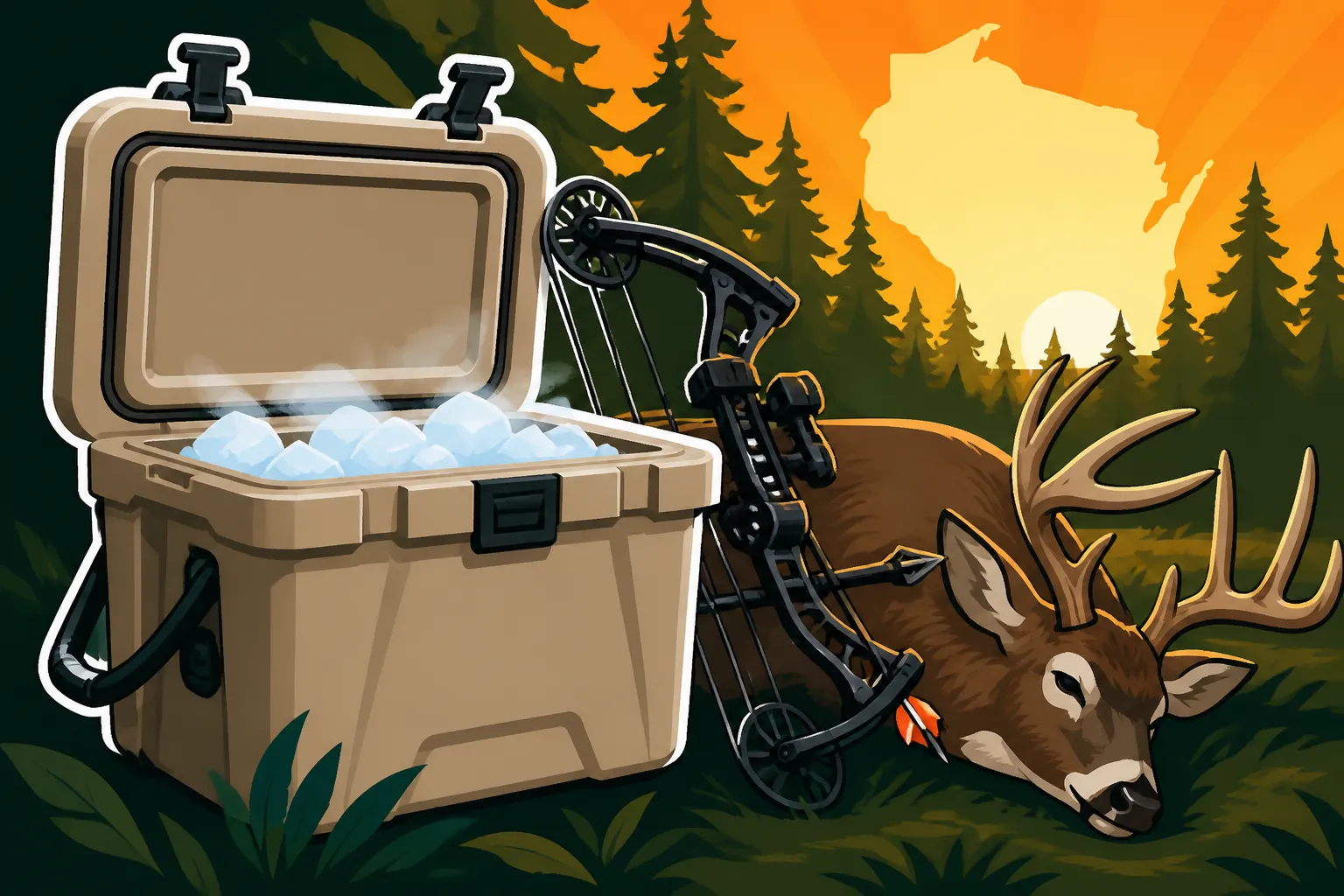
When it comes to serious ice retention and rugged durability, rotomolded coolers are the undisputed champions. These coolers are constructed using a rotational molding process, which creates a single, seamless, incredibly thick plastic shell. This process, combined with superior insulation (often pressure-injected foam), allows them to hold ice for days, even in warm conditions. They feature heavy-duty latches, thick gaskets around the lid, and often non-slip feet.
For hunters, this means you can pre-cool your cooler days in advance and trust it to keep your quartered venison frigid until you can get it to the processor or home to Butchering a Deer at Camp. The downside, naturally, is their weight and the investment. They are significantly heavier than traditional coolers, especially when loaded with ice and meat, and they come at a higher price point. However, for preserving a valuable deer during Wisconsin's warmer Wisconsin Archery Deer Season Dates, many consider them worth every penny. You'll find a variety of reputable brands making these types of coolers, and it's always wise to check current features and capacities before making a purchase.
Traditional Insulated Coolers: A Budget-Friendly Option
Standard or traditional coolers, often made with blow-molded plastic shells and thinner insulation, are a more affordable and lighter option. While they won't hold ice as long as their rotomolded cousins, they can still serve a vital role if managed correctly. These coolers are typically easier to lift and move, which can be a real benefit if you're hunting in areas requiring longer walks from the truck.
To make a traditional cooler effective for early archery, you'll need to be more diligent with pre-cooling and ice management. They are often best used for shorter periods or when supplemented with additional ice strategically. For hunters on a tighter budget, a few well-prepped traditional coolers might be a better option than one high-end rotomolded cooler, especially if you need to transport meat from multiple deer or want separate coolers for different cuts. You'll need to keep a closer eye on ice levels and be prepared to drain water and replenish ice more frequently.
Soft-Sided Coolers and Bags: For Light Duty or Supplements
Soft-sided coolers and insulated game bags, while not suitable for holding an entire quartered deer for an extended period in warm weather, have their place. They are excellent for carrying smaller amounts of boned-out meat, organs like the heart and liver, or for supplemental use. Imagine boning out backstraps and tenderloins in the field and quickly getting them into a soft-sided cooler with ice for the trek back to the truck. They are lightweight, flexible, and easy to pack into a hunting pack.
Some heavy-duty insulated game bags are designed specifically for meat care in the field. These can be used to protect quartered meat from dirt and flies while allowing it to breathe, and then placed inside a larger cooler with ice. While they don't offer the same thermal performance as a hard-sided cooler, their portability and protective qualities make them a useful tool for specific scenarios, particularly if you're employing the Bone Saws Versus the Gutless Method and deboning most of the meat in the field.
Here's a quick comparison of cooler types:
| Cooler Type | Durability | Ice Retention | Weight (Empty) | Best Use |
|---|---|---|---|---|
| Rotomolded Hard Cooler | Excellent | Very Long | Heavy | Primary meat storage for extended periods, warmest weather |
| Traditional Hard Cooler | Good | Moderate | Medium | Shorter transport, budget-friendly, supplementary storage |
| Soft-Sided/Game Bag | Fair to Good | Short to Fair | Light | Boned-out cuts, organs, short recovery, initial field transport to main cooler |
Mastering Cooler Prep and Field Care Techniques
Having the right cooler is only half the battle. How you prepare it and how you handle the deer in the field are equally critical to ensuring your venison makes it to the table in prime condition.
Pre-Cooling is Key
This step is often overlooked but it's absolutely vital for maximizing the effectiveness of any cooler, especially when the ambient temperature is high. A warm cooler will rapidly melt your ice as it tries to bring its own internal temperature down. To pre-cool, simply load your cooler with sacrificial ice (or even frozen water bottles) a day or two before your hunt. Let it sit, sealed, to bring the internal temperature of the cooler down as close to freezing as possible. Just before you head out, dump the sacrificial ice and replace it with fresh, cold ice for your actual hunt. This ensures that when you put your precious venison in, the cooler is already working at peak efficiency. This preparatory step is as important as scouting your hunting ground on GoHunt before the season starts – it’s about setting yourself up for success.
The Art of Ice Management
Not all ice is created equal when it comes to long-term cooling. Block ice, due to its larger surface area to volume ratio, melts much slower than cubed ice. A combination is often ideal: a base layer of block ice for longevity, topped with cubed ice that can be packed more tightly around the contours of your meat for immediate cooling. Frozen gallon jugs or two-liter bottles of water can also be incredibly effective. They pre-cool the cooler, provide "block" ice that melts slowly, and the melted water remains contained, keeping your meat from sitting in a watery bath. This is crucial because meat sitting in water can become waterlogged and develop off-flavors. If you're using loose ice, be diligent about draining the melted water frequently and replenishing with fresh ice as needed. For multi-day hunts, having a separate cooler just for ice replenishment is a smart move.
Field Dressing and Quartering for Cooler Readiness
Once your deer is on the ground, speed and efficiency are paramount. Begin Field Dressing Knives Worth Carrying immediately. The goal is to remove the internal organs as quickly as possible to allow the body cavity to start cooling. If you're hunting during warm weather, consider quartering or even deboning the animal in the field. This significantly reduces the bulk and allows you to pack the meat directly into your pre-chilled coolers.
The gutless method is an excellent technique for this, allowing you to remove all the prime cuts of meat without having to open the body cavity fully or even flip the deer over. You can learn more about this method through various online resources. Getting the meat off the bone and into a cooler filled with ice within an hour or two on a hot day can make all the difference in the quality of your venison. Remember, exposing the meat to air helps it cool faster initially, but once in the cooler, you want it well-packed and surrounded by ice.
Packing Your Cooler for Maximum Freshness
When it's time to pack your cooler, strategic layering is key. Start with a layer of block ice on the bottom. If you're using Game Bags for Warm September Days, place your meat, still in the game bags, on top of this ice layer. Game bags are excellent for keeping the meat clean and protecting it from direct contact with melted ice water while still allowing cold air to circulate. Then, fill in any gaps with cubed ice, making sure the meat is completely surrounded. You want as much surface area of the meat as possible to be in contact with ice. If you have multiple quarters or boned-out sections, try to avoid stacking them tightly without ice in between.
Close the lid securely. Avoid opening the cooler unnecessarily, as each time you do, you let warm air in and cold air out. If you have several deer to process, or if your hunt extends over multiple days, it's wise to have multiple coolers designated for different stages—one for initial field-packed meat, another for transporting a finished carcass, and perhaps another just for ice. This kind of meticulous planning, aided by using tools that keep you organized in the field, is crucial when deer hunting in Wisconsin.
Beyond the Cooler: Ensuring Quality from Field to Freezer
While the cooler is a hero in warm weather, remember it's part of a larger chain of care that begins the moment your arrow finds its mark. These additional steps will help cement your success.
Game Bags: Your First Line of Defense
Before your venison even sees the inside of a cooler, good quality game bags are indispensable, especially for early season hunts. These breathable, protective bags cover your quartered meat, protecting it from flies, dirt, and debris, which are all abundant in a warm Wisconsin environment. Unlike plastic bags, which can trap heat and moisture, game bags allow the meat to "breathe" and form a protective crust (a pellicle), which is beneficial for aging and preventing bacterial growth.
After field dressing and quartering your deer, place each section directly into its own game bag. Even if you plan on getting it straight into a cooler, the game bags add a layer of hygiene and protection. For extended recoveries, or if you're letting the carcass cool in the shade for a bit before quartering, breathable game bags are absolutely non-negotiable. They are a simple, inexpensive tool that can save your meat from significant contamination and improve its overall quality, helping you ensure the Best-Eating Game in Wisconsin.
Transport and Processing Logistics
Once your meat is packed into coolers with plenty of ice, your next priority is getting it to its final destination: a professional processor or your own home for butchering. Minimize travel time, especially if you're using traditional coolers. Keep the coolers out of direct sunlight during transport; covering them with a blanket or tarp can help maintain their internal temperature.
If you're taking your deer to a processor, call ahead to confirm their hours and capacity. Many processors are swamped during peak season. If you're Butchering a Deer at Camp, make sure your workspace is clean, cool, and you have all the necessary tools. Even after deboning, the meat still needs to be kept cold. Ideally, it should go straight from the cooler into a refrigerator or freezer. For those who want to practice Aging Venison in Cold Weather, remember that aging requires very specific temperature and humidity controls, usually in a dedicated cold storage unit, not just in a cooler with ice. Proper labeling and quick freezing are the last steps before enjoying your hard-won venison. For hunters considering sending meat to friends or family, understanding options for Freezing and Shipping Game Meat will be crucial for maintaining quality.
Disclaimer
This article is for general informational purposes only and does not constitute professional advice. Laws, prices and regulations vary by location and change over time. Consult a qualified professional for guidance on your specific situation.