Rangefinders Under 100 Yards
It's easy to fall into the trap of thinking a rangefinder is just another expensive gadget for those wide-open western hunts or for shooting deer at extreme distances. But for many of us chasing whitetails, turkeys, or even small game here in Wisconsin's diverse landscapes, the biggest challenge isn't always a quarter-mile shot – it's accurately judging distances within a hundred yards in thick timber, rolling coulees, or tangled swamps. This guide is all about demonstrating why a rangefinder, specifically an affordable model under a certain price point, can be an absolute game-changer for your close-range hunting in Wisconsin, taking the guesswork out of those critical moments without emptying your wallet.
Why Rangefinders Matter Even for Short Shots in Wisconsin
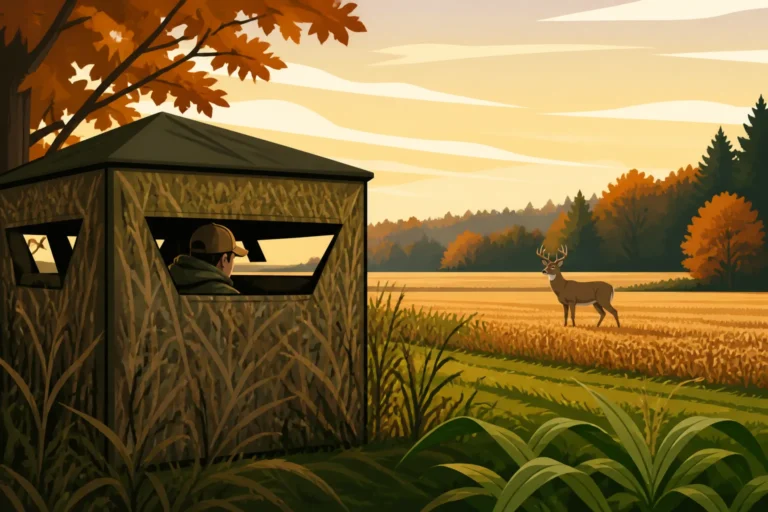
Let's be honest, standing in a treestand overlooking a dense woodlot or still-hunting through a cedar swamp, it can be incredibly difficult to judge exact distances. Our eyes play tricks on us, especially in low light or when deer seem to materialize out of nowhere. A lot of hunters, myself included, have stood there thinking a deer was 30 yards when it was actually 45, or vice-versa, leading to frustrating misses or, worse, poorly placed shots.
The Deceptive Nature of Wisconsin Terrain
Wisconsin's hunting grounds are a beautiful patchwork of environments, but they're rarely flat and open. Whether you're in the steep, timbered hills of the Driftless Area Deer Hunting in Wisconsin, the dense, regenerating aspen cuts of the north, or the thick river bottoms of central Wisconsin, the terrain constantly manipulates our perception of distance. A deer that steps out from behind a stand of oaks can look closer than it is because of the surrounding cover, or appear farther away if it's slightly downhill or partially obscured by brush.
Consider a scenario where you're perched in a stand, maybe one of your trusty Treestand Setups in Wisconsin Hardwoods, and a nice buck slips through the thick stuff. Your mind tells you "30 yards," but the slight incline and dense foliage between you and the deer could easily add another 10 or 15 yards. That's a huge difference for a bowhunter, potentially changing your pin choice, or for a shotgun hunter using slugs, affecting holdover. Even with a rifle, a precise range can help you avoid unnecessary bullet drop compensation or ensure your shot path is clear of small twigs that could deflect your projectile.
Beyond Bowhunting: Rifle and Shotgun Close Quarters
While rangefinders are often seen as essential for bowhunting, their utility extends far beyond. Many Wisconsin deer hunters opt for slug guns or muzzleloaders, especially in shotgun-only zones or during the dedicated Muzzleloader Deer Hunting in Wisconsin season. These firearms, while powerful, have distinct ballistic characteristics that make precise rangefinding critical, even at shorter distances. A slug dropping 6 inches at 75 yards versus 10 inches at 100 yards can mean the difference between a clean kill and a wounded animal.
Even if you're hunting with a rifle in areas where they're permitted, you'll often find yourself taking shots well under 100 yards in the thick cover of the Northern Forest or along farmland edges. A deer that bursts from a bedding area 60 yards away demands a quick, confident, and ethical shot. Knowing that exact 60-yard mark eliminates any doubt about where to hold, allowing you to focus purely on a steady aim and a clean trigger break. It's about respecting the animal and ensuring the quickest, most humane harvest possible, regardless of your chosen weapon.
Confidence in the Moment of Truth
Hunting often comes down to a few intense seconds when everything has to click. "Buck fever" is real, and it can cloud judgment. Removing even one variable – the question of exact distance – can significantly boost your confidence and improve your shot placement. When you've ranged that specific stump at 40 yards, that fallen log at 65, and that clump of pines at 80, and then a deer walks into one of those zones, you don't have to guess.
This confidence isn't just about making the shot; it's about making the right shot. It prevents that agonizing second-guessing and hesitation that can lead to missed opportunities or, worse, a rushed, poor shot. A basic, reliable rangefinder, even one that doesn't cost an arm and a leg, empowers you with certainty. It allows you to concentrate on your breathing, your form, and your target, giving you the best chance for a successful hunt.
Key Features to Look for in an Affordable Rangefinder (Under 100 Yards)
When you're looking for a rangefinder that won't break the bank but will perform reliably under 100 yards in Wisconsin, you need to focus on core functionality. Forget the extreme long-range capabilities you might never use; instead, prioritize the features that directly impact your success in typical hunting scenarios.
Prioritizing Basic Functionality Over Bells and Whistles
For close-range hunting, the most crucial feature is accurate, consistent ranging. You need a device that can quickly and reliably give you a reading on a deer-sized target at 20, 50, or 80 yards. Many budget-friendly rangefinders excel at this. Look for a model that offers a "scan mode," which allows you to continually range as you pan across an area. This is incredibly useful for a walking deer or for quickly checking multiple landmarks from your stand.
Angle compensation (ARC) is another feature that, while not strictly essential for every flatland hunt, becomes a huge advantage in Wisconsin's undulating terrain. If you're hunting in the steep ravines and ridge tops of the Hunting Wisconsin Coulees and Ridge Tops, a shot that looks like 40 yards horizontally might be significantly shorter in actual "shoot-able" distance if the deer is straight downhill. An ARC feature adjusts for this angle, giving you a truer ballistic distance, which is particularly vital for bowhunters. Some affordable rangefinders, including some models from brands like GoHunt, offer this basic angle-compensation, making them incredibly practical for varied Wisconsin landscapes. Don't be swayed by features like windage or advanced ballistic calculators if your primary need is accurate short-range distance.
Durability and Weather Resistance for Wisconsin's Elements
Wisconsin weather is notoriously unpredictable. A beautiful, crisp autumn morning can quickly turn into a drizzly, cold afternoon or even an early snow. Your gear needs to stand up to these conditions. When choosing an affordable rangefinder, look for models that are at least "water resistant." This means they can handle a light rain or a splash without conking out. "Waterproof" is even better, offering peace of mind if you accidentally drop it in a puddle or the bottom of a canoe.
Beyond water, consider the overall build quality. A rugged, rubber-armored housing will protect against inevitable bumps and drops when you're moving through brush or climbing into a stand. Buttons should be tactile and easy to operate, even when wearing gloves, a common necessity during the Hunting the Wisconsin Rut in November or late-season hunts. A rangefinder that feels flimsy or cheap is unlikely to survive a full season in the Wisconsin woods.
Readability and Ergonomics
A rangefinder is useless if you can't quickly and clearly see the reading. Look for a model with a clean, uncluttered display that shows the distance prominently. Some budget models offer a simple black LCD, which works fine in good light, while others might have a red or illuminated display, a definite advantage in low-light situations like dawn or dusk when deer are most active.
Ergonomics are also important. The device should fit comfortably in your hand, allowing for a steady hold. Compactness is a plus, as you'll want to carry it easily in a chest harness (like with your Binocular Harnesses Worth Wearing), a jacket pocket, or a small pouch. The quickness of acquisition – how fast the rangefinder locks onto a target and displays a reading – is also key. When that trophy buck steps out, you don't have seconds to spare fiddling with a slow device. A fast-acquiring unit ensures you get the information you need, right when you need it.
Top Considerations When Choosing Your Budget Rangefinder
Navigating the market for an affordable rangefinder can feel overwhelming, with countless options promising the moon. To make a smart choice for your Wisconsin hunting needs, it’s crucial to look beyond marketing hype and focus on practical realities.
Understanding the True "Under 100 Yards" Performance
Many rangefinders proudly display an advertised maximum range of 500, 800, or even 1,000 yards. However, these figures are almost always based on highly reflective targets, like a building or a large metal sign. The critical number for hunters is the range on a "deer-sized, non-reflective target." For a rangefinder under a certain price point, while it might claim 800 yards, its reliable range on a deer might be closer to 150-250 yards. This is perfectly acceptable and, in fact, ideal for most Wisconsin hunting, as you're primarily concerned with distances under 100 yards.
The key is consistency. You want a rangefinder that gives you the same reading repeatedly on the same target, especially at those crucial close distances. Don't just test it in your backyard once. Take it to a local park or out to your hunting land and range a variety of objects at different distances, noting the consistency of the readings. This real-world testing, focusing on short-range targets, will give you a much better understanding of its actual performance than any manufacturer's lofty claims.
Battery Life and Type
Nothing ruins a hunt faster than dead batteries, especially when you need your gear most. Most rangefinders use either common AAA batteries or specialized CR2 batteries. CR2s often offer longer life and better cold-weather performance but can be harder to find in a pinch and cost a bit more. AAAs are readily available and cheaper, but might drain faster in cold conditions.
Always carry a spare set of batteries, especially if you're planning a multi-day trip or hunting in frigid conditions like those experienced during Wisconsin Muzzleloader Season Tactics. Cold weather significantly reduces battery efficiency, so keeping spares in an inside pocket, close to your body heat, can help them last longer. Before heading out for Bowhunting Wisconsin's Long Archery Season or any other hunt, always check your battery level. A rangefinder like those offered by GoHunt typically uses common battery types, making replacements straightforward.
Field Testing Before the Season
Purchasing a rangefinder is just the first step; truly integrating it into your hunting routine requires practice. Before opening day, take your new rangefinder out to your hunting property or a similar environment. From your stand location or typical still-hunting routes, range various landmarks: trees, bushes, rocks, openings. Note down the distances. This pre-ranging helps you understand the layout of your hunting area and gives you instant reference points when game appears.
Practice ranging quickly. Try to pick up the rangefinder, get a reading, and put it back down smoothly. This speed becomes invaluable when a deer suddenly appears and you have only a few seconds to react. Test it in different lighting conditions – bright sun, cloudy days, and low light – to see how the display holds up. Familiarity with your rangefinder's quirks and capabilities under real-world conditions will make you a much more efficient and confident hunter.
Integrating Your Affordable Rangefinder into Your Wisconsin Hunt
Having a rangefinder is one thing, but knowing how to effectively use it during your hunt is another. For those critical shots under 100 yards in Wisconsin, a strategic approach will ensure you get the most out of your investment.
Strategic Ranging from Your Stand or Blind
Whether you're in a fixed stand or a ground blind, pre-ranging key landmarks is a crucial tactic. Before legal shooting hours begin, take a few minutes to range specific trees, stumps, trail intersections, or open lanes around your setup. Make a mental note – or even a physical one on a small card – of these distances. "That oak is 35, the fallen log is 50, the edge of the clearcut is 70." This preparation eliminates the need to fumble with your rangefinder when a deer is actually present, which often happens at the most inopportune times.
When a deer approaches, you can simply glance at the nearest pre-ranged landmark and know the exact distance without making any unnecessary movement or noise. This is especially helpful during the heightened activity of the rut, when deer might appear and disappear quickly. If a buck comes in responding to Rattling and Grunting in Wisconsin calls, you want to be focused on your shot, not on guessing distances.
Spot-and-Stalk or Still-Hunting Applications
For hunters who prefer to be more mobile, such as those Still-Hunting Wisconsin Cedar Swamps or engaging in spot-and-stalk tactics, the rangefinder becomes an active scouting and preparation tool. As you move through the woods, periodically range potential shooting lanes or areas where you expect deer to appear. This helps you understand the scale of the environment and build confidence in your shot distances.
If you spot a deer at a distance, quickly range it and the surrounding area before making your move. This information helps you plan your stalk, determine if the shot is ethical from your current position, or decide if you need to close the distance. For example, if you're approaching a cornfield during Hunting a Standing Cornfield in Farm Country, you can range the field edge to know your maximum effective range from where you intend to set up. A rangefinder from a reliable brand like GoHunt can be quickly drawn from a pocket or harness, acquire a target, and then be stowed away with minimal fuss, making it ideal for these active hunting styles.
Maximizing Value with Smart Usage
An affordable rangefinder is a powerful tool, but it's part of a larger system. Combine its accurate distance readings with other smart hunting practices. For instance, understanding Wind and Thermals in a Coulee helps you predict deer movement, and knowing the range allows you to capitalize on that knowledge. Similarly, if you've done your Scouting Wisconsin Public Land Before Season and identified a natural funnel, your rangefinder confirms the exact shooting lanes within that funnel.
Remember that while a rangefinder under 100 yards might not have all the bells and whistles of a premium model, its core function—providing accurate distance readings—is invaluable. Treat it with care, keep it dry, and make sure its batteries are fresh. By embracing its utility for the shorter distances common in Wisconsin hunting, you'll find that this seemingly basic piece of gear significantly elevates your precision, confidence, and ultimately, your success in the field.
| Feature | Budget-Friendly Rangefinder (Generally under $100) | Higher-End Rangefinder (Often $200+) |
|---|---|---|
| Max Advertised Range | Typically 500-800 yards (reflective targets) | 1000-1500+ yards (more reliable on non-reflective) |
| Effective Range (Deer) | Reliable to ~150-200 yards (excellent under 100) | Highly reliable to 400+ yards |
| Angle Compensation (ARC) | Often basic or absent | Usually standard, sometimes with advanced ballistic modes |
| Optical Clarity | Functional, sufficient for short ranges | Very good, brighter, clearer edge-to-edge |
| Scan Mode | Common, provides continuous readings | Standard, often faster and smoother updates |
| Durability/Weather | Durable plastic, basic water resistance | Rugged, advanced waterproofing (IPX-rated), shock-resistant |
| Display Type | Simple LCD, sometimes backlit | Advanced LCD or OLED, brighter reticles, customizable |
| Target Acquisition Speed | Good enough for most static targets, quick for close range | Near-instantaneous, very fast for moving targets |
| Battery Type | Often AAA or CR2 | Typically CR2 or proprietary rechargeable |
Disclaimer
This article is for general informational purposes only and does not constitute professional advice. Laws, prices and regulations vary by location and change over time. Consult a qualified professional for guidance on your specific situation.