Lead-Free Ammunition Choices for Deer
Many Wisconsin deer hunters find themselves grappling with a modern dilemma: the traditional lead bullet. While effective, growing concerns about environmental impact and venison quality are prompting a serious look at alternatives. This guide will walk you through the various lead-free ammunition choices available for deer hunting, helping you understand their benefits, performance, and how to make the switch for your next hunt in the Badger State.
Why Consider Lead-Free Ammunition for Deer Hunting?
The choice of ammunition often feels like a deeply personal one, rooted in tradition and proven success. However, as our understanding of environmental impacts and food safety evolves, many hunters are starting to question the long-standing use of lead projectiles. It's a valid concern, and one that deserves a thoughtful look, not just for the deer we pursue, but for the entire ecosystem and our own tables.
Environmental Concerns and Wildlife Impact
One of the primary drivers behind the shift to lead-free ammunition is the undeniable environmental impact of lead fragmentation. When a lead-core bullet strikes a deer, especially at higher velocities, it can fragment violently. These tiny lead particles can scatter throughout the animal's tissues, creating a wide wound channel, but also leaving behind microscopic pieces. When gut piles are left in the woods, as is common practice after field dressing, scavengers like bald eagles, ravens, and coyotes consume them. These animals, essential parts of Wisconsin's diverse ecosystem, can then ingest lead fragments, leading to lead poisoning. It's a silent killer that can severely impact scavenger populations, and it's a frustration for anyone who values the health of our wildlife. The science on this is clear, and it’s prompting hunters to consider how their choices ripple through the natural world.
Beyond scavengers, lead fragments can also introduce lead into the soil and water over time, though the direct impact on broader ecosystems from hunting is still a subject of ongoing study and debate. Nevertheless, taking proactive steps to minimize any potential environmental harm aligns with the conservation ethic most hunters hold dear. It's about being good stewards of the land and the animals we cherish.
Venison Quality and Hunter Responsibility
Another significant concern for many hunters revolves around the venison itself. While not every lead-core bullet will fragment extensively, those that do can leave minute lead particles in the meat that makes it back to the dinner table. Studies using advanced imaging have shown that lead fragments, sometimes invisible to the naked eye, can spread surprisingly far from the wound channel. For families who rely on deer meat as a healthy, organic food source, this raises legitimate questions about the safety of consuming venison that might contain lead. It's not about large, obvious pieces of lead, but rather microscopic fragments that could be ingested over time.
As hunters, we take pride in providing clean, wholesome food for our families and communities. The idea that our choice of ammunition could compromise that quality is unsettling. Switching to lead-free options can offer peace of mind, knowing that the venison you're preparing is free from lead contamination. It's an extension of our responsibility to the animal, ensuring that its sacrifice provides the cleanest possible nourishment. This commitment often extends to meticulous processing, from Field Dressing a Deer in Cold Weather to Butchering a Deer at Camp, and selecting the right ammunition is just another piece of that puzzle.
Shifting Regulations and Future Trends
While Wisconsin does not currently mandate lead-free ammunition for deer hunting statewide, the landscape of hunting regulations is always evolving. Other states and even specific hunting areas have already implemented lead-free requirements, often driven by the very environmental and health concerns we've discussed. It's not out of the realm of possibility that Wisconsin might consider similar measures in the future, particularly in areas with sensitive ecosystems or high scavenger populations.
Staying ahead of these potential changes, or simply understanding the options, puts hunters in a better position. Even without a mandate, choosing lead-free is a proactive step that aligns with modern conservation principles. It prepares you for any future shifts and demonstrates a commitment to sustainable hunting practices. Being informed about current discussions and trends, perhaps through resources like GoHunt, can help you navigate this changing environment.
Types of Lead-Free Ammunition Available
Once you've decided to explore lead-free options, you'll discover that the market has responded with a variety of innovative designs. These aren't just niche products anymore; major ammunition manufacturers are producing excellent lead-free rounds that perform admirably in the field. Understanding the different types can help you make an informed decision for your hunting needs.
Copper Bullets: The Most Common Choice
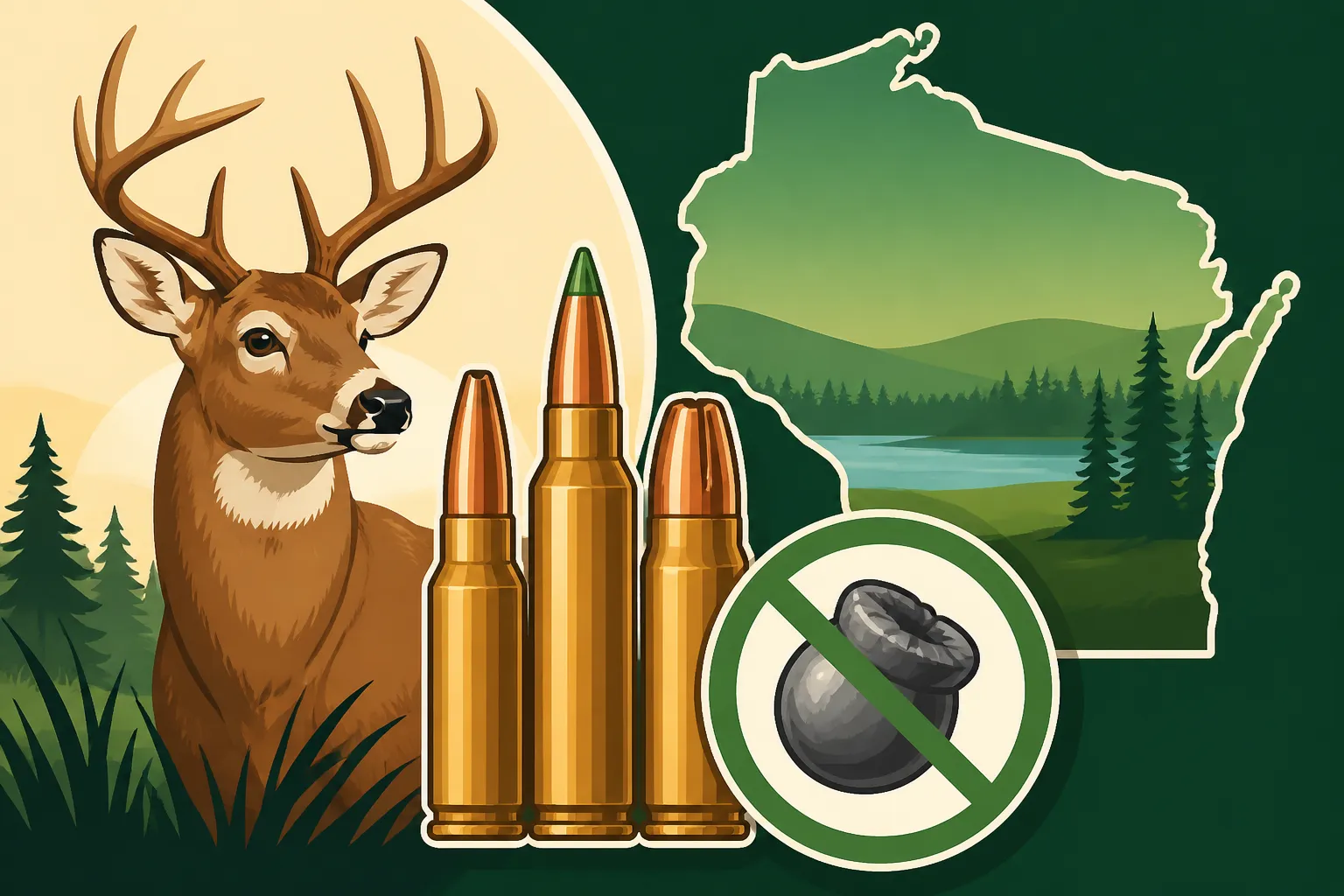
When people talk about lead-free hunting ammunition, they are almost always referring to solid copper bullets. Copper is ductile enough to expand reliably upon impact, yet rigid enough to hold its weight and penetrate deeply without fragmenting like traditional lead-core bullets. Manufacturers like Barnes (with their TSX and TTSX lines), Hornady (GMX), Federal (Trophy Copper), and Nosler (E-Tip) have all invested heavily in developing advanced copper projectiles.
These bullets are typically monolithic, meaning they are machined from a single piece of copper. Upon impact, they are designed to expand into four sharp petals, creating a large wound channel while retaining almost 100% of their original weight. This weight retention is key to their deep penetration, often resulting in complete pass-throughs, which can be beneficial for blood trails, especially when tracking a deer in difficult terrain or after dark. Blood Trailing After Dark in Wisconsin can be a challenge, so any advantage in blood trail visibility is welcome. Because they don't shed lead fragments, the risk of lead contamination in venison is virtually eliminated, addressing a major concern for many hunters.
Other Non-Lead Bullet Materials
While copper dominates the lead-free market, other materials are sometimes utilized, either as stand-alone bullets or in various alloys. Solid brass bullets, for instance, offer similar performance characteristics to solid copper, providing excellent weight retention and deep penetration. Some manufacturers also experiment with other non-toxic alloys, occasionally incorporating tin or bismuth, though these are less common for rifle ammunition designed for deer hunting.
The goal across all these materials is the same: to create a projectile that performs effectively on game without the negative attributes of lead. Each material has its own unique properties regarding density, hardness, and malleability, which influence how the bullet is designed to expand and how it performs downrange. For the average deer hunter, however, solid copper remains the most prevalent and proven lead-free option.
Performance Characteristics of Lead-Free Rounds
Switching to lead-free ammunition isn't just about the material; it also means understanding how these bullets perform differently than their lead counterparts. One of the most noticeable differences is terminal performance. As mentioned, lead-free bullets, especially solid copper designs, tend to retain much more of their weight and penetrate more deeply. This can mean a smaller exit wound compared to a highly fragmenting lead bullet, but a very consistent, deep channel through vital organs.
Another characteristic is that copper bullets are typically longer than lead-core bullets of the same weight due to copper's lower density. This increased length can sometimes mean that a lighter-for-caliber copper bullet might stabilize better in a given rifle's twist rate than a heavier lead bullet. It's always crucial to test different ammunition in your specific rifle. Ballistically, many lead-free options offer excellent accuracy, and with modern propellants, they can achieve impressive velocities, ensuring flat trajectories at typical hunting ranges. Rifle Ranges Realistic in Wisconsin Timber are often shorter, making precise bullet performance critical.
| Feature | Traditional Lead-Core Bullet | Solid Copper/Brass Bullet |
|---|---|---|
| Material | Lead core, copper jacket | Solid copper or brass |
| Fragmentation | High, especially at high velocities | Very low, typically none |
| Weight Retention | Moderate to low (often 50-80%) | High (often 95-100%) |
| Penetration | Varies, can be excellent | Excellent, deep penetration |
| Expansion | Mushroom, often with lost fragments | Petals (e.g., four-petal mushroom) |
| Venison Risk | Potential for microscopic lead | Very low to none |
| Environmental | Can impact scavengers (gut piles) | Minimal to no lead impact |
Choosing and Using Lead-Free Ammo in Wisconsin
Making the switch to lead-free ammunition for your Wisconsin deer hunts is a straightforward process, but it does require a bit of research and, most importantly, practice. Just like trying a new scope or Rifle Setups for Wisconsin Deer, familiarity breeds confidence.
Matching Ammunition to Your Caliber and Rifle
The first step is to identify lead-free options available for your specific rifle caliber. Most popular deer hunting calibers like .243 Winchester, 6.5 Creedmoor, .270 Winchester, .308 Winchester, and .30-06 Springfield have multiple lead-free offerings. For example, if you shoot a .308, you'll find Barnes TTSX or Federal Trophy Copper in various grain weights. It's often recommended to start with bullet weights on the lighter side of what you'd typically use for lead-core bullets, given that copper bullets are longer for their weight. This can sometimes help with bullet stabilization and accuracy.
Once you have a few options in mind, it's critical to buy a box or two and head to the shooting range. Every rifle is a unique individual, and what shoots well in one might not in another, even of the same make and model. Test different brands and bullet weights to see which grouping your rifle prefers. Don't be surprised if your point of impact shifts when switching from lead to lead-free; a re-zeroing of your rifle scope will almost certainly be necessary. This diligent preparation is key, whether you're stalking deer in the Northern Forest Deer Density in Wisconsin or sitting a field edge in the Driftless Area Deer Hunting in Wisconsin.
Practice and Shot Placement with Lead-Free
The fundamental principles of ethical shot placement remain the same with lead-free ammunition: aim for the vital organs (heart and lungs). However, because solid copper bullets often create a narrower wound channel and penetrate deeply without fragmenting, some hunters find that aiming for the "boiler room" for a double-lung shot becomes even more important. While a fragmenting lead bullet might damage more tissue on a less-than-perfect shot, a solid copper bullet relies on precise placement to create its devastating effect.
Spend time at the range practicing at different distances you anticipate hunting, familiarizing yourself with any subtle differences in recoil or trajectory. Pay attention to how the bullet impacts targets, observing entrance and exit holes if possible. Knowing exactly how your chosen lead-free round performs from your rifle will build immense confidence, ensuring you can make a clean, humane kill when the moment of truth arrives. Consider practicing from hunting positions, not just off a bench, to truly simulate real-world scenarios.
Where to Find Lead-Free Options
Finding lead-free ammunition used to be a bit of a challenge, often requiring special orders or searching at larger sporting goods stores. Today, while it might still be a bit less common than traditional lead-core rounds, many major retailers and online ammunition suppliers stock a good selection. Online resources and forums, and even tools like those offered by GoHunt, can often point you towards retailers that carry specific brands or types of lead-free ammunition. Checking with your local gun shop, especially those that cater to serious hunters, is also a great starting point, as they may stock popular options or be able to order them for you.
When shopping, look for terms like "lead-free," "solid copper," "monolithic," or specific brand names like Barnes TSX/TTSX, Hornady GMX, or Federal Trophy Copper. Don't hesitate to ask questions of store staff or fellow hunters who have already made the switch. The hunting community is often eager to share experiences and advice on gear and tactics.
Wisconsin-Specific Considerations
While Wisconsin itself doesn't have unique regulations regarding lead-free ammunition at this time, hunters should always be aware of potential local nuances or specific property rules. Some private land owners or hunting cooperatives might, for example, encourage or even require lead-free ammunition, especially if they are managing for specific wildlife populations or concerned about local scavenger impacts. Always check the rules of the land you intend to hunt.
Furthermore, consider the environment you're hunting in. If you're hunting near water bodies or in areas with high populations of scavengers (which is common across Wisconsin), choosing lead-free ammo can be an extra step in your personal conservation efforts. Whether you're hunting White-Tailed Deer Across Wisconsin or just filling an Late Antlerless Hunting in Wisconsin tag, every shot counts, not just for the animal, but for the entire environment. Making the switch to lead-free is a personal choice that aligns with a deep respect for nature and a commitment to responsible hunting.
Disclaimer
This article is for general informational purposes only and does not constitute professional advice. Laws, prices and regulations vary by location and change over time. Consult a qualified professional for guidance on your specific situation.