Hunting Wisconsin Coulees and Ridge Tops
Hunting the rugged, broken country of Wisconsin's Driftless Area can be one of the most rewarding—and challenging—experiences for a deer hunter. The deeply carved coulees, winding ridges, and patchwork of timber and agriculture create a complex puzzle, often leaving hunters frustrated by deer that seem to vanish into thin air or appear from impossible angles. This comprehensive guide is dedicated to unraveling the mysteries of this unique landscape, helping you understand how deer use coulees and ridge tops, and equipping you with the tactics needed to consistently find success in this demanding but deer-rich environment.
Understanding the Driftless Landscape
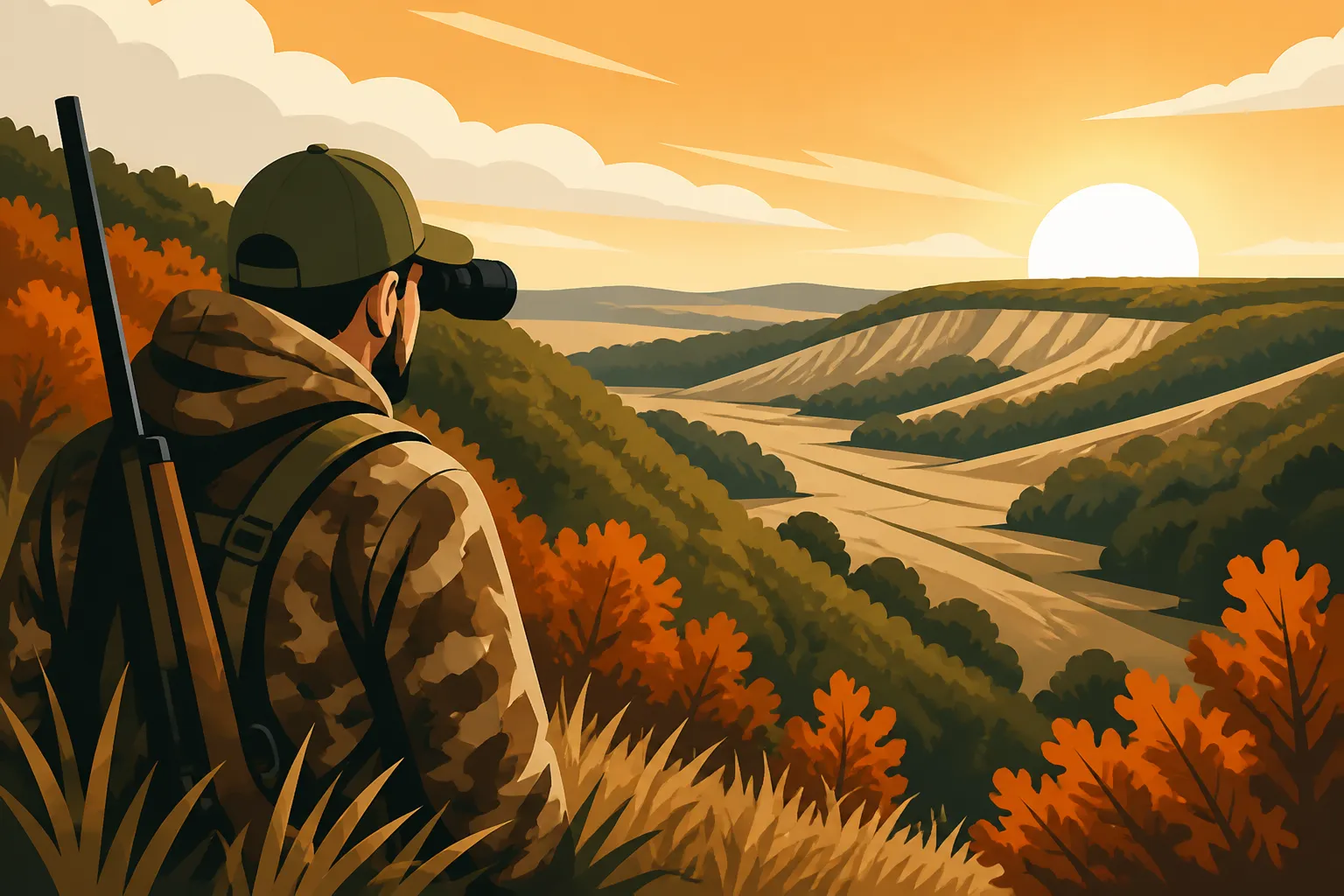
The Wisconsin Driftless Area, primarily in the southwestern part of the state, is unlike any other terrain in the Midwest. It’s a region that the last glaciers bypassed, leaving behind a stunning, unflattened landscape of steep hills, narrow valleys, and exposed rock formations. For hunters, this translates to incredibly diverse and often physically demanding ground, but also some of the best whitetail habitat anywhere.
The Anatomy of a Coulee System
A coulee, simply put, is a deep, narrow ravine or valley, often with steep, heavily wooded sides. Imagine massive trenches carved into the earth over millennia by water runoff, leading down to larger creek bottoms or rivers. These aren't gentle slopes; we're talking about inclines that can make your legs burn and your lungs ache, often covered in dense brush, oak timber, and sometimes surprising pockets of red cedar or pine.
Deer thrive in coulees because they offer everything a whitetail needs: extensive cover, diverse food sources, and protection from the elements and predators (including us hunters). The sheer complexity of these systems means deer can easily vanish into a tangle of draws, benches, and thickets. Each coulee often has smaller, finger-like draws branching off it, creating a spiderweb of terrain that can be overwhelming. Understanding how these features connect and where deer prefer to move within them is your first step to success. The bottom of a main coulee typically serves as a primary travel route, especially in periods of low hunting pressure or during the rut, connecting various smaller draws and ridges.
Reading Ridge Tops and Their Importance
While the coulees are dramatic, the ridge tops are equally crucial. These are the flatter, sometimes rolling expanses of land crowning the steep hills. They vary wildly from open agricultural fields (corn, soybeans, alfalfa) to mature hardwood forests, dense CRP (Conservation Reserve Program) grasses, or even scattered patches of timber. Ridge tops often act as key feeding areas, staging grounds, and primary travel corridors for deer moving between different parts of their home range.
Deer frequently use the edges where the timber of the ridge top meets the steep drop-off into a coulee, as well as distinct "ridge points" that jut out into the coulee itself. These points often offer elevated vantage points for deer and can be natural bottlenecks. Learning to read these points, identifying subtle dips or saddles, and understanding how deer navigate them is paramount. For instance, a saddle on a ridge top might look insignificant on a map, but it could be a major crossing point for deer moving between two bedding areas or a bedding area and a food source. Scouting for rub lines and scrape lines along these travel routes, especially on the top edges, can be incredibly telling. For more insights on this, check out our piece on Reading a Ridge Point for Deer Movement.
Deer Movement Patterns in Coulees
The Driftless Area’s topography directly dictates how deer move. Unlike flatter terrain where deer might move more randomly, in coulees, their movements are often funneled and predictable once you understand the lay of the land.
Bedding Areas on Side Hills and Points
Deer in coulee country are masters of using topography to their advantage for bedding. They typically prefer to bed on the side hills of a coulee, often one-third to two-thirds of the way down from the top. These locations offer several benefits:
- Thermal Advantage: South-facing slopes can provide warmth on cold days, while north-facing slopes offer shade and coolness when temperatures rise.
- Wind Advantage: Deer often bed just below the lip of a ridge, allowing them to detect scent coming over the top from behind them, while visually monitoring the coulee below. This gives them a 270-degree sensory advantage.
- Escape Routes: Bedding on a side hill allows a deer to quickly drop into the coulee bottom or climb to the ridge top to escape danger, depending on the direction of the threat.
Ridge points that extend into a coulee are also prime bedding spots, particularly for mature bucks. These points provide excellent visibility down into multiple draws and control scent coming from several directions. They can be incredibly difficult to approach undetected, which is precisely why big bucks favor them. Look for thick cover, downed trees, or dense brush patches on these side hills and points, as they provide the security deer crave.
Travel Corridors and Funnels
Deer are creatures of efficiency, and the coulee country provides natural highways and bottlenecks.
- Coulee Bottoms: These often serve as primary travel corridors, especially when there's a creek or a well-worn trail. Deer use them to move relatively undetected between feeding areas on ridge tops and bedding areas on side hills. However, hunting directly in coulee bottoms can be tricky due to swirling winds and the potential to spook deer moving above you.
- Benches: These are subtle, relatively flat ledges or terraces that break the steepness of a coulee side. They might not be obvious on a map but are often well-used travel routes for deer avoiding the steepest grades or seeking thermal cover. Finding a good bench can be like discovering a secret highway.
- Saddles: A saddle is a low point along a ridge line, often connecting two higher points or providing a natural crossing between two coulees. Deer instinctively use these lower points to cross terrain with minimal effort. They are classic pinch points and can be phenomenal stand locations, especially during the rut when bucks are cruising for does.
- Funnels: Beyond saddles, any natural constriction in the landscape, such as a narrow strip of timber between two fields or a tight bend in a coulee, can act as a funnel. These areas force deer into predictable paths, making them high-percentage spots for a stand. Identifying these funnels on topographical maps and then verifying them on the ground is a critical scouting step.
Food Sources in the Driftless
The diverse habitat of the Driftless Area provides a smorgasbord for deer throughout the year.
- Acorns: Hardwood ridges, particularly those dominated by oak, are absolute magnets for deer in the fall. White oak acorns are preferred, but red oaks are also heavily utilized, especially later in the season. A strong acorn crop can sometimes pull deer away from agricultural fields, so always factor this into your scouting.
- Agricultural Fields: The ridge tops often feature sprawling fields of corn, soybeans, and alfalfa. These are primary feeding destinations, particularly during the late season and throughout the fall. Deer will bed in nearby timbered coulees and travel up to these fields under the cover of darkness. Hunting the edges of these fields, or intercepting deer as they move from bedding to feeding, is a classic and effective tactic.
- Browse: Beyond specific crops, the dense underbrush and young growth within the coulees offer consistent browse. Deer constantly nibble on twigs, leaves, and forbs, especially in areas where logging has occurred, promoting fresh new growth. Identifying heavily browsed areas can help confirm deer presence and patterns.
Strategic Scouting and Entry/Exit
Hunting coulees and ridge tops effectively starts long before you ever step foot in the woods with your bow or rifle. It begins with meticulous scouting and planning.
Pre-Season Reconnaissance with Technology
Before you even lace up your boots, modern technology can be your best friend. Start by studying aerial maps and topographical maps from platforms like GoHunt or OnX Hunt. These tools allow you to identify key features from the comfort of your home.
- Identify Potential Bedding Areas: Look for south-facing slopes, thick timber patches, and prominent ridge points that would offer deer a bedding advantage.
- Pinpoint Travel Corridors: Trace creek bottoms, identify benches (sometimes visible as subtle contour lines), and mark saddles along ridge lines. Note any narrow strips of timber or natural funnels that stand out.
- Locate Food Sources: Overlay public land boundaries with satellite imagery to find agricultural fields or oak ridges. Many apps now provide specific data layers, and our guide on onX Layers for Wisconsin Land Status can help you maximize these digital tools.
Once you have a handful of promising spots marked, it's time for boots on the ground. Walk these areas, ideally in the off-season when scent disturbance is minimal. Look for old rub lines, scrape lines, well-worn deer trails, and confirmed bedding areas (day beds). Pay attention to prevailing winds and how the topography might influence thermals. This ground-truthing is invaluable for confirming what you see on the map and understanding the scale and steepness of the terrain.
Stealthy Access and Departure Routes
The single biggest mistake hunters make in coulee country is blowing out deer on their way to or from a stand. Deer are incredibly sensitive to pressure, especially in these confined environments.
- Use Topography for Cover: Always try to use the terrain to your advantage. Walk in coulee bottoms where you're out of sight of deer on the ridge tops, or walk just below a ridge crest to keep a low profile. Avoid skylining yourself on ridge lines.
- Mind the Wind: This is non-negotiable. Plan your entry and exit routes based on the prevailing wind direction to avoid blowing your scent into potential bedding or feeding areas. This might mean taking a much longer, more circuitous route, but it's worth it. Our article on Wind and Thermals in a Coulee offers excellent insights into how air currents behave in this terrain.
- Walk Quietly: The dry leaves and steep slopes can make quiet movement challenging. Choose routes with softer ground when possible. Move slowly and deliberately.
- Avoid Key Deer Areas: Your entry and exit routes should ideally avoid primary travel corridors, bedding areas, or known feeding zones during the times deer would be active there. This often means walking parallel to these areas, staying just outside the "kill zone." Developing solid Entry Routes on Steep Driftless Ground will dramatically increase your success.
Effective Hunting Tactics for Coulees and Ridge Tops
Once you've scouted, mapped, and planned your approach, it's time to consider the actual hunting tactics that will work best in this unique environment.
Treestand Setups and Ground Blinds
Choosing the right elevated position is paramount.
- Ridge Top Edge Stands: These are classic locations, especially overlooking agricultural fields. Set your stand just inside the timber edge, providing cover, and position it to catch deer moving from bedding cover in the coulee up to the fields at dusk, or vice-versa at dawn. Pay close attention to wind, as a slight shift can put your scent right into the field.
- Side Hill Stands/Benches: Placing a stand on a bench or a strategic side hill offers an excellent vantage point over a coulee. Look for benches that have fresh deer sign, indicating regular travel. These stands need careful consideration of thermals, which can rise in the morning and fall in the evening. A stand placed too high might have your scent falling into the coulee, while one too low might have it rising. You might find our guide on Treestand Setups in Wisconsin Hardwoods helpful for general tree stand advice.
- Saddle Stands: As mentioned, saddles are natural funnels. A stand in a saddle should offer a clear view of both sides of the ridge and the approaches along the ridge line. These are often best during the rut, when bucks are actively cruising.
- Ground Blinds: While treestands are popular, ground blinds can be incredibly effective in coulees, especially for bowhunters. They allow you to set up quickly in dense cover, on a steep slope, or in an area with no suitable trees for a stand. Brush in your blind meticulously and place it along a well-used trail or near a food source. For more tips on this, refer to Using a Ground Blind on Wisconsin Public Land. The key is to break up its outline and let deer get accustomed to it if possible.
Still-Hunting the Terrain
Still-hunting is perhaps the most physically demanding but potentially most rewarding tactic in coulee country. This involves moving incredibly slowly and deliberately through the woods, stopping frequently to scan, listen, and glass for deer.
- Slow Movement is Key: You should spend far more time standing still and observing than you do actually walking. Take a few steps, then stop and look for any movement, a flick of an ear, a horizontal line in a vertical world.
- Use the Wind: Always still-hunt into or across the wind. This keeps your scent from preceding you and alerting deer.
- Navigate the Contours: When moving through a coulee, consider walking along a bench or just below a ridge top, rather than directly in the bottom. This allows you to look down into the coulee or up towards the ridge, increasing your visibility.
- Focus on Thick Cover: Often, deer will bed in the thickest, nastiest cover on a side hill. Still-hunting these areas slowly can jump a bedded deer or allow you to spot one before it busts. The principles discussed in Still-Hunting Wisconsin Cedar Swamps (focusing on the slow, deliberate movement) can be adapted here, even though the habitat differs.
- Timing: Still-hunting can be very effective mid-day, when deer might be moving between bedding areas or stretching their legs, or during a light rain when your noise is muffled.
Understanding Wind and Thermals
This cannot be stressed enough: wind and thermals are everything in coulee country. The complex topography creates swirling air currents that can quickly betray your presence.
- Thermals are Predictable: In the morning, as the sun warms the earth, air rises up the coulees. In the evening, as the air cools, it falls down the coulees into the bottoms. This is a consistent pattern, though local topography can create nuances.
- Plan Your Approach and Stand: Always consider how thermals will affect your scent at different times of day. For a morning hunt, if you’re setting up on a side hill overlooking a coulee, you’ll want your stand high enough so your scent rises over the deer. In the evening, you might need to be lower to keep your scent from falling into the coulee below you.
- Micro-Thermals: Be aware that even slight changes in terrain, such as a small cut or a change in vegetation, can create localized micro-thermals that cause your scent to swirl unexpectedly. Carry a wind-checker puff bottle and use it constantly.
- The "Crosswind" Myth: While a true crosswind is ideal, in coulees, it's often more about managing a rising or falling thermal combined with a directional wind. Sometimes, positioning yourself where the rising or falling thermal will carry your scent away from the primary deer movement is the best you can do. Our article specifically on Wind and Thermals in a Coulee delves much deeper into this vital topic.
Specific Challenges and Solutions
Hunting the Driftless Area isn't always easy. The terrain itself presents significant hurdles, and the popularity of the region brings its own set of challenges.
Navigating Steep Terrain and Physical Demands
Let's be honest, hunting coulees is a workout. The hills are steep, footing can be treacherous with loose rock and leaves, and getting in and out of remote spots will test your endurance.
- Physical Preparation: Don't underestimate the physical demands. Start conditioning well before the season. Hike with your pack, climb hills, and build stamina.
- Appropriate Gear: Invest in good quality hiking boots with excellent ankle support and aggressive tread. A comfortable, well-fitting backpack is essential for carrying your gear, water, and eventually, a deer. Trekking poles can be a lifesaver for stability and reducing strain on your knees, especially when descending steep slopes.
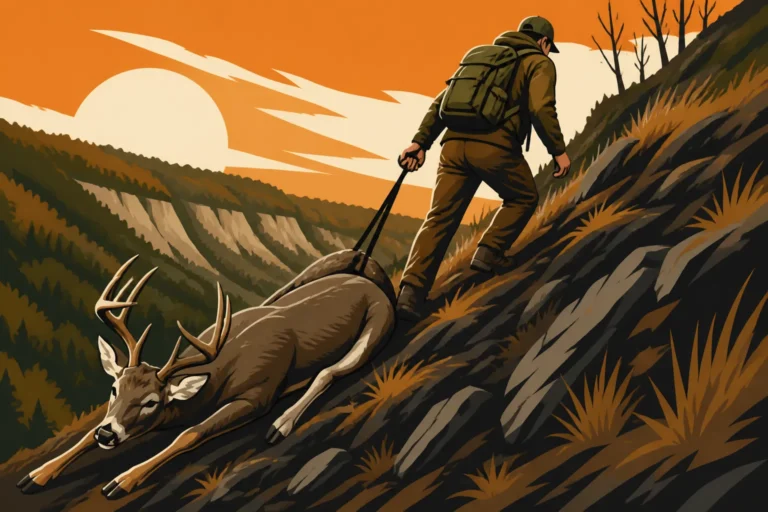
- Dragging a Deer: This is where the true test comes in. Recovering a deer from the bottom of a steep coulee can be one of the most brutal tasks in hunting. Consider boning out a deer on site, especially if you're alone or a long way from a road. A good game cart or deer sled can help on less extreme terrain, but for true coulee bottoms, sheer muscle power and teamwork are often required. We have a dedicated article on Dragging a Deer Up a Coulee Wall that offers practical advice for this very situation. Always carry strong rope, and don't be afraid to call for help if you're successful deep in a coulee.
Dealing with Hunting Pressure
The Driftless Area, especially counties like Buffalo and Trempealeau, are renowned for growing monster bucks. This means they draw significant hunting pressure, particularly on public lands.
- Hunt Remote Areas: The further you're willing to walk and climb, the less pressure you'll encounter. Look at maps for isolated pockets of public land, or areas that are difficult to access from roads. Many hunters simply won't put in the effort. Our piece on Hunting Pressure on Wisconsin Public Land elaborates on this.
- Utilize Mid-Week and Mid-Day: If hunting public land, consider hunting during the week rather than on weekends, and don't be afraid to hunt during the middle of the day. Many hunters clear out for lunch, and deer often move discreetly during these times, especially after being pressured.
- Find Overlooked Spots: Deer will adapt to pressure by seeking refuge in the nastiest, thickest, most overlooked spots. These might be small, isolated patches of cover, deep within a steep coulee, or areas that seem too small or too inconvenient for other hunters. Being willing to explore these spots can yield incredible results. Sometimes, it's about Finding Ground Others Walk Past – literally, areas adjacent to popular spots that hunters walk through or past to get to their "favorite" stand. Use GoHunt's mapping features to zoom in and find these small, neglected corners.
- Knocking on Doors: Private land access can significantly reduce pressure. Don't be shy about asking landowners for permission. A polite, well-prepared approach can often open up new opportunities.
| Hunting Tactic | Best Use Case in Coulees/Ridges | Advantages | Disadvantages |
|---|---|---|---|
| Treestand (Fixed) | Overlooking known funnels, field edges, or active scrape lines. | Excellent vantage point, scent dissipation (if wind/thermals cooperate). | Limited mobility, difficult setup in steep terrain, wind/thermal challenges. |
| Treestand (Mobile) | Adapting to changing conditions or exploring new areas quickly. | Highly adaptable, allows for quick adjustments based on fresh sign. | Requires more experience, physically demanding to move, may be noisy. |
| Ground Blind | Dense cover on a side hill, field edge for bowhunting, rain cover. | Stealthy setup, can hunt areas without suitable trees, good concealment. | Limited visibility, scent closer to the ground, requires careful brushing in. |
| Still-Hunting | Covering ground mid-day, following fresh tracks, scouting while hunting. | Ultimate adaptability, allows covering vast areas, exciting one-on-one encounters. | Physically demanding, high potential to spook deer, requires extreme patience. |
Post-Shot Strategy and Recovery
The shot is only half the battle, and in the Driftless, recovering a deer can be as challenging as taking it.
Trailing and Recovery in Steep Country
A well-placed shot is always crucial, but it's even more vital in steep, broken terrain. A marginal hit can mean a monumental tracking job.
- Wait It Out: After the shot, give the deer ample time. For a gut shot, that might mean 6-8 hours or even overnight, especially in cooler weather. For a heart/lung shot, 30-60 minutes is usually sufficient. Patience is your greatest ally here.
- Mark the Spot: Always mark the exact spot of the shot and the last place you saw the deer. Use flagging tape (remove it after), a piece of toilet paper, or a bright marker from your pack.
- Grid Search: Once you start trailing, move slowly. Look for blood, broken branches, disturbed leaves, and tracks. If the blood trail peters out, do a grid search in the direction the deer was last seen. Mark your last known blood sign and expand your search pattern in ever-widening circles.
- Enlist Help: Don't be afraid to call a friend or family member for help. More eyes on the ground can make a huge difference, especially in dense cover. If the trail is truly cold, consider calling a tracking dog service; these can be invaluable in tough terrain.
Meat Care in Remote Coulees
Once you've recovered your deer, the work isn't over. In steep, remote coulees, getting the animal out and ensuring the meat is properly cared for can be a logistical nightmare, especially during warmer early season hunts.
- Field Dressing ASAP: Get the deer field-dressed as quickly as possible. Removing the entrails helps the carcass cool down immediately, preventing spoilage.
- Skinning and Quartering: For deer harvested deep in a coulee or far from the road, consider skinning and quartering the animal on site. This significantly reduces the weight you have to carry out. A sturdy hunting knife and a bone saw (or the gutless method if you're proficient) are essential.
- Game Bags: Carry high-quality game bags to protect the quartered meat from dirt, insects, and debris. They allow air circulation, which is crucial for cooling.
- Cooling the Meat: If temperatures are warm, hang the quarters in the shade, if possible, allowing them to cool before packing them out. Using ice packs inside coolers for transport is also a good idea.
- Plan Your Extraction: Even if you quarter, you'll still have multiple heavy loads to carry up and out of the coulee. Have a plan, communicate with your hunting partners, and be realistic about the effort involved.
Hunting Wisconsin's coulees and ridge tops is truly an adventure. It demands respect for the land, physical exertion, and a keen understanding of deer behavior. But for those willing to put in the work, the rewards—the breathtaking views, the challenging pursuit, and the satisfaction of a hard-earned harvest—are immeasurable.
Disclaimer
Hunting is an inherently dangerous activity. Always prioritize safety, follow all Wisconsin Department of Natural Resources regulations, and obtain proper licenses and permits. The information provided in this guide is for informational purposes only and should not replace professional guidance or personal experience. Be aware of your surroundings, hunt ethically, and respect private property.