Treestand Setups in Wisconsin Hardwoods
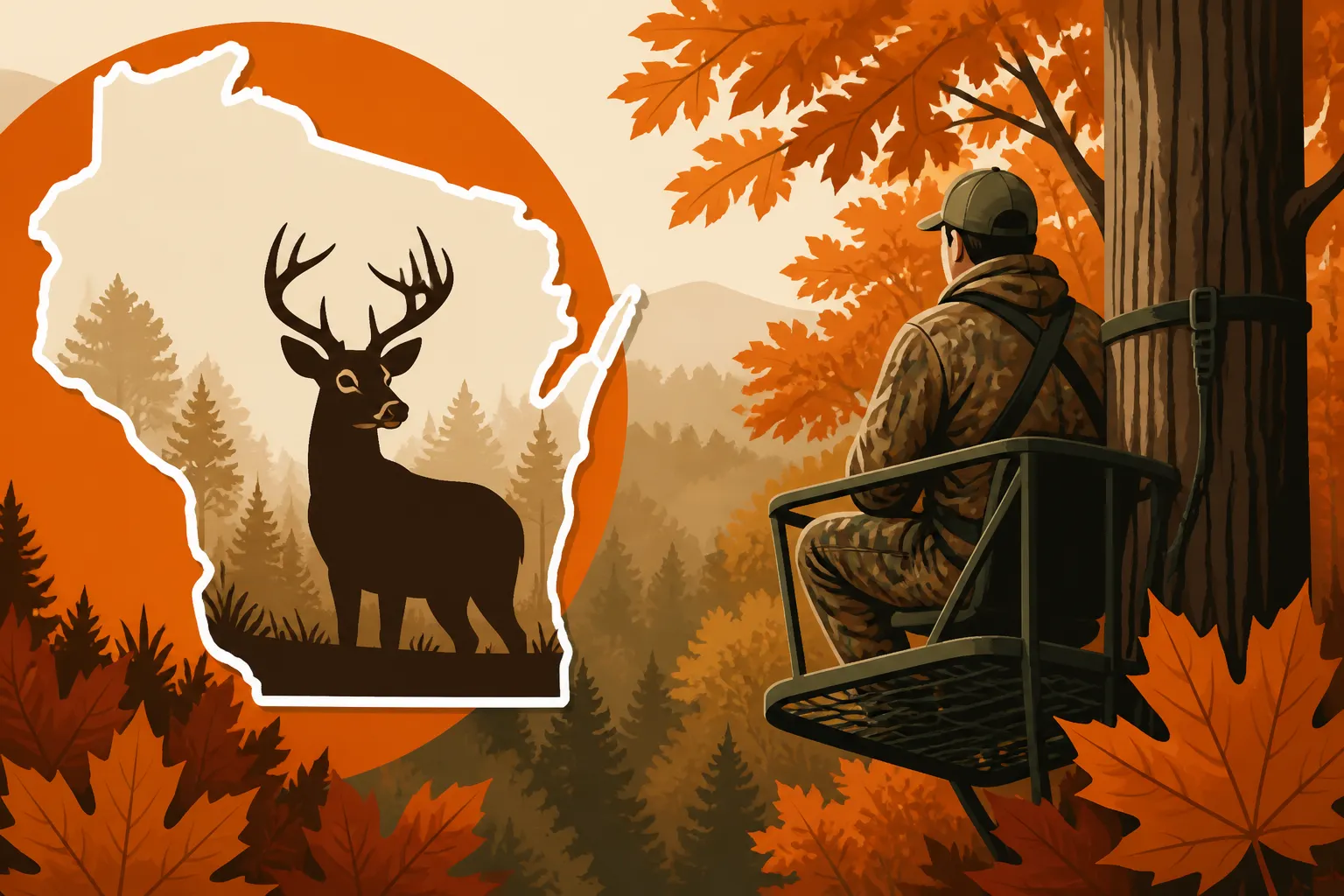
There's nothing quite like the challenge and reward of chasing whitetails in Wisconsin's sprawling hardwood forests. But let's be honest, setting up a treestand in these majestic, often dense, environments can be incredibly daunting. This guide will walk you through everything you need to know, from understanding deer behavior in hardwoods to executing the perfect, safe stand setup that puts you in the prime position for success.
Understanding Wisconsin Hardwoods for Deer Hunting
Wisconsin's hardwood forests are a hunter's paradise, but they present a unique set of challenges and opportunities. Unlike the thick conifer swamps or dense brush of the northern forest, hardwoods offer more open sightlines in some areas but can also be incredibly uniform, making it tough to pinpoint deer. Success here hinges on truly understanding the subtle nuances of these diverse habitats.
Identifying Key Habitat Features
When you're walking through a Wisconsin hardwood forest, especially during the fall, your eyes should be scanning for more than just a big buck. You're looking for the foundational elements that dictate deer movement and survival.
Mature Oaks and Acorn Production
The mighty oak, whether it's a massive white oak dropping sweet acorns early or a red oak holding its nuts later into the season, is often the undisputed king of food sources in a hardwood forest. Deer absolutely key in on acorns when they're available, often abandoning other food plots or browse in favor of this highly nutritious meal. Your scouting efforts should heavily focus on identifying mature oak groves, especially those that are actively producing. A mast crop failure can drastically alter deer patterns, but when the acorns are dropping, those areas become immediate hot spots. Look for fresh droppings, disturbed leaf litter, and even deer tracks converging on a specific area beneath the oaks. The best setups are often just downwind of these feeding zones, catching deer as they approach or leave.
Ridge Systems and Terrain Breaks
Hardwood forests are often characterized by rolling hills, steep ridges, and deep valleys, particularly in areas like the Driftless Area. These topographical features aren't just scenic; they are critical highways and hideouts for deer. Ridges offer elevated travel routes, thermal advantages, and strategic bedding locations. Deer will often travel just below the crest of a ridge, using the cover to remain undetected while still having a vantage point. Look for saddles, benches, and points along these ridge systems. A saddle, for instance, is a natural funnel, compressing deer movement between two higher points. A bench, a flat spot on a steep hillside, can serve as a prime bedding area or a staging point before deer move to feed. Even subtle terrain breaks, like a small ditch or a slight elevation change, can be enough to channel deer movement in predictable ways. Learning to read these contours on a topographical map, perhaps even with advanced tools like those offered by GoHunt, is paramount to understanding where deer will travel.
How Deer Use Hardwood Forests
Deer aren't just randomly wandering through the woods; their movements are dictated by a hierarchy of needs: food, water, cover, and safety. Understanding how they utilize the different features of a hardwood forest to meet these needs is fundamental to effective treestand placement.
Bedding Areas and Thermal Cover
In hardwoods, bedding areas can be less obvious than in dense conifer swamps or thickets, but they are equally important. Deer will often bed on ridge points where they have a commanding view downwind and can catch thermals rising up the hill. They might also choose dense pockets of younger timber, overgrown clearcuts, or areas with thick underbrush that provides visual security, even within a largely mature hardwood stand. During cold weather, south-facing slopes are preferred for their warmth, while in warmer times, north-facing slopes or thick shaded areas offer relief. Understanding these bedding preferences, often influenced by wind and sun exposure, allows you to predict where deer are resting and, more importantly, how they will move when leaving these areas to feed or seek water. Remember, your entry and exit to a stand near a bedding area must be meticulously planned to avoid detection.
Travel Corridors and Feeding Patterns
Deer in hardwood forests will establish distinct travel corridors between their bedding, feeding, and watering sites. These might be well-worn trails, or they could be subtle deer runs along the edge of a field, a fence line, or following a creek bottom. During the rut, these travel patterns become even more pronounced as bucks cruise for does, often following the path of least resistance or checking historical scrape lines. As the season progresses, food sources change. Early season might see deer hitting clover plots or secluded alfalfa fields, transitioning to acorns in the early fall, then perhaps moving to standing corn or browse in the late season. Observing these shifting patterns is crucial. You might need to move your stands to follow the available food. For example, if you're Hunting After an Acorn Failure, deer patterns will be dramatically different than when the oak crop is booming.
Scouting Strategies for Hardwood Treestand Success
You can have the fanciest treestand in the world, but if it's in the wrong spot, it's just a glorified seat in a tree. Effective scouting, both before and during the season, is the real key to consistently tagging deer in Wisconsin's hardwoods. It's about becoming a detective, piecing together the subtle clues the deer leave behind.
Pre-Season Reconnaissance
Long before hunting season ever opens, the groundwork for success should be laid. Pre-season scouting, done quietly and methodically, allows you to gather vital information without bumping deer when it matters most.
Map Scouting with Tools like GoHunt
Before your boots ever hit the dirt, open up your maps. Topographical maps are your best friend in hardwood country, revealing the ridge systems, saddles, and creek bottoms that will funnel deer. Aerial imagery provides context, showing mature timber, younger regeneration, field edges, and potential food sources. Websites and apps like GoHunt offer incredible layers, from property boundaries (essential for Hunting Small Private Tracts in Wisconsin) to public land boundaries, allowing you to identify access points, potential pinch points, and areas of high deer activity. Look for clusters of mature oaks, especially those on southern slopes for winter bedding or near water sources. Pay attention to how different habitat types intersect—where a hardwood ridge meets a marsh, for example, often creates a natural travel corridor. Mark potential stand sites, entry and exit routes, and areas you want to investigate further on the ground.
Boots-on-the-Ground Sign Reading
Once you've done your digital homework, it's time to hit the woods. This isn't about aimless wandering; it's about confirming your map theories and finding fresh, indisputable deer sign. Look for heavily used trails, especially those connecting distinct habitat features like a bedding ridge to an oak flat. Find rubs, particularly those on saplings or small trees, indicating where bucks have marked their territory. Examine historical scrape lines; even if they're not active in summer, bucks often re-use these spots during the rut. Pay attention to the understory: are there browse lines? Are native forbs being eaten? Fresh droppings, tracks, and even shed antlers (if you're scouting in late winter/early spring) all tell a story. This is also your chance to assess the tree canopy – are there suitable trees for a treestand, and do they offer good cover and shooting lanes?
Locating Primary Deer Sign
As the season draws closer, or even during the early days of archery, your scouting should become even more focused on finding current, active sign that indicates where deer are now.
Rub Lines and Scrape Zones
When bucks start rubbing trees and creating scrapes, they are communicating. Rub lines often parallel travel corridors, showing where bucks are moving through their territory. Heavily rubbed trees, especially bigger ones, indicate a mature buck is in the area. Scrapes are often found on field edges, along logging roads, or in areas where deer funnel naturally. These "sign posts" are vital intelligence. During the pre-rut and peak rut, bucks will frequently visit these scrape lines, making them prime locations for a treestand. However, remember that bucks don't always hit every scrape every night. Positioning yourself in a funnel leading to a scrape line, or downwind of a cluster of active scrapes, can be more productive than sitting directly over a single scrape. Consider the timing too; early season scrapes might not be as active as those found when the Hunting the Peak Rut Week in Wisconsin arrives.
Trails and Funnels
Well-worn deer trails are obvious indicators of deer movement. But not all trails are created equal. You're looking for primary travel routes that connect bedding to feeding, or main ridge systems to creek bottoms. Funnels are natural or man-made features that constrict deer movement into a smaller area. This could be a narrow strip of timber between two open fields, a saddle in a ridge, a creek crossing, or even a fence line with only a few easy crossing points. These pinch points are where you have the highest probability of encountering deer, especially mature bucks, as they are forced to pass through a predictable spot. When Reading a Ridge Point for Deer Movement, you might find trails converging where the ridge narrows. Set your stand up overlooking these funnels, paying careful attention to prevailing winds and your entry/exit routes to minimize detection.
Choosing the Right Treestand for Hardwood Hunting
The right treestand is more than just a place to sit; it's an extension of your hunting strategy, a tool that helps you blend into the canopy and get above a deer's natural line of sight. Given the varied nature of Wisconsin's hardwoods, having the right type of stand is crucial.
Different Stand Types and Their Suitability
Each type of treestand has its advantages and disadvantages, and the "best" one often depends on the specific hunting scenario, the type of tree, and your personal hunting style.
Climber Stands
Climber stands are self-contained units that allow you to "climb" a tree by alternately pushing and pulling the bottom and top sections. They are excellent for hunters who value mobility and want the flexibility to move their stand frequently based on current deer sign. In hardwoods, where mature, straight-trunked trees are common, climbers can be incredibly effective. They're quick to set up and take down, making them ideal for run-and-gun tactics or hunting public land where you can't leave a stand unattended. However, climbers require a tree with a relatively straight trunk, free of branches for the climbing path, which can limit your options in certain areas. They also typically don't offer as much platform space as some other stands.
Hang-on Stands
Hang-on stands, also known as fixed-position stands, consist of a platform that straps to a tree, often requiring separate climbing sticks or steps to access. These stands offer greater versatility in tree selection, as they can be hung in trees with irregular trunks, leaning trees, or those with lower branches. This makes them superb for targeting specific ambush points, like a bottleneck, a specific oak, or a strategic point in a coulee. They can be left in place for extended periods (where legal), allowing for quicker, quieter access on subsequent hunts. The downside is that setting them up initially requires more time and effort, especially if you're hanging multiple sets. For someone who likes to hunt the same high-traffic areas year after year, or for a hunt during Wisconsin's Nine-Day Gun Deer Season where consistency is key, a hang-on stand can be a perfect choice.
Saddle Hunting
Saddle hunting has surged in popularity for its ultralight, mobile, and minimalist approach. Instead of a large platform, you sit in a comfortable harness-like saddle that attaches to the tree, allowing you to pivot 360 degrees around the trunk. This offers unmatched concealment as you are literally "one with the tree" and can use the trunk as cover. Saddle hunters typically use lightweight climbing sticks or ropes to ascend. The learning curve for saddle hunting can be steeper than for traditional stands, but once mastered, it offers incredible flexibility and allows access to trees that other stands simply can't accommodate. For stealthy hunters who want to penetrate deep into thick hardwood cover or access difficult terrain, saddle hunting is a game-changer.
Essential Treestand Accessories
Regardless of your chosen stand type, a few key accessories are non-negotiable for safety and effectiveness.
Climbing Sticks and Steps
For hang-on stands and saddle hunting, climbing sticks or screw-in steps are your ladders to the canopy. Climbing sticks are modular sections that attach to the tree, forming a sturdy ascent path. They are generally preferred for public land hunting or when you don't want to damage trees. Screw-in steps offer a more permanent solution for private land, but care must be taken to minimize tree damage. The number and type of sticks/steps you choose will depend on the height you want to reach and the tree's condition. Always ensure they are securely fastened and tested before putting your full weight on them. The easier and quieter your ascent, the less likely you are to spook game.
Safety Harnesses and Lifelines
This cannot be stressed enough: always wear a full-body safety harness, and always be connected to the tree from the moment your feet leave the ground until they return. Treestand accidents are a leading cause of hunting injuries, and almost all are preventable with proper safety equipment. A quality safety harness should be comfortable, allow for full range of motion, and be regularly inspected for wear and tear. A lifeline, which is a rope that goes from the base of the tree up to your stand level, allows you to remain tethered as you ascend and descend. Never climb without one. The slight inconvenience of putting it on is a small price to pay for your life. You can find more detailed information on Safety Harnesses and Lifelines for a comprehensive understanding.
| Treestand Type | Pros | Cons | Ideal For |
|---|---|---|---|
| Climber Stand | Highly mobile, self-contained, quick setup/takedown | Requires straight, branch-free trees; less platform space | Hunters who move frequently, public land, areas with many suitable trees |
| Hang-on Stand | Versatile tree selection, stable, comfortable, can be left in place | Requires separate climbing sticks/steps; more initial setup time | Targeting specific ambush points, private land, semi-permanent sets |
| Saddle Hunting | Ultra-mobile, lightweight, excellent concealment, 360-degree shooting | Steeper learning curve, requires comfort with heights, less platform space | Stealthy hunters, deep penetration, difficult terrain, highly pressured deer |
Optimal Treestand Placement Principles in Hardwoods
Once you've done your scouting and picked your stand, the real art comes in choosing the exact tree and placement. This isn't just about finding any tree; it's about finding the tree that gives you the best advantage while remaining undetected.
Playing the Wind and Thermals
Deer have an incredible sense of smell, and ignoring the wind is the quickest way to empty your stand of deer. It's the number one factor in stand placement.
Prevailing Winds and Swirls
Always set your stand up so that your scent cone blows away from where you expect deer to approach and from their likely travel paths. This often means setting up on the downwind side of a trail or feeding area. However, Wisconsin's weather is fickle, and winds can shift. Prevailing winds might come from the west, but a cold front could bring north winds. Pay attention to local forecasts and don't be afraid to have multiple stand options for different wind directions. In hardwood ridges and valleys, wind can become incredibly swirly, especially in the mornings and evenings. This is where thermals come into play.
Thermal Hubs in Coulees and Valleys
Thermals are air currents that rise as the sun heats the earth and fall as it cools. In the morning, cold air sinks into valleys and coulees, then rises as the sun hits the slopes. In the evening, warm air rises and then falls into the low spots as things cool. Deer are masters at using these thermals to their advantage, often bedding high and dropping into valleys on rising evening thermals, or bedding low and rising with morning thermals. If you're Hanging a Stand in a Wisconsin Coulee, understanding these thermal movements is critical. Setting up high on a ridge point in the evening might keep your scent above deer moving up the coulee, but that same spot in the morning could mean your scent is sinking right into their path. Think about having "morning" and "evening" stands, strategically placed to work with the natural air currents.
Understanding Shot Angles and Backgrounds
Once the wind is handled, your next concern is ensuring you can make an ethical shot when a deer does appear. This involves both anticipating movement and preparing your shooting lanes.
Shooting Lanes and Obstructions
Before you ever climb into your stand for a hunt, you need to clear shooting lanes. While you don't want to go overboard and create a "deer alley," trimming small branches and saplings that might deflect an arrow or bullet is essential. Consider the likely approach paths and trim lanes for all potential shot angles—front, side, and even behind your stand. Remember, an animal might not stop exactly where you expect it. Practice drawing your bow or shouldering your rifle in your stand to ensure you have clear lines of sight to all areas you anticipate a shot. This meticulous preparation is what separates a successful hunter from one who's constantly frustrated by twigs.
Positioning for Ethical Shots
Beyond clear lanes, your stand's height and position relative to the anticipated deer path influence your shot angle. Too high, and your shot angle can be too steep, increasing the risk of hitting only one lung or passing through the back without hitting vital organs. Too low, and deer might bust you more easily. Generally, 18-25 feet is a good height for concealment and a favorable downward angle, especially for archery. Also, think about your background. A stand placed against a dense patch of evergreens or a cluster of smaller hardwood branches will break up your silhouette much better than one silhouetted against an open sky.
Entry and Exit Routes
Your hunt begins and ends with your walk to and from the stand. Messing up your entry or exit can ruin a hunt before it even starts, or educate deer for future hunts.
Minimizing Disturbance
The goal is to be a ghost in the woods. Plan your entry and exit routes to avoid known bedding areas, active feeding sites, or heavily used travel corridors. If possible, use natural terrain features, creek beds, or dense cover to conceal your movements. A logging road might seem easy, but if deer use it, you're better off taking a longer, more difficult path that keeps you out of sight and out of mind. Walking a route that puts the wind in your face on the way in is often a good strategy, as it pushes your scent away from where deer are likely to be. Quiet footwear and careful movement are also vital.
Planning for Dark
Many successful hunts happen at dawn or dusk, meaning you'll be entering or exiting in low light or darkness. Scout your entry and exit routes thoroughly during daylight, so you know every turn, every dip, and every obstacle. Use your GPS or a hunting app like GoHunt to mark your stand location and your path in. A headlamp with a red-light option can be invaluable for navigation without spooking game or blinding yourself. The more familiar you are with your route, the less noise you'll make and the less likely you are to get lost or accidentally stumble into a bedding area.
Advanced Tactics for Hardwood Treestand Hunting
Once you've mastered the basics, it's time to refine your approach. Hardwood hunting isn't static; it requires adaptability and a willingness to adjust your strategy as conditions and deer behavior change throughout the season.
Adapting to Changing Conditions
The Wisconsin hunting season is long, spanning months of varying weather, food availability, and deer behavior. What worked in September might be completely ineffective in November or December.
Seasonal Food Source Shifts
As mentioned earlier, food sources are paramount. Early in Bowhunting Wisconsin's Long Archery Season, deer might be hitting lush green fields or specific browse. As acorns drop, their focus shifts dramatically. Later in the season, after the leaves have fallen and acorns are depleted, deer will move to other sources like standing corn, winter wheat, or woody browse. Your treestand locations should reflect these shifts. Having multiple stands set up or being prepared to move a mobile stand to follow the food is crucial. For example, if you know a particular oak flat was hot in early October, but by mid-November, all the acorns are gone, you need to be hunting the cut cornfield nearby, or perhaps an area with persistent browse.
Pressure and Deer Movement
Deer are incredibly sensitive to hunting pressure. On public land, especially during Wisconsin's Nine-Day Gun Deer Season, deer will quickly adapt to hunter presence. They'll become more nocturnal, move into thicker cover, or use less obvious travel routes. If your prime treestand spot becomes dead quiet, it might be due to pressure. This is where you need to get creative. Consider pushing deeper into areas others avoid, like Still-Hunting Wisconsin Cedar Swamps if they're nearby, or hunting hard-to-access pockets. Sometimes, finding ground others walk past means leaving the obvious trails and pushing through the nastiest cover to find undisturbed deer. This is where an understanding of Hunting Pressure on Wisconsin Public Land becomes invaluable.
Combining Stand Hunting with Still-Hunting
While treestands are incredibly effective, sometimes a hybrid approach is the most potent, especially in less predictable hardwood environments.
Mid-Day Movement Strategies
Many hunters climb into their stands before dawn and descend for lunch, missing out on crucial mid-day movement, especially during the rut. During the peak rut, bucks are often on their feet throughout the day, cruising for does. If your stand is strategically placed near a bedding area or a funnel, staying put from sunup to sundown can greatly increase your odds. Alternatively, if your morning hunt from a stand is slow, the mid-day can be an excellent time to get down and still-hunt a ridge system or work a bedding area edge. Move slowly, carefully, taking a few steps, pausing for several minutes, and scanning with your binoculars. This method can cover ground while still allowing you to react to unexpected encounters.
Pressure Hunting Considerations
In heavily pressured hardwoods, deer are experts at detecting movement. Combining brief periods of still-hunting with strategic stand sits can be effective. You might still-hunt quietly to a specific location, then quickly set up a mobile stand or saddle for a few hours before moving again. This keeps deer guessing and allows you to cover more ground and react to fresh sign. It’s also a great way to hunt when scouting new ground or when deer patterns are erratic. Just remember, your movements must be slow, deliberate, and always mindful of the wind, especially in the more open hardwood canopy.
Safety First: A Non-Negotiable Aspect of Treestand Hunting
It bears repeating: treestand hunting is statistically one of the most dangerous aspects of deer hunting. Complacency and lack of preparedness are your biggest enemies. Always prioritize safety above all else.
Pre-Season Gear Inspection
Before you ever leave the ground with your stand, a thorough inspection of all your equipment is absolutely vital. This isn't a suggestion; it's a requirement for your survival.
Straps, Ropes, and Cables
Every strap, buckle, rope, and cable on your stand and safety harness needs to be meticulously inspected. Look for fraying, cuts, dry rot, cracking, or any signs of wear and tear. Rodents can chew through straps over the off-season, and UV exposure can degrade materials. If you find any damage, replace the component immediately, or if the damage is integral to the stand, replace the entire stand. Don't take chances with compromised equipment. This includes your climbing sticks or steps, and especially your safety harness and lifeline. Pay particular attention to the points where straps connect to the stand's metal frame.
Stand Platform Integrity
Check the entire metal frame of your treestand for any cracks, bends, or corrosion. Test all welds. Make sure hinges operate smoothly but securely. If your stand has a mesh platform, check for holes or tears. Ensure all bolts and nuts are tight, and that any moving parts are functioning as intended. If you store your stand outside, rust can be a major issue, weakening the structure. Giving your stand a good once-over now can prevent a catastrophic failure when you're 20 feet up a tree in freezing temperatures.
Best Practices for Climbing and Descending
The moments of climbing up and down are when most treestand accidents occur. These are critical phases of your hunt that demand your full attention and adherence to strict safety protocols.
Always Be Connected
This is the golden rule of treestand safety. From the moment your feet leave the ground until they are back on solid earth, you must be connected to the tree. This is where a continuous lifeline or a safety rope system truly shines. As you ascend your climbing sticks or ladder, you remain tethered. When you step onto your stand platform, you connect your harness directly to the tree strap. Many harnesses now come with a "bridge" or "tether" that allows for flexibility while keeping you safely attached. Never unhook yourself at the top of the climb to transfer to the tree strap; that brief moment of being untethered is enough for a fatal fall.
Using a Haul Rope
A common mistake is trying to climb with your bow, rifle, or backpack strapped to your person. This can unbalance you, obstruct your vision, and lead to a fall. Always use a haul rope. Attach it to your gear before you start climbing, and then pull your equipment up only after you are safely in your stand and connected. When descending, lower your gear first, and then unhook your harness and climb down. This simple practice significantly reduces the risk of fumbling, dropping gear, or losing your balance during the critical moments of ascent and descent.
Disclaimer
Please remember that hunting regulations and safety guidelines can change. Always consult the most current Wisconsin Department of Natural Resources (DNR) regulations and guidelines before heading into the field. This guide provides general information and recommendations, but it is your responsibility to be informed and comply with all applicable laws and safety standards.