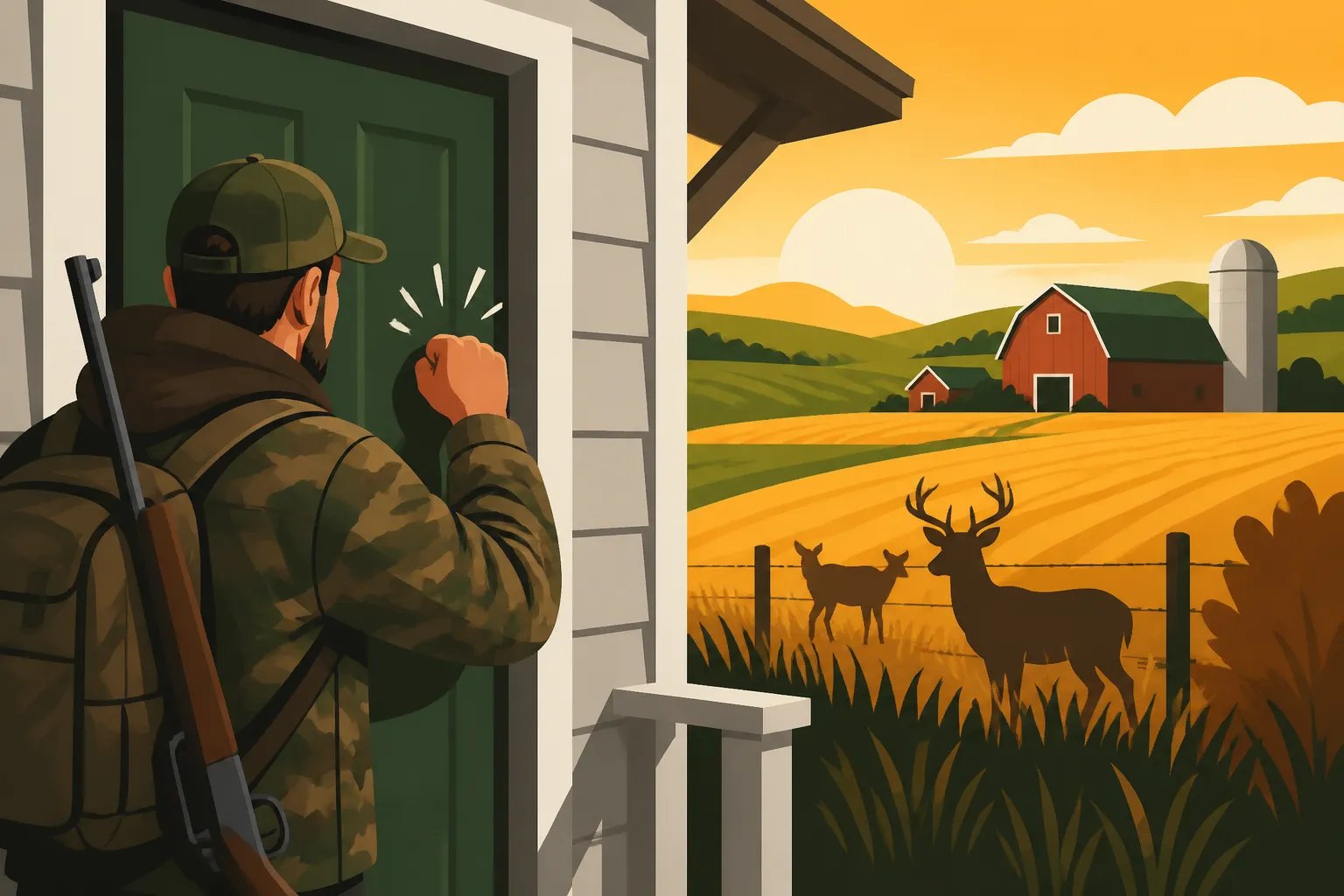
Knocking on Doors in Wisconsin Farm Country
Finding private hunting land can feel like an impossible quest, especially when public lands are feeling more crowded than ever, and those "No Trespassing" signs seem to be multiplying. Many of us remember a time when getting permission felt simpler, but times have changed, and approaching landowners can be intimidating. This guide is all about giving you the confidence and concrete steps to successfully knock on doors in Wisconsin farm country and open up new hunting opportunities.
The Enduring Value of Door-Knocking in Wisconsin Farm Country
Let's face it, in today's digital age, the idea of just showing up on someone's doorstep might seem old-fashioned, maybe even a little awkward. But when it comes to securing hunting permission in Wisconsin, especially in the rich agricultural areas, it remains one of the most effective, and often, most respected methods. Farmers and rural landowners in Wisconsin are busy people, and while they might not always be receptive, a face-to-face interaction can convey a level of sincerity and respect that an email or phone call often misses.
Why Face-to-Face Still Matters
There's a fundamental difference between a cold call or an impersonal message and looking someone in the eye. When you physically stand on their porch, you’re demonstrating initiative, respect for their property, and a willingness to engage. Many Wisconsin farmers value direct communication and appreciate the effort. They want to know who might be on their land, and a brief conversation allows them to get a feel for your character. It’s a chance for them to ask questions, voice concerns, and for you to build a foundational level of trust. This personal touch is often the deciding factor, particularly in communities where word-of-mouth still carries significant weight. Trying to find a spot on public land, which is often riddled with high pressure, can sometimes feel like a lost cause. Taking the time to build a personal connection bypasses some of those frustrations and often leads to more rewarding experiences on unpressured ground.
Understanding the Farmer's Perspective
It's crucial to put yourself in the landowner's shoes. Farmers deal with a lot: crop damage, potential liability issues, respect for their livestock, and often, a general weariness from bad experiences with disrespectful individuals. They've likely had hunters in the past who left gates open, drove across fields, or were simply careless. Your goal is to immediately distinguish yourself from those negative stereotypes. They're not just granting access; they're entrusting their property, their livelihood, and potentially their family's safety to you. Be prepared for a "no," and accept it gracefully. Even if they say no this year, a polite and respectful interaction can leave a positive impression that might open a door in a future season or even lead them to recommend you to a neighbor. Many landowners might also already have existing arrangements, or they hunt the property themselves.
Pre-Knock Preparations: Doing Your Homework
You wouldn't head into the woods without scouting, and you shouldn't knock on a door without doing your homework either. Preparation is key to increasing your chances of success. This isn't just about finding land; it's about finding the right land and the right landowner to approach.
Researching Potential Properties and Landowners
Before you even think about stepping onto someone's porch, spend some serious time on digital maps. Tools like the Wisconsin DNR's Hunt Wild App are fantastic for identifying public lands, but for private ground, you'll want to dig deeper. Services like GoHunt can be invaluable here. They often provide detailed parcel maps showing property boundaries, landowner names, and contact information. This is critical for knowing who owns the land you're interested in and ensuring you don't accidentally trespass. Look for properties with good habitat—woodlots, creek bottoms, unharvested fields, or areas adjacent to larger blocks of timber. You can often learn a lot about potential Hunting Wisconsin Farmland Deer by simply studying satellite imagery. Pay attention to how the property lays out, where natural travel corridors might be, and potential pinch points. Identifying these features will not only help you articulate why you're interested in their specific parcel but also show them you've done your due diligence and aren't just randomly picking properties. Remember to consult official county plat books or online GIS mapping portals for the most accurate and up-to-date ownership information. These resources are often publicly available and can confirm what you see on mapping apps.
Timing Your Visit for Optimal Results
Timing is everything when approaching farmers. Showing up during planting or harvest season, or in the middle of a big family dinner, is a surefire way to get a quick "no." Farmers work long, demanding hours, and their schedule dictates a lot.
When to Go:
- Off-season: Late winter after snowmelt, early spring before planting ramps up, or late summer after haying but before corn harvest. This gives them time to chat without feeling rushed.
- Weekdays: Weekends can be family time. Mid-week, late morning or early afternoon might be best, avoiding their rush to get morning chores done or prepare for supper.
- Post-season: After the hunting season has closed, you might find landowners more relaxed and willing to discuss future opportunities. This also demonstrates long-term interest, not just a desperate plea right before opening day.
When to Avoid:
- Peak farming seasons: Planting (April-May) and harvest (September-November) are absolutely critical times. Avoid these at all costs.
- Early morning or late evening: Respect their personal time.
- Hunting season: Asking for permission during the week leading up to or during opening weekend is often seen as a sign of poor planning or desperation. Most landowners will have their plans set, or their own hunting parties arranged.
A little bit of observation can go a long way. If you drive by and see them actively working in a field, come back later. If they're out on their porch relaxing or doing light chores, that might be a more opportune moment.
Your Appearance and Demeanor
First impressions matter, especially in rural Wisconsin. You don't need to wear a suit, but you absolutely need to look presentable and respectful.
- Dress neatly: Clean clothes, not your grimy hunting gear. A clean shirt, jeans or khakis, and tidy shoes. Avoid anything with offensive graphics or logos.
- Be polite and respectful: Use "sir" or "ma'am" if appropriate, shake hands firmly (if offered), and maintain eye contact.
- Be confident, not arrogant: You're asking for a privilege, not demanding a right. Speak clearly, be concise, and be ready to listen.
- Bring a gift (optional but nice): Some hunters bring a small token of appreciation, like a box of local chocolates, a gift certificate to a local diner, or even a small game processing gift certificate. This isn't a bribe, but a gesture of goodwill. It shows you value their time and generosity.
The Art of the Ask: What to Say and How to Act
Stepping onto that porch is often the hardest part. What do you say? How do you make your case without sounding needy or pushy? It's a fine balance.
Crafting Your Opening Statement
Your opening statement should be brief, clear, and immediately establish your purpose without being overly demanding.
- Introduce yourself: "Hi, my name is [Your Name], and I'm a hunter from [Your Town/Area]."
- State your purpose directly but politely: "I was wondering if you ever allow hunting on your property, specifically for deer." (Or whatever game you're after).
- Mention how you found them (if relevant): "I noticed your property borders the [nearby public land/woodlot] and it looks like really good habitat." This shows you've done your research.
- Have a specific area in mind: "I was particularly interested in the woodlot along your western fence line," rather than a vague "anywhere." This demonstrates you've thought it through and are not just looking for a free-for-all.
An example: "Good afternoon, my name is John Smith, and I live over in Black Creek. I'm an avid bowhunter, and I was admiring your property here, especially that stretch of woods along the creek. I was hoping to speak with you for a few minutes about the possibility of gaining permission to deer hunt on your land this upcoming season, if that's something you might consider."
Offering Reassurance and Value
Landowners have concerns, and addressing these proactively can go a long way. This is where you can offer solutions and demonstrate responsible behavior.
- Offer to help with nuisance animals: If they mention deer damage to crops, offer to focus on antlerless deer or help with nuisance coyotes.
- Emphasize safety: Highlight your experience and commitment to safety. Mention that you're a safe, ethical hunter and will always know your backdrop. Reassure them you understand Legal Firearms for Wisconsin Deer and will adhere to all regulations, including Wisconsin Blaze Orange and Pink Rules if applicable.
- Liability: While landowners in Wisconsin generally have significant liability protection under the recreational use statute (Wisconsin Statute 895.52), some still worry. You can offer to sign a written agreement or waiver, which brings us to the next point.
- Offer help: Beyond hunting, offer to help with chores if you're able and have time – fixing fences, helping with firewood, or even just clearing brush. This shows you're not just there to take.
Be Prepared for "No"
It's inevitable. You will hear "no" more often than "yes." The key is how you react.
- Accept it gracefully: A simple, "I understand completely, thank you for your time anyway," goes a long way.
- Don't badger or argue: Pressing the issue will only solidify their "no" and ensure you never get permission from them or their neighbors.
- Ask for alternatives (politely): "If not here, do you know anyone else in the area who might be open to hunters?" Sometimes they'll offer a lead.
- Leave a card: Have a small, professional card with your name and phone number. "If you ever change your mind or know someone who might be interested, here's my card. Thanks again for your time." This keeps the door open without being pushy.
Sometimes the "no" isn't about you but about existing arrangements, the landowner's own hunting plans, or a bad experience in the past. Respect that.
Written Permission: A Smart Move for Everyone
Even if they verbally grant permission, always offer to put it in writing. This protects both you and the landowner. It clarifies the terms, dates, and areas. This is especially important for multi-year agreements or if you plan to hunt with others. You can find simple templates online or create your own. This shows you are serious and professional. The Wisconsin DNR provides useful information regarding Do You Need Written Permission in Wisconsin?. This simple step can prevent misunderstandings later on and solidify the relationship.
Building Relationships and Maintaining Access
Getting permission is just the first step. The real success lies in nurturing that relationship and proving yourself to be a responsible and trustworthy hunter. Many Wisconsin farmers consider their land their legacy, and you are being invited into that space.
Adhering to All Agreed-Upon Terms
This is non-negotiable. If they say "no hunting within 100 yards of the barn," you adhere to it. If they say "only hunt the south woodlot," you don't stray into the north.
- Specifics: Confirm exactly what species you can hunt, during what seasons, and what areas of the property are open to you.
- Access points: Clarify where you can park and how you should access the property. Driving across a freshly planted field, even if it saves you a walk, is a quick way to lose permission.
- Communication: If your plans change, let them know. If you're going to bring a friend, ask first. Always.
- Safety zones: Understand and respect Wisconsin Posted Land Rules and any specific safety zones they designate around buildings or livestock.
Respecting the Land and Livestock
Beyond the explicit rules, demonstrate general respect for their property.
- Close gates: Always close gates, even if you found them open. This is paramount for preventing livestock from escaping.
- No littering: Pack out everything you pack in. Leave the land cleaner than you found it.
- Stay on designated paths: Don't drive off-road unless explicitly permitted.
- Be aware of livestock: If livestock are present, give them wide berth. Never harass or disturb them. Understand their movements, especially during sensitive times like calving.
- Harvesting crops: Be mindful of unharvested crops. If hunting a standing cornfield, know the landowner’s plans. Hunting a Standing Cornfield in Farm Country requires extra diligence.
Communication Beyond the Hunt
The relationship shouldn't end when the season does.
- Check-in: A quick text or phone call after a successful hunt, or even just to say thanks, goes a long way.
- Offer venison: If you're successful, offering them some fresh venison is a wonderful gesture of appreciation.
- Help out: If you offered to help with chores, follow through on it. It could be something as simple as helping move hay bales or fixing a fence for an hour or two. This reciprocal relationship builds strong bonds.
- Share success: Sharing a photo of a deer you harvested or a successful squirrel hunt builds excitement for them, too. It shows them the land is productive and appreciated.
- Keep in touch: A holiday card or a quick visit during the off-season, just to say hello and thank them again, reinforces the relationship and makes it more than just a seasonal transaction. This can ensure you have access to crucial Late-Season Food Sources for Whitetails year after year.
Using Technology to Your Advantage (Responsibly)
While the personal touch is primary, technology can support your efforts.
- Mapping apps: Beyond finding landowner info, use apps like GoHunt to precisely mark property boundaries, your stand locations, and agreed-upon access routes. This can help prevent accidental trespass and ensure you're always within the agreed-upon hunting zones. It's like having a digital plat book in your pocket.
- Trail cameras: If allowed, trail cameras can show landowners the quality of game on their property, reinforcing the value of hunting access. Always seek explicit permission before placing cameras.
- Communication: Texting can be a quick and convenient way to check in or confirm plans, but major discussions should still be face-to-face or via phone call.
The goal is to become a valued partner, not just a seasonal visitor. Building these relationships takes time and effort, but the rewards—access to prime, unpressured Hunting Small Private Tracts in Wisconsin and the satisfaction of meaningful connections—are well worth it. While Hunting Pressure on Wisconsin Public Land can be intense, a little legwork and genuine engagement can open up fantastic private land opportunities. Sometimes, understanding Reading Aerial Photos for Coulee Deer even in flat farmland can help identify small pockets of cover or waterways that hold deer, making your request more informed. Tools like Scouting With the Wisconsin Hunt Wild App can help you visualize these smaller parcels within the broader landscape, and Finding Wisconsin Property Lines is crucial for showing respect for boundaries.
Here's a quick reference table to help you prepare:
| Category | Do's | Don'ts |
|---|---|---|
| Preparation | Research landowner & property; use apps like GoHunt. | Show up unannounced or without knowing who owns the land. |
| Scout from afar for habitat features. | Pick a property at random. | |
| Timing | Visit during off-season or slower times (e.g., mid-week). | Approach during planting, harvest, or opening week of hunting. |
| Observe farmer's current activity. | Knock early morning or late evening. | |
| Appearance | Dress neatly and respectfully; be clean. | Wear dirty hunting clothes or anything offensive. |
| Offer a small, thoughtful gift (optional). | Show up empty-handed if a gift feels appropriate. | |
| The Ask | Be polite, introduce yourself clearly, state purpose. | Be vague, demanding, or assume permission. |
| Emphasize safety and responsibility. | Make excuses or argue if denied. | |
| Offer written permission/waiver. | Pressure them for an immediate "yes." | |
| Follow-Through | Adhere strictly to all agreed-upon rules. | Leave gates open, drive off-road, litter. |
| Communicate changes or guest hunters. | Disturb livestock or ignore property boundaries. | |
| Offer venison or help with chores. | Only contact them when you want to hunt. | |
| Maintain year-round contact. | Burn bridges if permission is revoked or not renewed. |
Disclaimer
The information provided in this guide is for general informational purposes only and does not constitute legal advice. Hunting regulations, landowner rights, and liability laws can vary and change. Always consult the official Wisconsin Department of Natural Resources (DNR) regulations and consider seeking legal counsel for specific situations. It is your responsibility to understand and comply with all applicable local, state, and federal laws.