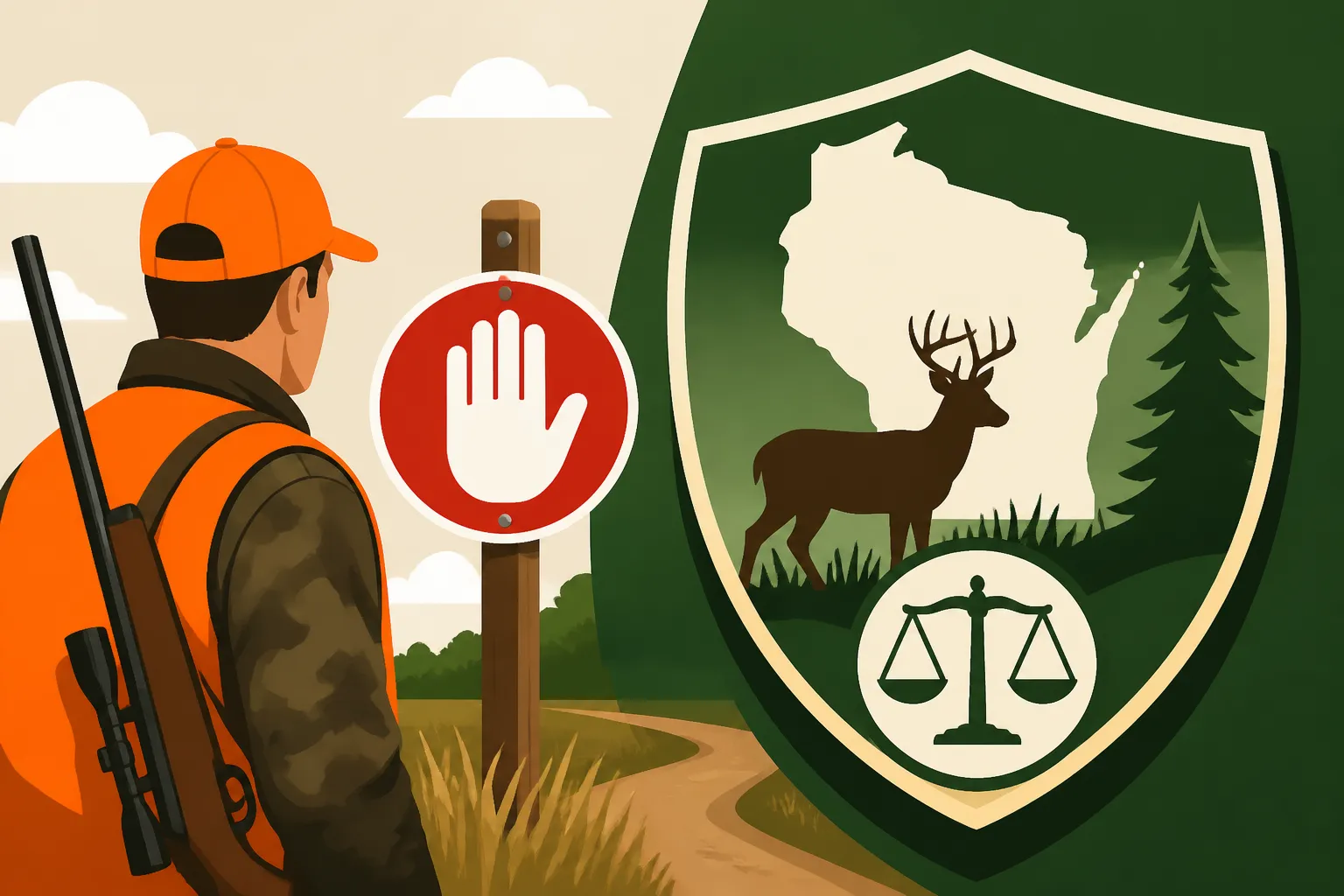
What Wisconsin Trespass Law Requires
One of the biggest anxieties for any hunter, whether you're new to the sport or a seasoned veteran, is the fear of accidentally trespassing. The lines between public and private land can sometimes feel blurry, maps can be confusing, and the rules around permission aren't always crystal clear. This guide will walk you through the specifics of Wisconsin's trespass laws, helping you understand your responsibilities and how to ensure you're always hunting legally and respectfully.
What Wisconsin Trespass Law Means for Hunters
Understanding the bedrock of Wisconsin's trespass law is absolutely essential for any hunter. It’s not just about avoiding fines; it’s about respecting private property rights and maintaining the positive image of hunters in the state. Too many stories start with a simple misunderstanding that escalates into a big problem, and often, it could have been avoided with a clearer grasp of the rules.
Defining Private Land and Hunter Responsibilities
At its core, private land in Wisconsin is any land not owned by the government or otherwise specifically designated for public access. This includes everything from vast timber company holdings to a farmer's back forty, and even that small woodlot behind someone's house. As hunters, we have a fundamental responsibility to know exactly whose land we are on at all times. This isn't just a suggestion; it's a legal obligation.
This responsibility extends beyond just stepping foot on the property. It includes sending your dog onto private land without permission, retrieving game that has fallen on private property, and even parking your vehicle in a way that blocks access to private land. The law doesn't make exceptions for "I didn't know" when it comes to property boundaries. It places the onus squarely on the individual hunter to be certain of their location. This diligence is especially crucial when hunting near residential areas or in patchwork landscapes where public and private parcels can be intertwined. The respect we show for private property is a reflection on all hunters, and upholding these standards is vital for maintaining good landowner-hunter relations across the state.
The Role of Posting Signs: Beyond the "No Trespassing"
Many people assume that if land isn't explicitly posted with "No Trespassing" signs, it's fair game. This is a common and dangerous misconception in Wisconsin. While "No Trespassing" signs certainly clarify an owner's intent, their absence does not automatically grant permission to enter. In Wisconsin, the general rule is that land is considered private, and therefore, permission is required to hunt on it, whether it's posted or not.
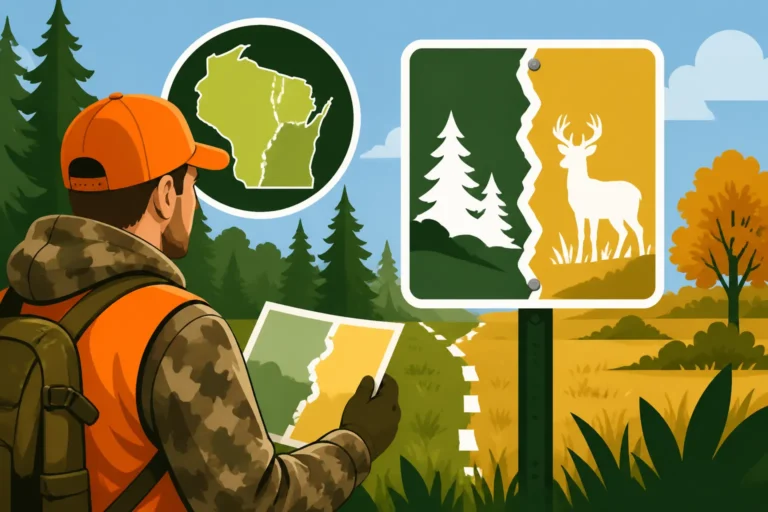
However, posting signs does serve a crucial legal purpose. Land that is "adequately posted" means that the landowner has taken reasonable steps to notify others that the land is private and entry is prohibited. This could be clearly visible signs, colored paint marks on trees or posts (often purple, though specific colors can vary, it's about clear notice), or even fencing that delineates the boundary. If you ignore these obvious markers, the penalties for trespassing can be more severe, as it demonstrates a clear disregard for the landowner's wishes. Conversely, if land is not posted, and you genuinely believed it to be public or had implied permission, there might be slight differences in how a violation is handled, but it doesn't absolve you of the need for permission. The best practice is always to assume private land requires explicit permission, regardless of whether you see a sign. You can learn more about Wisconsin Posted Land Rules in our detailed guide.
Understanding Different Forms of Trespass
Trespass isn't a one-size-fits-all legal concept; it can manifest in various ways, and understanding these distinctions is important for hunters. The most straightforward form is physical trespass: stepping onto private land without permission. This is what most people think of when they hear the word "trespass."
However, there are other nuances. For instance, "unauthorized occupancy" could apply if you set up a permanent treestand or a ground blind on private land without explicit permission, even if you’re not actively present at the time. "Damage to property" can also be considered a form of trespass if your actions, while on private land, result in harm to fences, crops, or other landowner assets. This highlights the importance of not just being on the land legally, but also acting responsibly once you are there. Even leaving trash behind on private property could be seen as a form of disrespectful trespass. Finally, "retrieval of game" can also fall under trespass if you cross a property line to retrieve a downed animal without first obtaining permission, which we will delve into further. The key takeaway is that any uninvited entry or unauthorized activity on private land, regardless of intent, can constitute trespass under Wisconsin law.
Obtaining and Proving Permission to Hunt Private Land
The golden rule for hunting private land in Wisconsin is simple: get permission. But it's not always as straightforward as it sounds. Knowing how to ask, what kind of permission to seek, and how to verify boundaries can save you a world of headaches and keep you in good standing with landowners.
The Value of Clear Communication: Verbal vs. Written
When it comes to getting permission to hunt private land, both verbal and written agreements are legally recognized in Wisconsin. However, there's a significant difference in their practical implications, especially if a dispute arises. Verbal permission, where a landowner says "Sure, go ahead and hunt," is legally binding. The problem? It can be incredibly difficult to prove if there's a misunderstanding or if the landowner denies ever granting it. Memories fade, and intentions can be misconstrued.
Written permission, on the other hand, provides a tangible record. This could be a simple signed note, an email exchange, or a formal hunting lease agreement. It clearly outlines who has permission, for what specific land, during which dates, and often includes any special conditions (e.g., "no ATVs," "stay off this field"). If you can get written permission, even a simple text message or email confirming your conversation, it is always the superior option. It protects both you and the landowner by leaving no room for doubt. For larger groups or extended hunting seasons, a more formal written agreement is highly recommended. Our guide on Do You Need Written Permission in Wisconsin? offers more insights.
Navigating Boundaries with Precision
Knowing exactly where property lines lie is paramount. Even with permission, accidentally crossing onto an adjacent property where you don't have permission is still trespassing. This is where modern technology has become an absolute game-changer for hunters. Gone are the days of relying solely on often-outdated paper plat maps or guessing based on fence lines that may not accurately follow legal boundaries.
Mapping applications like onX Hunt have revolutionized how hunters understand land ownership. These apps, often used on your smartphone or GPS device, overlay property boundaries, landowner names, and public land designations directly onto detailed satellite imagery and topographic maps. This means you can be standing in the woods, look at your phone, and see precisely which parcel you're on and whose land borders it. Another valuable tool, GoHunt, offers similar detailed mapping solutions that can prove invaluable for scouting and in-season navigation. Before you even step into the woods, you can use these tools to study your hunting area, identify potential access points, and scout out adjacent properties to proactively seek additional permission. Having these apps, along with a charged battery and a downloaded map for areas without cell service, can literally keep you out of trouble and ensure you respect every property line. For detailed advice, check out onX Layers for Wisconsin Land Status.
Special Scenarios: Retrieving Game and Tracking Wounded Animals
This is one of the trickiest situations a hunter can face: you've made a good shot, but the animal crosses a property line onto land where you don't have permission. Your instinct is to pursue, but legally, you cannot. In Wisconsin, crossing a private property line, even to retrieve a legally harvested or wounded animal, still constitutes trespass if you do not have permission.
The correct procedure is to contact the landowner before you cross the boundary. Explain the situation calmly and respectfully, and ask for permission to retrieve your animal. Most landowners, if approached courteously, will grant permission, especially if you offer to show them the animal's location and track it together. However, they are under no legal obligation to do so. If you cannot reach the landowner, or if they deny permission, your options become extremely limited. You may need to contact local law enforcement or a game warden for assistance, though even they cannot force a landowner to grant access. Never assume that the act of wounding or killing an animal on legal ground gives you automatic right of entry onto someone else's property. Always prioritize permission over pursuit to avoid legal repercussions. Our article on Retrieving Game From Private Land dives deeper into this specific challenge.
Legal Ramifications and Respecting Landowner Rights
Ignoring Wisconsin's trespass laws can lead to consequences far more serious than just a slap on the wrist. Understanding these potential outcomes, and more importantly, appreciating the landowner's perspective, is crucial for fostering a sustainable hunting culture.
Penalties for Trespassing: What Hunters Can Face
The legal repercussions for trespassing in Wisconsin can vary depending on the specific circumstances, but they are never trivial. Generally, trespassing is classified as a forfeiture violation, meaning you'll face a monetary fine. This fine can range significantly, and it often increases for repeat offenses or if there are aggravating factors, such as property damage, hunting without a license, or entering a posted area.
In addition to financial penalties, a trespassing conviction can also lead to the loss of hunting privileges. The Wisconsin DNR takes trespass violations seriously, especially when they involve hunting activities. You could have your hunting license suspended or revoked for a period, which means you wouldn't be able to legally hunt anywhere in the state, even on public land or land where you do have permission. Imagine losing your ability to participate in Wisconsin's Nine-Day Gun Deer Season or Bowhunting Wisconsin's Long Archery Season because of a preventable error. Furthermore, if your trespass involves damage to property or other criminal activity, you could face even more severe charges, including jail time. These penalties underscore why "knowing before you go" and securing proper permission is not just good etiquette, but a vital legal safeguard. Our guide on Wisconsin Wildlife Violation Penalties has more information on this.
Why Landowner Relations are Paramount for Hunting Access
In Wisconsin, a significant portion of huntable land is privately owned. Therefore, the future of hunting access in many areas relies heavily on positive relationships between hunters and landowners. When hunters trespass, leave gates open, litter, damage property, or are generally disrespectful, it doesn't just impact that specific landowner; it creates a negative perception of all hunters. This can lead landowners to close their properties to everyone, even those who would have asked for permission politely.
Consider a situation where a farmer routinely finds tire tracks through his newly planted cornfield or discovers spent shotgun shells near his barn. It's not just an inconvenience; it's a direct impact on their livelihood and sense of security. They might choose to post their entire property, denying access to future generations of ethical hunters. By contrast, a hunter who approaches landowners respectfully, offers to help with chores, and always leaves the land better than they found it, builds trust. These positive interactions are how hunting traditions are maintained and expanded. Maintaining good relations is a collective responsibility for the entire hunting community, ensuring that we preserve these invaluable opportunities for ourselves and those who come after us. This is crucial for Hunting Small Private Tracts in Wisconsin and Knocking on Doors in Wisconsin Farm Country.
Best Practices for Ethical and Law-Abiding Hunting
To ensure you're always on the right side of Wisconsin's trespass law, adopt these best practices into your hunting routine:
- Always Assume Private Land Requires Permission: Don't rely on the absence of "No Trespassing" signs. If it's not clearly marked public, seek permission.
- Use Mapping Technology: Invest in and learn how to use digital mapping apps like onX Hunt or GoHunt. These tools are invaluable for identifying property lines and landowner information. Finding Wisconsin Property Lines is made much easier with these resources.
- Get Written Permission: Whenever possible, obtain permission in writing. Even a simple text or email can serve as proof. Keep it accessible while you're hunting.
- Scout Thoroughly: Before hunting, scout the area. Identify boundaries, access points, and potential areas where an animal might run onto adjacent private land.
- Carry Landowner Contact Info: If you have permission, carry the landowner's contact information with you. This allows you to quickly reach them if an animal crosses a boundary or if an unforeseen issue arises.
- Be a Good Steward: Leave no trace. Pack out everything you pack in. Close gates, avoid driving off-road unless explicitly permitted, and respect agricultural operations.
- Know the Rules for Wounded Game: Understand that pursuing a wounded animal onto private land without permission is still trespassing. Be prepared to back out and seek permission.
- Educate Yourself and Others: Stay informed about Wisconsin's hunting regulations and share your knowledge with fellow hunters. New regulations or changes in land ownership can impact access.
By diligently following these practices, you not only protect yourself legally but also contribute positively to the future of hunting in Wisconsin by fostering trust and mutual respect with landowners.
| Feature / Aspect | Verbal Permission | Written Permission |
|---|---|---|
| Legal Standing | Legally valid, but difficult to prove | Legally valid and easily verifiable |
| Ease of Obtaining | Often quicker and more informal | May take slightly longer to formalize |
| Clarity of Terms | Open to interpretation, relies on memory | Explicitly states conditions, dates, specific land |
| Proof in Dispute | Your word against the landowner's | Document serves as undeniable evidence |
| Protection for Hunter | Minimal in case of misunderstanding | Strong protection against false accusations |
| Protection for Landowner | Minimal in case of hunter misbehavior | Clear expectations and recourse for violations |
| Recommended Use | For very trusted, long-standing relationships | Highly recommended for all private land hunting access |
Disclaimer
This article is for general informational purposes only and does not constitute professional advice. Laws, prices and regulations vary by location and change over time. Consult a qualified professional for guidance on your specific situation.