Wisconsin Posted Land Rules
Navigating the complex patchwork of public and private land in Wisconsin can be a real headache for hunters, often leading to confusion and the fear of inadvertently trespassing. It's a common frustration to scout a promising area, only to find it bordered by "No Trespassing" signs or, even worse, to unknowingly cross a property line while tracking game. This guide is here to clear up the mystery surrounding Wisconsin's posted land rules, helping you understand your responsibilities, how to legally secure access to private parcels, and what tools can help you stay on the right side of the law while pursuing your passion.
What Exactly Does "Posted" Mean in Wisconsin?
The term "posted land" carries significant weight in Wisconsin, marking areas where the landowner explicitly prohibits public access for activities like hunting, fishing, or trapping. It’s not just a suggestion; it's a legal declaration. Understanding what constitutes legally posted land is the first step in being a responsible hunter, ensuring you respect private property rights and avoid legal trouble.
Understanding Different Posting Methods
Wisconsin law provides clear guidelines on how landowners must mark their property to effectively prohibit trespass. It’s not enough for a landowner to simply say their land is off-limits; it needs to be visibly and properly marked. The most common and legally recognized method is placing signs that clearly state "No Trespassing" or a similar prohibitive message. These signs must be at least 11 inches square, bear the name of the owner, occupant, or person posting the land, and must be placed at intervals of 500 feet or less along the exterior boundaries of the property. They also need to be clearly legible and maintained.
Beyond traditional signs, some landowners might use purple paint markings on trees or fence posts. This is an increasingly popular and legally recognized method in many states, including Wisconsin, as it's durable and unambiguous. A strip of purple paint at least 8 inches long and 2 inches wide, placed between 3 and 5 feet from the ground, serves the same legal purpose as a "No Trespassing" sign. It's crucial for hunters to recognize both signs and paint markings as clear indicators of private property where entry is prohibited without permission. Regardless of the method, the intent is always the same: to clearly communicate that the land is not open for public use.
The Legal Implications of Marked Boundaries
The presence of properly posted signs or purple paint markings instantly transforms a landowner's intent into a legal boundary. Once land is legally posted, entering it for any recreational purpose without permission from the owner or occupant constitutes trespassing. This isn't just a minor inconvenience; it's a violation that can carry significant penalties. The legal implications are straightforward: respect the boundaries or face the consequences. This is why paying close attention to signs and property lines, especially when hunting near the edge of public land or adjacent to diverse land ownership, is paramount.
It's not just about avoiding confrontation with a landowner; it's about avoiding fines, potential forfeiture of equipment, and even loss of hunting privileges. The law is designed to protect private property, and hunters are expected to understand and abide by these regulations. Even an accidental trespass, while potentially met with more leniency than an intentional one, is still a trespass. This emphasizes the need for proactive scouting and utilizing mapping tools to precisely identify land ownership before and during your hunt. Ignoring these signs, whether intentionally or through negligence, reflects poorly on all hunters and can damage the critical landowner-hunter relationship.
Navigating Wisconsin's Trespass Laws as a Hunter
Wisconsin's trespass laws are designed to protect private property rights, but they also have specific provisions that every hunter needs to understand. It’s not just about seeing a "No Trespassing" sign; it's about knowing your responsibilities to avoid being a trespasser in the first place, and understanding the potential consequences if you do make a mistake.
Hunter's Duty to Know Land Ownership
As a hunter in Wisconsin, you carry the responsibility to know whose land you are on at all times. This isn't just good etiquette; it's a legal requirement. Ignorance of property lines is generally not an acceptable defense for trespassing. This means before you even step foot into an area, especially one that borders different parcels or appears ambiguous, you need to do your homework. Relying on outdated paper maps or vague recollections of property lines simply isn't enough anymore, especially with the advanced tools available today.
The expectation is that you'll take reasonable steps to ascertain land ownership. This might involve checking plat maps at the county courthouse, consulting the Wisconsin DNR's public access mapping tools, or, most commonly and conveniently, using modern GPS-enabled hunting apps. These resources provide detailed land ownership information, parcel boundaries, and often highlight public versus private land. Failing to use these tools, or simply making assumptions, puts you at risk. Remember, the onus is on the hunter to prove they were legally on the land, or at least made a good faith effort to know their location relative to private property. This proactive approach not only keeps you legal but also builds goodwill with landowners.
Penalties for Unlawful Entry and Hunting
Trespassing in Wisconsin is not to be taken lightly. The penalties can range from substantial fines to more severe consequences, especially if hunting is involved or if the trespass is repeated. For a first offense of simple trespass, you might face a significant fine. However, if you are actively hunting, trapping, or fishing on posted land without permission, the penalties typically increase. These can include higher fines, court costs, and potentially the forfeiture of any game taken during the trespass. Imagine spending hours tracking a trophy buck, only to have it confiscated because you crossed an unmarked line.
Beyond financial penalties, repeated trespassing or more egregious violations can lead to the suspension or revocation of your hunting licenses and privileges. This means you could be prohibited from hunting in Wisconsin for a period of time, which for many passionate outdoorspeople is a far greater punishment than a fine. It’s also important to note that landowners can pursue civil action in addition to criminal charges, further increasing your legal exposure. The message is clear: the cost of unauthorized entry far outweighs the perceived benefit of hunting on someone else's property without permission. Always err on the side of caution, verify your location, and secure permission when needed.
Getting Permission: Your Gateway to Private Land Hunting
Private land offers some incredible hunting opportunities in Wisconsin, often less pressured than public lands. However, accessing it requires permission. Securing that permission isn't always easy, but approaching it correctly can make all the difference. Building a good relationship with landowners is key, and it opens doors to opportunities many hunters miss.
The Power of Verbal vs. Written Permission
In Wisconsin, you generally need the consent of the landowner to hunt, fish, or trap on private property. This consent can be verbal, but for hunting, especially for deer, written permission is always the safest and most recommended route. While a handshake agreement might feel sufficient, memories fade, landowners change, or disputes can arise. Having something in writing, even a simple note with the landowner's signature, date, and a description of the permission granted (e.g., "permission to hunt deer on parcel X from Date A to Date B"), eliminates ambiguity.
Think of it this way: if a warden or another individual questions your presence on private land, a written permission slip is irrefutable proof. It covers both you and the landowner, ensuring everyone is clear on the terms. While Do You Need Written Permission in Wisconsin? might technically say verbal is okay in some contexts, having it in writing is a gold standard. Many landowners appreciate this professionalism, as it shows you are serious about respecting their property and the law. This practice helps to solidify trust and can lead to long-term hunting access.
Best Practices for Approaching Landowners
Successfully asking for permission is an art form. It's about being respectful, polite, and understanding. Here are some best practices:
- Timing is Everything: Don't show up on opening day with your hunting gear. Approach landowners well in advance of the season, perhaps in late summer or early fall. This shows foresight and respect for their time.
- Appearance Matters: Dress neatly. You don't need a suit, but don't show up in muddy hunting clothes. A clean, presentable appearance sends a message of respect.
- Be Prepared: Have a specific request. Know what you want to hunt (deer, turkey, small game), and for what duration. Bring a map of their property (you can get these from county GIS offices or via mapping apps) to show them exactly where you'd like to hunt. This demonstrates you've done your homework.
- Introduce Yourself: Start with a friendly introduction. Explain who you are, where you're from, and why you're interested in hunting their property.
- Offer Something in Return: While not always necessary, offering to help with chores, fix a fence, or share some venison can go a long way. Even just offering to keep an eye on their property for anything suspicious can be valuable to a landowner.
- Respect Their Decision: Whether they say yes or no, always be gracious and thank them for their time. A "no" today doesn't mean a "no" forever. Sometimes, a polite thank you can leave a good impression for future requests.
- Follow Through: If you get permission, follow through on any promises you made. Leave gates as you found them, don't litter, and stay within the agreed-upon boundaries. Asking a Wisconsin Farmer for Permission often involves these considerations. The goal is to be an ideal guest, making them happy to have you back.
Tools to Identify Landowners and Boundaries
In today's hunting world, technology is your best friend when it comes to understanding property lines and identifying landowners. Gone are the days of solely relying on abstract descriptions or vague landmarks. Modern mapping applications provide a hunter with unparalleled precision.
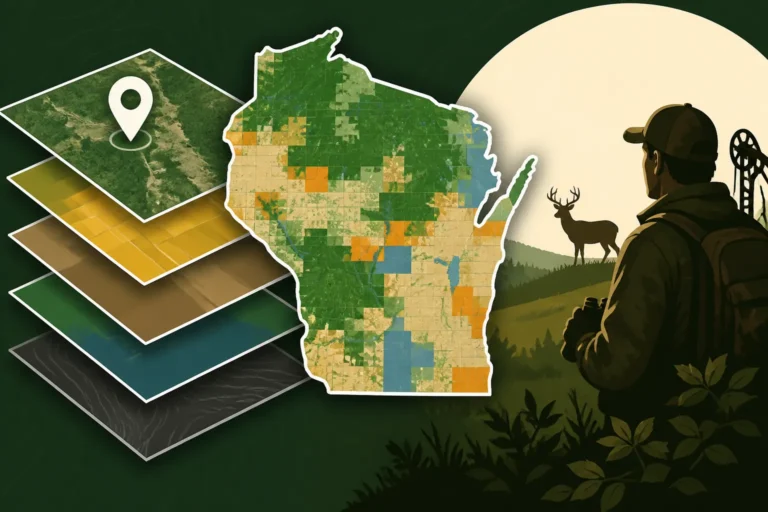
Services like onX Hunt and GoHunt offer detailed mapping layers that display property boundaries, land ownership information (including landowner names and addresses in many cases), public land designations, and even aerial imagery. These tools are invaluable for:
- Pre-Season Scouting: You can identify promising habitat on private land and then use the app to find the landowner's contact information, allowing you to seek permission proactively. This is far more effective than knocking on random doors. Finding Wisconsin Property Lines becomes much easier.
- In-Field Navigation: While hunting, these apps show your exact position relative to property lines in real-time. This is critical when you're walking a wooded edge or tracking a deer near a known boundary. You can avoid accidental trespass by constantly monitoring your location.
- Understanding Land Status: The onX Layers for Wisconsin Land Status can differentiate between public land, private land, Managed Forest Law (MFL) parcels open to public hunting, and other categories, helping you make informed decisions about where you can legally hunt.
| Permission Type | Description | Recommended For Hunters | Best Use Case |
|---|---|---|---|
| Verbal | Spoken agreement between hunter and landowner. | Generally not recommended | Short-term, informal access for non-hunting |
| Written | Document signed by landowner outlining terms. | Highly Recommended | All hunting activities, especially deer and bear |
| Implicit | Assumed permission (e.g., unposted, unfenced). | Avoid entirely | Absolutely none; always seek explicit permission |
Using these digital tools is no longer a luxury but a necessity for ethical and legal hunting in Wisconsin. They empower you to make informed decisions and maintain a clear conscience while in the field. Remember, these tools are aids, not replacements for direct communication and respect for private property.
Common Scenarios and Misconceptions for Wisconsin Hunters
Even with the best intentions, hunters often encounter situations on the edge of posted land that can be confusing. It's important to clarify these scenarios to ensure you always act within legal bounds and maintain good relationships with landowners.
Retrieving Game from Adjacent Posted Land
This is one of the most common and frustrating scenarios: you make a good shot, the deer runs onto the neighbor's posted property, and suddenly you're faced with a dilemma. In Wisconsin, the law generally states that if you wound game, and it runs onto private land that is legally posted or where you do not have permission, you do not have an automatic right to pursue or retrieve that animal. This is a critical point that many hunters misunderstand.
Your best course of action is to immediately stop at the property line and make every reasonable effort to contact the landowner for permission to retrieve your animal. Do not cross the line without that explicit permission. If you cannot reach the landowner, or if they deny permission, you are legally out of luck for that animal. This can be heartbreaking, but respecting property rights is paramount. Retrieving Game From Private Land can be a touchy subject, so approach the landowner calmly, explain the situation, and be ready to accept their decision. Showing respect and offering to track the animal with them, or waiting for them, can sometimes sway their decision in your favor. Never assume you have the right to enter, even for a wounded animal.
Hunting Adjacent to Public Land and Boundary Awareness
Many hunters seek out properties that border public land, hoping to catch deer moving between them. This strategy can be highly effective, but it comes with a heightened need for boundary awareness. It's incredibly easy to misjudge a property line in thick timber or rolling terrain, especially when focusing on game movement. You might be legally hunting public land, but a small misstep could put you onto adjacent private, posted property.
This is where the detailed mapping tools, like onX Hunt, truly shine. Being able to see your exact location relative to public and private boundaries in real-time is indispensable. When hunting near these edges, constantly check your GPS. Pay attention to subtle changes in fencing, old survey markers, or even changes in timber management that might indicate a property line. It's also wise to scout these areas thoroughly before the season to identify boundary markers on the ground. When you're Hunting Wisconsin Coulees and Ridge Tops, or exploring Where Northern Forest Bucks Bed, these property lines can be incredibly hard to discern. Knowing precisely where the lines are, and even leaving a few non-invasive markers (like flagging tape you intend to remove) during scouting, can prevent an accidental trespass and keep your hunt legal and enjoyable.
Disclaimer
This article is for general informational purposes only and does not constitute professional advice. Laws, prices and regulations vary by location and change over time. Consult a qualified professional for guidance on your specific situation.