Wisconsin Wildlife Violation Penalties
It’s easy to feel overwhelmed by the sheer volume of hunting regulations in Wisconsin. With seasons, zones, and rules constantly evolving, the fear of unknowingly stepping over a line is a real one for many of us. This guide aims to clear the air, diving deep into the specifics of Wisconsin wildlife violation penalties, so you can hunt confidently and responsibly, knowing the consequences of various infractions.
Understanding the Legal Landscape of Wisconsin Wildlife Violations
Navigating Wisconsin’s hunting regulations can sometimes feel like trying to read a phone book in the dark. The rules are extensive, and understanding the legal classifications of violations is the first step toward avoiding trouble. It's not just about knowing what you can't do, but understanding the gravity of various infractions.
Misdemeanors Versus Felonies in Wildlife Law
When you break down wildlife violations in Wisconsin, they generally fall into two main categories: misdemeanors and felonies. The distinction isn't just legal jargon; it directly impacts the severity of the penalties you could face. Most common hunting infractions, like an improper tagging or a minor baiting violation, are typically classified as misdemeanors. These can still carry significant fines, surcharges, and potential license revocations, but they generally don't lead to long prison sentences. For instance, being caught with an untagged deer or hunting without the proper license might fall into this category. The Wisconsin Department of Natural Resources (DNR) takes these seriously, as even minor violations can undermine conservation efforts.
However, some offenses escalate quickly to felony status. These are usually tied to more severe crimes, such as chronic poaching, commercializing illegally taken wildlife, or aggravated offenses involving violence or significant environmental damage. Imagine someone repeatedly killing trophy animals out of season for profit, or using explosive devices to take game – these are scenarios where felony charges become a very real possibility. A felony conviction, beyond the direct wildlife penalties, carries a host of other life-altering consequences, including the loss of your right to possess firearms, which, for many hunters, is an unthinkable outcome. Understanding this hierarchy of offenses is crucial for appreciating the legal framework.
Civil Forfeitures and Stipulations
Beyond criminal charges, Wisconsin wildlife law often involves civil forfeitures. Think of these as monetary penalties – a fine you pay to the state, similar to a traffic ticket. For many minor violations, a conservation warden might issue a citation that leads to a civil forfeiture. You have the option to pay the forfeiture amount, which often includes the base fine plus court costs and surcharges, or you can contest it in court. If you pay it, it's generally considered an admission of guilt, but it typically avoids a criminal conviction on your record, unless it's part of a plea agreement for a more serious charge. This is a common way the system handles infractions like violating certain aspects of Wisconsin Deer Seasons and Zones or exceeding bag limits.
Sometimes, rather than going to a full trial for a criminal misdemeanor, a stipulation might be offered. This is essentially an agreement between you and the prosecution where you admit guilt to a lesser charge or agree to certain terms, often involving a higher forfeiture amount, restitution, and license revocation, in exchange for avoiding a more severe criminal conviction. It’s a pragmatic way for the legal system to resolve cases without lengthy trials, but it's vital to understand what you're agreeing to. When faced with a citation, it’s always wise to consult legal counsel who specializes in wildlife law to fully understand the implications of a civil forfeiture or stipulation.
The Role of Conservation Wardens
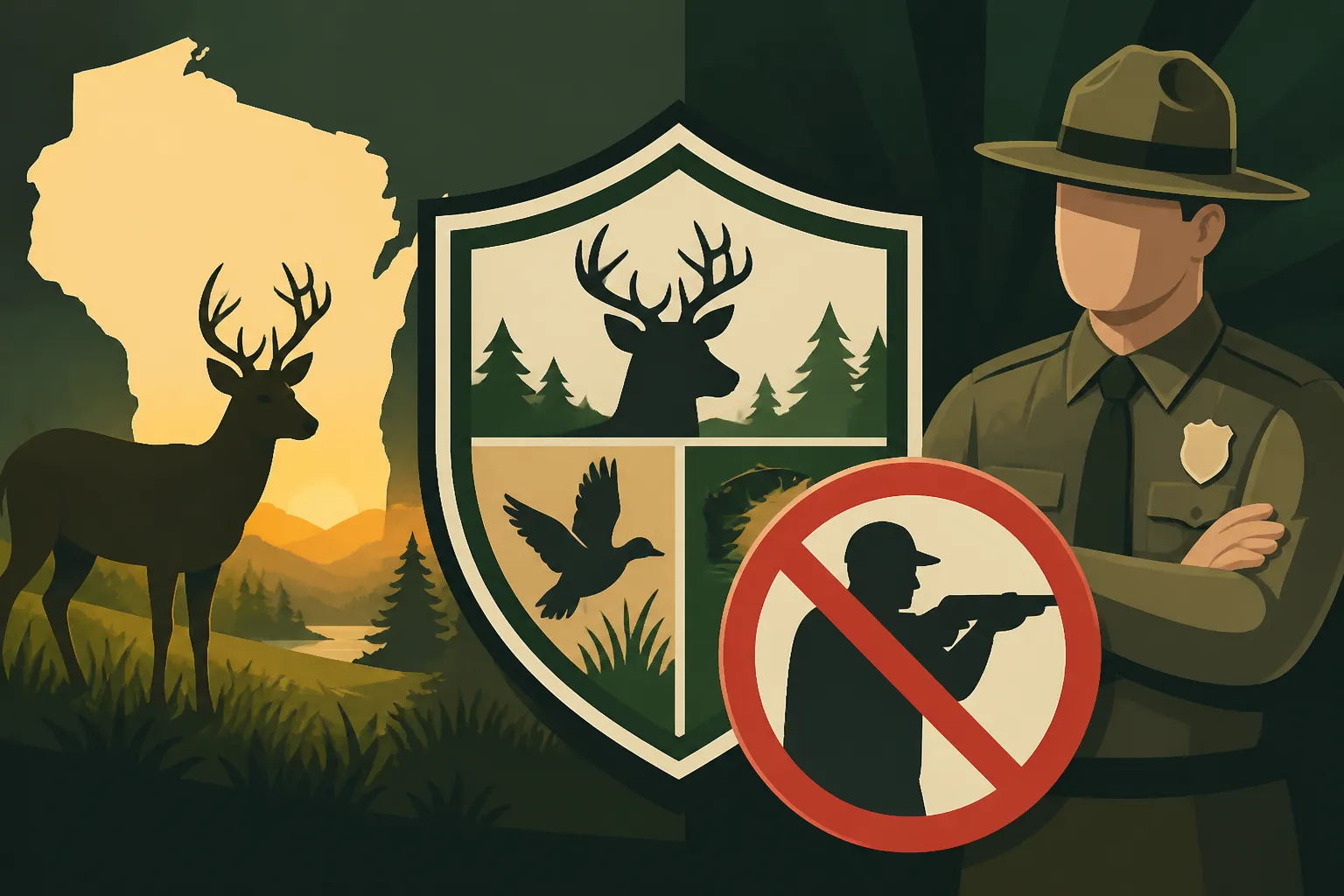
Conservation wardens are the frontline enforcers of Wisconsin’s wildlife and environmental laws. They are fully commissioned law enforcement officers with the authority to investigate violations, make arrests, and issue citations. Their job isn’t just about catching lawbreakers; it’s also heavily focused on education and ensuring public safety. They’re often out in the field, checking licenses, verifying compliance with regulations, and responding to reports of illegal activity. Many hunters will interact with a warden during routine checks, perhaps while they're on public lands or after successfully harvesting an animal.
Wardens have a deep understanding of the intricacies of hunting regulations, from the specifics of Wisconsin Baiting and Feeding Bans to the proper methods of Registering a Wisconsin Deer Online. They are trained to investigate everything from simple tagging errors to complex poaching rings. Their observations, witness statements, and evidence collection are critical in any wildlife violation case. It's their initial contact and subsequent investigation that often determines how a violation is classified and what penalties might be pursued. Having a respectful and cooperative attitude when encountering a warden, even if you suspect you might have made a mistake, is always the best approach. They are there to uphold the law and protect Wisconsin’s natural resources, and understanding their role can help you navigate any potential encounter more effectively.
Common Hunting Violations and Their Consequences
It's easy to get caught up in the excitement of the hunt and overlook a crucial detail, leading to a violation. Many infractions stem from honest mistakes or a lack of understanding, but others are deliberate. Knowing the common pitfalls can help you avoid them.
Tagging and Registration Errors
One of the most frequent violations hunters face revolves around the proper tagging and registration of harvested deer. Wisconsin has strict rules designed to ensure accountability and track harvest data. You might have successfully taken a deer, but if you fail to immediately attach your valid deer carcass tag to the animal, or if you don't validate it correctly, you could be cited. The rules state that the tag must be validated by removing the correct notches for the date and time, and it needs to be attached to the deer before moving it from the kill site. Many hunters use their GoHunt account to purchase tags, but the physical act of tagging at the kill site remains critical.
Even if the tagging is done correctly, failing to register your deer within the specified timeframe (usually by 5:00 PM the day after harvest) is another common violation. Whether you register online, via phone, or through a designated station, this step is mandatory. The consequences for these errors, even if unintentional, typically include fines and surcharges. While a warden might issue a warning for a minor, easily rectifiable error, repeated or blatant disregard for these rules will almost certainly lead to a citation. These regulations are not just bureaucratic hurdles; they are essential for collecting accurate data on Wisconsin Deer Population Estimate and managing the herd effectively.
Baiting and Feeding Infractions
Wisconsin’s regulations regarding baiting and feeding deer are some of the most complex and frequently violated rules, especially with the ongoing concerns about Chronic Wasting Disease (CWD). The state has a dynamic system where baiting and feeding bans can be enacted in specific counties based on CWD detections. If you hunt in a county under a ban, placing any type of bait or feed (corn, apples, minerals, etc.) to attract deer is illegal. This also extends to feeding deer for recreational viewing outside of hunting season in banned counties. Ignorance of the law is not a defense, and hunters are expected to know the current status of their hunting area. This is where resources like the Wisconsin Baiting and Feeding Bans become absolutely critical.
Penalties for baiting and feeding violations can range from significant fines, often several hundred dollars, to confiscation of equipment, and potentially even license revocation. The severity often depends on the amount of bait, the duration it was present, and whether there's evidence of commercial intent. It's not uncommon for wardens to use trail cameras to monitor suspicious sites, and they are very skilled at identifying old baiting locations. Even if you're hunting without bait in a banned county, if someone else has placed bait nearby, you need to be aware and adjust your setup to avoid any appearance of impropriety. The DNR maintains maps and information to help hunters understand which counties are affected, and it’s a hunter’s responsibility to check these regularly.
Trespassing and Public Land Rules
Respecting property lines is a cornerstone of ethical hunting. Trespassing, whether intentional or accidental, is a serious violation in Wisconsin. This includes not only entering private land without permission but also retrieving game from private land without consent. While some states have laws allowing retrieval of game from adjoining property, Wisconsin Trespass and Permission Law generally requires permission for both entry and retrieval. Penalties for trespassing can include significant fines, restitution to the landowner for any damages, and even criminal charges, depending on the circumstances and the landowner's wishes.
Beyond private land, there are also specific rules for public lands, such as state forests, wildlife areas, and county forests. These might include regulations on vehicle access, overnight camping, placing permanent stands, or using ATVs. For instance, leaving a permanent treestand on public land year-round, or driving an ATV where it's not permitted, can lead to citations. While tools like the Scouting Wisconsin Public Land Before Season app can help identify boundaries, it's crucial to understand the specific rules for the type of public land you're on. Violations of public land rules often result in fines, and in some cases, can lead to forfeiture of equipment or even temporary bans from using public lands.
Hunting During Closed Seasons or Without Proper Authorization
Perhaps one of the most straightforward yet egregious violations is hunting game animals during a closed season or without the proper licenses and tags. This isn’t just about deer; it applies to all game species, from turkeys to waterfowl. Taking a deer during the archery season without an archery license, or during the gun season without a gun deer license, is a clear violation. The same goes for hunting ducks outside the established Wisconsin Waterfowl Seasons and Zones or attempting to harvest a spring gobbler without a valid turkey authorization for that specific zone and period. Every hunter must carry proof of their licenses and tags while hunting, whether it’s a physical copy or through The Wisconsin Go Wild Licence System on a mobile device.
The consequences for these offenses are severe. Hunting without a license or during a closed season can result in substantial fines, which can easily climb into the thousands of dollars, especially if a trophy animal is involved. Restitution for the illegally taken animal is almost always sought, often ranging from hundreds to thousands of dollars depending on the species and size. Furthermore, significant periods of license revocation are common, meaning you could lose the privilege to hunt or fish in Wisconsin, and often in other states through interstate compacts, for several years. This is where platforms like GoHunt that help manage your hunting profile become invaluable, reminding you of valid licenses and season dates.
Illegal Methods and Equipment
Wisconsin has specific laws governing the methods and equipment allowed for hunting various species. Using an illegal firearm during the deer gun season, for example, is a serious offense. While most rifles are legal statewide for deer, there are specific areas, especially in the CWD-affected counties of southern Wisconsin, where rifles might be restricted to promote hunter safety and manage population density. Knowing the Legal Firearms for Wisconsin Deer for your specific hunting zone is essential. Similarly, using a rifle to hunt migratory birds, or a crossbow during the archery season if you don't have a valid crossbow authorization, would be a violation.
Other examples include using electronic calls for deer or turkeys (which are illegal), hunting with more than the legal number of hooks for fishing, or employing artificial lights to spot or shoot game at night (jacklighting). Night hunting for coyotes is allowed with specific rules, but doing so for deer is a felony. The penalties for using illegal methods or equipment can include hefty fines, confiscation of the illegal gear, and license revocation. The state wants to ensure fair chase and ethical hunting practices, and these regulations are put in place to maintain that balance.
Specific Penalties: Fines, Restitution, and License Revocations
When a wildlife violation occurs, the consequences can vary widely depending on the nature of the offense, prior history, and other factors. It’s not just about a simple fine; there’s a multi-layered system of penalties designed to deter illegal activity and compensate for damages to public resources.
The Financial Cost: Fines and Surcharges
The most immediate and common penalty for a wildlife violation in Wisconsin is a fine. These can range from relatively minor amounts for technical infractions to thousands of dollars for more serious offenses. On top of the base fine, there are usually court costs, justice surcharges, and other fees that significantly increase the total financial burden. For example, a basic violation like an improper tag might incur a fine of a couple hundred dollars, but combined with surcharges, it could easily double.
More serious offenses, such as hunting without a license, hunting out of season, or significant baiting violations, will command much higher fines, often starting at $500 to $1,000 and going up from there. The Wisconsin legislature sets the ranges for these fines, but the specific amount within that range is often determined by the court, taking into account the circumstances of the case. These fines are intended to punish the offender and act as a deterrent, but they also contribute to the state’s conservation funds, so in a way, they circle back to support the very resources they aim to protect. It's a costly lesson, but one designed to reinforce the importance of following the rules.
Restitution for Illegally Taken Wildlife
Beyond fines, one of the most significant financial penalties is restitution. This is the monetary value assigned to an illegally taken animal, which the offender must pay back to the state. Wisconsin has established restitution values for various game species, and these can be substantial, especially for trophy animals. For instance, illegally taking a trophy white-tailed deer can carry a restitution value of several thousand dollars. The idea behind restitution is to compensate the public for the loss of a valuable natural resource that was taken outside of legal parameters.
Imagine a scenario where a hunter illegally harvests a large buck during a closed season. Not only would they face fines for hunting out of season, but they would also be ordered to pay restitution for that specific deer. This can be a separate financial penalty that far exceeds the initial fine. The combination of fines and restitution can quickly add up to tens of thousands of dollars for repeat offenders or those who take high-value game. This particular penalty really highlights the state's stance that wildlife belongs to all citizens of Wisconsin, and those who take it illegally are effectively stealing from the public.
License Revocation and Point Systems
Perhaps one of the most impactful penalties for hunters is the revocation of hunting privileges. Wisconsin operates on a point system for certain violations, where infractions accumulate points. Enough points can trigger an automatic revocation of your hunting, trapping, and fishing licenses. Even for offenses that don't fall under the point system, a judge or the DNR can order a direct revocation. The length of revocation can vary widely, from one year for a minor offense to five years, ten years, or even permanently for severe or repeated violations.
A license revocation in Wisconsin often means you cannot purchase any hunting, trapping, or fishing license for the duration of the ban. Furthermore, Wisconsin participates in the Interstate Wildlife Violator Compact. This means if your privileges are revoked in Wisconsin, they are very likely to be revoked in nearly all other member states. This compact ensures that individuals who lose their hunting rights in one state cannot simply cross a border and continue their activities. For many, the inability to participate in hunting seasons, particularly something as integral as Wisconsin's Nine-Day Gun Deer Season, is a far greater punishment than any fine. It's crucial for hunters to be aware of how their actions could impact their future ability to engage in their passion, which is something a detailed GoHunt profile might help track.
Potential Jail Time and Other Consequences
While most routine hunting violations are handled with fines and license revocations, more serious offenses, particularly those classified as misdemeanors or felonies, can lead to jail time. Intentional poaching, especially for commercial purposes, repeated violations, or offenses involving aggravated circumstances, are situations where incarceration becomes a real possibility. For instance, night hunting deer (jacklighting) is a felony in Wisconsin and can carry significant prison sentences.
Beyond jail time, other consequences can arise. The state can seize vehicles, firearms, and other equipment used in the commission of a serious wildlife crime. If a violation involved damaging private property, the offender could face additional civil lawsuits from landowners. Furthermore, a criminal record, especially a felony, can have long-lasting impacts on employment, housing, and other aspects of life, far beyond the direct scope of hunting. This underscores the importance of adhering to all regulations and understanding the full spectrum of potential repercussions for breaking wildlife laws in Wisconsin.
Navigating the System: What Happens After a Violation?
Receiving a citation or facing an investigation for a wildlife violation can be a stressful and confusing experience. Knowing the process can help you respond appropriately and protect your rights.
Receiving a Citation and Court Procedures
When a Wisconsin Conservation Warden determines a violation has occurred, they will often issue a citation. This document will detail the specific violation, the statute or rule broken, the date, time, and location of the incident, and an initial forfeiture amount. Importantly, it will also provide a court date, indicating when and where you need to appear to address the citation. This is your formal notification to appear before a judge or commissioner.
Upon receiving a citation, you generally have a few options. You can pay the forfeiture amount before the court date, which typically constitutes a plea of no contest and closes the case. Alternatively, you can appear in court on the specified date to plead not guilty, discuss options with the prosecutor, or even request a trial. During the court proceedings, you'll have the opportunity to present your side of the story, cross-examine witnesses, and challenge the evidence presented by the state. This is where legal representation can be extremely beneficial, especially if the charges are serious or complex, such as those that might lead to Wisconsin Wildlife Violation Penalties like extensive license revocation. The court system aims to ensure due process, and understanding these steps is vital.
Appealing Decisions and Understanding Your Rights
If you are found guilty or if a decision is made that you believe is unjust, you typically have the right to appeal. This process usually involves filing a formal appeal with a higher court within a specific timeframe, as outlined by legal procedures. The appellate court will review the record of your initial hearing to determine if any legal errors were made or if the lower court's decision was a clear abuse of discretion. It's not a re-trial of the facts, but rather a review of the legal process.
Throughout any interaction with law enforcement or the court system, it's crucial to understand your rights. You have the right to remain silent, the right to legal counsel, and the right to due process. If you're stopped by a warden, you should provide your name, address, and present any requested licenses or permits, but you are not obligated to answer questions that might incriminate you without a lawyer present. Consulting with an attorney specializing in environmental and wildlife law can be invaluable, as they can explain the specific laws, advise you on your best course of action, and represent your interests effectively. This becomes particularly critical when dealing with potential multi-state impacts due to compacts.
The Impact on Future Hunting Privileges
A wildlife violation, even a minor one, can have lasting repercussions on your ability to hunt in Wisconsin and potentially beyond. As mentioned, license revocation is a significant penalty, and once your privileges are revoked, reapplying after the ban ends can sometimes involve additional steps, fees, or even waiting periods. Furthermore, any violation becomes part of your hunting record, which can be accessed by law enforcement. Repeat offenders often face harsher penalties for subsequent violations, demonstrating that the system remembers prior infractions.
For serious violations, the impact can extend beyond hunting. A felony conviction for egregious poaching could affect your Second Amendment rights, prohibiting you from possessing firearms, which is a devastating outcome for any hunter. The penalties are designed to protect the state's natural resources and ensure ethical hunting. By understanding these potential impacts, you can take proactive steps to educate yourself on the rules, use tools like your GoHunt application to stay compliant with your licenses and regulations, and always prioritize responsible and legal hunting practices to preserve your privilege to enjoy Wisconsin's outdoors.
Here's a quick summary of common violations and their potential penalties to give you a clearer picture:
| Violation Type | Typical Penalty Range (Fines) | Restitution (If Applicable) | License Revocation | Other Potential Consequences |
|---|---|---|---|---|
| Improper Tagging/Registration | $100 – $500 | No | 1-3 years possible | – |
| Baiting/Feeding in Banned County | $200 – $1,000+ | No | 1-5 years probable | Confiscation of baiting materials |
| Hunting Without Proper License/Tag | $200 – $1,000+ | Yes (value of animal) | 1-10 years probable | Confiscation of equipment |
| Hunting During Closed Season | $500 – $2,000+ | Yes (value of animal) | 3-10 years probable | Confiscation of equipment, jail time |
| Trespassing | $150 – $1,000+ (plus property damages) | No | Possible | Criminal charges, civil lawsuits |
| Using Illegal Methods (e.g., Jacklighting) | $1,000 – $5,000+ | Yes (value of animal) | 5-10 years or permanent | Felony charges, jail time, equipment confiscation, loss of firearm rights |
| Exceeding Bag Limits | $200 – $1,000+ (per excess animal) | Yes (value of animal) | 1-5 years probable | – |
| Failure to Report a Violation | $100 – $500 (can vary based on underlying crime) | No | Possible | – |
Note: This table provides general ranges. Actual penalties can vary significantly based on specific circumstances, county ordinances, judicial discretion, and prior offenses.
Disclaimer
Please note that this guide provides general information about Wisconsin wildlife violation penalties and is not intended as legal advice. Wildlife laws are complex and subject to change. For specific legal guidance regarding a violation or to ensure compliance, always consult with a qualified attorney or the Wisconsin Department of Natural Resources directly.