Which Wisconsin County Has the Most Forest
Finding expansive, unbroken stretches of timber where you can truly get away from the crowds and immerse yourself in the hunt can feel like an impossible task in a state as popular for hunting as Wisconsin. Hunters often pore over maps, wondering which corners of the state still hold those vast, silent woods, the kind that swallow up sound and offer a genuine wilderness experience. This guide is here to shed light on exactly that question, helping you pinpoint the Wisconsin counties boasting the most forest land, and how you can tap into these incredible resources for your next hunting adventure.
Understanding Wisconsin's Forested Landscape for Hunters
Wisconsin is a state of incredible natural diversity, ranging from the rugged bluffs of the Driftless Area to the flat plains of the farmlands, and, of course, the dense northern forests. For hunters, the presence of extensive forest cover isn't just about pretty scenery; it dictates everything from deer density and bear populations to turkey roosting habits and grouse cover. Knowing where these big blocks of timber exist is the first step to planning a successful and fulfilling hunt.
Why Forested Land Matters to Wisconsin Hunters
When we talk about "most forest," we're not just looking for a high percentage of tree cover. We're looking for contiguous forest, large blocks where game animals can live out their lives with minimal human disturbance, offering hunters the chance to truly scout, track, and experience wild game. These areas are vital for species like white-tailed deer, especially those older, wiser bucks that avoid open agricultural fields. Black bears thrive in dense woodlands, often utilizing vast tracts of forest for foraging and denning. You'll also find prime habitat for ruffed grouse in aspen and birch stands, while wild turkeys use towering oaks and pines for roosting.
The sheer scale of these forests means less pressure in many areas compared to smaller, fragmented woodlots. It also means different hunting strategies. You might find yourself still-hunting through miles of timber, setting up on subtle transitions, or executing small, strategic Deer Drives With Three or Four Hunters. The opportunities are different, and often, the rewards are greater for those willing to put in the miles and learn the rhythms of the big woods.
The Different Types of Forest Ownership
Wisconsin's forested landscape is a mosaic of different ownerships, and understanding these is key to unlocking hunting access. The state boasts a significant amount of public land, much of it forested. We have our beloved County Forests, which are vast tracts managed by individual counties, often for timber, recreation, and wildlife. Then there are the federal lands, primarily the Chequamegon-Nicolet National Forest, sprawling across northern Wisconsin. State Forests, like the Northern Highland-American Legion State Forest, also offer huge blocks of timber for hunting.
Beyond these major public holdings, there's a good chunk of private forest. Some of this private land is enrolled in programs like Managed Forest Law (MFL) or Forest Crop Law (FCL), which can, in some cases, open them up to public hunting access. Always double-check current maps and regulations for MFL-designated lands, as public access rules can vary. The crucial takeaway is that "forest" doesn't automatically mean "huntable." Knowing the ownership category is your ticket to ethical and legal access. Using mapping apps like onX Hunt can be incredibly helpful for deciphering these property lines and identifying public access points, even in the densest timber.
Pinpointing Wisconsin's Heavily Forested Counties
So, which counties really stand out when it comes to forest cover? While many counties have significant timber, some are truly dominated by woodlands, offering hunters exceptional opportunities. These are often the places where you can hunt all day without crossing a road or seeing another hunter, where the deer sign is abundant, and the challenge is as rewarding as the harvest.
The King of the Forest: Vilas County and Its Unique Appeal
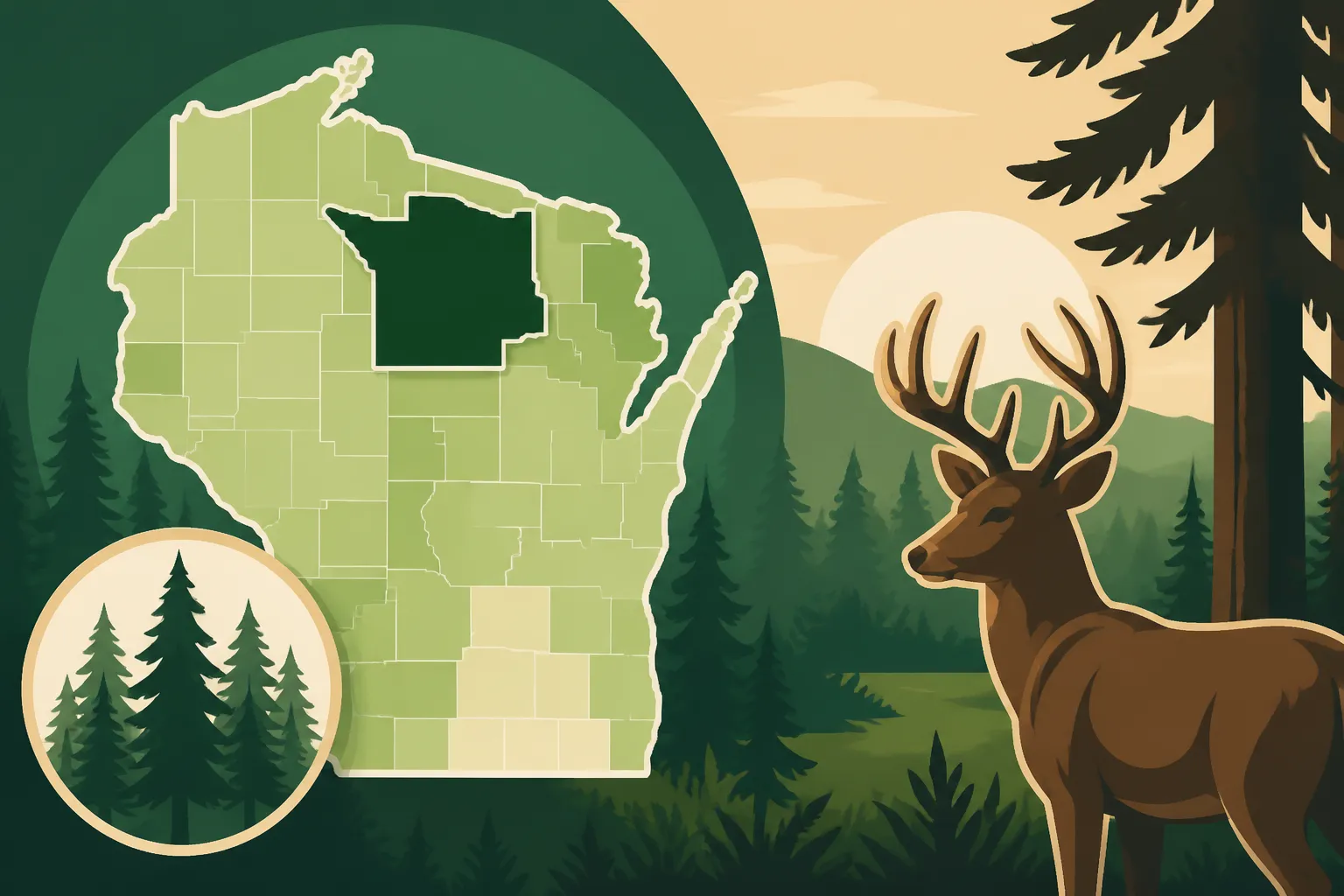
When you ask about Wisconsin's most forested county, the answer that consistently rises to the top is Vilas County. Situated in the very northern reaches of the state, Vilas County is an absolute treasure trove of lakes and forests. It's home to a huge portion of the Northern Highland-American Legion State Forest, one of Wisconsin's largest state forests. This means vast, unbroken tracts of mixed conifer and hardwood forests, dotted with thousands of lakes and flowages.
For deer hunters, this means adapting to a different kind of whitetail. Northern Forest deer often live at lower densities than their farmland cousins, but they also tend to be tougher, more elusive, and live longer, meaning bigger racks. Where Northern Forest Bucks Bed often involves navigating dense swamps, thick popple stands, or deep cedar pockets. It's truly big woods hunting. Beyond deer, Vilas County is prime territory for Grouse and Woodcock Hunting in Wisconsin, with abundant aspen cuts and alder runs. Bear hunters also find fantastic opportunities here, as the county sits squarely within prime bear habitat. The interconnectedness of the forest and water makes it an incredibly rich ecosystem for a diverse range of game.
Other Northern Forest Giants: Bayfield, Iron, Sawyer, and Price Counties
While Vilas County might be the king, several other northern Wisconsin counties are close contenders and offer equally incredible hunting experiences. These include Bayfield, Iron, Sawyer, and Price counties, all of which boast immense forested acreage, much of it within the Chequamegon-Nicolet National Forest or extensive County Forests.
- Bayfield County: Home to a significant portion of the Chequamegon National Forest and vast Bayfield County Forest lands, this county offers excellent opportunities for deer, bear, grouse, and woodcock. Its proximity to Lake Superior also creates unique microclimates and forest types. Hunters might find themselves exploring areas with old-growth hemlock or vast pine plantations, requiring adaptable tactics. Hunting the Chequamegon Side for Grouse is a classic pursuit here.
- Iron County: Often overlooked, Iron County is another gem. Heavily forested and rugged, it's known for its abundant public land, including parts of the Chequamegon-Nicolet National Forest and sprawling Iron County Forest. This is deep woods country, perfect for hunters seeking solitude and a challenge. Deer here often respond well to traditional Still-Hunting Wisconsin Cedar Swamps techniques, especially after a fresh snow.
- Sawyer County: With large sections of the Chequamegon National Forest and the Flambeau River State Forest, Sawyer County offers diverse hunting. It's known for its healthy bear population and fantastic grouse hunting in its regenerating timber stands. The terrain can be quite varied, from rolling hills to vast lowlands, offering a range of tactical opportunities.
- Price County: Similar to its neighbors, Price County is heavily forested with a mix of national forest and county forest lands. It's excellent deer and bear country, with plenty of remote access. These counties are where you'll appreciate the detailed maps provided by services like onX Hunt or GoHunt, which delineate property boundaries and forestry roads, making it easier to find those untouched pockets of public land.
Central Wisconsin's Unexpected Forested Havens: Jackson and Juneau Counties
While the north gets most of the attention for its vast forests, central Wisconsin holds some surprisingly large and huntable timber blocks, particularly Jackson and Juneau counties. These counties are home to the Black River State Forest, a massive expanse of pine and oak forest that stands in stark contrast to the agricultural fields surrounding it.
The Black River State Forest and surrounding public lands in these counties provide excellent habitat for deer, especially with its mix of oak ridges, pine plantations, and river bottoms. Turkeys also thrive in these woods, offering great spring and fall hunting opportunities. It’s a different feel from the far north; while still heavily forested, the landscape might be flatter in some areas, with more extensive pine stands. Hunters here often focus on Hunting a Funnel Between Two Swamps or along the edges of the vast pine plantations that provide both cover and food for deer. Access is generally good via a network of forest roads, but getting off the beaten path is still key to finding unpressured game.
Navigating and Maximizing Your Hunt in Forested Counties
Having a county with a lot of forest is one thing, but knowing how to effectively hunt it is another. These large, often remote areas demand different strategies and tools than hunting small woodlots or agricultural fringes. Embracing technology and traditional woodsmanship in equal measure will lead to the most success.
Utilizing Mapping Tools for Forested Public Land
Gone are the days when a paper map and compass were your only tools for navigating vast public lands. While those skills are still incredibly valuable, modern mapping applications like onX Hunt and GoHunt have revolutionized how we interact with forested hunting grounds. In counties like Vilas or Bayfield, with their intricate patchwork of national, state, and county forests, these apps are indispensable.
Imagine you're deep in the Chequamegon-Nicolet, miles from a marked trail. With an app like onX Hunt, you can:
- Identify Public vs. Private Land: Instantly see property lines and land ownership, preventing accidental trespassing, which is crucial when boundaries can be less obvious in dense woods.
- Locate Access Points: Discover hidden parking areas, walk-in access points, or old logging roads that might not be on standard road maps.
- Analyze Topography: Understand elevation changes, creek drainages, and ridge lines without having to hike every inch. This is vital for predicting Wind and Thermals in a Coulee or understanding where deer will travel.
- Mark Waypoints: Drop pins for sign, potential stand locations, historical rub lines, or recovery points, building a detailed map of your hunting area over time.
- Download Offline Maps: Crucially, in many of these remote, heavily forested areas, cell service is spotty or nonexistent. Downloading maps for offline use before you leave home ensures you always have your navigation tools, no matter how deep you go. This can be the difference between a successful hunt and a frustrating, or even dangerous, situation.
Tactics for Hunting in Dense Forest Environments
Hunting in heavily forested counties requires a strategic mindset. You can't just set up on a food plot like you might in farm country. Instead, you'll need to focus on natural funnels, bedding areas, and subtle food sources.
- Still-Hunting: This is a classic big woods tactic. Moving slowly, stopping frequently, and using your binoculars to scan for deer sign or parts of an animal can be incredibly effective. Focus on transitions – where pine meets hardwood, or where a swamp gives way to an oak ridge.
- Scouting is Paramount: Pre-season scouting, even without boots on the ground, using aerial maps, can reveal hidden clearcuts, old logging roads, or stands of mast-producing trees. Pay attention to Hunting After an Acorn Failure, as deer will shift their patterns. During the season, look for fresh rubs, scrapes, and tracks along natural travel corridors. In these vast forests, finding the deer is often the biggest challenge.
- Understanding Habitat Diversity: A "forest" isn't uniform. A dense cedar swamp will hold deer in bitter cold, while an aspen stand will attract grouse, and a mature oak ridge will draw turkeys and deer alike when acorns drop. Learn to read the subtle changes in forest type and how they influence game movement. For deer, understanding Where Northern Forest Bucks Bed in different conditions is critical.
- Calling and Rattling: In some of these larger forest blocks, particularly during the rut, aggressive calling and rattling can be very effective, especially where deer might not be as pressured as in smaller woodlots. Knowing when and how to vary Rattling Volume in Thick Cover or use Grunt Calls in Mature Timber can draw in a curious buck.
Respecting the Resource: Regulations and Ethical Considerations
Hunting in Wisconsin's forested counties comes with responsibilities. These wild lands are a shared resource, and ethical conduct ensures they remain viable for future generations.
- Treestand Rules: Always check regulations for leaving treestands on public land. Most public lands in Wisconsin have rules regarding when and how long stands can be left up, and often require them to be clearly marked with your name and customer ID.
- Baiting and Feeding Bans: Wisconsin has ongoing baiting and feeding bans in many counties, particularly those with Chronic Wasting Disease (CWD) detections or adjacent to them. It's crucial to know Which Wisconsin Counties Ban Baiting before you head out, as these regulations are strictly enforced. Even in counties without a ban, some public lands may have their own restrictions.
- Leave No Trace: Pack out everything you pack in. This includes spent shell casings, food wrappers, and any flagging tape you might use. The goal is to leave the forest as pristine as you found it, or even better.
- Respect Other Users: These forested areas are used by hikers, campers, bird watchers, and other outdoor enthusiasts. Be mindful of their presence, especially during peak hunting seasons, and share the woods responsibly.
Hunting in Wisconsin's most forested counties offers an unparalleled opportunity for adventure, challenge, and connection with nature. With the right knowledge, tools, and respect for the land, you can unlock some truly memorable experiences in these wild spaces.
| County | Primary Forest Types | Key Game Species | Notable Public Land | Hunting Focus |
|---|---|---|---|---|
| Vilas | Mixed Hardwoods, Pine, Aspen, Conifer Swamps | Deer, Bear, Grouse, Woodcock | Northern Highland-American Legion State Forest | Big woods deer, grouse in aspen, bear |
| Bayfield | Mixed Hardwoods, Pine, Hemlock, Aspen | Deer, Bear, Grouse, Woodcock, Elk | Chequamegon National Forest, Bayfield County Forest | Deep timber deer, grouse, bear, potential elk |
| Iron | Mixed Hardwoods, Pine, Conifer Swamps | Deer, Bear, Grouse, Woodcock | Chequamegon National Forest, Iron County Forest | Remote deer, bear, still-hunting |
| Sawyer | Mixed Hardwoods, Pine, Aspen | Deer, Bear, Grouse, Woodcock | Chequamegon National Forest, Flambeau River State Forest | Bear hunting, grouse in younger timber |
| Price | Mixed Hardwoods, Pine, Aspen | Deer, Bear, Grouse, Woodcock | Chequamegon National Forest, Price County Forest | Consistent deer & bear habitat, remote access |
| Jackson | Pine Plantations, Oak/Mixed Hardwoods, River Bottoms | Deer, Turkey, Small Game | Black River State Forest, Jackson County Forest | Central Wisconsin deer, turkey, pine country |
| Juneau | Pine Plantations, Oak/Mixed Hardwoods, Marsh Edge | Deer, Turkey, Waterfowl, Small Game | Necedah National Wildlife Refuge, Juneau County Forest | Deer on marsh edges, central WI turkeys, waterfowl |
Disclaimer
This article is for general informational purposes only and does not constitute professional advice. Laws, prices and regulations vary by location and change over time. Consult a qualified professional for guidance on your specific situation.