Baiting Rules on Wisconsin Public Land
Hunting on Wisconsin's vast public lands offers incredible opportunities, but it also comes with a unique set of challenges and, often, a great deal of confusion, especially when it comes to baiting regulations. Many hunters arrive at their favorite public hunting grounds with a bag of corn or some deer blocks, only to realize too late that they're in violation of strict state laws, not to mention ethical guidelines specific to shared hunting spaces. This guide is here to untangle the complexities of baiting rules on Wisconsin public land, helping you understand what's allowed, what's definitely not, and how to successfully pursue game without running afoul of the law or compromising the integrity of the hunt.
Understanding Wisconsin's General Baiting and Feeding Regulations
Let's start by clarifying the fundamental distinctions between baiting and feeding as defined by Wisconsin law, because they aren't quite the same, even if both involve putting out attractants. "Baiting" generally refers to placing, depositing, or distributing any material to attract wild animals for hunting purposes. This can include everything from corn, carrots, apples, or molasses blocks, to mineral licks and even certain types of liquid attractants. The intent here is specifically to draw animals closer for a harvest.
"Feeding," on the other hand, usually refers to the placement of food for observation or enjoyment, outside of a hunting context. While both are regulated, the rules often differ depending on the specific animal and location. For deer, which is often the primary focus when discussing baiting, Wisconsin has strict regulations that impact both practices. These rules are primarily designed to mitigate the spread of Chronic Wasting Disease (CWD) and to ensure fair chase principles. It’s not just about what you put out, but also where and when you put it out, and crucially, for what purpose.
The most impactful factor influencing baiting and feeding rules in Wisconsin is the presence of Chronic Wasting Disease (CWD). When CWD is detected in a county, that county, and often its immediately adjacent neighbors, are subjected to baiting and feeding bans. These bans are not temporary; they usually last for an extended period, often two years from the last CWD detection in the adjacent counties, and potentially indefinitely in the core CWD-affected counties. This means that a county that has had a CWD positive deer will have a ban, and any county bordering that CWD-positive county will also implement a two-year ban from the date the CWD-positive deer was detected in the adjacent county. It’s a cascading effect designed to reduce deer congregation and limit disease transmission.
The duration of these bans can vary significantly. In a CWD-affected county, the ban often remains in place indefinitely, subject to review and new scientific understanding. For counties adjacent to a CWD-positive detection, the ban is typically for a period of two years from the date of the detection. This often leads to a patchwork of regulations across the state, making it incredibly challenging for hunters to keep up without constantly checking official resources. What might be legal in one county could be strictly prohibited just across the county line, leading to understandable frustration for hunters trying to do the right thing. It's not uncommon for hunters to be caught off guard by a new ban in a county they've hunted for years. You really need to stay on top of the current CWD map. Wisconsin CWD Testing for Hunters is a good resource to stay informed.
The Strict Reality of Public Land Baiting in Wisconsin
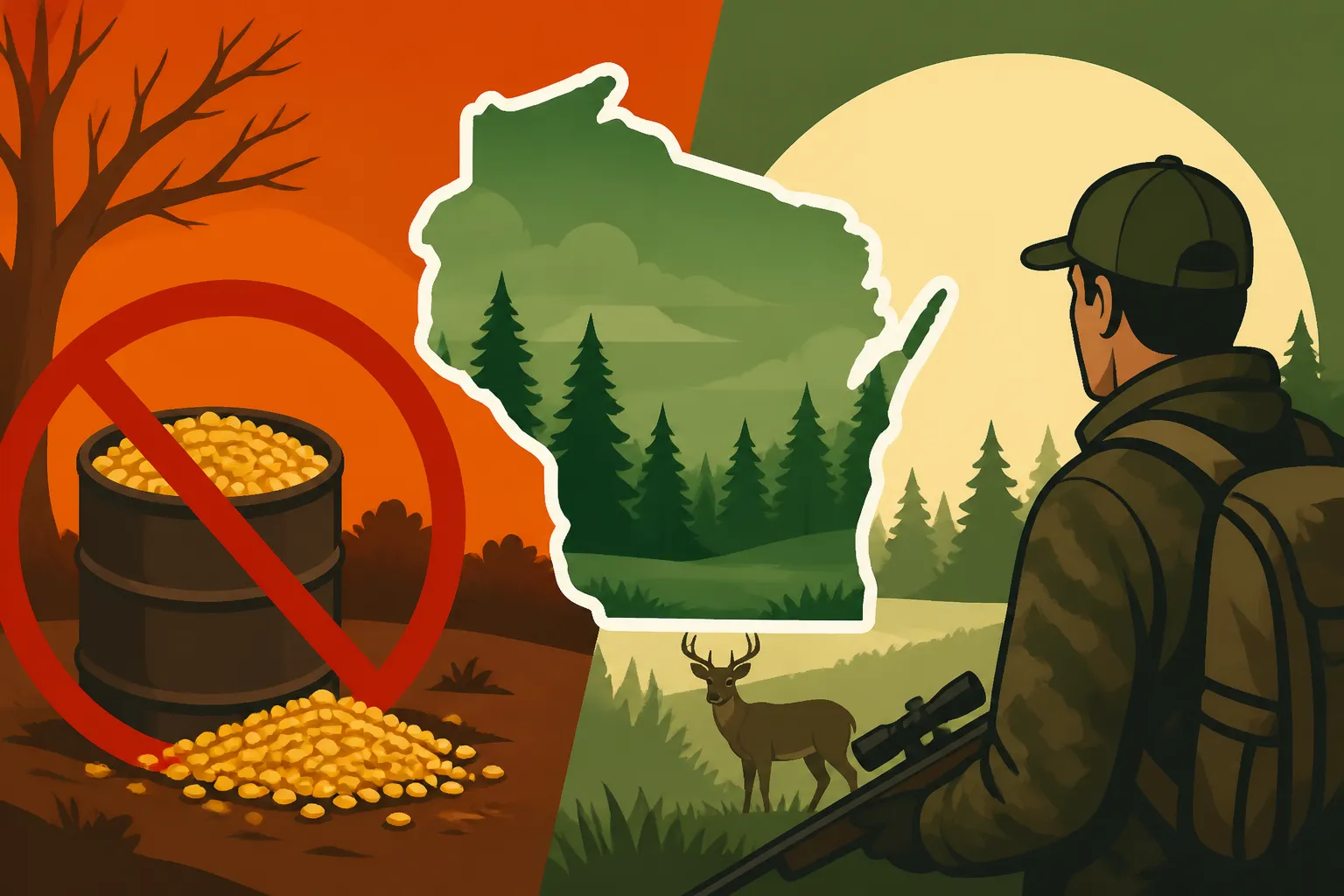
When it comes to baiting on public land in Wisconsin, the rules are even more stringent and generally lean heavily towards prohibition. While some specific state regulations might allow for limited baiting in certain non-CWD counties on private land (with quantity restrictions and timing rules), this allowance almost universally vanishes when you step onto publicly accessible hunting grounds. Whether it's a state forest, county forest, national forest, or state wildlife area, the default stance is usually no baiting, period. This overarching prohibition is in place for several critical reasons beyond just CWD.
One primary reason public land operates under stricter rules is to maintain an equitable and fair hunting experience for everyone. Public lands are, by definition, shared resources. If baiting were widely permitted, it could lead to "claiming" prime spots with bait piles, concentrating deer artificially, and creating an uneven playing field. It also becomes incredibly difficult for land managers to monitor compliance with baiting limits (such as the two-gallon rule for private land in non-CWD counties) across thousands of acres of public access. Furthermore, unintended consequences arise, such as attracting non-target species or habituating wildlife to human-provided food sources, which can lead to conflicts. The intent is to encourage hunting based on scouting, knowledge of game behavior, and woodsmanship, rather than reliance on artificial attractants.
The consequences of non-compliance with baiting regulations on public land can be severe. Hunters found violating baiting bans face significant fines and potential revocation of hunting privileges. Enforcement officers are well aware of the common temptation to bait, and they actively patrol public lands, often checking areas known for deer activity or places that show signs of previous baiting. It’s not a situation where ignorance of the law is a valid excuse, and claiming you didn't know the rules for a specific public parcel or CWD zone will likely not spare you from a citation. It’s your responsibility as a hunter to know and follow the rules for your chosen hunting location. Before you head out, tools like the Wisconsin DNR's Hunt Wild App or mapping applications like onX Hunt are invaluable for checking local regulations and land ownership boundaries. You can also explore Wisconsin Public Access Lands Maps to understand where you can hunt.
Even if you're hunting in a county where baiting might be legal on private land, you cannot assume it's okay on the public land within that same county. Always double-check the specific rules for the public property you intend to hunt. State forests, national forests, and wildlife areas often have their own specific use regulations that are even stricter than general state law. For instance, even if a county doesn't have a CWD baiting ban, many state-managed public lands will still prohibit baiting outright to prevent conflicts and maintain natural wildlife patterns. The safest bet, if you're unsure, is to assume baiting is not allowed on Wisconsin public land. It removes any doubt and ensures you're hunting ethically and legally. This approach also aligns with the spirit of Hunting Deer Without Bait in Wisconsin.
Why These Rules Exist and What They Aim to Achieve
The regulations surrounding baiting on Wisconsin public lands aren't arbitrary; they are the result of careful consideration of wildlife management, disease control, and ethical hunting practices. Understanding the "why" behind these rules can help hunters not only comply but also appreciate their importance for the health of the deer herd and the future of hunting.
The primary driver behind many of Wisconsin's baiting bans, particularly in recent years, is the ongoing battle against Chronic Wasting Disease (CWD). This neurological disease is always fatal to deer and elk, and there is no known cure. Research has shown that CWD prions (the infectious proteins) can persist in the environment for years, and concentrating deer at baiting sites significantly increases the likelihood of direct deer-to-deer transmission, as well as indirect transmission through contaminated soil or saliva left behind. When multiple deer repeatedly visit a small bait pile, they are essentially sharing a communal feeding trough, which is a perfect vector for disease spread. The bans are a critical tool in attempting to slow the spread of this devastating disease, which poses a serious long-term threat to Wisconsin's deer population and hunting heritage. Chronic Wasting Disease in Wisconsin has fundamentally reshaped how deer are managed.
| Baiting/Feeding Action | General Rule (Non-CWD County, Private Land) | Public Land Rule (Most Often) | Rationale/Impact |
|---|---|---|---|
| Deer Baiting | Limited to 2 gallons, spread out, removed daily (check local rules) | PROHIBITED | CWD mitigation, fair chase, reduce conflicts |
| Deer Feeding | Generally prohibited for viewing | PROHIBITED | CWD mitigation, prevent habituation |
| Mineral Licks | Limited to 2 gallons for deer baiting, removed daily | PROHIBITED | CWD transmission, soil contamination |
| Food Plots | Generally allowed (agricultural practice) | ALLOWED (if planted by land manager) | Habitat improvement, natural food source |
| Attractants (non-food) | Allowed (e.g., scents, lures, calls) | ALLOWED | Does not concentrate deer on food |
Beyond CWD, the regulations also uphold the principle of fair chase. Fair chase is a cornerstone of ethical hunting, emphasizing that hunters should not have an unfair advantage over the animals they pursue. It’s about respecting the animal's natural instincts and relying on a hunter's skill, patience, and knowledge of the wild. While opinions on what constitutes "fair chase" can vary, many feel that baiting, especially on public land where others are also hunting, can detract from this principle by making animals unnaturally vulnerable. By prohibiting baiting, land managers encourage hunters to scout for natural food sources, understand bedding areas, and interpret deer movement patterns, leading to a more challenging and, arguably, more rewarding experience. It's about hunting deer on their terms, in their natural environment. This often means focusing on Late-Season Food Sources for Whitetails or understanding Scrape Lines Along a Logging Road.
The rules also aim to prevent unintended ecological consequences. Baiting can draw deer and other wildlife out of their natural movement patterns, concentrating them in specific areas. This can lead to localized over-browsing, increased competition for natural food, and even alter predator-prey dynamics. It can also habituate animals to human presence and food, which can sometimes lead to nuisance issues in residential areas or greater conflicts with humans. Furthermore, baiting can attract non-target species like bears, coyotes, or even domestic animals, creating unexpected interactions and potential hazards. By limiting artificial attractants, the goal is to promote a more natural balance within the ecosystem, allowing wildlife to thrive based on the available natural resources.
Ethical and Effective Alternatives to Baiting on Public Land
For many hunters, the idea of not using bait can feel like losing an advantage, especially if they've relied on it in the past. However, hunting public land in Wisconsin without bait is not only possible but can lead to a deeper understanding of deer behavior and more satisfying hunts. It forces you to become a better hunter, relying on observation, strategy, and patience.
One of the most powerful tools in a bait-free hunter's arsenal is thorough scouting and a deep understanding of natural food sources. Instead of creating a food source, you're learning to find and interpret the ones nature provides. This means spending time in the woods before the season, even during the off-season, identifying key mast crops like acorns, identifying browse lines, locating stands of apples (if available), or understanding agricultural patterns on nearby private land. Deer are constantly on the move, searching for food, water, and cover, and these natural resources dictate their movements. Learning to read the landscape for oak ridges producing acorns, forgotten apple trees, or areas where deer are consistently browsing on specific plants will put you miles ahead of someone just waiting over a pile of corn. Apps like onX Hunt can help you identify different timber types and potential food sources from aerial imagery, giving you a head start before boots hit the ground. For more on this, check out Hunting After an Acorn Failure and Late-Season Food Sources for Whitetails.
Beyond food, understanding deer movement and habitat is paramount. Deer are creatures of habit, often using the same travel corridors between bedding areas, food sources, and water. Public lands, while pressured, often have subtle terrain features that act as natural funnels or pinch points. This could be a narrow strip of timber between two swamps, a saddle on a ridge, or a creek crossing. Learning to identify these areas by studying topographic maps (which GoHunt can assist with, or by using the layers on onX Hunt), or better yet, by walking the terrain, can reveal prime ambush locations. Look for existing deer trails, rub lines, and scrapes that indicate consistent travel and activity. Deer also seek thermal cover in cold weather, dense conifer stands in deep snow, and cool, shaded bottoms during warmer archery seasons. Knowing where deer seek refuge during different conditions is just as important as knowing where they eat. This kind of detailed scouting will often lead you to success. Learning to recognize these patterns will make you a much more adaptable and skilled hunter. Scouting Wisconsin Public Land Before Season is a great starting point for this.
Finally, effective use of calls and scents can significantly enhance your chances without relying on bait. Grunt tubes, doe bleat calls, and rattling antlers can mimic natural deer communication, drawing curious or aggressive bucks into range. During the rut, the sound of sparring bucks can be irresistible. Similarly, natural deer scents, such as estrous doe urine or buck interdigital gland scents, can pique interest and draw deer to your stand site, especially when placed strategically along travel corridors or near mock scrapes. These methods rely on tricking the deer's natural instincts and sensory perceptions, rather than providing an artificial food reward. They engage the deer on a more primal level and maintain the spirit of fair chase. Just remember that legal shooting hours apply, and that means being ready early and staying late. Rattling and Grunting in Wisconsin offers some excellent insights into making these techniques work for you. By embracing these bait-free strategies, you're not just complying with the law; you're developing a deeper connection to the land and the animals you pursue, becoming a more skilled and ethical hunter in the process.
Disclaimer
This article is for general informational purposes only and does not constitute professional advice. Laws, prices and regulations vary by location and change over time. Consult a qualified professional for guidance on your specific situation.