Hunting the Wisconsin Driftless Area
Hunting the Wisconsin Driftless Area can feel like stepping into a whole different world compared to the flat fields of the south or the dense forests up north. The unglaciated terrain with its steep coulees, sharp ridges, and winding valleys presents unique challenges and incredible rewards for those willing to embrace its rugged beauty. If you've ever felt frustrated trying to navigate this dramatic landscape or decipher how deer move through such broken country, this guide is for you. We're going to dive deep into understanding this distinctive region, equipping you with the knowledge and strategies to confidently pursue game in the breathtaking Wisconsin Driftless.
Understanding the Driftless Area's Unique Landscape
The Wisconsin Driftless Area is a geological anomaly, a truly special corner of the state that somehow escaped the flattening and scouring effects of the last glacial period. This lack of glacial "drift" is what gives it its name and its incredibly distinct character. It's a place where the landscape tells a story of millions of years of erosion, creating a hunter's paradise unlike any other.
Geological Formation and Topography
Imagine a vast, ancient seabed slowly uplifted, then carved by countless streams and rivers over eons, never scraped flat by a glacier. That's essentially the story of the Driftless. What you get are dramatically steep hillsides, deep, winding valleys often called "coulees," and sharp, finger-like ridges that stretch for miles. This isn't just rolling hills; we're talking about elevation changes of several hundred feet in a very short distance.
The resulting topography is a dizzying mix of bluffs, benches, and draws, all interconnected. For deer, this means an abundance of natural cover, hidden travel routes, and varied microclimates. For hunters, it means every step is a climb or a descent, every vista breathtaking, and every deer pursuit a true test of grit. Understanding the lay of the land – how water flows, where the steepest slopes are, and where the subtle benches exist – is the first step to unlocking its secrets. The constant undulation defines deer movement more here than almost anywhere else.
The valleys, or coulees, were carved by ancient rivers and streams, and many still have active waterways at their bottoms. These natural drainages act as highways for deer, providing both water sources and concealed travel. The bluffs are the sheer, rock-faced cliffs that often cap the steepest sections, offering impenetrable escape routes for pressured deer. Finally, the ridges are the long, often wooded spines that separate the coulees, providing high ground for bedding and overlooking vast areas.
Vegetation and Habitat Diversity
The varied topography of the Driftless directly translates into an incredible diversity of vegetation, creating a mosaic of prime deer habitat. On the sun-drenched ridge tops, you'll often find mature oak and hickory forests, absolutely crucial for acorn production – a primary food source for whitetails, especially in the fall. These stately hardwoods also provide excellent cover and elevated vantage points for deer.
As you descend into the coulees, the vegetation changes. North-facing slopes often hold cooler, moister conditions, favoring different tree species and denser undergrowth. South-facing slopes, conversely, are warmer and drier, sometimes holding more open timber or even pockets of prairie grasses. Crucially, many coulee bottoms and steep hillsides are choked with dense stands of cedar, hawthorn, and other brushy species. These thickets are absolute sanctuaries for deer, offering unparalleled thermal cover in winter and security cover year-round. They can be nearly impossible for humans to navigate quietly, making them perfect bedding locations for mature bucks.
Interspersed throughout this forested landscape are pockets of agriculture, particularly in the wider valley bottoms. Corn, soybeans, alfalfa, and winter wheat fields provide abundant food sources. This creates a classic food-to-cover dynamic, with deer bedding in the security of the coulees and timber, then moving into the fields to feed, often traveling along the edges of the woods or through hidden draws. This rich blend means deer have everything they need right at their fingertips, making them residents rather than transient visitors.
Water Sources and Their Importance
In any hunting scenario, water is a lifeblood, but in the steep, sometimes dry conditions of the Driftless, its importance is amplified. The unglaciated nature of the region means that groundwater often surfaces as springs, creating small, trickling creeks that feed into larger streams and rivers in the valley bottoms. These consistent water sources are absolute magnets for deer, especially during warmer weather or after a dry spell.
Deer will habitually travel along these waterways, using them as natural corridors that offer both sustenance and cover. The moist ground near springs and creeks also tends to promote lush vegetation, providing additional forage. Knowing where these water sources are – even small, seeping areas on a hillside – can be key to understanding deer travel patterns. Often, a deer trail will follow a creek bed for a stretch before veering up a draw to a bedding area.
Beyond drinking water, the presence of waterways influences thermal cover. The dense, evergreen cover of cedar swamps and thickets, often found along creek bottoms or on cooler slopes, provides critical refuge from harsh winds and deep snow in winter, and relief from summer heat. Deer will actively seek out these areas for bedding, knowing they offer both security and a stable microclimate. Identifying these specific water-influenced habitats is paramount for stand placement and still-hunting strategies.
Navigating Public Hunting Opportunities in the Driftless
The sheer amount of public land in the Driftless Area might surprise you, given its agricultural reputation. From vast state forests to scattered wildlife areas and even private lands open through public programs, there's ample ground to explore. However, simply knowing it's "public" isn't enough; understanding the different types of public access and how to best utilize them is crucial for success.
State Wildlife Areas and Forests
Wisconsin's Department of Natural Resources (DNR) manages numerous State Wildlife Areas and State Forests throughout the Driftless region, offering significant public hunting opportunities. These lands are often a mix of mature timber, brushy clearings, and sometimes even agricultural fields or wetlands specifically managed for wildlife. They're designed to provide diverse habitats and recreation opportunities.
Hunting these areas often comes with challenges like higher hunter pressure, especially during opening weekends of popular seasons. However, their size means that if you're willing to walk further and climb deeper, you can often find unpressured pockets. Look for areas with difficult access points, steep climbs, or thick cover that might deter casual hunters. These are often the spots where older, wiser deer choose to live. Understanding the specific management goals of each area can also give you clues; some are managed for upland birds, others for waterfowl, but almost all hold deer.
Success on State Wildlife Areas and Forests in the Driftless often boils down to aggressive scouting, both pre-season and during. Don't be afraid to put on miles, looking for subtle benches, obscure rubs, and hidden bedding areas that might be overlooked by others. Utilize mapping tools (more on that soon!) to identify elevation changes and potential funnels that might not be obvious from the road. The deer here are masters of using the terrain to their advantage, so you need to think like they do.
County Forests and Managed Forest Law Lands
Beyond state-managed lands, Wisconsin has an extensive system of County Forests, especially in the northern parts of the Driftless, and a significant amount of private land enrolled in the Managed Forest Law (MFL) program that is open to public hunting. These categories represent massive acreage and can be incredible resources if you know how to find and use them.
County Forests are exactly what they sound like: timberlands managed by individual counties. They are typically open to public hunting and often see less pressure than some state-managed areas, particularly those that aren't advertised heavily. These lands are often actively logged, which means you'll find a mix of mature timber, young clear-cuts, and regenerating forests. These varied age classes create fantastic deer habitat, offering both food and thick cover. Check with individual county forestry departments for maps or information, though many are well-marked on digital mapping platforms.
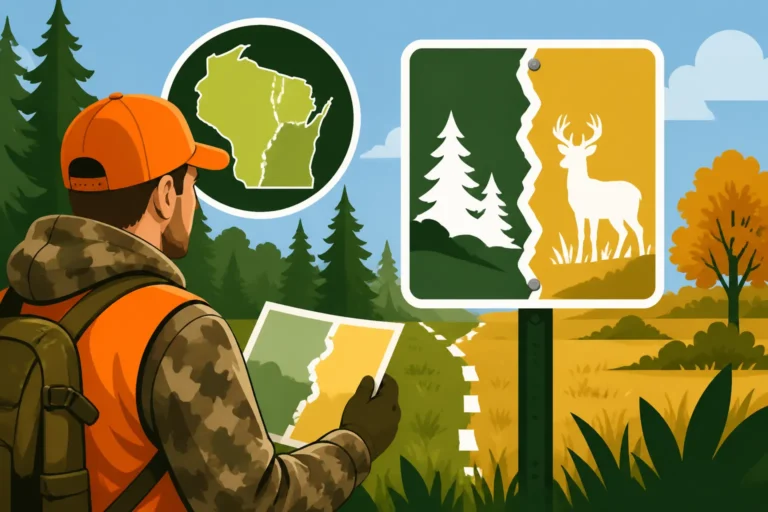
Managed Forest Law (MFL) lands are a unique Wisconsin program. Private landowners receive a tax incentive for managing their forest lands, and in exchange, they often agree to open portions of their property to public recreation, including hunting. It's crucial to understand that not all MFL lands are open; landowners choose between "open" and "closed" classifications. You must verify the status of an MFL parcel before hunting it. Look for yellow MFL signs with "Open" clearly visible, or consult DNR MFL maps, which are typically available online. Finding these open MFL parcels can be like discovering hidden gems, often providing access to prime ground that borders otherwise inaccessible private land.
Using Mapping Tools for Public Land Identification
In the rugged, convoluted landscape of the Driftless, digital mapping tools aren't just a convenience; they are an absolute necessity. Trying to navigate this country with just a paper map and compass is a valiant effort, but it pales in comparison to the power of a good GPS-enabled app. This is where tools like onX Hunt and GoHunt truly shine, transforming the way you scout and hunt.
These platforms allow you to overlay property boundaries (public, private, MFL, etc.) directly onto detailed topographic maps and aerial imagery. This means you can see exactly where public land ends and private land begins, preventing accidental trespassing – a common concern in checkerboarded farm country. More importantly, they allow you to "pre-scout" from the comfort of your home. You can identify potential access points, pinpoint steep bluffs, locate hidden coulees, and mark down specific funnels or benches that look promising for a stand. For Entry Routes on Steep Driftless Ground, a mapping app is invaluable for finding the path of least resistance.
Beyond property lines, the topographic features are invaluable. You can read the contours of the land to understand where deer might be bedding (e.g., dense cover on a north-facing slope for cooling, or a south-facing slope for warmth), how they'll travel between a food source in a valley and a bedding area on a ridge, and where saddles or pinch points might occur. When you're standing on the ground, often obscured by thick timber or steep drops, having that bird's-eye view on your phone or GPS unit is a game-changer. It helps you orient yourself, track your progress, and verify that you're where you intended to be, even in the densest cover.
Deer Behavior and Movement in Coulee Country
The unique topography of the Driftless Area profoundly shapes deer behavior. These aren't your typical flatland deer that might cross an open field every evening. Driftless whitetails are masters of using elevation, cover, and thermals to their advantage, making them challenging but incredibly rewarding to hunt. Understanding their patterns is key to getting close.
Thermal Hubs and Bedding Areas
Deer in the Driftless are constantly thinking about their comfort and security, and the undulating terrain provides abundant options for both. This means they utilize different "thermal hubs" depending on the season and time of day. In the colder months, especially during late archery or the muzzleloader season, deer will heavily favor south-facing slopes. These slopes catch the most sun throughout the day, providing warmth and helping to melt snow, making travel easier and exposing more forage. Conversely, on scorching early archery days, deer will often bed on cooler, north-facing slopes or deep within thick, shaded cedar swamps in coulee bottoms to escape the heat.
Security is paramount for bedding. Look for dense cedar thickets, particularly on steep slopes or in the bottoms of coulees, as well as tangles of hawthorn, multiflora rose, and regenerating clear-cuts. These areas provide visual obstruction and make it difficult for predators (including hunters) to approach undetected. Often, a buck will bed just below the crest of a ridge, allowing him to observe the ridge top for danger while catching an updraft thermal to scent check the valley below.
These bedding areas aren't random; they're strategically chosen. A mature buck might have several preferred bedding sites based on wind direction, time of year, and pressure. Understanding which slopes provide thermal advantage and which thickets offer security is a critical part of pre-season scouting. When you find these areas, pay close attention to the trails leading in and out, as these will reveal the deer's preferred travel routes.
Ridge Top and Valley Bottom Travel Corridors
Deer in the Driftless move in predictable ways, once you learn to "read" the terrain. They rarely traverse directly up and down the steepest parts of a coulee unless spooked. Instead, they utilize more gradual paths, often creating distinct travel corridors.
One common pattern is traveling just off the ridge crests. Instead of walking directly on the very top of an exposed ridge, deer will often move along a bench or slightly down the side, where they have some cover and can use the subtle contours of the land for concealment. These "benches" – small, relatively flat areas on a steep hillside – can be fantastic ambush points, acting as natural highways. Similarly, saddles (low points along a ridge) are classic funnels, where deer will cross from one side of a coulee to another, or to access different drainages. Reading a Ridge Point for Deer Movement can reveal crucial travel lanes.
In the valley bottoms, deer will use the edges of fields, brush lines, and especially the creek bottoms as travel corridors. These provide excellent cover and reduce their exposure to open areas. The transition zones between the agricultural fields and the timbered slopes are also heavily utilized, particularly during feeding times. When you find sign (tracks, rubs, scrapes) in these transition areas, you know you're on a productive travel route. Learning to identify these natural funnels and pinch points is key to successful stand placement.
Influence of Wind and Thermals
If you hunt the Driftless and don't factor in wind and thermals, you're setting yourself up for failure. This is arguably the most critical aspect of hunting this terrain. The dramatic elevation changes create constantly shifting air currents that can quickly betray your presence.
In the mornings, as the sun begins to warm the valley floors, air rises. This creates an "updraft" thermal, pulling scent up the hillsides. As a result, deer bedding on the side of a coulee or on a ridge will often be able to scent check anything below them. In the evenings, as the sun sets and the air cools, the opposite happens: air flows down the hillsides, creating a "downdraft" thermal. This pulls scent down into the valleys. This phenomenon is often summarized as "thermals rise in the morning, fall in the evening."
Beyond these general rules, wind can swirl unpredictably in the coulees. A prevailing west wind might be coming from the north in a valley bottom, or it might be completely calm, with only thermals dictating air movement. Hunting directly on a ridge top means your scent will be carried down both sides, often making it a poor choice unless the wind is very strong and consistent. Understanding Wind and Thermals in a Coulee is essential.
For stand placement, this means you need to get creative. Often, positioning yourself horizontally along a hillside, rather than directly above or below a known deer trail, can allow you to hunt a specific thermal. You might set up higher than a bedding area in the morning to catch a deer moving down, or lower than a feeding area in the evening to catch them moving up. Always consider what your scent is doing relative to where you expect deer to be. A good quality wind checker is your best friend in the Driftless.
Effective Hunting Strategies for the Driftless Terrain
Hunting the Driftless demands a different approach than hunting flat timber or open fields. The steep, broken terrain, combined with smart, pressured deer, means you need to adapt your strategies. It's often a game of patience, stealth, and using the landscape to your advantage.
Still-Hunting and Scouting
Still-hunting is perhaps one of the most effective, yet underutilized, strategies in the Driftless. This method involves moving very slowly and deliberately through the woods, taking a few steps, then pausing for several minutes to observe, listen, and scan for deer. It's a method that works incredibly well in areas where deer are constantly moving or where traditional stand hunting is difficult due to swirling winds or unpredictable travel routes.
The key to successful still-hunting in this terrain is to use the contours of the land for concealment. Move along benches, behind bluffs, and through thick cover, always trying to stay out of sight while surveying the landscape. Pay meticulous attention to ground sign – fresh tracks, droppings, rubs, and scrapes. The Driftless is full of diverse vegetation, so understanding which plants deer are browsing on can also lead you to productive areas.
Scouting is an ongoing process here. Even during the season, when you're moving slowly through a new coulee, you're gathering information. Look for transition points, funnel areas where two drainages converge, or where thick cover meets a more open hardwood ridge. These are the places deer are most likely to travel. The more time you spend on the ground, learning the nuances of each specific piece of public land, the more successful you'll be. Embrace the climb, and you'll often find deer in unexpected places, far from the road hunters.
Treestand and Ground Blind Placement
Choosing the right location for a treestand or ground blind in the Driftless is critical, and often more complex than in flatter terrain. Given the swirling thermals, a stand that's perfect in the morning might be useless in the evening.
For treestand setups, focus on saddles along ridges, pinch points where dense cover funnels deer into a narrow travel corridor, or transition areas between bedding thickets and feeding grounds. Often, a stand placed about a third to halfway down a hillside can be effective, allowing you to intercept deer moving along a bench and giving you options for prevailing winds. Remember the thermals: if you plan to hunt an evening sit, you might want to be lower than an expected travel route to avoid your scent drifting down into it. Conversely, for a morning hunt, being higher might be advantageous. Hanging a Stand in a Wisconsin Coulee requires careful consideration of these factors, ensuring you have a clear shot while remaining undetected.
Ground blinds can also be highly effective, especially in areas with very steep terrain or dense cover where a treestand isn't practical. Brush in your blind meticulously, using natural materials from the surrounding area. Place them along field edges, at the confluence of several deer trails in a coulee bottom, or overlooking a natural browse area. The key is to break up the outline of the blind and ensure your scent is carried away from expected deer movement. On public land, ensure you understand the rules for leaving blinds overnight; typically, they need to be removed daily or clearly marked and placed a certain distance from trails. Using a Ground Blind on Wisconsin Public Land can be a great option.
Deer Drives and Group Hunting
While often associated with northern Wisconsin, deer drives can be incredibly effective in the Driftless, especially for busting deer out of those impenetrable cedar thickets and brush-choked coulees. The steep terrain forces deer into predictable escape routes, making drives a viable strategy for groups of hunters.
The key to a successful Driftless deer drive is careful planning and precise execution. Scout the area beforehand to identify the thickest bedding cover, known escape routes, and safe shooting lanes. Due to the severe topography, a smaller, more focused drive with three or four hunters can be more effective than a large, sprawling one. One or two "pushers" move slowly and deliberately through the thickest cover, while one or two "posters" are positioned ahead on a strategic ridge point, saddle, or valley bottleneck. Deer Drives With Three or Four Hunters can be a productive way to fill tags.
Safety is paramount. Everyone involved must know the plan, understand their roles, and be acutely aware of where other hunters are positioned. Communication via two-way radios can be a lifesaver in this broken country. Ensure posters have a clear, safe backdrop for shooting and that pushers are moving slowly enough to identify game before pushing it too hard. These drives are not about running deer; they're about moving them subtly and predictably through known funnels, giving the posters a shot at a walking deer.
Gear and Logistics for Driftless Hunters
Hunting the Driftless isn't just a mental game; it's a physical one. The terrain will test your endurance, your equipment, and your resolve. Having the right gear and understanding the logistical challenges of this unique landscape can make the difference between a successful hunt and a frustrating one.
Essential Gear for Steep Terrain
Your gear choices in the Driftless are more critical than ever. First and foremost, invest in high-quality hunting boots with excellent ankle support and aggressive traction. You'll be climbing steep, often slick hillsides, traversing rocky creek beds, and descending through leaf-covered slopes. A sprained ankle or a bad fall can quickly end a hunt, or worse. Waterproofing is also key, as you'll inevitably cross streams or encounter morning dew.
For those planning to use treestands, lightweight climbing sticks and stands are a must. You'll be packing them deep into rugged terrain, often uphill, so every pound counts. Consider saddle hunting for ultimate mobility and reduced weight, as it's particularly well-suited for dynamic stand placement in varied timber. A sturdy, comfortable backpack is also essential, capable of carrying all your day's essentials – water, snacks, layers, emergency supplies – without becoming a burden on long climbs.
Finally, a reliable GPS unit or a smartphone with a robust mapping app like onX Hunt or GoHunt is non-negotiable. Not only for identifying public land and scouting, but for navigation. It's incredibly easy to get turned around in the labyrinthine coulees, where every ridge looks the same from the bottom. Mark your truck, your stand, and any key features like water sources or thick bedding areas. Having a backup power bank for your phone is also a smart move.
Physical Preparation and Safety
The Driftless is not for the faint of heart, or for those who skip leg day. The constant elevation changes demand a good level of physical fitness. Long climbs up steep hillsides, especially when carrying a stand or a pack, will test your cardiovascular endurance and leg strength. Pre-season training that includes incline walking, hiking with a weighted pack, and core strengthening will pay dividends.
Safety in this rugged environment requires extra vigilance. If hunting alone, let someone know your exact hunting location and when you expect to return. If hunting with partners, consider carrying two-way radios, as cell service can be spotty in the deep coulees. A fully charged phone with emergency numbers stored is essential, but don't rely on it for constant communication. First Aid Kits for Remote Northwoods Ground are non-negotiable, stocked for cuts, sprains, and other common outdoor injuries.
Hunting partners should stick to a communication plan, especially during deer drives or when splitting up to cover ground. Blaze orange or pink is always recommended, even when not legally required, particularly during firearms seasons, to increase visibility in dense cover. Always be aware of your surroundings, identify potential hazards like steep drop-offs or loose rocks, and approach every step with caution.
Recovering and Processing Game in Difficult Areas
So, you've successfully harvested a deer in a deep coulee – congratulations! Now comes one of the toughest parts: getting it out. This isn't flat ground where you can easily drag a deer to your truck. Recovering a Deer From a Coulee Bottom can be an arduous, multi-hour ordeal.
Traditional deer carts are often useless on the steepest slopes and through dense brush. Your best bet is often to field dress the deer where it falls to lighten the load, then quarter it or use the "gutless method" to bone out the meat. A good game bag system and a stout frame pack become invaluable for carrying sections of meat out, requiring multiple trips but saving your back. Even dragging a field-dressed deer can be incredibly challenging uphill. Consider bringing a sturdy rope or a deer sled (though sleds are best in snow and on more gradual slopes) to assist.
If you're hunting with a partner, having two people can significantly ease the burden, allowing you to take turns pulling or carrying. Plan your extraction route before you even pull the trigger, if possible. Look for the most gradual ascent or the path with the least amount of impenetrable brush. Remember, getting a deer out of a Driftless coulee is a marathon, not a sprint. Take breaks, stay hydrated, and celebrate the hard-won venison.
Season-Specific Tactics for Driftless Deer
The Driftless Area offers excellent hunting opportunities throughout Wisconsin's long deer seasons, but the dynamic landscape means your tactics need to adapt as the calendar pages turn. Deer behavior shifts with the available food sources, breeding cycle, and prevailing weather, requiring hunters to be versatile.
Early Archery Season (September-October)
When Wisconsin's Bowhunting Wisconsin's Long Archery Season opens, the Driftless is typically lush and green, and temperatures can still be quite warm. Deer behavior during this period is highly focused on food and transitioning from their summer patterns. Early season hunters should prioritize scouting for primary food sources.
Acorns, particularly from red and white oak varieties, are absolute magnets. Locate oak ridges and observe which trees are dropping acorns, as deer will congregate under them. Agricultural fields – corn, soybeans, alfalfa – are also major drawcards. Look for deer trails leading from thick bedding cover in the coulees and timber to these feeding areas. Setting up along these transition lines, especially where they funnel through a narrow strip of woods or across a subtle bench, can be highly effective. Hunting a Standing Cornfield in Farm Country requires careful attention to wind direction and entry/exit routes.
Warm weather means scent control and meat care are paramount. Use scent-reducing sprays and charcoal-lined clothing. If you harvest a deer in warm weather, field dress it immediately and get it cooled down as quickly as possible. Consider packing game bags and a portable cooler to protect the meat on the journey out. Deer are still largely nocturnal during this period, so targeting early morning and late evening movements near food is key.
The Peak Rut (November)
November is when the Driftless truly comes alive for deer hunters. The peak rut brings increased deer movement, as bucks become much more active in their search for does. This is the time when even mature, reclusive bucks may be seen moving during daylight hours, often abandoning their typical cautious patterns.
During the rut, shift your focus from primary food sources to doe bedding areas and natural travel corridors that connect them. Ridge points, saddles, and the edges of dense cover become prime locations. Bucks will cruise these areas, scent-checking for receptive does. Rub lines and scrape lines will also become more active, indicating buck travel. Consider setting up on a ridge point that allows you to overlook multiple coulees or draws, giving you a chance to spot a cruising buck. Hunting the Peak Rut Week in Wisconsin is about being in the right place at the right time.
Aggressive calling strategies like rattling and grunting can be highly effective during the rut. Bucks are more apt to respond to sounds that mimic sparring rivals or a doe in heat. Position yourself strategically, ensuring good visibility and a clear shot lane, before initiating a calling sequence. Be ready, as a curious buck might appear quickly and from an unexpected direction.
Late Seasons (Muzzleloader, Late Archery, Holiday Hunts)
As winter sets in and temperatures plummet, deer behavior shifts once more. Survival becomes the driving force, and deer will prioritize persistent food sources and thermal cover. The muzzleloader season in December, followed by late archery and the holiday antlerless hunts, can be challenging but highly rewarding.
Focus your scouting on identifying food sources that remain available and attractive through the cold, snow-covered months. Standing cornfields that haven't been harvested, brassicas, or unpicked soybeans can be absolute deer magnets. If snow is on the ground, fresh tracks leading to these areas will be obvious. Deer will also congregate around natural food sources like browse in regenerating clear-cuts or specific mast trees that still hold nuts. Late-Season Food Sources for Whitetails are worth the effort to locate.
Thermal cover becomes critical. Deer will gravitate towards dense cedar thickets on south-facing slopes, which provide warmth from the sun and shelter from cold winds and snow. They will often yard up in these areas, meaning you might find multiple deer concentrated in a relatively small area. Still-hunting through these thickets, moving slowly and methodically, can be productive, or setting up on trails leading in and out. Patience, warm clothing, and minimizing your scent are crucial for success in the brutal cold of late season.
Beyond Deer: Other Hunting Opportunities
While the Wisconsin Driftless Area is synonymous with spectacular deer hunting, its diverse habitats and plentiful wildlife offer a wealth of other opportunities for the adventurous hunter. From gobbling turkeys to scurrying small game, there's always something to pursue in this unglaciated wonderland.
Wild Turkeys in the Driftless
The Driftless Area boasts a booming wild turkey population, making it one of the premier turkey hunting destinations in the state. Both spring and fall seasons offer fantastic opportunities for chasing these wary birds. The mix of mature oak ridges for roosting, agricultural fields for feeding, and dense coulee bottoms for nesting and cover creates ideal turkey habitat.
In spring, Calling a Wisconsin Gobbler Off the Roost at dawn from a ridge top, listening for his booming gobble echoing across the coulees, is an unforgettable experience. Setting up strategically in his flight path or attempting to draw him into a strut zone requires patience and skilled calling. Understanding how turkeys use the elevation – often flying down from ridge roosts to feed in valley bottoms – is key. For Turkey Tactics for Driftless Farm Edges, using decoys and setting up along field borders where birds frequently feed can be highly effective.
Fall turkey hunting offers a different challenge. Often, the best strategy is to locate a flock, break it up, and then call the scattered birds back together an hour or two later. The communication yelps and kee-kees of young birds are often irresistible to lonely individuals trying to regroup. These tactics work particularly well in the Driftless, where large flocks often frequent the same timbered ridges and valley bottoms.
Small Game and Furbearers
Don't overlook the abundance of small game and furbearers that thrive in the varied habitats of the Driftless. These hunts offer a great way to stay active, hone your woodcraft skills, and put delicious meat on the table outside of deer season.
Cottontail rabbits and snowshoe hares are plentiful in brushy areas, thickets, and regenerating clear-cuts, especially in the northern reaches of the Driftless. Walking through these areas with a good beagle can provide fast-paced action and a full game bag. Rabbit Hunting Thick Wisconsin Brush can be a great way to introduce new hunters to the sport. Squirrels – both gray and fox – are abundant in the oak and hickory forests on the ridge tops. A quiet still-hunt through these mast-producing woods on a crisp fall morning can yield a mess of squirrels for the pot. Look for cuttings under oak trees, indicating active feeding.
For those interested in predator hunting, coyotes roam throughout the Driftless, preying on small game and deer. Their opportunistic nature makes them challenging but rewarding to call. Early mornings or late evenings are often the best times, especially in winter when their pelts are prime. Position yourself on a ridge overlooking a valley, use electronic or mouth calls, and be patient. The varied terrain provides excellent concealment for both hunter and coyote, making for exciting encounters.
Here's a quick comparison of hunting characteristics across different Driftless terrain features:
| Terrain Feature | Typical Vegetation | Deer Movement Characteristics | Hunter Strategy Considerations |
|---|---|---|---|
| Ridge Top | Mature Oak/Hickory, more open | Cruising, bedding just off crest, crossing saddles | Stand hunt saddles, still-hunt edges, monitor wind |
| Coulee Side | Mixed hardwoods, thick brush, cedar | Benches for travel, thermal bedding, bedding security | Set stands on benches/funnels, use thermals to your advantage |
| Valley Bottom | Ag fields, thick brush, creek beds | Feeding, water access, concealed travel along creeks | Hunt food sources, track trails along water, use ground blinds |
| Bluffs/Steep Face | Rocky, sparse vegetation, some cedar | Escape routes, observation points | Avoid direct hunting, use for glassing; deer use as sanctuary |
This article is for general informational purposes only and does not constitute professional advice. Laws, prices and regulations vary by location and change over time. Consult a qualified professional for guidance on your specific situation.