Why Aspen Cuts Grow Grouse
Wisconsin aspen cuts provide ruffed grouse with dense hiding cover, critical nesting areas, and winter food sources like buds and catkins.
Know what you’re after.
Big game, small game, upland birds, and waterfowl — identification, behavior, rut and migration timing, and how each species moves through the season.
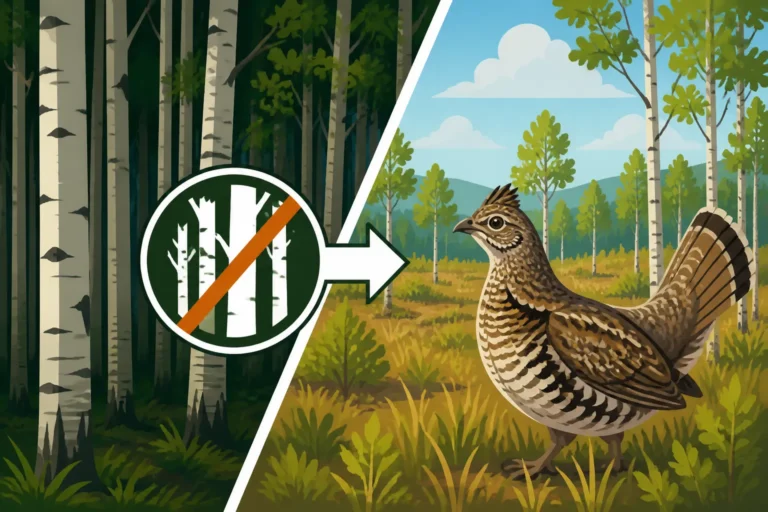
Wisconsin aspen cuts provide ruffed grouse with dense hiding cover, critical nesting areas, and winter food sources like buds and catkins.
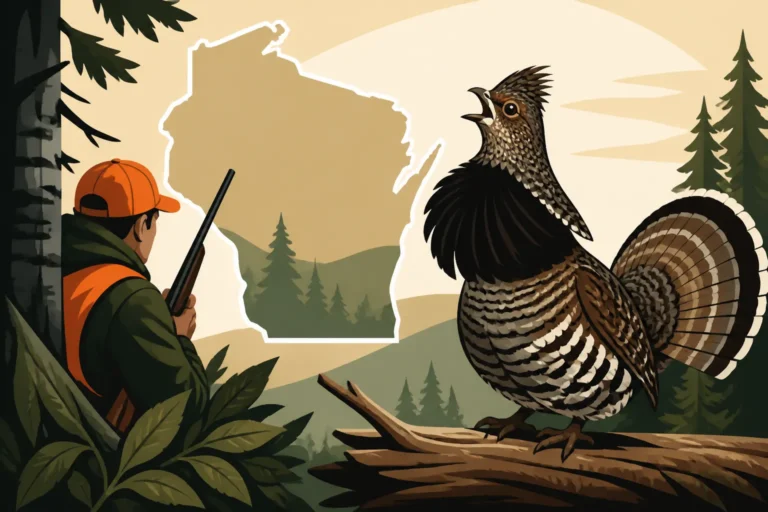
Wisconsin grouse drumming surveys explain ruffed grouse population trends and help hunters plan their seasons using spring survey counts.
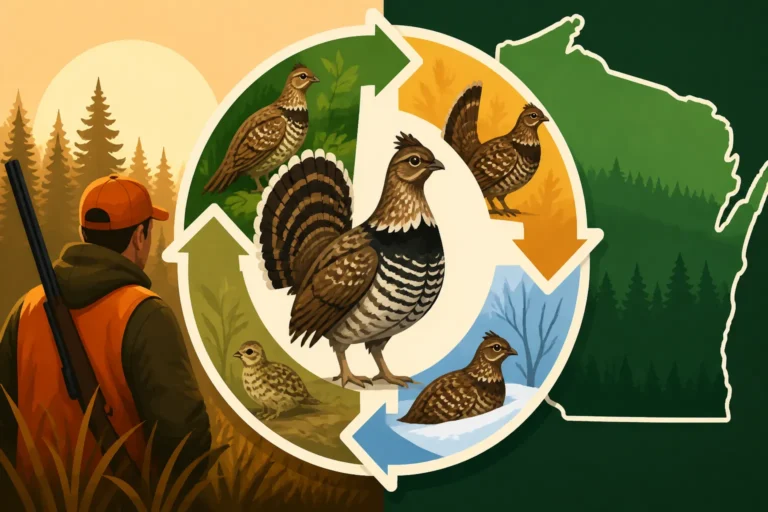
The Wisconsin ruffed grouse population cycle runs roughly eight to twelve years, featuring dramatic peaks followed by severe lows.
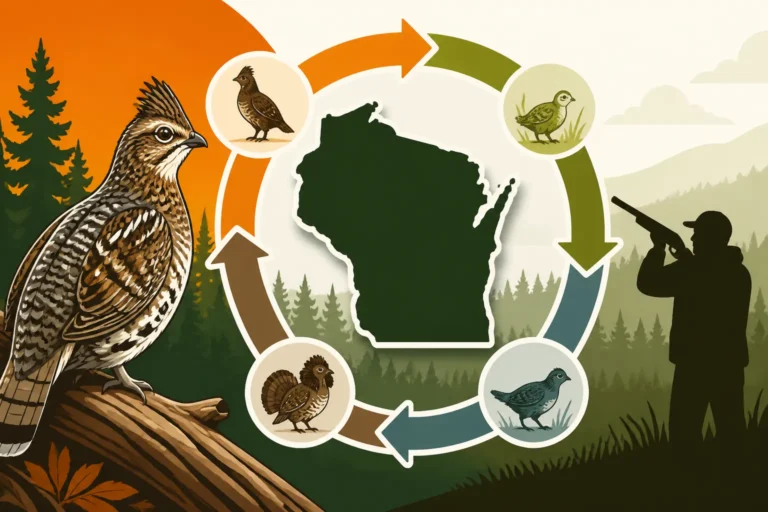
Wisconsin ruffed grouse populations experience an eight to eleven year boom and bust cycle driven by predators and food availability.
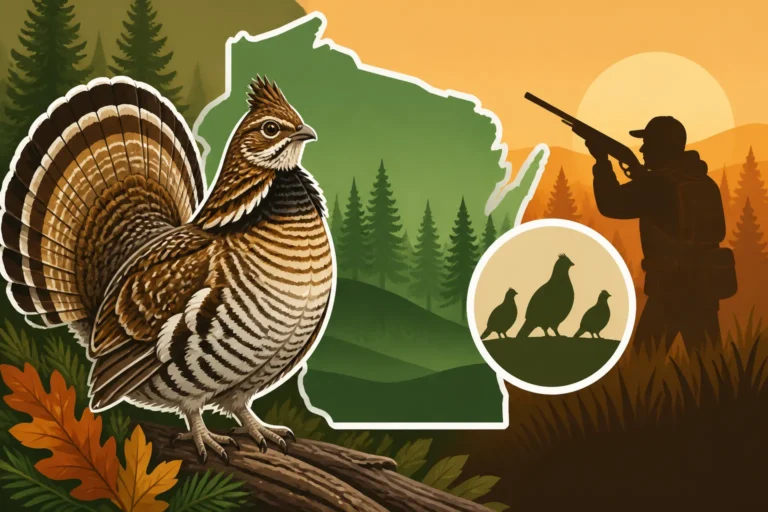
Wisconsin ruffed grouse population cycles, spanning eight to eleven years, and habitat quality explain annual bird hunting numbers.
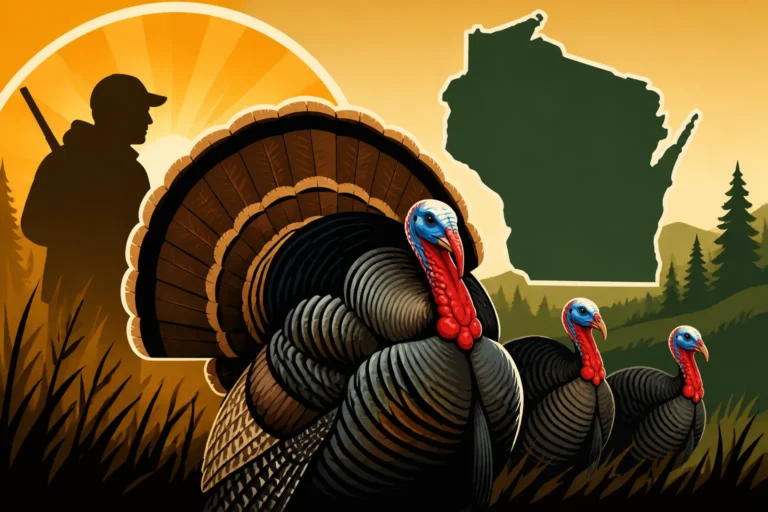
Wisconsin record book gobblers require specific measurements including beard length, spur length, and live weight for NWTF entry.
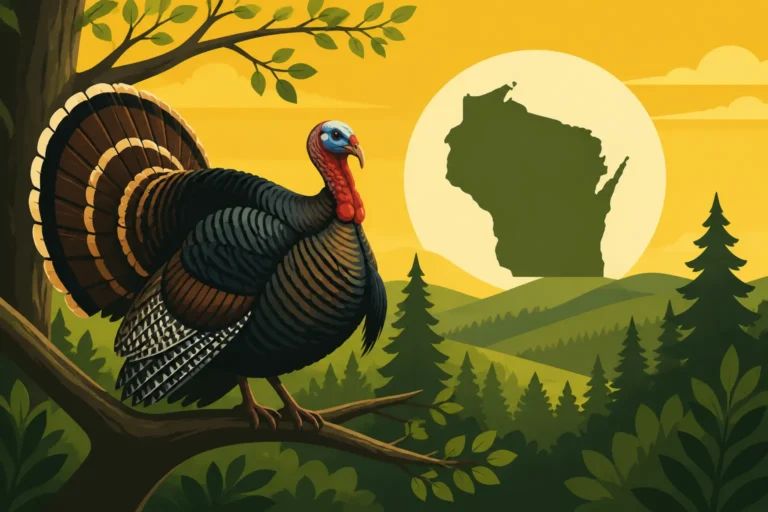
Wisconsin spring turkey roosting habits, preferred tree species, and topography help hunters predict morning fly-down locations.
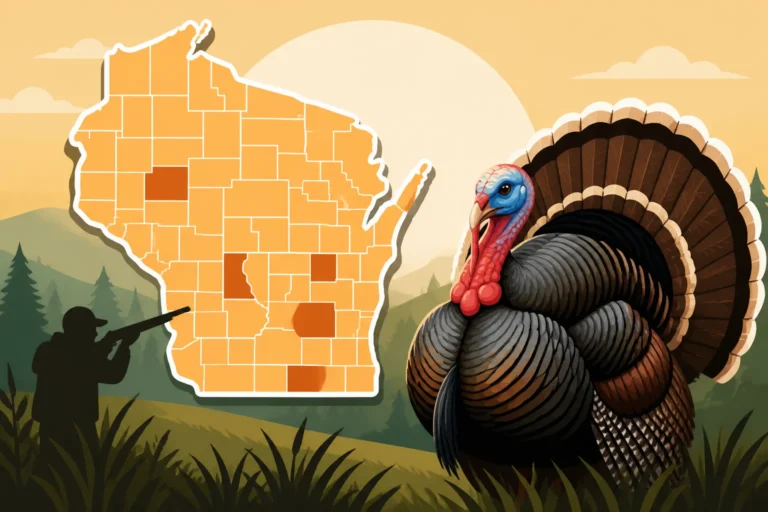
Wisconsin turkey hunting locations and population densities depend on habitat factors, winter severity, predation, and land use.
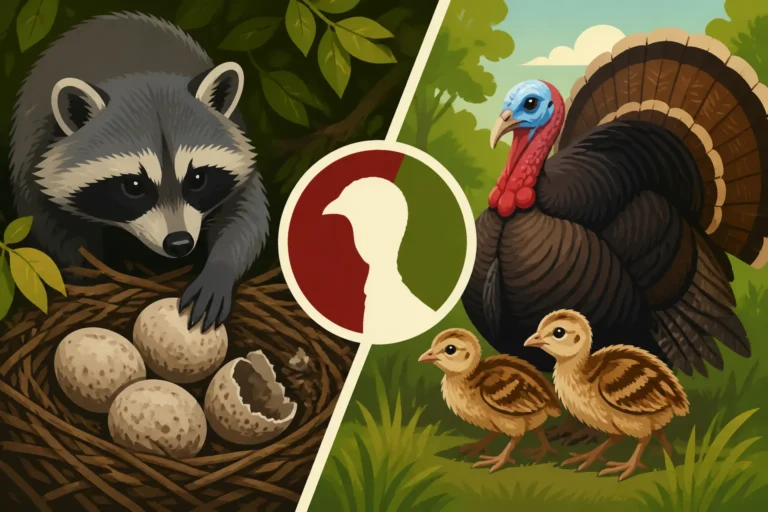
Nest predation affects Wisconsin wild turkey populations, reducing poult numbers and hatch success during spring nesting and incubation.
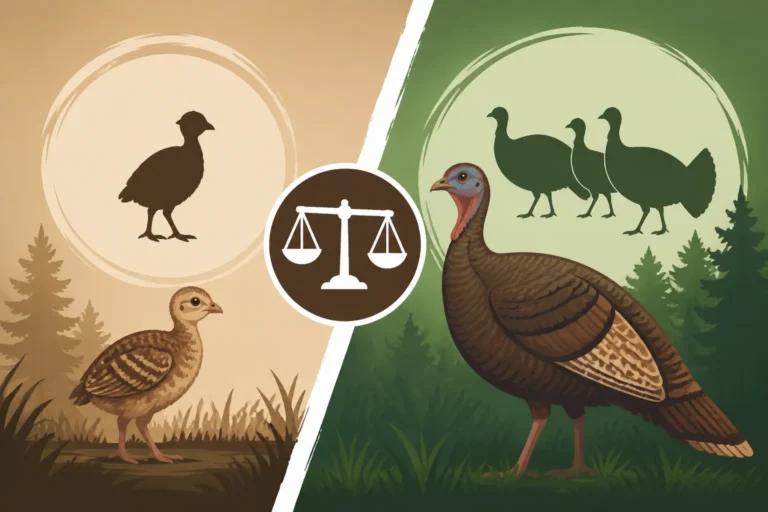
Poult-to-hen ratios track wild turkey reproductive success, helping Wisconsin hunters anticipate future population trends and harvest numbers.