How Long a Wisconsin Baiting Ban Lasts
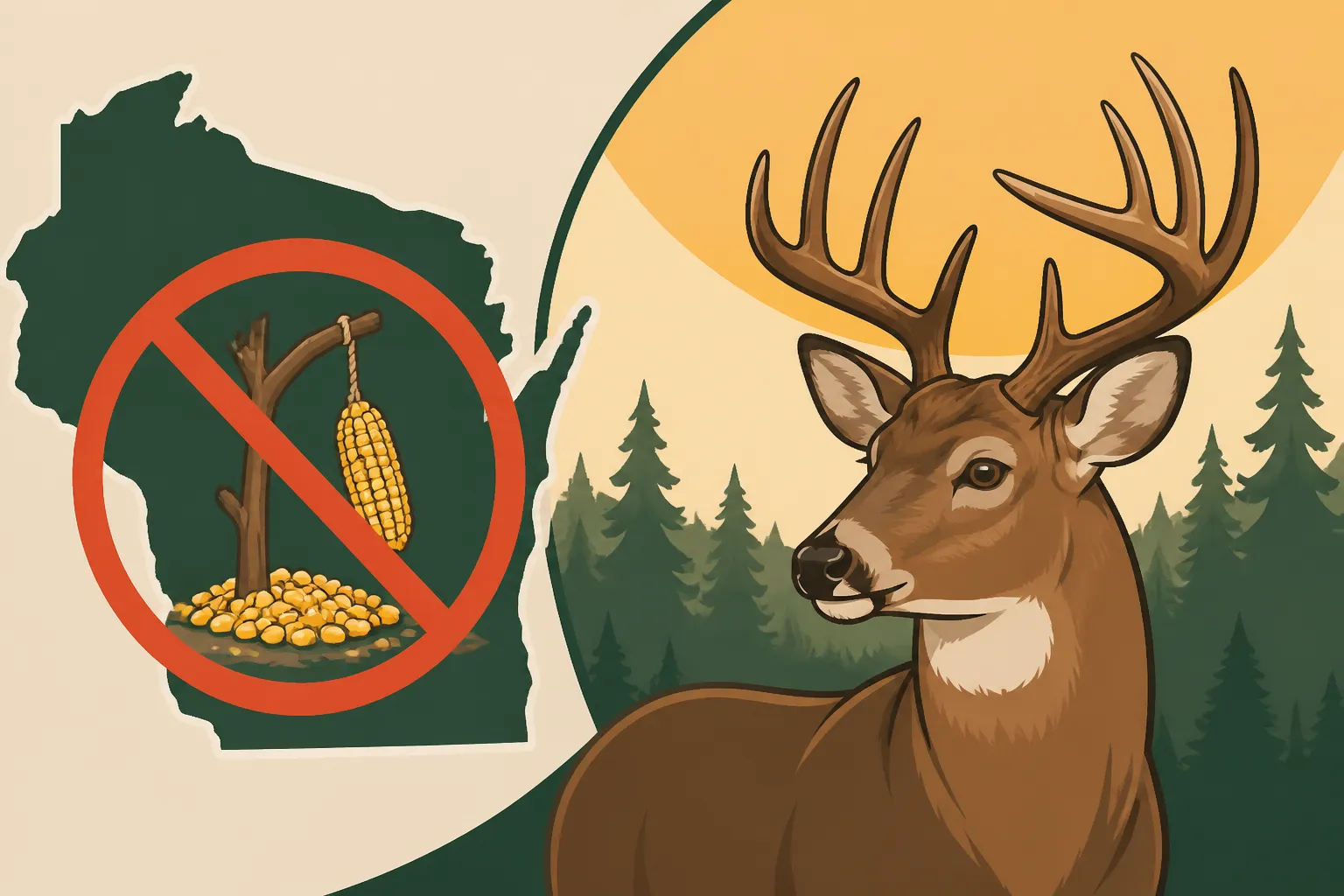
It’s incredibly frustrating to plan your hunting season, only to find out that the rules you thought you knew about baiting have changed, or that your favorite spot is suddenly under a ban. This constant shift and uncertainty surrounding baiting and feeding regulations in Wisconsin can feel like a moving target, making it tough to know if you're legal or not. This guide will walk you through exactly how long a Wisconsin baiting ban typically lasts, what triggers these bans, and how to stay informed so you can hunt confidently and within the law.
Understanding Wisconsin's Baiting and Feeding Regulations
Let's be honest, trying to keep up with Wisconsin's baiting and feeding regulations can feel like a full-time job. One year you're fine, the next your county is under a ban. The core reason for these regulations, especially the bans, is the ongoing battle against Chronic Wasting Disease (CWD). The Wisconsin Department of Natural Resources (DNR) views baiting and feeding as activities that concentrate deer, increasing the likelihood of CWD transmission among the herd. It’s a tough situation for hunters who’ve relied on these methods for years, but the state's goal is to manage the health of our deer population.
For counties not currently under a ban, there are still strict limits on how much bait you can use. Typically, you're looking at a maximum of two gallons of bait per hunting site. This bait must be dispersed over an area no larger than four feet by four feet. Plus, it has to be completely removed from the field each day after hunting hours. The idea is to prevent large-scale congregation of deer. Many hunters find themselves double-checking these rules every season, especially if they hunt in multiple counties. If you're ever in doubt, the DNR's official website is your best friend for the most current information. You can also get a good overview in our guide on Wisconsin Baiting and Feeding Bans.
The Trigger: How a CWD Detection Impacts Baiting
The single biggest trigger for a baiting ban in Wisconsin is the detection of CWD. It's a sobering moment for any county when a wild or farm-raised deer tests positive for this incurable neurological disease. Once a CWD positive deer is confirmed within a county, that county immediately falls under a mandatory baiting and feeding ban. This isn't just about the county where the deer was found; any county that shares a border with a CWD-positive county also gets swept into the ban for a specific period. This "adjoining county" rule is critical because it aims to create a buffer zone, recognizing that deer don't respect invisible county lines.
Think of it like this: a new CWD positive deer is found in, say, Waushara County. Immediately, Waushara County and all its direct neighbors—like Marquette, Green Lake, Portage, and Adams—are subject to the ban. This can lead to a domino effect, quickly expanding the map of restricted areas. It's a proactive measure, albeit one that causes a lot of headaches for hunters who might have hunting land straddling these newly defined borders. Understanding How Wisconsin Baiting Bans Are Triggered can help you anticipate these changes.
Differentiating Baiting and Feeding
It’s easy to get "baiting" and "feeding" confused, but in Wisconsin, they are distinct activities with different rules, though both are heavily regulated due to CWD concerns.
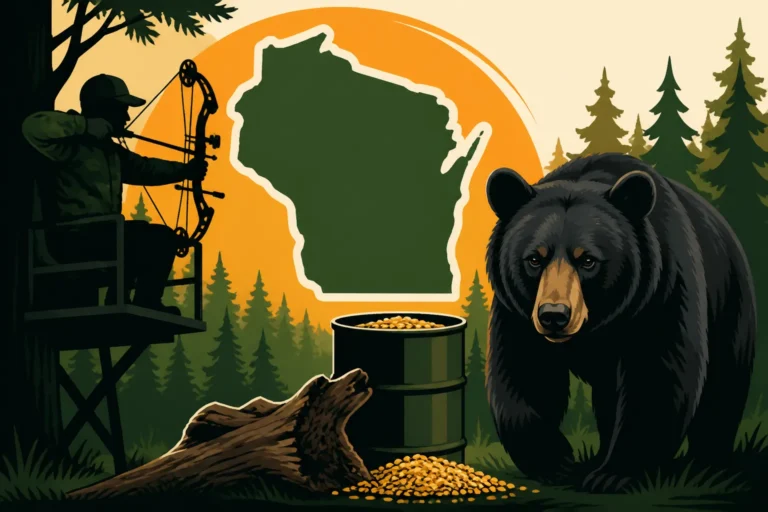
Baiting refers specifically to placing food, salt, or mineral attractants for the purpose of hunting. This includes corn, apples, sugar beets, mineral blocks, and even liquid attractants. If you put it out with the intention of drawing deer to your stand for a shot, it's considered baiting. When a ban is in effect, this activity is completely prohibited for deer, elk, and bear. The intent is key here.
Feeding, on the other hand, is the act of providing food for wildlife generally, often outside of hunting season or for non-hunting purposes (e.g., backyard bird feeders, deer observation). While hunting baiting bans are typically about CWD, general wildlife feeding regulations also exist and vary. In CWD-affected counties, a feeding ban is often imposed alongside a baiting ban, covering all supplemental feeding of deer. However, there are exceptions. Normal agricultural practices, like standing crops or food plots, are not considered baiting or feeding. Similarly, backyard bird feeders are generally exempt, provided they are placed in a manner that doesn't actively attract deer (e.g., not directly accessible by deer, or the feed is designed for birds). Even scattering a small amount of bird seed on the ground usually falls outside the feeding ban, as long as it's not done to attract deer. Our guide on Wisconsin Deer Feeding Rules Outside Season dives deeper into these nuances.
The Duration of a Wisconsin Baiting Ban
This is often the million-dollar question for hunters: how long does this ban actually last? The straightforward answer is that newly triggered bans are typically imposed for a minimum of two years from the date of the CWD detection. However, it's crucial to understand that "minimum" is the operative word here. These bans are far from a set-it-and-forget-it deal; they are dynamic and can be extended, sometimes indefinitely, depending on subsequent CWD findings.
Imagine the frustration of getting ready for your third season after a ban was implemented, only to find out a new CWD positive deer was just detected in the same area. This unfortunate reality means that a ban can essentially "reset" its clock or become permanent if the disease continues to surface. It’s a continuous monitoring process, and the DNR isn't shy about extending bans if new data warrants it.
The Initial Two-Year Period
When a new CWD positive is detected in a county, that county, along with any adjacent counties, will typically go under a baiting and feeding ban for a period of two years. Let's say a CWD deer is confirmed in Pepin County on October 1st, 2024. Pepin and its neighbors, such as Buffalo, Dunn, and Eau Claire counties, would then be subject to a ban for the remainder of 2024, all of 2025, and all of 2026. The ban would likely be re-evaluated as October 1st, 2026, approaches. This initial two-year window is designed to allow time for monitoring, further testing, and to hopefully break any potential transmission cycles by concentrating deer.
During this period, the DNR conducts extensive surveillance, collecting samples from harvested deer to assess the spread of CWD. The hope is that by removing baiting and feeding practices, deer interactions will lessen, and the prevalence of the disease won't increase, or at least its spread will slow. However, if additional CWD positives are found within that two-year period, particularly in a county previously not affected or if the prevalence is increasing, the ban doesn't just expire; it can be extended for another two years, or even longer. This is why staying current with DNR announcements is absolutely vital. Many hunters use platforms like GoHunt or the Wisconsin Hunt Wild App to get instant updates and see current ban maps.
When a Ban Extends Indefinitely
For many hunters, the initial two-year ban isn't the end of the story. In areas where CWD has become firmly established, particularly in the core CWD zones in the southern part of the state, these bans can effectively become indefinite. Take, for example, the counties in the Driftless Area like Iowa, Grant, and Crawford counties, where CWD was first found in Wisconsin. These areas have had CWD for decades, and despite rigorous management efforts, the disease persists. Consequently, baiting and feeding bans in these regions are essentially permanent, continuing year after year without a definitive end date.
This indefinite extension occurs because CWD prevalence rates remain consistently high, and new positive detections are an ongoing occurrence rather than an isolated incident. The DNR determined that continuous restrictions on baiting and feeding are necessary to manage the disease as best as possible. For hunters in these established CWD areas, hunting without bait has become the norm, requiring a fundamental shift in their hunting strategies. It's a tough pill to swallow for many, but adapting is key to continued success. To see which counties are currently under indefinite bans, you'll need to consult the official DNR maps, which are updated regularly. Our article on Which Wisconsin Counties Ban Baiting can also give you a good starting point for your research.
Here’s a summary of the typical baiting ban scenarios:
| Scenario | Trigger | Initial Duration | Potential Extension | Examples |
|---|---|---|---|---|
| New CWD Detection | First CWD positive in a county or adjacent county. | 2 years minimum | Extended if new CWD positives are found within the 2-year period. | Counties newly impacted by CWD spread. |
| Established CWD Zone | High CWD prevalence, ongoing positive detections. | Indefinite | Continues as long as CWD remains established. | Southwestern Wisconsin (e.g., Iowa, Dane, Grant). |
| Clean County (No CWD) | No CWD detected in county or adjacent counties. | No ban | Standard regulations apply (e.g., 2-gallon limit). | Many northern Wisconsin counties. |
Navigating Baiting Bans and Planning Your Hunt
The reality of baiting bans means that hunters, especially those who've relied on bait in the past, need to adapt. It's not just about knowing the rules; it's about shifting your entire approach to deer hunting. This can feel daunting, but it also pushes us to become better, more observant hunters. Instead of attracting deer to a specific spot, you're now tasked with finding where they naturally want to be.
One of the biggest impacts for hunters is the necessity of checking regulations every single year, sometimes even mid-season. The CWD landscape can change rapidly, and what was legal last season might not be this season. This is why leveraging reliable resources is absolutely critical. For example, many hunters find platforms like GoHunt invaluable for keeping tabs on these dynamic regulations. Their mapping tools often overlay current baiting bans with property lines, helping you visualize affected areas quickly.
Staying Informed: DNR and GoHunt Resources
The absolute best, most official source for baiting and feeding regulations in Wisconsin is always the Wisconsin DNR website. They maintain regularly updated maps and detailed explanations of the rules, including specific county bans. I can't stress this enough: check it before you head out, and even during the season if you hear of new CWD detections.
Beyond the official DNR site, there are excellent third-party resources that compile and present this information in user-friendly ways. The Wisconsin Hunt Wild App is fantastic because it's a direct DNR tool on your phone, offering real-time updates and mapping. Additionally, commercial apps and services like GoHunt have become indispensable for many hunters. These platforms often integrate DNR data with robust mapping features, allowing you to easily see which counties are under a ban, check public land boundaries, and even scout potential hunting spots. They can be incredibly helpful for confirming whether your hunting area is impacted or for finding alternative spots. Local County Deer Advisory Councils (CDACs) also play a role in reviewing CWD surveillance data and making recommendations, so following their discussions can provide insight, although the DNR makes the final regulatory decisions.
Hunting Strategies Without Bait
So, your favorite spot is under a baiting ban. Now what? It's time to sharpen your natural scouting and woodcraft skills. Hunting without bait isn't just possible; it often leads to a deeper understanding of deer behavior and the landscape.
First and foremost, focus on natural food sources. Deer need to eat every day, and they'll travel to where the food is. This means scouting for acorns in oak stands, checking agricultural fields for waste grain like corn or soybeans, or identifying preferred browse like cedar, dogwood, or maple saplings. Understanding Late-Season Food Sources for Whitetails is particularly important as natural food becomes scarcer.
Next, pay close attention to deer movement patterns. Look for fresh tracks, rub lines, and scrape lines. These tell a story of where deer are traveling, how they're marking their territory, and where they're looking for does. Funnels—areas where terrain features constrict deer movement, like saddles between ridges, narrow strips of timber between open fields, or pinch points along river bottoms—become absolute hotspots. This kind of Scouting Wisconsin Public Land Before Season is invaluable, helping you identify prime stand locations before the season even opens.
Don't underestimate the power of calling! Rattling antlers and using grunt calls can be incredibly effective, especially during the rut. A well-timed rattling sequence can bring a curious buck right into your shooting lane, completely negating the need for bait. Our guide on Rattling and Grunting in Wisconsin offers some great tips. Additionally, still-hunting – moving slowly and deliberately through the woods, taking a few steps then stopping to observe – allows you to cover ground and encounter deer on their terms, rather than waiting for them to come to you. This method is particularly effective in varied terrain and dense cover.
It’s an adjustment, no doubt, but successfully hunting without bait can be incredibly rewarding. It forces you to become more immersed in the deer's world, understanding their daily routines and preferences.
Disclaimer
Please note that hunting regulations, including baiting and feeding bans, are subject to change by the Wisconsin Department of Natural Resources (DNR). While we strive to provide accurate and up-to-date information, it is the hunter's responsibility to consult the most current Wisconsin hunting regulations pamphlet or the official DNR website before engaging in any hunting activities. This content is for informational purposes only and should not be considered legal advice.