How Farmland Zone Quotas Are Set
It can feel like the annual deer hunting regulations, especially those related to antlerless tags in Wisconsin's Farmland Zone, appear out of thin air, leaving many hunters scratching their heads or feeling frustrated. You're trying to plan your season, understand your options, and make sense of why some areas have abundant tags while others are scarce. This guide aims to pull back the curtain on that process, explaining in detail how those crucial Farmland Zone quotas are actually set, from local input to statewide decisions.
Understanding Wisconsin's Deer Management Framework
The world of deer management can often seem like a complex maze of data, public opinion, and scientific principles. In Wisconsin, the system is designed to be comprehensive, taking into account various factors to maintain healthy deer populations while balancing the needs of hunters, landowners, and the ecosystem. It's a challenging task, and it's why understanding the foundational framework is so important.
The Role of County Deer Advisory Councils (CDACs)
At the heart of local deer management are the County Deer Advisory Councils, or CDACs. These aren't some distant government bureaucracy; they're actually made up of local people, just like you. Think of them as a cross-section of the community: hunters, farmers, foresters, conservationists, and tourism representatives. Their main job is to listen, review, and recommend. They are the boots-on-the-ground voice for what's happening with deer populations in their specific county. It's their responsibility to gather public input, sift through mountains of data provided by the Wisconsin DNR, and then offer recommendations on deer population objectives and antlerless quota levels. This process is crucial because what works in the heavily forested northern counties might be completely inappropriate for the agricultural landscapes of the Farmland Zone. Balancing these diverse interests – the desire for more deer for hunting, the need to reduce crop damage for farmers, and the overall health of the herd – is a tightrope walk that these councils attempt every year.
Data-Driven Decisions: What Information is Used?
When CDACs sit down to make their recommendations, they don't just pull numbers out of a hat. They rely heavily on a wide array of data points to paint the most accurate picture possible of the deer herd. This data includes:
- Harvest numbers: This is foundational. They look at buck harvest, total antlerless harvest, and overall deer harvest trends over several years. Are hunters taking more deer or fewer? What does that suggest about the population?
- Deer Vehicle Collisions (DVCs): The number of deer hit by vehicles is a strong indicator of deer density, especially in areas with significant road networks like the Farmland Zone. A spike in DVCs often points to an increasing population that might need more antlerless tags.
- Crop Damage Reports: Farmers often provide direct feedback on how deer are impacting their fields. Significant, documented crop damage can be a major driver for increasing antlerless quotas to alleviate economic pressure on agriculture.
- Hunter Surveys and Public Input: Beyond the hard data, the DNR collects feedback from hunters through surveys, and CDACs hold public meetings to hear direct testimony. Are hunters seeing fewer deer? Are landowners complaining about too many? This qualitative data, while sometimes subjective, is vital for a holistic view.
- CWD Prevalence Data: In counties where Chronic Wasting Disease (CWD) is present, the prevalence rates and geographic spread of the disease can also influence management decisions. Higher CWD prevalence might lead to recommendations for increased harvest to slow the spread, particularly of antlerless deer. For more information on this, you can look into details about Wisconsin CWD Sampling and Test Sites.
This combination of quantitative and qualitative data helps CDACs make informed recommendations that reflect both the biological realities of the deer herd and the social tolerance for deer in their specific county.
The Specifics of the Farmland Zone
Wisconsin is a diverse state, not just in its geography, but also in its deer management challenges. The Farmland Zone presents a very particular set of circumstances that require a tailored approach, quite different from the sprawling forests of the North.
Unique Challenges and Management Goals
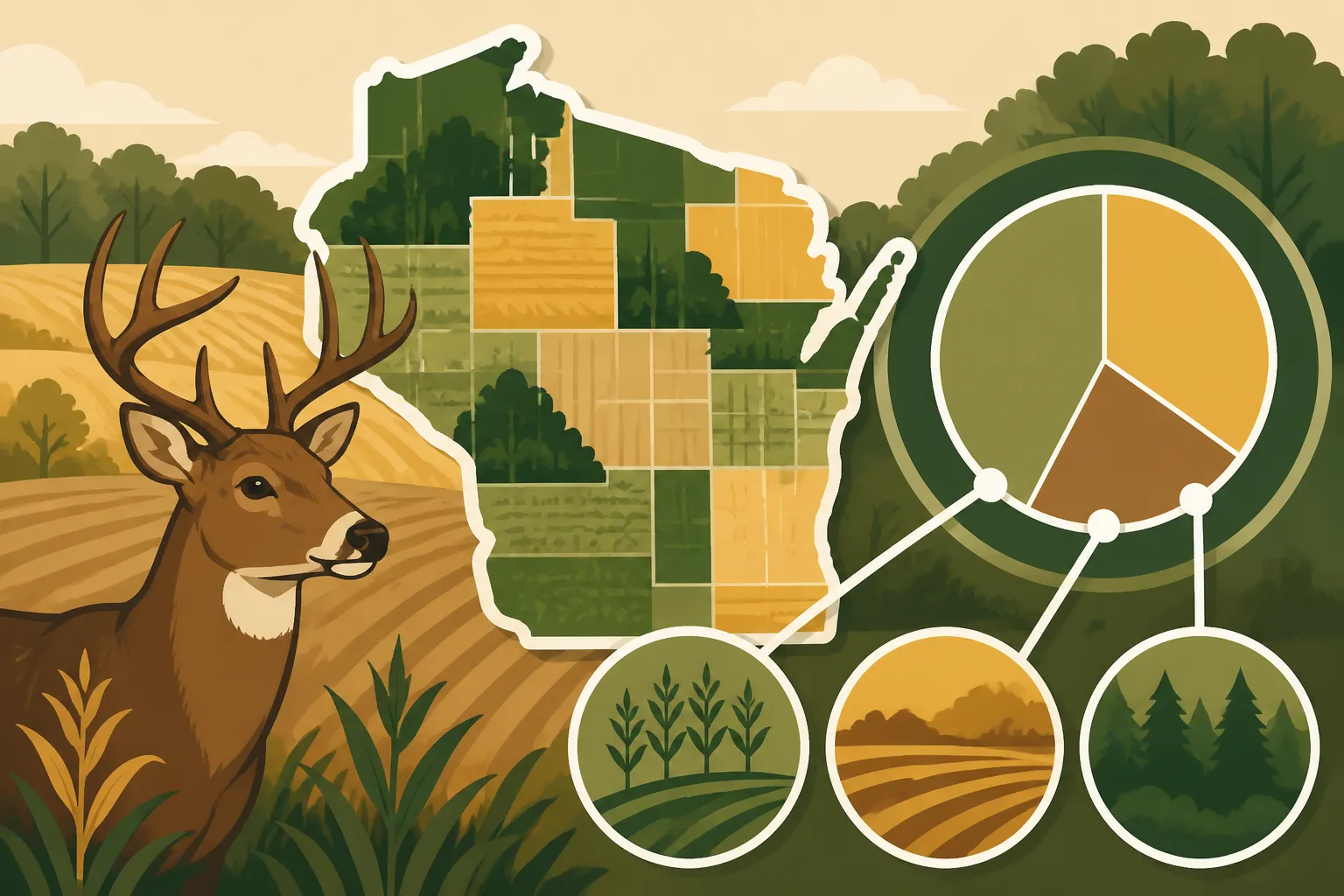
Imagine endless fields of corn, soybeans, and alfalfa, broken up by small woodlots, creek bottoms, and hedgerows. This is the quintessential Farmland Zone, and it's a paradise for deer, offering abundant food sources and enough cover to thrive. However, this environment comes with its own unique set of management challenges. For one, deer densities in these areas can be incredibly high, leading to significant conflicts with agricultural interests. Farmers often face substantial crop damage, which directly impacts their livelihoods.
The primary management goals in the Farmland Zone, therefore, revolve around:
- Reducing crop damage: This is often the top priority, as deer can decimate fields, leading to economic losses for farmers.
- Maintaining a healthy deer herd: While reducing numbers is important, ensuring the herd remains healthy, with a balanced age structure and good fawn recruitment, is also key.
- Balancing hunter opportunity with landowner tolerance: The goal isn't to eliminate deer, but to manage them at a level that provides ample hunting opportunities without creating undue hardship for landowners.
- Addressing CWD concerns: In areas affected by CWD, management also focuses on strategies to mitigate disease spread, which often involves increased harvest recommendations. You can learn more about specific hunting strategies in these areas by reading about Hunting Wisconsin Farmland Deer.
These goals often mean that quota recommendations in the Farmland Zone lean towards maintaining higher antlerless harvest opportunities compared to zones where timber regeneration or winter survival are the primary concerns.
Antlerless Authorizations: The Key Management Tool
If CDACs are the strategists, antlerless authorizations are their primary tactical weapon in managing deer populations, particularly in the Farmland Zone. When you talk about "tags," you're often referring to these authorizations. They are essentially permits that allow a hunter to harvest an antlerless deer.
Here's how they work in practice:
- Controlling Herd Size: By increasing the number of available antlerless tags, the DNR and CDACs aim to reduce the overall deer population, as taking female deer directly impacts reproduction rates. Conversely, reducing the number of antlerless tags allows the population to grow.
- Bonus Tags: Many hunters are familiar with "bonus antlerless tags." These are additional tags that hunters can purchase, often at a reduced cost, specifically for antlerless deer. The availability and price of these bonus tags are a direct reflection of the quota decisions made by CDACs and the DNR.
- Public vs. Private Land: It's also important to remember the distinction between public and private land antlerless tags. In many Farmland Zone counties, a significant portion of the harvest occurs on private land. CDACs consider this dynamic when setting quotas, often recommending more private land tags to encourage harvest where deer densities and crop damage are highest.
- Harvest Targets: Each management unit (which aligns with county boundaries for deer management purposes) is given a harvest target for antlerless deer. The allocation of antlerless authorizations is designed to help meet that target, balancing the number of deer that need to be removed with hunter success rates and participation.
The decision to offer more or fewer antlerless tags directly dictates the potential for antlerless harvest. This is why understanding Wisconsin Antlerless Harvest Authorizations is so crucial for any hunter planning their season.
The Quota Setting Process: From Local Input to Statewide Decision
The journey from a local CDAC meeting to a finalized antlerless quota on your GoHunt app or the DNR website is a multi-step process that involves public participation, scientific review, and ultimate approval. It’s designed to be transparent, though its complexity can sometimes make it feel opaque.
The CDAC Recommendation Process
The process kicks off annually as CDACs across the state begin their deliberations. Each county's CDAC holds meetings, which are open to the public, to discuss the current deer population trends and review the latest data. They analyze the harvest statistics from the previous year, look at trends in deer vehicle collisions, and consider the feedback from local farmers and landowners regarding crop damage. This is where local nuance really comes into play.
After thoroughly reviewing the data and listening to community input, the CDACs propose one of three population objectives for their county:
- Decrease: A recommendation to reduce the deer population, usually in areas with high deer densities, significant crop damage, or elevated CWD concerns. This would lead to an increase in antlerless tags.
- Maintain: A recommendation to keep the deer population at its current level, indicating a balanced situation. This typically means a similar number of antlerless tags as the previous year.
- Increase: A recommendation to allow the deer population to grow, often in areas where deer numbers are considered too low, or where habitat can support more deer. This would result in fewer antlerless tags.
These recommendations are then subject to a public comment period, both online and in person. This is your chance, as a hunter or landowner, to voice your opinion and provide additional insights. This input is critical for the CDACs to fine-tune their proposals before submitting them to the DNR. You can often find details on these public comment periods via resources like GoHunt, which frequently covers upcoming meetings and opportunities for input.
DNR Review and Final Approval
Once the CDACs have finalized their recommendations, they are forwarded to the Wisconsin Department of Natural Resources (DNR). The DNR's role isn't to override local input arbitrarily, but rather to review all county recommendations and ensure they align with broader statewide management objectives and biological principles. They scrutinize the data, cross-reference it with statewide trends in Wisconsin Deer Population Estimate and consider the ecological carrying capacity of different regions.
After the DNR compiles and synthesizes all the CDAC recommendations and their own scientific analyses, the proposed regulations and quotas are presented to the Natural Resources Board (NRB). The NRB is a citizen board that sets policy for the DNR. They review the entire package, debate any contentious points, and ultimately cast the final vote to approve the deer season structure, including the specific antlerless quotas for each county and deer management unit within the Wisconsin Deer Management Zones. Once approved, these quotas become official, determining how many antlerless tags will be available for sale in each zone. Understanding this process, from initial data gathering to final approval, can empower hunters to better anticipate regulations.
How Hunters Are Impacted and Can Get Involved
Knowing how the sausage is made is one thing, but understanding how it affects you as a hunter, and what you can do about it, is perhaps even more important. The quota system directly influences your hunting opportunities and your ability to manage deer on lands you hunt.
Accessing Antlerless Tags
The most direct impact of the quota setting process on hunters is the availability of antlerless tags. Once the quotas are finalized by the NRB, the DNR announces how many bonus antlerless tags will be available for purchase in each county and unit. This is a critical piece of information for planning your hunting season, especially if you're targeting multiple deer or hunting in specific areas.
- Understanding Availability: In the Farmland Zone, where deer populations are often robust, bonus antlerless tags are frequently more plentiful than in the Northern Forest. However, even within the Farmland Zone, specific county quotas can vary based on local conditions, crop damage, and CWD status.
- Timely Purchase: Hunters need to be aware of when Bonus Antlerless Tag Sales in Wisconsin open. These tags are often sold on a first-come, first-served basis, and popular units can sell out quickly. Being prepared and knowing the dates is essential, which is where resources like the DNR website or a hunting app like GoHunt can keep you informed.
- Private vs. Public Land: Remember that many counties will have separate quotas for public and private land antlerless tags. If you primarily hunt private land, securing a private land tag is often easier. If you rely on the How Many Acres Wisconsin Opens to Hunters for public land access, you'll want to prioritize those public land tags.
This system directly determines How Many Deer You Can Take in Wisconsin each season, making it paramount for hunters to stay informed about the specific regulations for their chosen hunting grounds.
Influencing Future Quotas
Feeling frustrated by deer regulations? The good news is that you don't have to be a passive observer. Your participation is not only welcomed but actively encouraged and crucial for the system to work effectively.
- Attend CDAC Meetings: As mentioned, CDACs are designed to incorporate local input. Attending these meetings, sharing your observations, and engaging constructively can directly influence the recommendations made for your county. Check the DNR website or a platform like GoHunt for meeting schedules and locations.
- Provide Public Comment: Even if you can't attend a meeting, the DNR offers online platforms for public comment on proposed regulations. This is an easy way to make your voice heard from the comfort of your home.
- Accurate Deer Registration: This might seem minor, but it's incredibly important. When you harvest a deer, accurately and promptly registering it via options like Registering a Wisconsin Deer Online provides the DNR with vital data. These harvest numbers are a cornerstone of the CDACs' decision-making process. If harvest data is inaccurate, it can lead to skewed population estimates and less effective management.
- Engage with Organizations: Join hunting and conservation organizations that advocate for hunter interests at the state level. Many of these groups stay actively involved in the quota setting process and represent the collective voice of thousands of hunters.
By understanding the intricate process of County Deer Advisory Council Recommendations and actively participating, you become an integral part of Wisconsin's deer management, ensuring that future quotas reflect a balanced approach to the state's incredible deer resource.
| Factor Considered | Impact on Antlerless Quota (Likely) | Rationale |
|---|---|---|
| High Deer Vehicle Collisions | Increase | Suggests high deer density, often a trigger for population reduction. |
| Significant Crop Damage | Increase | Addresses economic concerns of farmers by reducing deer pressure. |
| High CWD Prevalence | Increase | Strategy to reduce deer numbers to potentially slow disease transmission. |
| Hunter Reports of "Too Few" Deer | Decrease | Indicates a perceived low population, aiming to allow herd growth. |
| Low Deer Density Estimates | Decrease | Scientific data suggesting population is below management goals. |
| Balanced Hunter Satisfaction | Maintain | Current population is meeting management objectives and hunter expectations. |
Disclaimer
The information provided in this guide is intended for general informational purposes only and is subject to change. Hunting regulations, seasons, and tag allocations in Wisconsin are dynamic and can be updated by the Wisconsin Department of Natural Resources (DNR). Always consult the official Wisconsin DNR regulations and website for the most current and accurate information before participating in any hunting activity.