Hunting a Standing Cornfield in Farm Country
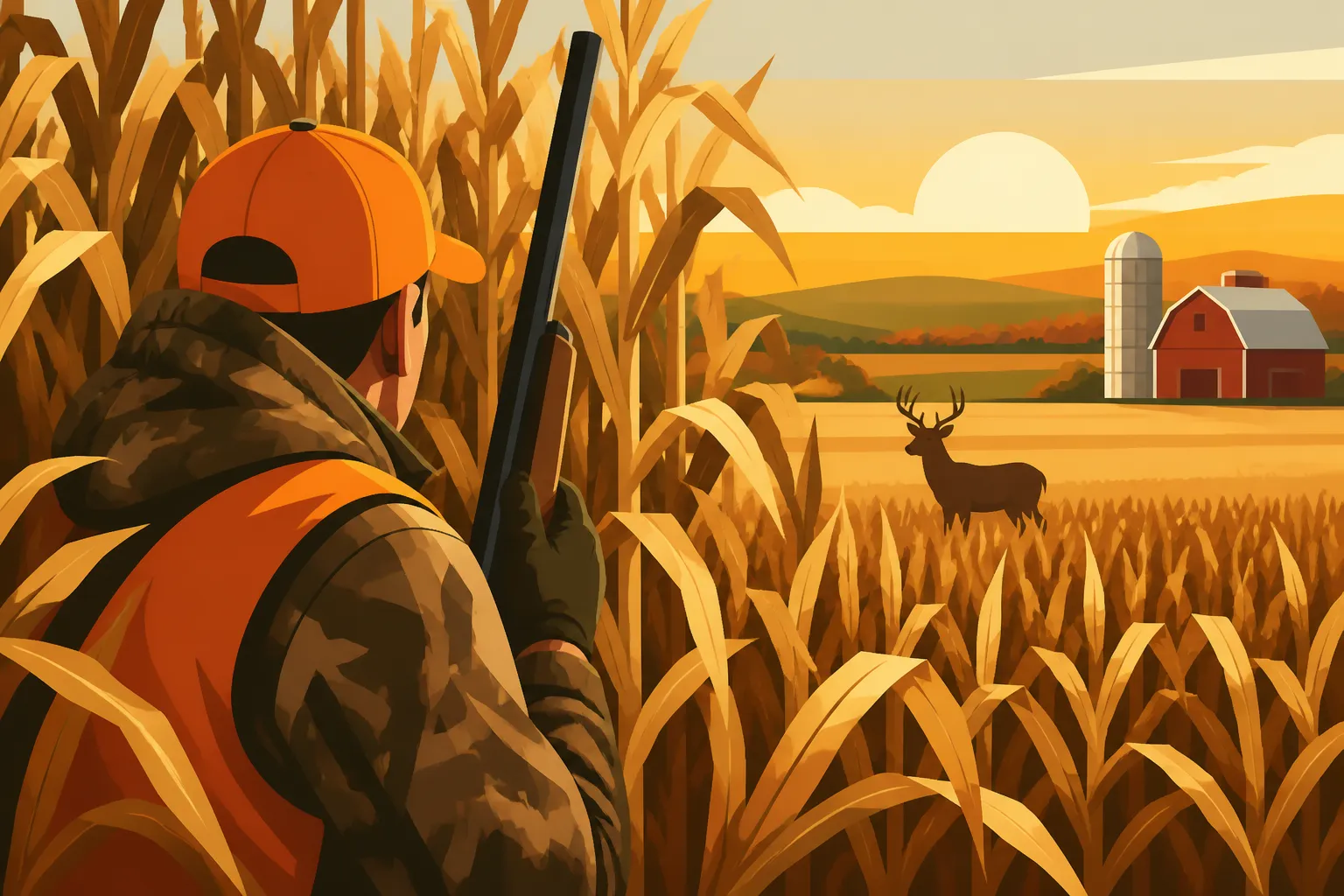
Hunting a standing cornfield in Wisconsin farm country can feel like trying to find a needle in a haystack, or more accurately, a trophy buck in a maze of rustling stalks. It’s a completely different ballgame than hunting timber, and anyone who’s spent a chilly morning watching empty rows knows the frustration. This guide is here to unravel the mysteries of those golden fields, helping you understand deer behavior, refine your scouting, and implement effective tactics to punch your tag even when the corn is still standing tall.
Understanding Deer Behavior in Standing Corn
Standing cornfields offer an unparalleled combination of food, cover, and security for whitetail deer, creating a unique ecosystem that challenges hunters. It's not just a place they visit; it's often where they live for a significant portion of the hunting season, especially in agricultural areas across Wisconsin. This presents both a puzzle and an opportunity for diligent hunters.
Why Deer Love Standing Corn
Deer gravitate to standing corn for a multitude of reasons, making these fields prime real estate from early archery season right up until harvest. First and foremost, it's an abundant food source. Mature corn kernels provide high-energy carbohydrates, critical for deer to put on weight for the upcoming rut and the lean winter months. They will browse on the leaves, stalks, and especially the ears, which they can knock down or eat directly from the plant. This nutritional bounty means they often don't need to leave the corn for food, allowing them to conserve energy and reduce exposure. Beyond the food, corn offers incredible thermal and visual cover. A deer can disappear into a standing cornfield and become virtually undetectable to predators, including hunters. It's thick, provides a break from the wind, and offers a labyrinthine environment where they feel safe bedding, moving, and feeding. During the heat of early season, the shade and slightly cooler temperatures within the stalks are also a welcome reprieve.
Deer Movement Patterns Within the Rows
Forget typical timber travel corridors; movement within a standing cornfield is its own intricate dance. Deer establish runways and trails that snake through the stalks, creating networks of tunnels that are nearly invisible from the outside. These trails often follow field edges, connect to woodlots, draws, or fence lines, and lead to bedding areas deeper within the corn. Bucks, especially mature ones, will use the densest parts of the corn for bedding, often creating large "beds" where they've pressed down stalks. They might even cruise these internal trails during the rut, scent-checking for does without ever exposing themselves. Understanding these internal movements is paramount, but it's incredibly difficult to scout without disturbing the area. It’s a delicate balance, and often, you're relying on external sign and careful observation to piece together their internal roadmap.
Scouting and Planning Your Cornfield Hunt
Effective scouting for cornfield hunting isn't about stomping through the rows before the season; it's about smart observation, leveraging technology, and understanding the surrounding landscape. Since directly entering a standing cornfield can easily contaminate it with human scent and alert deer, a more strategic approach is needed.
Reading the Edges and Entry Points
The real key to unlocking a standing cornfield is meticulously scouting its perimeter. Deer almost always enter and exit cornfields at specific points, often where the corn transitions to woods, a creek bottom, a CRP field, or a natural funnel. Look for heavily used trails entering and exiting the corn, paying close attention to tracks, droppings, and rub lines or scrapes along the edge. These "highways" are your best bet for intercepting deer. Focus on corners where two different cover types meet, or where a point of timber juts into the field, creating a natural pinch point. Agricultural field edges, especially those bordering a woodlot or a creek, are classic travel routes. During the rut, bucks will often cruise these edges, sometimes just inside the corn, looking for does. You'll want to understand Reading a Ridge Point for Deer Movement if the cornfield is bordered by varied topography, as deer will often utilize these features for cover when transitioning in and out of the fields. Using tools like GoHunt, you can analyze aerial imagery to identify these natural funnels and pinch points before you ever step foot on the property.
Leveraging Technology and Observation
Today's hunters have an incredible advantage with mapping applications and digital scouting tools. A platform like GoHunt allows you to overlay property boundaries, topographic maps, and satellite imagery to identify potential entry/exit points, hidden draws leading into the corn, and adjacent cover that deer might use. You can mark probable bedding areas based on the densest cover within the corn and map out potential stand sites or ambush points. Don't forget the power of trail cameras, but use them strategically. Place cameras on external trails leading into the corn, or on scrapes and rub lines along the edges, rather than deep inside the field itself. This minimizes disturbance. Focus on monitoring these external indicators to tell you when deer are using the corn and which specific paths they prefer. Remember, if you’re scouting areas that adjoin public lands, the Scouting With the Wisconsin Hunt Wild App can also be invaluable for identifying legal access points and public-private boundaries.
Timing Your Hunt with the Harvest
The timing of the corn harvest is perhaps the single biggest factor influencing cornfield hunting success. As farmers begin to cut the corn, deer are displaced and forced to find new cover and food sources. This can create a period of intense deer movement, often leading to excellent hunting opportunities. Typically, corn is harvested in Wisconsin from late September through October, and sometimes even into November. During this period, keep a close eye on local agricultural activity. When you see combines rolling in neighboring fields, prepare for a shift in deer patterns. The day the corn is cut is often fantastic for hunting the remaining sections or adjacent cover, as deer get pushed around. However, once the entire field is down, the game changes again, and deer will typically relocate to nearby woodlots, swamps, or even other standing crop fields like soybeans or alfalfa. This shift is critical, and knowing how to adapt your strategy for Late-Season Food Sources for Whitetails is essential once the corn is gone.
Effective Hunting Tactics for Standing Corn
Hunting standing corn requires a blend of patience, stealth, and a willingness to adapt. Traditional stand setups might still work on the edges, but getting into the thick of it demands different approaches.
Stand and Blind Setups on Cornfield Edges
For many hunters, the most accessible and least intrusive way to hunt standing corn is from a stand or blind positioned on its edge. The key here is to set up overlooking those proven entry and exit trails you've identified during scouting. Choose a location where the wind consistently blows your scent away from the primary deer travel routes. A well-placed treestand or saddle setup can provide excellent visibility into the corn rows as deer approach, and also into the adjacent cover they might be coming from. If the corn borders a dense woodlot, consider a stand just inside the timber, offering shots at deer moving along the edge or entering the woods.
Ground blinds are also highly effective, especially when positioned at a corner or funnel. When setting up a ground blind, remember to Brushing In a Blind on a Field Edge to break up its outline and help it blend seamlessly into the environment. Give yourself a shooting lane that offers a clear view of the deer trails without being too wide open, which could make deer nervous. These edge setups are particularly potent during the rut, as bucks will often cruise the corn edges looking for receptive does. Consider the sun's position throughout the day to avoid being silhouetted or having sun glare obscure your vision during prime hunting times. You might even find success with Using a Ground Blind on Wisconsin Public Land near agricultural areas, where fields often border public access parcels.
Still-Hunting the Rows and Interior
While challenging, still-hunting within a standing cornfield can be incredibly effective, especially for experienced hunters who move slowly and deliberately. This tactic is about moving just a few steps at a time, pausing to scan, listen, and glass every lane and opening. The rustling of the corn can mask your movements and sounds, but it also makes it harder to hear approaching deer. Walk into the wind, or with a crosswind, to carry your scent away and allow you to hear better. Focus on working down the obvious deer trails you've identified, or simply move slowly through the rows, looking for fresh sign or the flick of an ear.
When still-hunting, keep your eyes peeled not just for deer, but for subtle clues: a bent stalk, fresh droppings, or a sudden quiet in the usual rustle of the leaves. Your visibility will be extremely limited, often only 10-20 yards, so shot opportunities will be close and fast. Having a fast-handling firearm or a bow you can quickly bring to full draw is crucial. This method is physically demanding and requires immense concentration. It’s a great option for situations where you're struggling to locate deer on the edges or when you know a mature buck is holed up deep inside the corn. It's often best done in pairs or small groups (with extreme caution and communication) if you want to push sections, but solo still-hunting demands the utmost focus and stealth.
Strategic Deer Drives in Standing Corn
Deer drives in standing corn are a tactic used by groups of hunters to push deer out of the dense cover and towards waiting standers. This can be one of the most productive ways to hunt standing corn, but it requires careful planning, good communication, and strict adherence to safety protocols. A cornfield drive often involves several "drivers" walking through the corn, making noise and pushing deer, while "standers" are positioned at strategic exit points, such as woodlot edges, fence lines, or other natural funnels where deer are likely to flee.
The key to a successful cornfield drive is understanding deer escape routes. Deer rarely just bolt into an open field; they'll usually try to sneak along the edge of the corn, use a ditch, or dive into the nearest dense cover. Standers should be positioned to intercept these escape artists. Communication between drivers and standers is vital, often facilitated by two-way radios. Safety is paramount: know where every hunter is located, wear plenty of blaze orange, and only take clear, ethical shots at deer you've positively identified with a safe backdrop. Never shoot into the standing corn without a clear view of the animal and what's beyond it. For larger sections, coordinating Deer Drives With Three or Four Hunters can be highly effective, but always prioritize safety over all else. If you are in a county with baiting bans, this can also be an alternative method to Hunting Without Bait in a Banned County.
Safety and Ethical Considerations
Hunting is not just about filling a tag; it's about doing so responsibly, ethically, and safely. When dealing with the unique challenges of standing cornfields, these considerations become even more critical.
Blaze Orange Requirements and Visibility
Visibility is severely compromised in standing corn. The dense stalks can obscure hunters, other people, and deer, making it difficult to maintain situational awareness. This makes adhering to Wisconsin's blaze orange or blaze pink requirements absolutely non-negotiable. During the gun deer season, hunters must wear at least 50% of their outer clothing above the waist in blaze orange or pink. This includes a hat. Even during archery season, if you're on public land where gun hunting is allowed (e.g., during the youth hunt or gun season overlap), you should consider wearing blaze orange for safety. If participating in a drive, every person, driver and stander alike, needs to be highly visible. Never assume you're alone in a cornfield, especially on public land or near property lines.
Respecting Landowner Boundaries and Property
Hunting private land, which most cornfields are, requires explicit permission from the landowner. Always get permission before stepping foot on private property, and be clear about your intentions and methods. This is fundamental to maintaining good relationships between hunters and landowners in Wisconsin. Beyond permission, be meticulously aware of property lines, especially when deer are on the move. A deer flushed from a standing cornfield might cross into an adjacent parcel, and you need to know the rules for retrieving game from private land if you don't have permission for that specific parcel. Tools like GoHunt can help you clearly identify property boundaries, preventing accidental trespassing. Remember, asking a Wisconsin farmer for permission often involves showing respect for their land and their livelihood.
Safe Shot Placement in Dense Cover
The limited visibility within standing corn means that shot opportunities are often fleeting and at close range. It's easy to get tunnel vision when a deer suddenly appears. Prioritize ethical shot placement. Never take a hurried shot where you can't clearly identify the animal, its body angle, and what lies beyond it. Broadside shots are ideal, allowing for a clean pass-through of the vitals. Avoid quartering-to or quartering-away shots unless you are absolutely confident in your ability to place the projectile accurately through the shoulder or into the vitals.
Always consider your backdrop. In standing corn, a shot might pass through a deer and continue into another part of the field where another hunter or even livestock could be. This is especially true during deer drives. If in doubt, don't shoot. It’s always better to let a deer walk away than to take an unsafe or unethical shot that could lead to injury, a lost animal, or even a tragedy. Remember that Tracking a Deer in Wisconsin Snow or thick corn can be incredibly difficult, so making that first shot count is more important than ever.
| Hunting Tactic | Pros | Cons | Ideal Scenario |
|---|---|---|---|
| Edge Stand/Blind | Good visibility, less disturbance, natural travel corridors. | Limited access to deer deep in the corn, wind direction critical. | Deer frequently moving in/out, rut cruising, known pinch points. |
| Still-Hunting Rows | Active and engaging, targets deer deep in cover, close shots. | Very low visibility, high chance of spooking, physically demanding. | Isolated mature bucks, late-season, when deer are holding tight. |
| Deer Drive | Highly effective for flushing deer, covers large areas. | Requires multiple hunters, strict safety protocols, can push deer far. | Large cornfields, moderate deer density, cooperative hunting group. |
Disclaimer
Hunting is an inherently dangerous activity. This guide provides general information and recommendations but cannot account for all variables, conditions, or individual skill levels. Always consult the most current Wisconsin Department of Natural Resources (DNR) regulations and guidelines before hunting. Prioritize safety, ethical conduct, and respect for landowners and wildlife.