Where Wisconsin Restricts Rifles for Deer
It's a common scenario: you've planned your Wisconsin deer hunt, scouted your spot, and lovingly sighted in your favorite rifle, only to discover last minute that the area you're heading into might have unexpected firearm restrictions. Wisconsin's diverse landscapes mean diverse hunting rules, and understanding where you can and cannot use a rifle for deer is absolutely crucial for a legal and successful hunt. This guide is here to untangle the complexities of Wisconsin's rifle-restricted zones, explaining precisely where and why certain firearms are prohibited for deer hunting, so you can hunt confidently and legally.
Understanding Wisconsin's Rifle-Restricted Zones
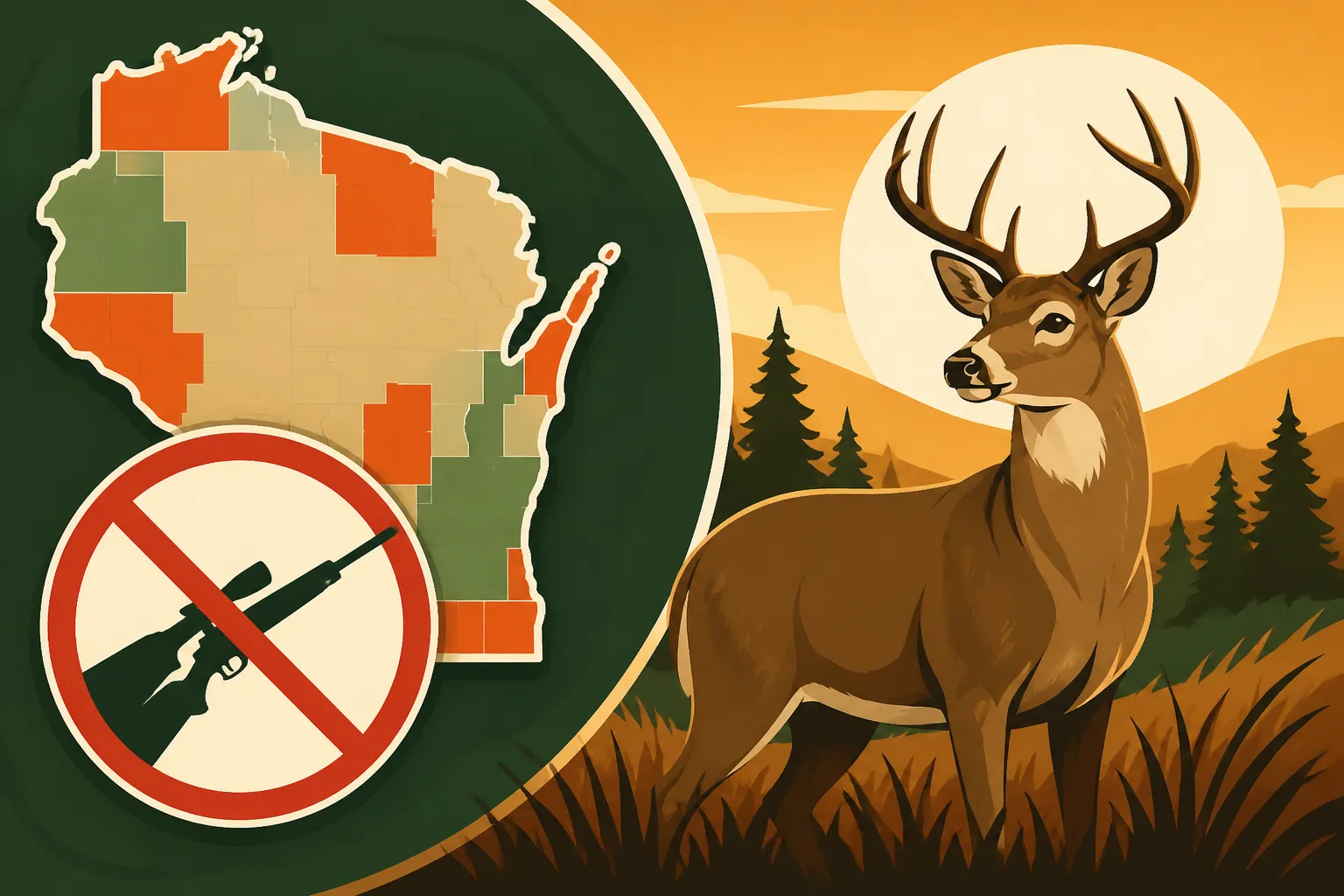
Wisconsin offers a fantastic variety of deer hunting experiences, from the sprawling northern forests to the rolling agricultural lands of the south. However, these different landscapes come with different regulations, particularly concerning what kind of firearm you can use for deer. The primary distinction hunters need to be aware of revolves around "shotgun/muzzleloader/archery only" zones, which typically restrict the use of centerfire rifles.
The Southern Farmland and Populated Areas
When most hunters talk about rifle restrictions in Wisconsin, they are referring to the historically designated "shotgun/muzzleloader/archery only" zones. These areas are predominantly found in the more densely populated southern and eastern parts of the state, characterized by a mosaic of agricultural fields, smaller woodlots, and a higher density of homes, roads, and human activity. Think of counties around Madison, Milwaukee, and the Fox Valley.
In these zones, the discharge of high-powered rifle rounds is restricted primarily due to public safety concerns. A modern rifle bullet can travel for miles, retaining lethal energy far beyond what is considered safe in areas with limited sightlines and numerous non-hunting residents. Shotguns, firing slugs, have a significantly shorter effective range and drop energy much faster, making them a safer choice in these environments. These zones don't ban firearm hunting entirely, but rather dictate the type of firearm allowed. Many hunters in these areas have embraced modern slug guns with rifled barrels and specialized sabot slugs, which can be remarkably accurate out to 150 yards or even more. However, the core principle remains: these are not rifle zones. It's a key piece of information you'll find when looking into Wisconsin Deer Seasons and Zones.
Specific Local Ordinances and Wildlife Areas
Beyond the broad "shotgun zones" that are defined by larger geographic regions or county lines, hunters must also be vigilant about specific local ordinances or the regulations governing individual public land parcels. It's not uncommon for a state wildlife area, a federal refuge, or even a local park that allows hunting to have its own unique set of rules that might be more restrictive than the surrounding county.
For example, you might be hunting in a county where rifles are generally permitted, but if you step onto a particular state natural area or a Voluntary Public Access (VPA) parcel, you might find that only shotguns, muzzleloaders, or archery equipment are allowed. These hyper-local rules are often in place to protect sensitive habitats, manage specific wildlife populations, or to mitigate potential conflicts with other recreational users in the area. This is where tools like the GoHunt app or other detailed mapping resources become invaluable. Before setting foot on any public ground, especially if it's new to you, always cross-reference your location with the specific rules for that parcel. The DNR's property-specific regulations are often available online, and it's your responsibility as a hunter to know and abide by them. Checking these maps is as important as understanding Wisconsin Public Access Lands Maps.
Legal Alternatives: Shotguns, Muzzleloaders, and Handguns
If you find yourself in a rifle-restricted zone, don't despair! Wisconsin offers several effective and popular alternatives for deer hunting. These alternatives are not merely compromises but are often preferred by many hunters for their specific advantages.
- Shotguns: As mentioned, modern slug guns are highly effective. A shotgun with a rifled barrel and quality sabot slugs can achieve accuracy that rivals many rifles out to medium distances. They deliver significant knockdown power, making them a formidable choice for whitetails in dense cover or open fields alike. It's worth researching Shotgun Slugs for Wisconsin Deer to maximize your effectiveness.
- Muzzleloaders: Wisconsin's muzzleloader season provides a unique opportunity, and these firearms are almost universally permitted in rifle-restricted areas during the general deer seasons. With advancements in muzzleloader technology, including in-line ignition systems and saboted projectiles, they offer excellent accuracy and range. They demand a different hunting style, often a bit slower and more deliberate, which many hunters find incredibly rewarding. If you're considering this option, dive deep into Muzzleloader Deer Hunting in Wisconsin.
- Handguns: For a truly close-quarters challenge, handgun hunting for deer is also permitted in Wisconsin, including in areas where rifles are restricted. This requires a high degree of skill and discipline, as effective range is typically much shorter. However, with powerful calibers and proper bullet selection, a handgun can be an ethical and exciting way to harvest a deer. Ensure you understand the specific requirements and regulations for Handgun Hunting Rules in Wisconsin.
- Archery and Crossbow: Of course, archery and crossbow hunting are legal statewide during their respective seasons and offer some of the longest seasons available. They are completely unrestricted by the firearm zones and provide an excellent opportunity to pursue deer in close quarters.
Why These Restrictions Exist: Safety and Population Management
Understanding the "why" behind these regulations can help hunters appreciate their purpose rather than view them as arbitrary limitations. The rules are not designed to hinder hunters but to ensure safety for everyone and to manage the deer herd effectively across diverse landscapes.
Public Safety in Densely Populated Regions
The most significant driver behind rifle restrictions in southern Wisconsin is public safety. It's a simple, undeniable fact that a high-velocity rifle bullet, such as from a .30-06 or .270, can travel much farther and penetrate more deeply than a shotgun slug. In areas with a higher concentration of homes, businesses, roads, and recreational trails, the risk of an errant rifle shot causing unintended harm is greatly elevated.
Consider a scenario in a typical southern Wisconsin woodlot: a deer stands at 75 yards, with a busy road or residential area potentially a few hundred yards beyond the tree line. A rifle bullet could easily sail through the deer, through trees, and across that road, posing a serious danger. A shotgun slug, while still powerful, loses energy rapidly and typically has an effective range of 100-150 yards, often less. This significantly reduces the risk of a projectile traveling beyond the intended target area into unsafe territory. These zones are a proactive measure to protect non-hunters and property, allowing hunters to continue their traditions in a safer manner.
Historic Precedent and Evolving Regulations
Many of Wisconsin's current firearm restrictions have roots in regulations established decades ago. In an era when shotguns were less accurate than they are today, they were still seen as the safer option for hunting in more developed regions. As technology has advanced, with the advent of rifled shotgun barrels, specialized sabot slugs, and even straight-wall rifle cartridges that mimic slug ballistics, the debate around these zones sometimes flares up.
While the DNR does review and adapt regulations, changing established zones is a complex process involving public input, scientific data, and careful consideration of safety implications. The core principle of limiting projectile travel in populated areas remains a cornerstone. Hunters who advocate for changes often point to the improved accuracy and terminal performance of modern alternatives, but the regulatory bodies must weigh these against the broader public perception and the foundational safety concerns that prompted the rules in the first place.
Balancing Hunter Opportunity and Landowner Concerns
The existence of rifle-restricted zones is also a delicate balancing act designed to maintain hunter opportunity while addressing the legitimate concerns of landowners and the general public. In many agricultural areas of southern Wisconsin, deer populations can be quite high, leading to crop damage and increased deer-vehicle collisions. Hunting is a vital tool for managing these populations.
By implementing rules that prioritize safety, the state helps to foster a better relationship between hunters and non-hunting landowners. When landowners feel confident that hunting is being conducted safely, they are often more willing to grant access to their property, which is absolutely critical for managing deer in these heavily private-land dominated regions. These regulations demonstrate a commitment to responsible hunting practices, which is essential for the long-term health and public acceptance of hunting in Wisconsin. It's part of the broader framework that covers everything from Wisconsin Hunting Licences and What They Cost to daily bag limits.
Navigating the Rules: Tools and Best Practices
Navigating Wisconsin's firearm regulations might seem daunting at first, but with the right tools and a proactive approach, you can easily determine where rifles are restricted and plan your hunt accordingly.
The Wisconsin DNR's Role and Resources
The absolute first place any Wisconsin hunter should look for information is the Wisconsin Department of Natural Resources (DNR). They are the authoritative source for all hunting regulations, season dates, and zone boundaries. Every year, the DNR publishes a comprehensive hunting regulations pamphlet, which is available both in print at license vendors and online on their website.
Beyond the annual pamphlet, the DNR website is a treasure trove of information. They often provide interactive maps that clearly delineate deer management zones, including those with firearm restrictions. These online resources are regularly updated and are the most reliable way to stay informed. Before heading out, make it a habit to check the current year's regulations, as minor changes or clarifications can occur from season to season. This due diligence ensures you're always hunting within the law and aligns with the information found in Wisconsin Deer Management Units by County.
Using Mapping Apps and GPS for Zone Clarity
In today's digital age, technological tools have revolutionized how hunters scout and navigate. GPS-enabled mapping apps on smartphones or dedicated GPS devices are incredibly powerful for understanding land ownership, topography, and crucially, hunting zone boundaries. This is where a robust app like GoHunt really shines.
Apps like GoHunt integrate various data layers, allowing you to overlay public land boundaries, parcel ownership, and often, specific hunting zone designations right on your device. Imagine you're standing on the edge of a woodlot, and with a quick glance at your phone, you can see if you're in a general firearms zone or a shotgun/muzzleloader only zone. This real-time information can prevent accidental violations and ensure you're using the correct equipment for your location. Always download maps for offline use before heading into areas with spotty cell service, a common issue in many of Wisconsin's more remote hunting grounds. Using tools like this for Scouting With the Wisconsin Hunt Wild App will give you an edge.
Pre-Season Scouting and Local Inquiry
While digital tools are fantastic, nothing completely replaces good old-fashioned pre-season scouting and gathering local knowledge. Walking the ground you plan to hunt allows you to observe signage, understand the terrain, and note proximity to roads or residences that might influence specific local rules.
Furthermore, don't underestimate the value of talking to local experts. A quick chat with a DNR warden, the clerk at a small-town bait shop, or even seasoned local hunters can provide invaluable insights into nuanced rules or common practices in a particular area. They might be aware of a specific ordinance for a tiny public land tract or have advice on local unwritten rules that keep everyone safe and compliant. They often know details that are hard to find on a general map. Remember, local engagement is key to understanding areas like Wisconsin State Wildlife Areas.
Common Misconceptions and How to Avoid Them
Even experienced hunters can sometimes fall prey to misunderstandings about Wisconsin's rifle restrictions. Clearing up these common misconceptions is vital for every hunter to avoid potential fines and game violations.
"Straight-Wall Cartridges Are Always Legal in Shotgun Zones"
This is one of the most persistent and potentially costly misconceptions. In some other states, straight-wall rifle cartridges (like the .45-70 Government, .350 Legend, or .44 Magnum) are specifically allowed in "shotgun-only" zones because their ballistic properties—shorter effective range, rapid energy loss—are similar to those of shotgun slugs. However, Wisconsin's regulations are specific: in rifle-restricted zones, you must use a shotgun (with slugs), a muzzleloader, or a handgun.
A straight-wall cartridge, regardless of its ballistic profile, is still fired from a rifle unless it's a handgun. The distinction in Wisconsin's law is typically about the firearm type, not just the cartridge type. Always refer to the exact wording in the current Wisconsin hunting regulations. Do not assume that what is legal in Ohio or Michigan is legal in Wisconsin. This is why a deep dive into Legal Firearms for Wisconsin Deer is non-negotiable before your hunt. Using a .350 Legend rifle, for instance, in a shotgun-only zone would be a violation.
Assuming Rules Are Uniform Across County Lines or Public Lands
Another frequent mistake is assuming that if one county or public land parcel has a certain rule, adjacent ones will follow suit. Wisconsin's deer management unit boundaries and firearm restriction lines don't always perfectly align with county borders or with the visible landscape. You might be hunting in a rifle-legal area, but just a mile down the road, crossing an invisible line, could put you into a shotgun-only zone.
Similarly, within a larger county that generally allows rifles, a specific state park, wildlife area, or even a smaller piece of federal land might have more stringent firearm restrictions. Always check the regulations specific to the exact property you plan to hunt. The GoHunt app, with its detailed land parcel information and regulation overlays, is an excellent tool for verifying these nuances on the ground, helping you avoid surprises when moving between areas. This attention to detail is crucial, especially when moving between different public land types or when hunting near a county border.
The "It's Just a Small Rifle" Argument
Sometimes hunters might rationalize using a small-caliber rifle, like a .223 Remington or a .243 Winchester, in a restricted zone with the logic that it's "not a big rifle" and therefore less dangerous. This line of thinking is incorrect and can lead to serious legal trouble. The law typically defines a "rifle" by its design features (rifled barrel, shoulder stock, etc.), not by the specific caliber or perceived power of its ammunition.
A .223 is unequivocally a rifle, and its bullet can still travel for well over a mile, retaining lethal energy far beyond safe distances in a populated area. The intent of the "shotgun/muzzleloader/archery only" zones is to restrict the type of firearm that propels projectiles long distances, regardless of whether that rifle is a large magnum or a smaller varmint caliber. Stick to the letter of the law: if it's a rifle, and you're in a rifle-restricted zone, it's illegal for deer hunting. Don't risk your license, your equipment, or a hefty fine based on a flawed interpretation of the rules.
Here's a quick summary to help clarify:
| Zone Type | Typical Location/Description | Permitted Firearms for Deer | Common Misconceptions to Avoid |
|---|---|---|---|
| General Firearm Zones | Primarily Northern and Central Wisconsin; vast forests, lower population | Rifles, Shotguns, Muzzleloaders, Handguns, Archery, Crossbow | Assuming no specific local property rules apply |
| Shotgun/Muzzleloader/Archery Only Zones | Southern and Eastern Wisconsin; agricultural, more populated areas | Shotguns (slugs), Muzzleloaders, Handguns, Archery, Crossbow | Straight-wall rifle cartridges are not permitted in rifles in these zones. Caliber doesn't change rifle type. |
| Specific Public Land Properties | Can be anywhere, within any larger zone type (e.g., State Wildlife Areas) | Varies greatly; check specific property regulations | Assuming property rules are the same as the surrounding county. Always verify. |
Navigating Wisconsin's firearm regulations for deer hunting requires diligence and a clear understanding of the rules. By utilizing the DNR's resources, leveraging modern mapping tools like GoHunt, and educating yourself on specific zone requirements, you can ensure a safe, legal, and enjoyable hunting experience in America's Dairyland.
Disclaimer
This article is for general informational purposes only and does not constitute professional advice. Laws, prices and regulations vary by location and change over time. Consult a qualified professional for guidance on your specific situation.