Still-Hunting Wisconsin Cedar Swamps
The dense, seemingly impenetrable world of a Wisconsin cedar swamp can be incredibly intimidating for any hunter. The reality is, it’s often a tangled mess of thick cover, standing water, and biting cold, making movement a loud, exhausting chore. But for those willing to embrace the challenge, these swamps hold a secret: they're prime sanctuaries for whitetail deer, especially big, mature bucks looking for escape and security. This guide will take you deep into the strategy of still-hunting these unique habitats, helping you unlock their potential and find success where others fear to tread.
The Unique Challenge of Wisconsin Cedar Swamps
Wisconsin's cedar swamps aren't just patches of woods; they're entire ecosystems unto themselves, offering distinct advantages to the deer that call them home. These areas, often found in the northern and central parts of the state, present a different kind of hunting puzzle compared to the open hardwoods or agricultural fields. Understanding their dynamics is the first step toward effective still-hunting.
Why Deer Love Cedar Swamps
Deer, particularly older bucks, are constantly seeking security and thermal cover, especially when hunting pressure is high or the weather turns harsh. Cedar swamps provide this in spades. The dense, interwoven canopy of northern white cedar (Thuja occidentalis) blocks wind and snow, creating warmer microclimates than surrounding uplands. During bitter cold snaps or heavy snowfalls, deer will often yard up in these swamps, concentrating their numbers in areas where food and shelter are readily available. This makes them absolute magnets for deer activity when other areas of the forest become too exposed or difficult to navigate for deer.
Beyond thermal cover, cedar swamps offer unparalleled security. The thick understory, often a mix of tag alders, dogwood, and other brush, creates a labyrinthine environment where deer can move undetected. A buck can literally be twenty yards from you and vanish into the green tangle. This natural fortress provides refuge from predators, including human hunters and even wolves in the northern parts of Wisconsin. It's a place where a mature buck feels safe, allowing him to rest and conserve energy without constant vigilance, making it an excellent location to try Where Northern Forest Bucks Bed.
Understanding the Terrain
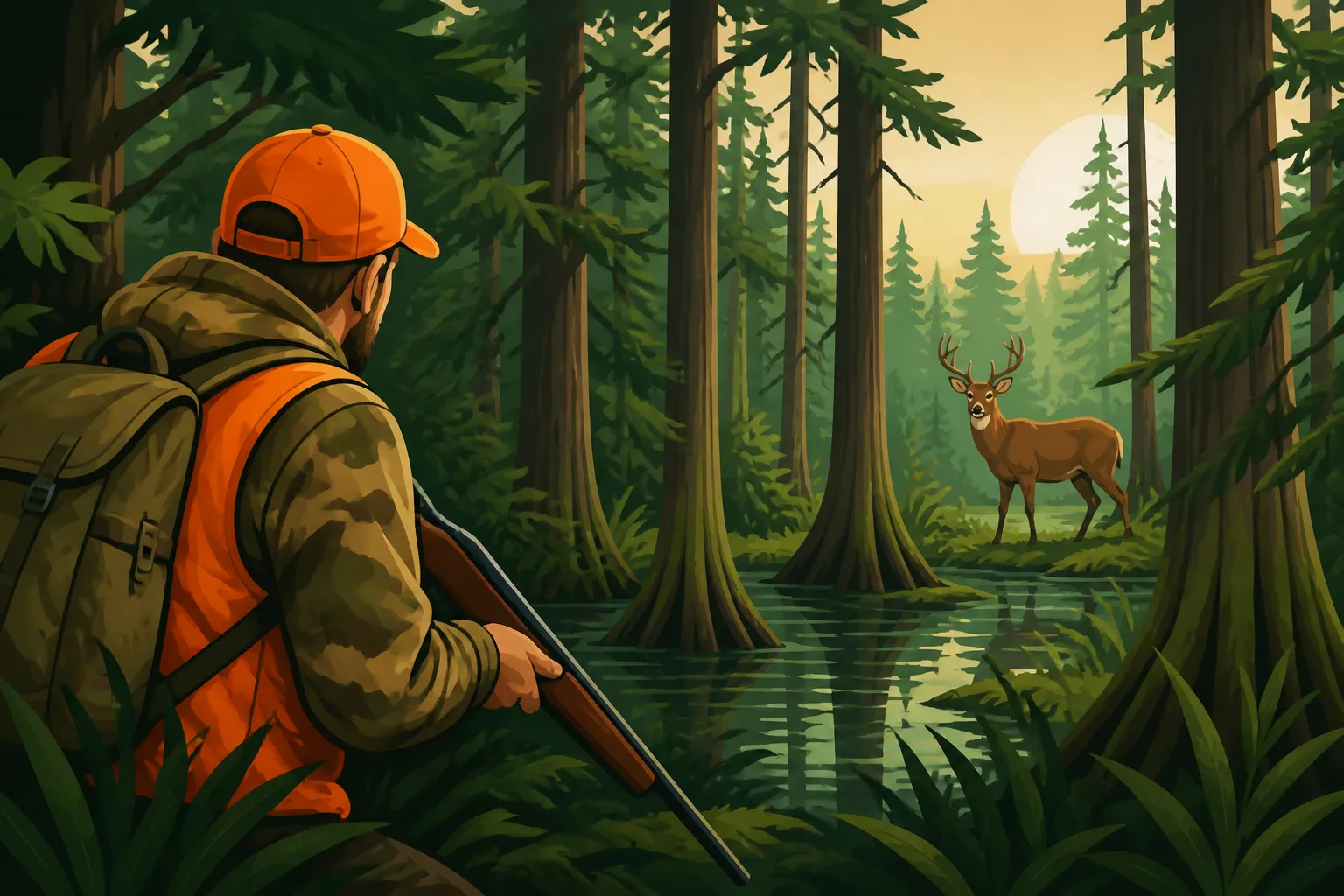
Navigating a cedar swamp is rarely a straightforward affair. Picture a dense thicket where fallen trees create treacherous obstacles, water can be ankle-deep or waist-deep without warning, and the ground can be a spongy mix of sphagnum moss and tangled roots. Movement is inherently slow and often noisy, which is exactly why many hunters avoid these areas. However, this difficulty for humans translates directly into increased security for deer. These challenging conditions mean that deer here are often less pressured than their counterparts in more accessible terrain.
Successful still-hunting in a cedar swamp requires a complete shift in mindset. You're not looking for clear shooting lanes; you're looking for subtle openings, deer trails, and pockets of slightly drier ground. Understanding that the terrain itself is both your biggest obstacle and your greatest ally is crucial. Hunters must anticipate the need to climb over large blowdowns, wade through water, and push through dense brush, all while trying to move as quietly as possible. This intimate understanding of the swamp's character is vital for developing effective hunting strategies.
Essential Gear for Navigating and Hunting Swamps
Stepping into a Wisconsin cedar swamp unprepared is a recipe for a miserable, and potentially dangerous, hunt. The environment demands specific gear choices that prioritize warmth, waterproofing, quiet movement, and reliable navigation. Skimping on these essentials will not only compromise your comfort but also your safety and your chances of success.
Clothing and Footwear Considerations
When still-hunting cedar swamps, your clothing and footwear are perhaps the most critical components of your kit. The primary challenge is staying dry and warm in a cold, often wet, environment, while also being able to move quietly. A quality waterproof shell is non-negotiable. Look for materials that are durable enough to withstand snags from branches but soft enough not to crackle in freezing temperatures. Layering is key, starting with moisture-wicking base layers, adding insulating mid-layers like fleece or wool, and topping it off with that bombproof outer shell. You'll want to avoid bulky clothing that restricts movement or snags easily.
Footwear is arguably even more important. You need boots that are absolutely waterproof, well-insulated for warmth, and offer excellent traction on slippery, uneven surfaces. Think rubber boots or high-quality waterproof leather boots designed for extreme cold and wet conditions. Many hunters opt for knee-high or even hip-waders if they know the swamp areas they are targeting have significant standing water. The constant exposure to moisture and cold demands the best protection you can afford. It's also wise to bring an extra pair of wool socks to change into if your feet do get damp, a common occurrence in these challenging habitats. For more on this critical piece of equipment, check out our guide on Boots for Wisconsin Swamps and Snow.
Navigation and Communication Tools
Getting lost in a vast, homogeneous cedar swamp can happen quickly, especially when you're focused on moving slowly and looking for deer. Visibility can be extremely limited, and without distinct landmarks, disorientation is a real threat. A reliable GPS unit or a smartphone with a robust hunting app is absolutely essential. Modern mapping applications, like the Wisconsin DNR's Scouting With the Wisconsin Hunt Wild App, or commercial options such as GoHunt, allow you to preload maps, mark your path, identify property boundaries, and pinpoint specific features like dense cedar pockets or drier ridges within the swamp.
Beyond navigation, communication is vital, particularly if you're hunting with a partner or in a remote area. While cell service can be spotty, a fully charged satellite messenger or two-way radio can be a lifesaver in an emergency. Remember to carry backup power for all electronic devices, as cold weather can drain batteries quickly. Having a physical compass and a printed map as a failsafe is also a smart move. Always tell someone where you're going and when you expect to return, especially when venturing into such challenging terrain.
Mastering the Art of Still-Hunting in Cedars
Still-hunting is a blend of extreme patience and calculated movement. It’s less about covering ground quickly and more about experiencing the woods at a glacial pace, allowing you to observe, listen, and react to the subtle cues deer leave behind. In the dense confines of a cedar swamp, this method becomes even more critical.
The Importance of Slow Movement and Observation
In a cedar swamp, your movement should be painstakingly slow – often taking several minutes to cover just a few yards. Think of it as "hunting with your eyes," where every step is deliberate, and you spend more time looking and listening than actually moving. The goal is to blend into the environment, becoming part of the natural rhythm of the swamp, rather than an intrusive element. This ultra-slow pace minimizes noise, allowing you to hear deer before they hear you, and gives you time to pick apart the dense cover for any flicker of movement or unusual shape.
Focus on taking one or two steps, then stopping for an extended period, perhaps a full minute or even longer. During these pauses, scan every inch of the swamp ahead and to your sides. Look for horizontal lines (a deer's back) in a vertical world, the flick of an ear, or the tell-tale glint of an antler. Pay close attention to changes in terrain, subtle rises, or breaks in the cedar canopy that might offer a slightly drier bedding area or a travel corridor. This patient, methodical approach is key to detecting deer in a habitat designed for concealment.
Reading Sign in Thick Cover
While cedar swamps are incredibly dense, deer still leave plenty of sign, and learning to interpret it is a crucial skill. Fresh tracks in the damp soil or snow can tell you how recently a deer passed through, its direction of travel, and potentially its size. Look for subtle deer trails – narrow paths where vegetation is matted down, often slightly elevated or winding around obstacles to find the easiest route through the swamp. These trails act like deer highways, especially in areas of denser cover. You can learn a lot about animal movement by Finding Sign in Big Timber.
Beyond tracks and trails, keep an eye out for browse lines on cedars, where deer have nipped off branches, especially during harsh winters when other food sources are buried under snow. Rubs and scrapes, though less common within the deepest parts of the swamp, can sometimes be found on the edges or on isolated islands of higher ground. Finding these indicators of deer activity helps you confirm that you're in an active area and can guide your slow movement. Understanding these subtle clues will significantly increase your odds of encountering a deer.
Optimal Conditions and Timing for Swamp Still-Hunting
The success of still-hunting cedar swamps often hinges on timing your hunts with specific weather patterns and deer behavior. Not all days are created equal in these challenging environments, and understanding when deer are most likely to be in the swamps, and when they're most vulnerable, can make all the difference.
Hunting During and After a Snowfall
Cedar swamps truly shine as a hunting destination when the snow starts to fly, or immediately after a fresh snowfall. There are several reasons for this. First, snow cover makes tracking significantly easier. Fresh tracks stand out clearly, allowing you to follow a deer's path and understand its movement patterns. This is invaluable in dense cover where visual confirmation is difficult. You can tell if a deer is traveling purposefully, browsing, or even bedding down. Still-hunting becomes a true "track and stalk" operation, making Still-Hunting After a Wisconsin Snow an incredibly effective tactic.
Second, heavy snow and bitter cold drive deer into the thermal cover of the cedars. The dense canopy intercepts much of the snow, leaving the ground underneath relatively clear, and the thick needles provide insulation from the cold wind. Deer will gravitate to these areas for warmth and easier movement. This concentration of deer, combined with the ability to track, creates a powerful advantage for the still-hunter. The quiet hush that snow brings to the forest also aids in stealth, as your own movements are muffled, and the crunchy leaves that plague early season hunts are no longer a factor. For tips on navigating these conditions, consider our article on Hunting Deer in Deep Northern Wisconsin Snow.
Rut Movement and Late Season Opportunities
While snow is a huge advantage, cedar swamps also offer fantastic opportunities during the peak of the rut and in the late archery or muzzleloader seasons. During the rut, bucks are often on the move, searching for does, and they will utilize the security cover of swamps as travel corridors or staging areas. You might catch a buck cruising the edges of the swamp, or even pushing a doe through the densest parts of it. The thick cover offers him a sense of security during an otherwise vulnerable time.
In the late season, after the gun hunts have scattered deer and temperatures plummet, cedar swamps become critical wintering grounds. Deer move into these areas for survival, seeking thermal protection and available browse. This makes them prime locations for Cold Weather Sitting Strategy, but also excellent for slow, methodical still-hunting. Deer might be less active, conserving energy, but they are also concentrated. Finding those late-season food sources within or immediately adjacent to the cedars can be a game-changer. The key is to be extremely patient, understanding that deer might move very little, but when they do, it will be purposeful.
Strategies for Success in Pressured Swamps
It's a common misconception that cedar swamps are always untouched havens. While they are often less pressured than easily accessible woods, increased hunting pressure on surrounding public lands can push deer into these swamps, but also increase the number of hunters willing to brave them. Adapting your still-hunting strategy for these conditions is paramount.
Finding Undisturbed Pockets
Even in a heavily hunted area, deer will always find the path of least resistance from human intrusion. In a cedar swamp, this usually means pushing deeper into the most miserable, difficult-to-access sections. While other hunters might follow obvious trails or stick to the edges, your advantage lies in going where others won't. This could mean wading through deeper water, pushing through even thicker tangles, or simply walking further from any access point. The more challenging the terrain, the less likely other hunters are to penetrate it deeply.
Utilize tools like GoHunt or other detailed topographic and aerial maps to identify these "unbothered" pockets. Look for sections of swamp that are furthest from roads, parking areas, or easy entry points. Often, these will be surrounded by especially wet or dense areas that deter casual hunters. Focusing your effort on these hard-to-reach sanctuaries increases your chances of encountering a truly undisturbed deer, one that hasn't been bumped multiple times. Sometimes, finding these areas means venturing into what seems like an impenetrable mess, but the reward can be significant. This approach ties into strategies like How Far to Walk From a Logging Road where distance from common access points equates to less pressure.
Exit and Entry Routes
When still-hunting a cedar swamp, your entry and exit routes are just as important as your hunting path. The goal is to move in and out without alerting deer in the area you intend to hunt or the deer that might be utilizing that same area after you leave. This often means planning a circuitous route, avoiding direct lines from roads to your hunting zone. Consider using topographical features, or even adjacent less-desirable cover, to mask your approach. If you are hunting a funnel between two swamps, as discussed in Hunting a Funnel Between Two Swamps, your entry and exit could dictate success.
For exiting, if you've harvested a deer, think about how you'll get it out efficiently and with minimal disturbance to the broader area. This could involve using a sled in snow, or even the gutless method and packing out portions of the animal to avoid a noisy, difficult drag. If you're simply leaving the woods after an unsuccessful hunt, choose a path that takes you away from prime bedding or feeding areas, minimizing your impact on the deer you hope to hunt another day. Always consider wind direction for both entry and exit, attempting to approach with the wind in your face to prevent scenting deer before you even begin your hunt.
Gear Checklist for Wisconsin Cedar Swamp Still-Hunting
To help you prepare for your next adventure into the challenging but rewarding world of Wisconsin's cedar swamps, here's a quick checklist of essential gear:
| Category | Item | Specific Considerations for Swamps |
|---|---|---|
| Clothing | Waterproof/Breathable Outer Shell | Durable, quiet, thorn-resistant |
| Insulated Mid-Layers (Wool/Fleece) | Warm even when damp, quiet | |
| Moisture-Wicking Base Layers | Essential to manage sweat | |
| Blaze Orange/Pink Outerwear | Required during gun seasons, highly visible | |
| Footwear | Insulated, Waterproof Boots | Knee-high or hip-waders for deep water, excellent traction |
| Wool Socks | Multiple pairs, for warmth and wicking moisture | |
| Navigation | GPS Unit / Smartphone App (GoHunt) | Preloaded maps, extra battery pack |
| Physical Compass & Paper Map | Backup, laminated for protection | |
| Satellite Messenger / Two-Way Radio | For emergency communication where cell service is absent | |
| Hunting Gear | Quiet Firearm/Bow | Protected from moisture, sling for hands-free movement |
| Binoculars | Compact, good low-light performance for thick cover | |
| Rangefinder | For quick measurements in limited visibility | |
| Backpack | Waterproof, comfortable, sufficient capacity for layers, food, water | |
| Game Processing Kit | Knife, gloves, game bags, bone saw (if packing out) | |
| Safety/Comfort | First-Aid Kit | Well-stocked for minor injuries, cuts, scrapes, blisters |
| Headlamp | With red light option, extra batteries | |
| Water & High-Energy Snacks | Stay hydrated and fueled for demanding conditions | |
| Hand Warmers / Body Warmers | Crucial for cold, sedentary periods |
Disclaimer
Hunting is an inherently dangerous activity. Always prioritize safety, adhere to all Wisconsin Department of Natural Resources regulations, and ensure you have the proper licenses and permits. Be aware of your surroundings, know your target and what lies beyond, and hunt ethically and responsibly. This guide is for informational purposes only and does not replace official hunting education or regulations.