Wool Versus Synthetics in Wet Snow
There's nothing quite like the excitement of a fresh blanket of snow settling over the Wisconsin woods, but that picture-perfect winter wonderland can quickly turn into a miserably cold and damp nightmare if you're not dressed right. Many of us have experienced that bone-chilling cold that seeps in when a gentle snowfall turns to heavy, wet flakes, soaking through layers and leaving you shivering on stand. This guide is all about navigating that challenging reality, helping you understand the real-world performance of wool and synthetic hunting apparel when the weather takes a turn for the worse with wet snow.
The Wisconsin Winter Reality: Why Wet Snow is Such a Challenge
Hunting in Wisconsin often means contending with a fickle Mother Nature. One moment it's crisp and dry, the next you're facing a blustery mix of snow and sleet that feels less like a gentle dusting and more like a direct attack. It's not just the cold, but the insidious dampness that truly chills you to the bone and ruins a hunt faster than anything.
Understanding Wisconsin's Winter Weather Shifts
Wisconsin winters are legendary for their unpredictability. You can start the day with temperatures well below freezing, perfect for tracking deer in dry, powdery snow. But by mid-morning, a warm front might roll in, bumping the mercury up just enough for that beautiful, fluffy snow to become heavy, wet, and clinging. This is especially true during the Muzzleloader Tactics in December Cold or the later stretches of Late Antlerless Hunting in Wisconsin. It's not uncommon to experience a temperature swing of twenty degrees or more in a single day, transforming the very nature of precipitation from dry flakes to damp slush. This means your gear needs to be versatile, capable of handling both extremes and everything in between.
The Misery of Being Cold and Damp
Anyone who has spent a full day on stand, trying to stay still and quiet, knows the feeling of cold seeping in. Add dampness to that equation, and it's a whole new level of misery. Wet clothing rapidly wicks heat away from your body, a process known as evaporative cooling. Even if the air temperature isn't brutally low, being wet makes it feel much colder. Your muscles start to tense, your teeth chatter, and your focus on the hunt diminishes dramatically. It becomes a battle against your own body's attempts to stay warm, rather than a focused pursuit of game. This isn't just uncomfortable; it can lead to dangerous situations, especially if you're deep in the woods or far from a warm vehicle.
Impact on Hunter Performance and Safety
Beyond personal comfort, being cold and damp directly impacts your effectiveness as a hunter and, more importantly, your safety. Shivering makes it impossible to hold a steady aim, spoiling a shot opportunity you've waited all day for. Your fine motor skills degrade, making it harder to manipulate calls, rangefinders, or even safely handle your firearm or bow. Decision-making can become impaired as your body prioritizes warmth over other functions. In extreme cases, sustained exposure to cold and wet conditions can lead to hypothermia, a serious medical emergency that all hunters must actively guard against. That's why having the right gear, capable of performing in wet snow, isn't just about luxury; it's about being effective and coming home safely.
Wool: The Time-Tested Champion for Cold and Wet
For generations, wool has been the gold standard for cold-weather outdoor enthusiasts, and for good reason. Before the advent of modern synthetic fibers, wool was the primary choice, and many experienced Wisconsin hunters still swear by it, especially when the snow starts to fly.
How Wool Keeps You Warm When Wet
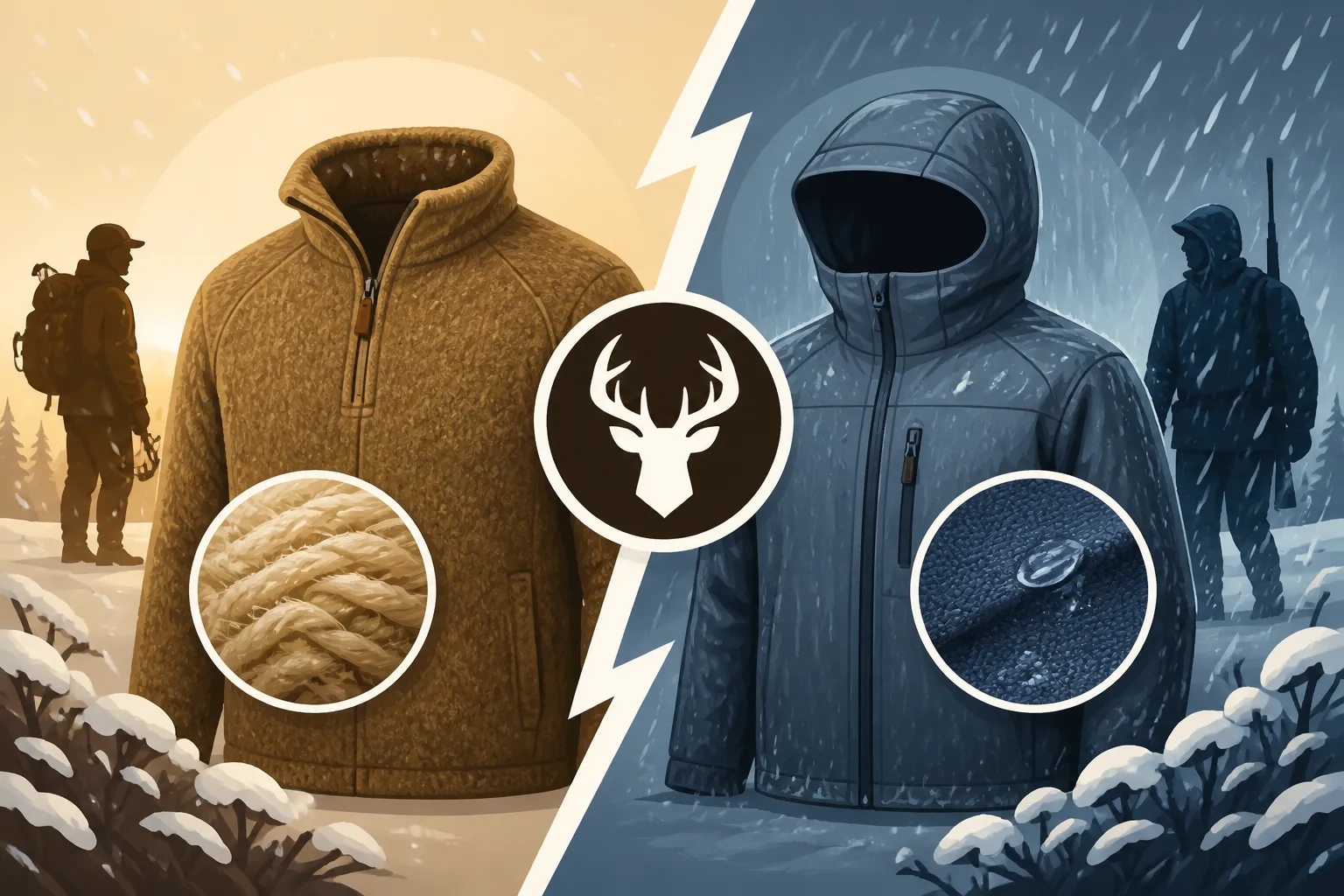
The unique structure of wool fibers, particularly fine merino wool, is what makes it so effective. Each wool fiber has a crimped, scaly surface that traps air, creating natural insulation. Crucially, wool is hygroscopic, meaning it can absorb a significant amount of moisture – up to 30% of its own weight – without feeling wet to the touch. This moisture is absorbed into the core of the fiber, leaving the surface relatively dry. Even when the fiber core is saturated, the crimp and air pockets remain, allowing wool to continue insulating. This is a game-changer when you're dealing with wet snow and damp conditions; you might get wet on the outside, but the wool still offers a layer of protection against the cold that would otherwise be lost with other materials. This property is why you'll often hear veteran hunters say, "wool warms even when wet."
Key Benefits of Wool for Hunters
Beyond its "warm when wet" magic, wool offers several other compelling benefits for the Wisconsin hunter. First, its natural odor-resistant properties are fantastic. Wool fibers naturally resist the growth of odor-causing bacteria, meaning you can wear wool base layers for multiple days in the field without alarming deer with your scent. This is a huge advantage for stealth, especially when you're trying to stay scent-free in areas where Hunting Without Bait in a Banned County is necessary. Second, wool is incredibly quiet. When stalking through brush or climbing into a stand, the soft, natural fibers make virtually no noise, unlike some stiffer synthetic fabrics that can rustle and give away your position. Finally, wool is durable and surprisingly comfortable against the skin, especially modern merino wool which is much finer and less itchy than the coarse wool of yesteryear.
Potential Downsides of Wool Gear
While wool has many advantages, it's not without its drawbacks. The most immediate concern for many hunters is the cost. High-quality merino wool garments can be a significant investment, often more expensive than their synthetic counterparts. Another consideration is its drying time. While wool keeps you warm when wet, it does eventually get wet, and when it does, it takes longer to dry than many synthetics. This can be an issue if you're on a multi-day trip with limited drying options. Weight can also be a factor; for comparable warmth, wool can sometimes be bulkier and heavier than advanced synthetics, which might matter if you're covering long distances or trying to keep your pack light for Scouting Wisconsin Public Land Before Season. Finally, wool can be more susceptible to abrasion and snagging in dense brush compared to some tougher synthetic weaves, so you need to be mindful of its outer layer use.
Synthetics: Modern Marvels in Moisture Management
In recent decades, synthetic fabrics have revolutionized outdoor gear, offering lightweight, quick-drying, and often very warm options that give wool a serious run for its money. For many Wisconsin hunters, modern synthetics have become an indispensable part of their cold-weather layering system.
The Science Behind Synthetic Warmth
Synthetic fabrics like polyester, polypropylene, and various proprietary blends are engineered to mimic or even surpass some of wool's natural properties. These fibers are typically hydrophobic, meaning they repel water rather than absorbing it. Instead, they're designed to wick moisture (sweat) away from your skin and transfer it to the outer layers, where it can evaporate more easily. This keeps your skin dry, which is critical for staying warm. The insulation comes from the structure of the fabric, which traps air in tiny pockets, much like wool. Companies like Sitka, Kuiu, and others constantly innovate with new fabric technologies, creating materials that are incredibly lightweight yet surprisingly warm, even when damp.
Advantages of Synthetic Hunting Apparel
The advantages of synthetics are numerous. Their primary strength lies in their ability to dry incredibly quickly. If you get soaked by wet snow or sweat heavily on a long hike to your stand, synthetics will shed moisture much faster than wool, getting you back to a dry, comfortable state sooner. This rapid drying is a huge benefit for multi-day hunts or in situations where you might have unexpected changes in weather. Synthetics are also generally lighter than wool for comparable warmth, making them an excellent choice for base layers or insulation pieces when minimizing weight is a priority. Cost can also be an advantage, with many synthetic options being more budget-friendly than premium wool. Furthermore, many synthetics are highly durable and resistant to abrasion, making them ideal for outer layers that will rub against trees and brush. When you're looking for gear, exploring options on platforms like GoHunt can reveal a wide array of synthetic apparel, from specialized base layers to rugged outer shells, each with different features and price points.
Drawbacks and Limitations of Synthetics
Despite their advancements, synthetics do have some inherent limitations. The most common complaint is their tendency to retain body odor. Unlike wool's natural antimicrobial properties, synthetics often require special treatments to resist odor, and even then, they can start to smell after a day or two of hard hunting. This is a significant consideration for stealth hunters. While synthetics excel at wicking moisture away from the skin, their warmth performance when truly saturated by external moisture (like heavy wet snow) isn't quite as reliable as wool. Once soaked, they can lose a significant amount of their insulating power. Another factor to consider is noise; some synthetic fabrics, especially those designed for extreme durability or water resistance, can be stiff and make more noise when moving, which can be a dealbreaker for archery hunters or those still-hunting in close quarters.
Comparing Performance: Wool vs. Synthetics Head-to-Head
When the chips are down, and you're out in the Wisconsin woods facing wet snow, how do these two powerhouse materials truly stack up? It's not always a clear-cut winner; often, the best solution involves understanding their strengths and weaknesses in specific scenarios.
Warmth-to-Weight Ratio in Different Conditions
In dry conditions, modern synthetics often boast an impressive warmth-to-weight ratio, meaning they provide significant insulation without adding much bulk. This is fantastic for active hunts or when you're trying to keep your pack light. However, when wet snow starts to saturate your outer layers, the dynamic shifts. As mentioned, wool retains a higher percentage of its insulating value when damp compared to many synthetics. While a synthetic base layer will continue to wick sweat effectively, if your mid or outer synthetic layers become saturated from external moisture, their ability to trap warm air diminishes more rapidly than wool. For a sedentary hunt like Cold Weather Sitting Strategy where you might be exposed to prolonged wet conditions, wool often wins on sustained warmth. For high-exertion hunts where you're generating a lot of internal moisture, synthetics might pull ahead due to their superior wicking and faster drying of sweat.
Drying Times and Moisture Wicking
This is where synthetics truly shine. Their hydrophobic nature means they don't absorb water into their fibers. Instead, they move it across the fabric surface, allowing it to evaporate quickly. If you get caught in a downpour or have to push through heavy, wet brush, synthetics will dry out much faster once the immediate moisture source is gone. This is a huge advantage for comfort and convenience, especially if you need to dry your gear overnight. Wool, while still insulating when wet, takes considerably longer to dry completely. If you're managing sweat from exertion, both materials perform admirably in wicking, but synthetics often feel "drier" next to the skin due to their non-absorbent properties. For example, if you're making a long haul to your stand and sweating profusely, a synthetic base layer will likely move that moisture away from your skin faster than a wool one, preventing that clammy feeling.
Durability and Longevity Considerations
The lifespan and ruggedness of your hunting gear are important, especially given the investment involved. Many high-quality synthetic fabrics are engineered for extreme durability, often featuring ripstop weaves or reinforced areas that stand up well to snags and tears from thick brush. They tend to hold their shape and resist shrinking or stretching over time, even with repeated washing. Wool, particularly fine merino wool, can be more delicate. While it's certainly durable enough for hunting, it can be more prone to holes from abrasion or moth damage if not stored properly. The longevity of wool also depends heavily on its weave and how it's treated. A tightly woven wool outer layer will be more durable than a lightweight merino base layer. When you're researching gear on platforms like GoHunt, pay attention to user reviews regarding durability and how specific fabrics hold up in real-world hunting scenarios.
| Feature | Wool (Merino) | Synthetics (Polyester, etc.) |
|---|---|---|
| Warmth When Wet | Excellent (insulates even when saturated) | Good (wicks sweat, but loses more external warmth) |
| Drying Time | Slow | Fast |
| Odor Resistance | Excellent (natural antimicrobial properties) | Fair to Good (often requires chemical treatments) |
| Weight | Moderate to Heavy (for comparable warmth) | Light to Moderate (excellent warmth-to-weight) |
| Noise | Very Quiet | Varies (can be quiet; some can be noisy/stiff) |
| Durability | Good (can be prone to abrasion/snagging) | Excellent (engineered for toughness) |
| Cost | Higher | Moderate to High |
| Comfort (Skin) | Excellent (soft, non-itchy merino) | Good (smooth, consistent feel) |
The Hybrid Approach: Layering for Ultimate Wisconsin Comfort
Trying to pick an absolute "best" material for all Wisconsin hunting conditions, especially with wet snow, is often a fool's errand. The real secret to staying comfortable, safe, and effective lies in mastering the art of layering and strategically combining the strengths of both wool and synthetics.
Building a Smart Layering System
A truly effective cold-weather hunting system is built on layers, each with a specific purpose. You typically want three main components:
- Base Layer (Next-to-Skin): This layer's job is to manage moisture, wicking sweat away from your skin to keep you dry.
- Mid-Layer (Insulation): This layer traps warm air to provide warmth. You can add or subtract these depending on the temperature and your activity level.
- Outer Layer (Shell): This layer protects you from the elements – wind, rain, and that nasty wet snow – while allowing moisture vapor to escape from within.
For hunting in Wisconsin, particularly during the late season when you might be facing Hunting Deer in Deep Northern Wisconsin Snow, building a versatile system means thinking about how each layer interacts. You don't want a heavy, bulky base layer, nor do you want a mid-layer that compresses too much under your outer shell. Every piece serves a function. For a comprehensive guide on building your system, check out Layering for a Wisconsin Deer Stand.
Combining Wool and Synthetics Effectively
Here's where the hybrid approach really shines. Many hunters find success by blending the best attributes of both materials:
- Wool Base Layer: A thin merino wool base layer worn next to the skin is often favored for its superior odor control and ability to provide a touch of warmth even when damp with sweat. If you're moving a lot, a synthetic base layer might be preferred for its quick-drying properties.
- Synthetic Mid-Layer: A lightweight synthetic fleece or insulated puffy jacket makes an excellent mid-layer. It provides great warmth-to-weight, compresses well for packing, and dries quickly if it gets damp from sweat.
- Wool Outer Layer (or Synthetic Outer Layer with Wool Mid): For stealth and sustained warmth in wet conditions, a thick wool outer jacket can be a fantastic choice, as it will continue to insulate even if it gets wet from persistent wet snow. However, a waterproof/breathable synthetic shell (like a good GORE-TEX or similar fabric) over a wool mid-layer is also an extremely popular and effective combination, offering the best of both worlds – dry skin from the wicking wool and absolute protection from the elements.
The key is to use the right material for the right job within your layering system. This versatility allows you to adapt to the wildly varying conditions you encounter, whether you're dealing with a mild Hunting the Pre-Rut in Late October day or the biting cold of When Wisconsin's Late Archery Season Ends.
Specific Scenarios for Layering Choices
Let's think about a few common Wisconsin hunting scenarios:
- Long Walk to a Remote Stand in Wet Snow: You'll be generating a lot of body heat on the hike, but then sitting still in potentially soaking conditions. A synthetic base layer to wick sweat, followed by a synthetic mid-layer that you can shed for the hike, and then a quiet, waterproof/breathable synthetic outer shell. Once on stand, you could add a packable, insulated synthetic puffy over your mid-layer for warmth, or rely on a thick wool outer layer if you know you'll be exposed to dampness for hours.
- Still-Hunting in a Cedar Swamp During a Wet Snowfall: Quiet movement and warmth when damp are paramount. A wool base layer is excellent for odor control and quiet. A medium-weight wool mid-layer provides reliable insulation, and a DWR-treated (Durable Water Repellent) wool outer layer or a very soft, quiet synthetic softshell with good water resistance would be ideal. The natural quietness of wool here is a huge advantage.
- All-Day Sit in a Treestand During Freezing Rain/Sleet: Here, staying absolutely dry is critical. A synthetic base layer to handle internal moisture, a thick wool or synthetic insulated mid-layer, and a bomb-proof, waterproof, and breathable synthetic outer shell are non-negotiable. This is where you might also consider Insulated Boots for All-Day Sits and additional hand/foot warmers.
By considering your activity level, the expected precipitation, and the duration of your hunt, you can fine-tune your layering to maximize comfort and effectiveness.
Making Your Choice: Factors Beyond the Fabric
While the debate between wool and synthetics is a critical one, a truly informed decision involves looking at the bigger picture. Fabric choice is one piece of the puzzle; other considerations play a significant role in your overall hunting experience and success.
Budget and Investment in Gear
Let's be real: hunting gear can be a serious investment. High-quality wool, particularly fine merino, tends to be more expensive upfront than many synthetic options. However, synthetics at the top end of performance can also carry a premium price tag. When you're weighing your options, consider the longevity and versatility of the garments. A well-cared-for wool garment can last for many seasons, as can durable synthetic pieces. Think about what you can afford, and where you prioritize your spending. Sometimes, it's better to invest in one or two really good core pieces (like a quality base layer or an outer shell) and supplement with more affordable options for less critical layers. Websites like GoHunt often feature sales or offer comparisons that can help you find value without sacrificing quality.
Scent Control and Noise in the Field
These two factors are often non-negotiable for serious deer hunters. As discussed, wool naturally excels at odor resistance, which is a massive advantage when trying to remain undetected by a wary whitetail. Synthetics, while improving, still often rely on chemical treatments that can wear off over time. For maximum scent control, especially for Hunting the Wisconsin Rut in November when bucks are cruising, many hunters lean towards wool next to their skin.
Noise is equally important. When Still-Hunting Wisconsin Cedar Swamps or making that final draw on a buck, any extraneous noise can blow your cover. Wool is inherently quiet. Some synthetic fabrics can be stiff or have a "swishy" sound when rubbed together, especially those designed for high water resistance. Modern advancements have led to very soft, quiet synthetics, but it's something you need to check when purchasing. When trying on gear, move around in it, rub your arms together, and sit down to see how much noise it creates.
Maintenance and Care of Your Hunting Apparel
Looking after your gear properly will extend its life and ensure it performs season after season. Wool requires a bit more delicate care; it often needs to be washed on a gentle cycle with specific wool-friendly detergents and laid flat to dry to prevent shrinking or stretching. Synthetics are generally more robust and can often be machine washed and tumble dried on low settings, making them easier to care for on multi-day trips or for quick turnarounds. Always check the care labels on your garments, regardless of the material. Proper storage is also key; wool needs protection from moths, while synthetics should be stored clean and dry to prevent mildew. Taking the time to properly clean and store your hunting apparel will ensure it's ready for action, whether you're gearing up for Opening Weekend Tactics in Wisconsin or the late-season crunch.
Disclaimer
This article is for general informational purposes only and does not constitute professional advice. Laws, prices and regulations vary by location and change over time. Consult a qualified professional for guidance on your specific situation.