Shotguns for Wisconsin Grouse Cover
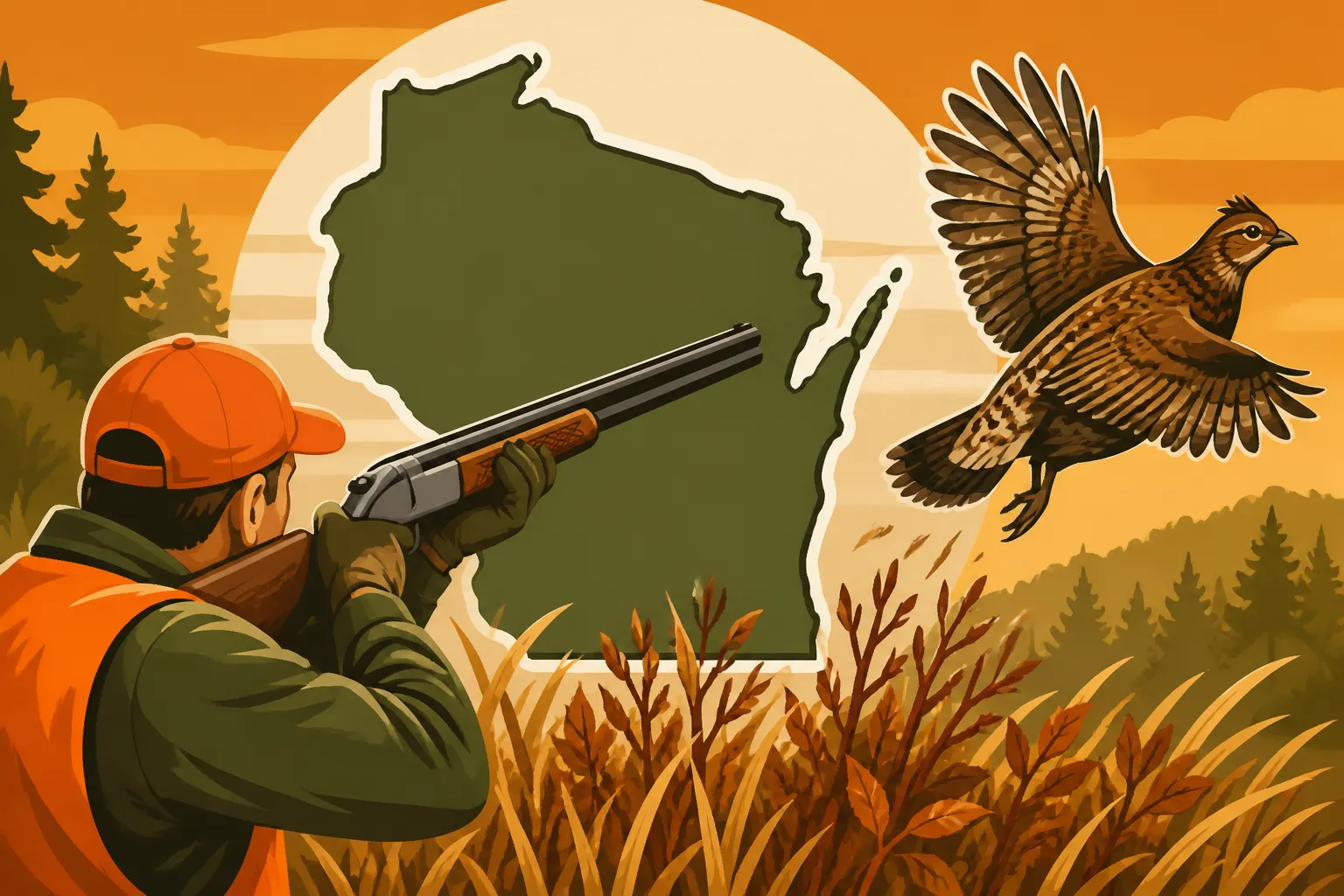
One of the most thrilling and often frustrating experiences in Wisconsin's Northwoods is the sudden, explosive flush of a ruffed grouse. You're walking through tangled aspen or dense alder, minding your own business, and then WHIRRRRR! a bird rockets out, often through a screen of branches, giving you mere fractions of a second to react. It’s a challenge that tests your reflexes, your patience, and most importantly, your gear. This guide is all about choosing the right shotgun to meet the unique demands of pursuing ruffed grouse and their woodcock cousins in Wisconsin's famously thick cover.
The Unique Challenges of Wisconsin Grouse Hunting
Hunting ruffed grouse and woodcock in Wisconsin isn't like shooting clays or chasing pheasants in open fields. It's a game played in tight quarters, where success hinges on quick decisions and even quicker gun handling. The dense forests and often challenging weather conditions dictate a specific set of requirements for your upland shotgun, far different from what you might use for waterfowl or deer.
Dense Cover and Quick Shots
Imagine yourself pushing through a dense thicket of young aspen in Langlade County, the kind of place where you practically have to swim through the branches. Suddenly, a grouse bursts from a few yards away, diving and weaving through the timber. There's no time to think, no time to shoulder deliberately; it's an instinctual "mount and shoot" situation. The cover is your biggest obstacle, often obscuring the bird until it’s almost on top of you, and then providing a nearly impenetrable escape route. Your shotgun needs to be incredibly maneuverable, light enough to carry all day, and capable of putting a dense pattern on a bird that might only be visible for a split second. This means short, fast swings and often very close-range shots.
The typical ruffed grouse habitat in Wisconsin, particularly in the northern counties, involves a patchwork of varying timber ages, often characterized by young aspen and birch stands, alder swamps, and dense conifer regeneration. These environments are fantastic for grouse but brutal on the hunter and their equipment. Branches snag barrels, mud and wet leaves cake actions, and the constant push through cover makes anything heavy or unwieldy a significant burden by the end of the day. A gun that feels balanced and quick to the shoulder when you're fresh can feel like a lead pipe after five miles of busting brush.
Weather Conditions and Gear Durability
Wisconsin weather during the grouse season, which often stretches into the late fall, is notoriously fickle. You might start the day under crisp, blue skies, only for it to turn into a cold, driving rain or even an early snowstorm by afternoon. This means your shotgun needs to be durable and reliable in adverse conditions. Wooden stocks and blued steel can quickly show wear and tear, and more delicate actions might struggle when packed with moisture and debris.
Consider a hunt in October in the Chequamegon-Nicolet National Forest Hunting. You could be walking through a light drizzle one minute, then find yourself slogging through a cedar swamp with water dripping everywhere the next. A shotgun that is resistant to rust and can function flawlessly when wet and dirty is paramount. Synthetics and stainless steel components can offer a significant advantage here, reducing the amount of meticulous cleaning needed after every outing. Furthermore, the constant bumping and scraping against trees and brush demands a gun that can take a few knocks without compromising its integrity or function. It's not about being careless, but acknowledging the reality of hunting in challenging environments.
Understanding Grouse Behavior
To pick the right shotgun, you need to understand the bird you're hunting. Ruffed grouse are masters of evasion. Their flush is explosive and often takes them straight up, then immediately into the densest cover available, or along the contours of a ridge, using trees as natural shields. They don't typically fly long, open distances like a pheasant might across a harvested field. Instead, they dart, weave, and drop back into the thicket, often landing within 50 to 100 yards, ready to flush again if pressured.
Woodcock, often found in the same coverts (especially alder runs), present an even trickier target. Their flight is often described as "erratic" or "whimsical," a twisting, corkscrewing ascent before they level out and zip away. They are smaller birds, and their flight path can be incredibly unpredictable, demanding a fast, open pattern. This behavior strongly influences choke selection and shot size, which we'll dive into later. The window of opportunity to connect with either bird is incredibly brief, so a shotgun that mounts smoothly and points instinctively is a huge asset. This often comes down to the gun's balance and fit to the shooter.
Gauge Choices for Wisconsin Grouse
The choice of gauge is perhaps the most fundamental decision when selecting a shotgun for Wisconsin grouse. Each gauge offers a distinct blend of firepower, recoil, and carrying weight, impacting how you handle the gun in the field. There's no single "best" gauge; rather, it's about matching the gauge to your hunting style and comfort level. When considering Best Shotgun Gauge for Wisconsin Grouse, hunters often weigh tradition against practicality.
The Classic 12 Gauge
The 12 gauge is, without a doubt, the most common shotgun gauge in America, and for good reason. It offers the widest variety of ammunition choices, from light target loads to heavy magnum waterfowl shells. For grouse, a 12 gauge allows you to throw a very dense pattern, which can be advantageous in thick cover where a single pellet might be all that connects.
However, the 12 gauge also has its drawbacks in the grouse woods. Guns chambered in 12 gauge tend to be heavier and bulkier than their smaller counterparts, which can become a noticeable burden after several hours of walking rugged terrain. The recoil, even with lighter target loads, is also generally greater than smaller gauges, which can lead to flinching or discomfort over a long day of shooting. While you can certainly find lighter 12 gauge upland models, they still often feel substantial compared to a svelte 20 or 28 gauge. If you already own a 12 gauge and are comfortable with it, using lighter, faster loads (like 1 oz or 7/8 oz) is a good strategy for grouse. The sheer volume of pellets can be a confidence booster, especially for newer hunters.
The Nimble 20 Gauge
Many seasoned grouse hunters consider the 20 gauge to be the quintessential upland gauge, especially for timber birds like ruffed grouse and woodcock. It strikes an excellent balance between manageable recoil, reasonable weight, and effective patterning. A 20 gauge shotgun is typically lighter and more compact than a 12 gauge, making it a joy to carry through dense cover all day long. This reduced weight significantly impacts your ability to swing the gun quickly and effectively on a bird that flushes without warning.
A standard 20 gauge load, often 7/8 oz or 1 oz of shot, provides a sufficient pattern density to cleanly take a grouse or woodcock at typical timber ranges (10-30 yards). The reduced recoil compared to a 12 gauge allows for quicker follow-up shots and less fatigue, meaning you're more likely to stay on target for that second or third bird. For many, the 20 gauge offers the perfect blend of authority and agility, making it a highly effective and enjoyable choice for Grouse Hunting Wisconsin Aspen Cover and Woodcock Hunting Wisconsin Alder Runs. Many hunters specifically seek out 20 Gauge Doubles for Aspen Cover for their balance and quick handling.
The Light and Fast 28 Gauge
The 28 gauge is a fascinating option that has gained a dedicated following among serious upland hunters. It's often referred to as a "gentleman's gauge" due to its typically lighter, more elegant firearms and very mild recoil. Don't let its smaller stature fool you, though; the 28 gauge, when paired with the right choke and shot size, is incredibly effective on grouse and woodcock. Its primary advantages are its feather-light weight and almost non-existent recoil, making it exceptionally fast to shoulder and swing.
The patterns produced by a 28 gauge are surprisingly efficient, often described as very uniform and dense within its effective range, usually out to about 30-35 yards. This makes it ideal for the close-quarters flushing shots common in Wisconsin's grouse cover. While ammunition selection is not as broad as for 12 or 20 gauge, modern 28 gauge loads are highly capable. For hunters who prioritize minimal weight and recoil, and appreciate the challenge and finesse of a smaller bore, the 28 gauge is an outstanding choice that adds an extra layer of enjoyment to the hunt. It forces you to be precise, but rewards you with quick handling and easy carry.
The .410 Bore for the Experienced
The .410 bore is the smallest common shotgun gauge and is considered by many to be a true expert's choice for grouse and woodcock. While incredibly light and with virtually no recoil, the .410 throws a very small charge of shot (typically 1/2 oz or 11/16 oz). This means the pattern is significantly sparser than any other gauge, demanding exceptional accuracy and perfect timing. The margin for error with a .410 is razor-thin.
For a skilled shooter, the .410 can be a wonderfully challenging and rewarding tool, making every connection feel like a triumph. It’s also incredibly fun to carry due to its minimal weight. However, for most hunters, especially those new to grouse hunting or those who don't consistently shoot well, the .410 can lead to frustration and potentially wounded birds. It requires a deep understanding of lead, distance, and choke to be consistently effective. While it's certainly legal and possible to harvest grouse with a .410, it's generally recommended for those who have mastered the art of close-range shotgunning and want an additional layer of challenge.
Action Types and Their Advantages in the Uplands
Beyond the gauge, the action type of your shotgun significantly influences its handling, reliability, and how quickly you can get a second shot off. In the fast-paced world of grouse hunting, these factors are crucial. Wisconsin hunters pursuing Ruffed Grouse and Woodcock in Wisconsin need a gun that performs reliably in challenging conditions.
Reliable Pump-Actions
Pump-action shotguns are renowned for their rugged durability and reliability. They are workhorses, capable of functioning in nearly any weather condition, from pouring rain to freezing sleet. The manual cycling of the action means fewer delicate parts to malfunction compared to some semi-automatics, and they are generally less sensitive to different ammunition loads. This makes them a favorite among hunters who prioritize absolute dependability.
For grouse hunting, a pump-action like a Mossberg 500 or Remington 870 can be an excellent choice. They are often more affordable than other action types, allowing hunters to invest more in other gear like good boots or a GoHunt subscription for scouting. While not as fast for follow-up shots as a semi-auto, a hunter proficient with a pump can cycle it remarkably quickly. The main drawback is that constant pumping can break your shooting rhythm, but for many, the trade-off in reliability and cost is well worth it. They are also incredibly versatile, easily converted for deer or waterfowl seasons with a barrel change.
Fast-Cycling Semi-Autos
Semi-automatic shotguns offer the distinct advantage of rapid follow-up shots with minimal recoil. The gas or inertia-driven systems absorb some of the recoil, making them very comfortable to shoot, which can be a huge benefit when you’re taking multiple shots in quick succession or on a long day in the field. This also means you can maintain a more consistent sight picture between shots, increasing your chances of connecting on a double flush.
However, semi-autos can sometimes be more sensitive to cleaning and ammunition types. Some gas-operated models might "short-stroke" or jam if not kept meticulously clean, especially in dusty or muddy conditions. Others might struggle to cycle very light target loads reliably, although most modern upland-specific semi-autos are designed to handle a wide range of loads. Despite these potential quirks, the ability to put multiple shots downrange quickly and comfortably makes a semi-auto a very popular choice for many grouse hunters, especially when faced with those elusive doubles. Brands like Beretta and Browning offer excellent semi-auto options well-suited for the uplands.
Elegant Break-Actions Over/Under and Side-by-Side
Break-action shotguns, encompassing both over/under (O/U) and side-by-side (SxS) configurations, are often considered the epitome of upland bird hunting. They are typically lighter, more compact, and exquisitely balanced, offering an unparalleled feel in hand. The ability to select between two different chokes (one in each barrel) is a significant advantage in the varied cover grouse inhabit. You might set one barrel with an open choke (e.g., improved cylinder) for the first, close-range flush, and the second with a slightly tighter choke (e.g., modified) for a bird that gets out a bit further.
Side-by-sides, with their wider sighting plane, can feel incredibly fast to point and are a traditional choice for walking through dense cover. Over/unders offer a single sighting plane, which many shooters find more intuitive. Both designs are mechanically simple and very reliable, though they are slower to reload than pumps or semi-autos after two shots. The main downsides are often cost—quality break-actions can be quite expensive—and the fact that they are limited to two shots. However, for many traditionalists, the aesthetics, balance, and pure joy of carrying a fine break-action gun in the grouse woods are unmatched.
Choke Selection for Wisconsin Ruffed Grouse
Choke selection is paramount for consistent success when hunting ruffed grouse and woodcock in Wisconsin's dense cover. Unlike open-field hunting where longer shots are common, timber hunting almost exclusively means close-range engagements. Therefore, your choke choice should prioritize a wide, forgiving pattern. This is a crucial element when considering Choke Choice for Fast Flushes.
Open Chokes for Close Flushes
For the vast majority of grouse and woodcock hunting situations in Wisconsin, open chokes are your best friends. These include Cylinder, Skeet, and Improved Cylinder (IC). The reason is simple: when a bird flushes at 10 to 25 yards, a tighter choke will produce a pattern so dense that you'll either miss entirely, or if you connect, you'll pulverize the bird, rendering it largely inedible. An open choke spreads the shot more quickly, creating a larger effective pattern at close ranges.
- Cylinder Choke: This is the most open choke, offering no constriction at all. It throws the widest pattern at close range, making it ideal for extremely close flushes (under 15 yards) or for hunters who struggle to lead fast-moving birds. It’s particularly effective for woodcock, whose erratic flight often keeps them in very tight cover.
- Skeet Choke: Slightly more constricting than cylinder, a Skeet choke still produces a very open pattern. It’s a fantastic all-around choice for close-range grouse and woodcock, providing enough spread to forgive minor aiming errors without being so wide that the pattern becomes too thin too quickly.
- Improved Cylinder (IC): This is arguably the most popular choke for grouse hunting, striking a great balance between pattern spread and density. It’s effective out to about 30-35 yards, covering most typical timber shots. It allows for a good spread while still retaining enough pellet energy to dispatch a bird cleanly. Many hunters will run an IC in both barrels of a double gun or as their sole choke in a pump or semi-auto.
Modified Chokes for Mixed Cover
While open chokes are generally preferred, a Modified choke can have its place, especially if you hunt areas with slightly more open timber or tend to encounter birds that flush a bit further out. A Modified choke offers more constriction than an Improved Cylinder, providing a denser pattern at longer ranges.
If you're using an over/under or side-by-side, a common setup is to have an Improved Cylinder in the first barrel (for the inevitable close flush) and a Modified in the second barrel (for a bird that makes it past the initial shot and gains some distance). This gives you versatility. However, be cautious about using a Modified choke for all your grouse hunting. If most of your shots are indeed under 25 yards, a Modified choke significantly reduces your effective pattern size, making it harder to connect and increasing the chance of missing cleanly. It's a trade-off that requires you to know your hunting grounds and the typical flush distances you encounter.
Don't Over-Choke
The biggest mistake a new grouse hunter can make is over-choking their shotgun. Using a Full or even a Tight Modified choke for grouse is almost always counterproductive. These chokes are designed to keep patterns tight at 40+ yards, distances rarely, if ever, seen in typical Wisconsin grouse cover. At 15-20 yards, a Full choke produces a pattern no bigger than a dinner plate, making accurate shooting incredibly difficult.
Over-choking leads to frustrating misses, or, worse, severely damaged birds when you do connect. Remember, the goal is a clean kill, and a widely dispersed pattern increases the likelihood of enough pellets hitting the vital zone without causing excessive damage. Always test your chosen choke and ammunition combination on a pattern board at realistic grouse distances (15, 20, 25 yards) to understand exactly how your gun performs. You might be surprised at how tight even an Improved Cylinder can be at very close range. GoHunt's resources sometimes include articles on patterning shotguns, which can be helpful.
Barrel Length and Balance in Thick Cover
The length of your shotgun barrel directly impacts how the gun handles and balances, which are absolutely critical factors when maneuvering through dense Wisconsin grouse cover. While longer barrels might offer certain advantages in other hunting scenarios, shorter, quicker-handling barrels are generally preferred in the uplands. The topic of Barrel Length for Walking Thick Cover is often debated but generally leans toward shorter barrels for grouse.
Shorter Barrels for Dense Woods
For hunting ruffed grouse in typical northern Wisconsin cover – thick aspen regeneration, alder swamps, dense evergreens – a shorter barrel is a distinct advantage. Barrels in the 24-inch to 26-inch range are highly favored, with some even going down to 22 inches. The reasons are simple and practical:
- Maneuverability: A shorter barrel is significantly easier to maneuver through tangled branches and dense brush. You'll snag less, bump fewer trees, and generally move more freely. When a bird flushes in front of you, a shorter barrel allows for a quicker, unhindered swing to get on target.
- Faster Handling: Shorter barrels make the gun feel lighter and "faster" to the shoulder. This translates directly into quicker target acquisition on those explosive, unpredictable grouse flushes. Every fraction of a second counts when a bird explodes from cover and darts into the timber.
- Reduced Fatigue: Carrying a lighter, shorter gun all day through demanding terrain will result in less fatigue. This means you'll maintain your energy and focus, which are crucial for staying sharp and ready for that sudden flush, even late in the day.
While some might argue that a shorter barrel affects swing or sight plane, for the close-range, snap-shooting nature of grouse hunting, these concerns are largely negated by the benefits of superior handling in tight quarters.
Longer Barrels and Swing
Longer barrels, typically 28 inches or more, are often preferred for open-field hunting, trap shooting, or waterfowl hunting where sustained swings and longer shots are common. The added length can provide a smoother swing and a longer sighting plane, which can be beneficial for precision at distance.
However, in the Wisconsin grouse woods, these advantages turn into liabilities. A 28-inch barrel will constantly catch on branches, making it cumbersome to walk with and incredibly difficult to swing effectively on a bird that pops up at 15 yards. The extra weight at the muzzle also makes the gun feel sluggish and slows down your reaction time. Imagine trying to thread a needle with a broomstick – that's what a long barrel feels like in dense grouse cover. While some hunters might make it work, it's generally an unnecessary handicap in this specific hunting environment.
Overall Balance and Carry Weight
Ultimately, barrel length is just one component of a shotgun's overall balance and carry weight. A well-balanced gun feels "lively" in your hands, with its center of gravity typically just forward of the receiver. This allows for quick, effortless mounting and swinging. You want a gun that feels like an extension of your body, rather than a separate object you're wrestling with.
The total carry weight is also paramount. A grouse hunter will often cover miles of challenging terrain in a single day, often uphill and downhill, through thick brush and sometimes standing water. A heavy gun, even if well-balanced, will eventually become a burden. This is why many upland-specific shotguns are designed to be relatively lightweight. Paying attention to the overall weight and how the gun distributes that weight will make a significant difference in your enjoyment and effectiveness in the field. When choosing Upland Guns for Aspen and Alder, prioritizing balance and lightness is a smart move.
Ammunition Selection for Ruffed Grouse and Woodcock
Choosing the right ammunition is just as important as selecting the right shotgun and choke. You need a load that delivers enough pellets with sufficient energy to cleanly dispatch a bird at close range, without obliterating it. This involves understanding shot size, whether to use lead or non-toxic shot, and the appropriate load weight and velocity. These are key considerations for Shot Size for Grouse and Woodcock.
Understanding Shot Sizes
For ruffed grouse and woodcock, smaller shot sizes are generally preferred. These birds are not large, and larger pellets (like BBs or #4s) meant for geese or pheasants would simply be overkill, leading to fewer pellets in your pattern and potentially missed birds or excessive damage.
- #7.5 Shot: This is a very popular all-around choice for grouse. It offers a good balance of pellet count and energy. At typical grouse ranges (10-30 yards), #7.5s deliver plenty of knockdown power while maintaining a dense pattern. It's a versatile choice for both grouse and woodcock.
- #8 Shot: Often considered the sweet spot for grouse and woodcock. #8 shot contains more pellets per ounce than #7.5, creating an even denser pattern, which is highly advantageous in thick cover and for fast-flushing birds. The individual pellets still carry enough energy for clean kills on these relatively small birds at close range. It’s an excellent choice for a wide, open choke.
- #9 Shot: This is the smallest common shot size and is fantastic for woodcock and very close-flushing grouse. It delivers the densest pattern of all, maximizing your chances of hitting an erratic flyer. However, #9 shot loses energy quickly, so it's best reserved for shots under 25 yards. It’s a specialized load for those who hunt very tight cover and prioritize pellet count above all else. Some hunters will use #9 shot in their first barrel (open choke) and #8 shot in their second (slightly tighter choke) for a break-action gun.
Lead vs. Non-Toxic Shot
Historically, lead shot was the standard for all upland hunting. However, environmental concerns, particularly regarding lead contamination in wetlands, have led to regulations requiring non-toxic shot in certain areas. In Wisconsin, nontoxic shot is required for hunting all waterfowl statewide, and for all hunting on some federally owned lands like National Wildlife Refuges.
If you are hunting on a National Wildlife Refuge in Wisconsin, you must use non-toxic shot, even for upland birds like grouse and woodcock. This is an important detail to verify before you head out. Otherwise, for grouse hunting on most state and county public lands, lead shot is generally still permissible. However, many hunters are voluntarily making the switch to non-toxic alternatives like bismuth or steel for upland birds. While steel shot can be hard on older barrels and might pattern differently than lead (often requiring a size larger to compensate for its lighter weight), bismuth performs very similarly to lead. It’s always good practice to check current regulations before each season, especially if you hunt various locations, as rules can change.
Load Weight and Velocity
For grouse and woodcock, you don't need heavy, magnum loads. Standard field loads or even target loads are usually more than sufficient.
- Load Weight: Most grouse hunters prefer 7/8 oz to 1 1/8 oz loads for 12 and 20 gauge. For a 28 gauge, 3/4 oz is standard, and for a .410, 1/2 oz or 11/16 oz. The goal is to throw enough pellets for a dense pattern without unnecessary recoil or expense. Heavier loads generally mean more recoil and slower gun handling, which are detrimental in the grouse woods.
- Velocity: A standard velocity (around 1200-1300 fps) is perfectly adequate. There’s no need for high-velocity loads, which tend to increase recoil and spread the pattern more quickly than desired at close ranges. Focus on consistent patterns and comfortable shooting.
- Patterning: Regardless of your chosen shot size, load weight, or velocity, it is absolutely essential to pattern your shotgun with your chosen ammunition and choke. Take a large piece of paper or cardboard (40"x40" is good) and shoot at it from 20 and 30 yards. This will show you exactly how dense and even your pattern is. You might find that a different brand of shell or even a slight change in choke produces a much better pattern from your particular gun. Patterning a Turkey Gun at 40 Yards covers some of the same principles, though at a different range.
Key Features and Accessories for Grouse Shotguns
Beyond the core components of gauge, action, barrel length, and choke, certain features and accessories can significantly enhance your experience and effectiveness when hunting grouse in Wisconsin. These are the details that improve comfort, safety, and practicality in the field.
Sling and Swivels
This might seem like a minor detail, but a good sling is a game-changer for walking miles through challenging terrain. Even the lightest shotgun feels heavy after a few hours of carrying it at the ready. A sling allows you to temporarily free up your hands for navigating obstacles, carrying a harvested bird, or simply giving your arms a rest. When you use a GoHunt app to check a map or mark a promising covert, having your hands free is invaluable.
Look for a sling that is comfortable, durable, and easy to adjust. Neoprene slings offer good grip and padding, while traditional leather slings can be quite sturdy. Ensure your shotgun has proper swivel studs installed (or can have them installed) for attaching the sling securely. The ability to quickly and quietly detach or tighten your sling is important; you want it secure when walking but out of the way when the action starts.
Stock Fit and Recoil Pads
A shotgun that fits you well will point more naturally, swing more smoothly, and be more comfortable to shoot. Stock dimensions—length of pull, drop at comb, and cast—are often overlooked but are crucial for consistent shooting. While custom fitting can be expensive, many modern shotguns offer adjustable shims to tweak the stock to better fit your body. A properly fitting stock means your eye naturally aligns with the rib when you quickly mount the gun, without having to crane your neck or search for the sight plane.
Additionally, a good recoil pad can make a surprising difference, especially with higher-recoiling gauges or if you plan on shooting a lot of shells over the course of a season. Modern recoil pads absorb a significant amount of the felt recoil, reducing shoulder fatigue and preventing flinching. This means you can stay more focused on the hunt and less distracted by discomfort. For a gun you’ll carry and shoot frequently, these seemingly small details make a big impact on overall enjoyment and performance.
Sight Options
Most upland shotguns come with a simple front bead sight, often made of brass or fiber optic. For the close-range, snap-shooting nature of grouse hunting, an elaborate sight system is rarely necessary, and can even be a hindrance, catching on branches or distracting from the natural pointing of the gun.
- Traditional Brass Bead: Simple, classic, and effective. The bead is meant to be a reference point, not something you "aim" like a rifle sight. Your focus should be on the bird, with the bead simply helping confirm proper gun alignment.
- Fiber Optic Front Sight: These sights gather ambient light, making them glow brightly and offering a very clear, easy-to-pick-up reference point, especially in low light conditions common in dense timber. Many hunters prefer them for their visibility.
- Mid-Bead: Some shotguns also feature a small mid-bead, further down the rib. This helps confirm consistent head position and proper gun mount. If your front and mid-bead stack up perfectly, you know your eye is aligned.
Ultimately, the best "sight" for grouse hunting is a consistent gun mount and good pointing ability. Practice mounting your shotgun quickly and smoothly, focusing on a target, and ensuring your eye naturally aligns with the barrel. Any sight should aid this natural pointing, not replace it.
Maintenance and Care for Your Upland Shotgun
A shotgun used for grouse hunting in Wisconsin will inevitably face mud, rain, snow, and dense brush. Proper maintenance isn't just about keeping your gun looking good; it's about ensuring its reliability and longevity. A well-cared-for firearm is a safe and effective one.
Cleaning After a Wet Hunt
Wisconsin weather can be unforgiving. You might start your morning with bright sunshine and end it with a steady, cold drizzle that soaks everything. If your shotgun gets wet during a hunt, cleaning and drying it thoroughly as soon as possible is critical to prevent rust and ensure proper function. This is especially true for blued steel and wooden stocks.
- Disassemble and Dry: Field strip your shotgun as much as is practical and wipe down all metal surfaces with a clean, dry cloth. Pay special attention to the bore, bolt, and action.
- Lubricate and Protect: Once completely dry, lightly oil all metal parts with a good quality gun oil to prevent rust. Protect wooden stocks with a dedicated stock finish or wax. Ensure the action and trigger mechanism are free of debris and lightly lubricated. Don't forget to clean the choke tube and its threads, as these can seize up if neglected.
- Barrel Cleaning: Run a bore snake or cleaning rod with patches through the barrel to remove any residue. A light coat of oil in the bore after cleaning will help protect it.
- Ammunition: If you're using lead shot, be aware that plastic wad residue can build up in the barrel, especially with tighter chokes. Regular cleaning helps remove this.
Neglecting a wet shotgun, even for a day or two, can lead to pitting rust, especially in the bore or on exposed metal surfaces. This is not only unsightly but can also affect accuracy and safety.
Pre-Season Check and Tune-Up
Before the grouse season officially kicks off in mid-September (check Wisconsin Grouse Season Dates for specifics), it's a wise practice to give your shotgun a thorough inspection and tune-up. This ensures everything is in working order and you won't be caught off guard by a malfunction in the field.
- Deep Clean: Perform a comprehensive cleaning, including the often-overlooked parts of the action and trigger group. Remove any old grease or fouling.
- Inspect for Wear: Check for any signs of wear and tear, especially on moving parts, springs, and pins. Look for loose screws on stock, fore-end, or scope mounts (if applicable).
- Barrel Inspection: Visually inspect the bore for any obstructions, pitting, or bulging. Ensure choke tubes are clean, properly threaded, and seated.
- Function Test: With the gun unloaded and pointed in a safe direction, cycle the action several times to ensure it operates smoothly. Test the safety mechanism.
- Pattern Check: As mentioned earlier, pattern your shotgun with your chosen ammunition to confirm your choke and load are performing as expected. This also serves as a good warm-up for the season.
If you notice any significant issues or malfunctions during your check, consider taking your shotgun to a qualified gunsmith for professional inspection and repair. It's much better to discover a problem before you're standing in a grouse covert with a bird flushing.
Proper Storage for Longevity
When the season ends, or between hunts, proper storage is key to maintaining your shotgun's condition for years to come. Simply tossing it in a closet or case might seem convenient, but it can lead to problems.
- Clean and Dry: Always store your shotgun clean and dry, with a light coating of oil on metal surfaces.
- Breathable Storage: Avoid storing firearms in padded, soft cases for extended periods, especially in humid environments. These cases can trap moisture, leading to rust. A climate-controlled gun safe or a breathable gun sock within a hard case is a much better option. Consider using desiccant packs in your safe or case to absorb moisture.
- Humidity Control: In Wisconsin, humidity can be an issue. A dehumidifier in your gun safe is a worthwhile investment.
- Security: Always store your firearms securely to prevent unauthorized access, adhering to all local and state laws.
Taking good care of your shotgun ensures it will be ready for many more seasons of exhilarating Grouse and Woodcock Hunting in Wisconsin, providing reliable performance when that next explosive flush happens.
| Gauge Recommendation | Typical Shot Size | Pros for Grouse Hunting | Cons for Grouse Hunting | Best Use Case |
|---|---|---|---|---|
| 12 Gauge | #7.5, #8 | Wide ammo availability, dense patterns, versatile | Heavier, more recoil, can be unwieldy in thick cover | General purpose, if already owned, or for hunters needing maximum pellets |
| 20 Gauge | #7.5, #8 | Excellent balance of weight, power, and maneuverability, less recoil | Slightly less ammo variety than 12ga | Ideal all-around choice for most grouse hunters |
| 28 Gauge | #8, #9 | Very light, minimal recoil, excellent balance, elegant | Less common ammo, requires more precise shooting | Hunters prioritizing lightness, low recoil, and a challenge |
| .410 Bore | #9 | Extremely light, almost no recoil, ultimate challenge | Very sparse pattern, demands expert accuracy, easy to wound birds | Expert hunters seeking maximum challenge and minimal weight |
Disclaimer
This article is for general informational purposes only and does not constitute professional advice. Laws, prices and regulations vary by location and change over time. Consult a qualified professional for guidance on your specific situation.