Iron County Public Land Access
Venturing into the vast, wild expanse of Iron County, Wisconsin, for a hunting trip can feel like stepping into another world. It’s a place of towering pines, thick aspen, and often, silence that’s only broken by the rustle of leaves or the distant call of a raven. But for many hunters, the sheer scale of public land can be overwhelming, making it tough to pinpoint where to go and how to access those prime, unpressured spots. This guide will help you decode Iron County's public land access, offering practical insights and strategies to find and hunt the Northwoods effectively.
Understanding Iron County's Unique Landscape for Hunters
Iron County, nestled deep in Wisconsin's Northwoods, offers a truly wild hunting experience. Unlike the rolling farmlands of the southern part of the state, this is big timber country, characterized by dense forests, numerous lakes, rivers, and plenty of rugged terrain. This unique landscape profoundly shapes not only the types of game you'll pursue but also how you'll go about accessing and hunting these vast public tracts.
The Northwoods Character of Iron County
When you talk about Iron County, you're talking about vast, unbroken stretches of forest. We're talking about a mix of northern hardwoods like maple and oak, interspersed with conifer swamps of cedar and spruce, and significant tracts of aspen and birch. This isn't small woodlots bordering crop fields; this is true wilderness. The remoteness means fewer roads, less human disturbance in many areas, and a landscape that feels truly untamed. For hunters, this translates to opportunities for solitude and chasing game that lives in a more natural state, far from the pressures of populated areas. However, it also presents challenges: navigating dense cover, understanding deer movement in big timber, and being prepared for all that the wilderness might throw at you. Snowfall here is usually abundant and early, which means deer often yard up in conifer swamps for winter survival, changing their movement patterns dramatically from other parts of the state.
Dominant Public Land Types in Iron County
Iron County boasts an impressive amount of public land, primarily managed by two major entities: the Iron County Forest and the Chequamegon-Nicolet National Forest. Understanding the distinctions between these land types is crucial for planning your hunt.
The Iron County Forest makes up a substantial portion of the public hunting grounds. These lands are generally well-managed for timber production, which often creates a mosaic of habitat types – clearcuts, younger aspen stands, and mature timber – that are beneficial for a variety of game. Access often involves a network of gravel and dirt logging roads, some of which are open to public vehicle traffic, while others might be gated or seasonal.
A significant portion of the Chequamegon-Nicolet National Forest also extends into Iron County. National Forest lands are managed for multiple uses, including timber, recreation, and wildlife. These areas can feel even more remote than county forests, with more emphasis on primitive camping and extensive trail systems. How Many Acres Wisconsin Opens to Hunters is a good article to get a general idea of the overall public land picture in Wisconsin.
It's important to remember that while the general rules for public hunting apply across these lands, there can be subtle differences in specifics like camping regulations, vehicle access on certain roads, or even the type of treestand you're allowed to use. Always check with the specific land manager (Iron County Forestry Department or the US Forest Service) if you have detailed questions.
Game Species and Habitat Considerations
The wild character of Iron County directly influences the game you'll find there. This region is renowned for:
- White-tailed Deer: While densities might not be as high as in the agricultural zones to the south, the Northwoods produces resilient, often older bucks that are masters of their deep-woods environment. You'll find them using thick cover, cedar swamps, and new growth clearcuts for browse. Hunting strategies here often involve still-hunting or methodical tracking, especially once snow falls.
- Black Bear: Iron County is prime bear country. The extensive forests provide ample habitat, forage, and denning sites. Many hunters come here specifically for bear, often using baiting or hound hunting methods permitted in this zone. Where Wisconsin Black Bears Live gives a broader overview of their range.
- Ruffed Grouse and Woodcock: The cyclical nature of aspen regeneration in the County Forest creates fantastic habitat for ruffed grouse. Alder thickets along streams and swamps are magnets for woodcock, especially during their fall migration. This is a bird hunter's paradise, offering miles of cover to walk. Ruffed Grouse and Woodcock in Wisconsin delves deeper into these species.
- Small Game: Snowshoe hares are prevalent in the conifer swamps, offering challenging hunts, particularly in winter. Gray and fox squirrels also inhabit the timbered areas, especially where oak stands provide acorns.
Understanding these connections between the landscape and the animals will help you narrow down your target areas and employ more effective hunting tactics.
Navigating Public Access Points and Regulations
Finding public land is one thing, but understanding how to legally and effectively access it, and what rules apply once you're there, is another entirely. This is where a little homework goes a long way, and modern tools can be your best friend.
Utilizing Digital Mapping Tools for Iron County
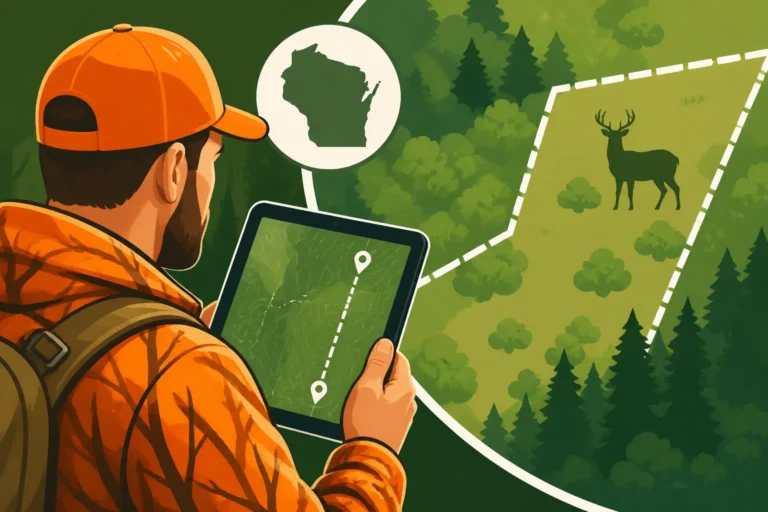
Gone are the days when you relied solely on paper maps and compasses (though you should always carry them as backup!). Today's digital mapping applications are invaluable for navigating Iron County's public lands. Tools like onX Hunt and GoHunt offer detailed satellite imagery, topographic maps, and crucial land ownership layers that clearly delineate public versus private boundaries.
Here’s how they help:
- Identifying Public Land: With a quick glance, you can see the color-coded public lands, making it easy to confirm you're on legal hunting ground. This is especially vital where public and private parcels checkerboard.
- Finding Access Points: These apps allow you to zoom in and identify logging roads, old two-tracks, and even foot trails that might not be marked on traditional maps. You can also spot potential parking areas or places to pull off the main road.
- Layering Information: You can overlay topographical data to understand elevation changes (crucial for Wind and Thermals in a Coulee), identify water sources, and pinpoint dense cover or open timber. Satellite imagery helps you see habitat types, recent clearcuts, or mature forest stands that might hold game.
- Offline Capability: Crucially for Iron County, where cell service can be spotty at best, these apps allow you to download maps for offline use. This means you’ll always know where you are, even deep in the woods without a signal.
- GPS Tracking: Use the app to track your movements, mark important waypoints like game sightings, rubs, scrapes, or your truck location. This is a game-changer for navigating back to your starting point, especially after a long day of still-hunting.
When using these tools, pay close attention to the small details: look for faint lines that might indicate old logging trails, note potential pinch points or funnels that deer might use, and always double-check the land status before venturing in.
Understanding County Forest Access and Rules
The Iron County Forestry Department manages its lands with specific guidelines for public use. Here are some key points to consider:
- Road Access: Many county forest roads are open to the public, providing access to vast areas. However, some are seasonally gated, especially during spring thaw or after heavy rains to prevent damage. Others may be permanently gated or designated for non-motorized use only. Look for signage, and check the county forestry website or contact the department directly for current road conditions and maps. Vehicle Rules on Wisconsin Public Land are generally consistent across state and county lands, but it's always good to be specific to the area.
- ATV/UTV Use: Iron County has an extensive network of ATV/UTV trails, and some of these might be shared with logging roads. It's imperative to know which trails are legal for motorized use and which are strictly hiking or biking. Stay on marked trails to avoid trespassing or damaging fragile ecosystems.
- Camping: Dispersed camping (primitive camping outside of designated campgrounds) is often allowed on County Forest land, but rules vary. There might be restrictions on length of stay, fire regulations, or locations where camping is prohibited. Always practice Leave No Trace principles.
- Treestands and Blinds: Temporary treestands and ground blinds are generally permitted, but often require them to be removed daily, or to be clearly marked with your customer ID number and kept for a limited duration. Nails or screw-in steps that damage trees are typically prohibited. Check the specific regulations for Iron County Forest. Treestand Rules on Wisconsin Public Land can provide a baseline.
National Forest Access in the Chequamegon-Nicolet
The Chequamegon-Nicolet National Forest, a federal entity, has its own set of regulations. While similar in spirit to County Forest rules, there can be some nuances.
- Forest Road System: The National Forest maintains a vast network of forest roads. Many are open to vehicles, but some are designated as "minimum maintenance" or "closed to motorized use." These closures can be seasonal or permanent. Maps showing the Motor Vehicle Use Map (MVUM) are essential and indicate exactly which roads and trails are open to which types of vehicles. You can often find these maps on the US Forest Service website or at Ranger District offices.
- Dispersed Camping: The National Forest is very accommodating for dispersed camping, allowing you to set up camp almost anywhere unless otherwise posted. There are usually limits on the length of stay (often 14 days in a 30-day period) and group size.
- Treestands and Blinds: Similar to county forests, temporary stands and blinds are typically allowed but must be removed at the end of the hunting season or within a specified timeframe, and should not cause permanent damage to trees.
- Wildlife Openings and Habitat Work: The National Forest often implements habitat improvement projects, such as prescribed burns or creating wildlife openings. These areas can be excellent for hunting as they provide food and cover. Keep an eye on Forest Service news releases for information on these activities.
By familiarizing yourself with these details, you'll be able to hunt Iron County's public lands confidently and legally.
| Public Land Type | Primary Managing Body | Typical Access | Camping Rules (General) | Common Hunting Focus |
|---|---|---|---|---|
| Iron County Forest | Iron County Forestry Dept | Logging roads (some seasonal/gated) | Often dispersed, check county rules for specifics | Deer, Grouse, Bear, Small Game |
| Chequamegon-Nicolet NF | US Forest Service | Forest roads (MVUM important) | Generous dispersed camping, 14-day limit often applies | Deer, Bear, Grouse, Woodcock, Small Game |
Strategies for Successful Hunting on Iron County Public Land
Hunting in Iron County's big timber is a different beast than hunting agricultural edges or small woodlots. Success often hinges on a blend of good scouting, appropriate tactics, and a deep understanding of how deer and other game utilize this unique environment.
Scouting Techniques for Remote Northwoods Parcels
Pre-season scouting is paramount, but it has to adapt to the Northwoods. Forget looking for obvious feeding patterns in cut corn; here, you're looking for subtle signs in vast spaces.
- Map Scouting is Your First Step: Before you even set foot in the woods, spend hours poring over maps, both paper and digital (like those on onX Hunt). Look for areas with diverse cover types: where mature timber meets young clearcuts, edges of cedar swamps, or areas with slight elevation changes. Identify potential travel corridors, such as ridges, benches, or funnels between thickets. Focus on areas away from easily accessible roads – the farther you walk, the less pressure you'll likely encounter. Reading Aerial Photos for Coulee Deer offers insights on map interpretation, which can be adapted to other terrains.
- Boots on the Ground: Once you have potential spots identified, get out there. Walk those logging roads and old trails. Look for deer sign like tracks, rubs, and droppings. Pay close attention to transition zones. In the Northwoods, deer often gravitate towards areas with abundant browse, which means clearcuts 5-15 years old can be dynamite. Look for signs of heavy browsing on young saplings.
- Trail Cameras (Where Permitted): Trail cameras can be incredibly useful, especially in identifying specific game trails or understanding patterns around a natural food source like an isolated oak stand. Just be sure to follow all regulations regarding camera placement on public land. Where to Hang a Camera on a Logging Road can provide useful tips.
- Post-Season Scouting: Even better than pre-season scouting is post-season. After the leaves fall and especially after a fresh snow, you can see sign much more easily. Deer sign like old scrapes and rub lines from the previous season are still visible, offering clues to future buck travel routes.
Hunting Methods Suited to Iron County Terrain
Given the vastness and density of the terrain, certain hunting methods tend to be more effective in Iron County.
- Still-Hunting: This is perhaps the most quintessential Northwoods hunting style. Moving slowly, deliberately, and quietly through the woods, stopping often to scan and listen. You're hunting the ground and the signs, covering country at a snail's pace. Focus on areas where visibility is slightly better, like ridges or the edges of dense cover. Still-Hunting Wisconsin Cedar Swamps offers specific advice for one of the toughest cover types.
- Tracking: After a fresh snow, tracking becomes an art form. Learning to read tracks, interpret gait, and predict where a deer might be headed can lead to direct encounters. This requires patience, good woodsmanship, and a willingness to put on miles. Tracking a Deer in Wisconsin Snow will be invaluable here.
- Stand Hunting (Strategic Placement): While less common than in agricultural zones, strategic stand placement can be effective, particularly near natural funnels, pinch points, or bedding areas you've identified through extensive scouting. Rather than targeting food plots (which are rare on public land here), focus on travel corridors between feeding and bedding areas or around specific natural features like a ridge point or a swamp edge. Use climbing stands or saddle setups for mobility, as conditions can change.
- Dog Hunting for Bear and Upland Birds: Iron County is a premier destination for bear hunting with hounds, and running dogs for grouse and woodcock is also a very popular and effective method here. If you're interested in these pursuits, understanding the specific regulations and having well-trained dogs are key. Bear Hunting With Bait and Dogs in Wisconsin and Grouse and Woodcock Hunting in Wisconsin provide excellent starting points.
Respecting the Land and Other Users
Hunting on public land is a privilege, and with that comes a responsibility to respect the resource and your fellow outdoor enthusiasts.
- Leave No Trace: Pack out everything you pack in. This includes spent shell casings, food wrappers, and any trash. Leave your hunting area cleaner than you found it.
- Shared Access: Remember that hunters share these public lands with hikers, campers, bird watchers, and ATV riders. Be courteous and considerate. For instance, if you're setting up a ground blind, make sure it's not on a designated hiking trail.
- Ethical Hunting Practices: Always follow hunting regulations, ensure clean shots, and make every effort to recover game. Retrieving a deer in the vastness of Iron County can be a major undertaking. If you make a marginal shot, be prepared to put in the time and effort needed for a thorough search, even if it means Blood Trailing After Dark in Wisconsin.
- Fire Safety: Especially during dry periods, be extremely careful with campfires or any activity that could spark a wildfire. Check for fire bans before you go.
Important Considerations for Hunters in Iron County
Hunting in Iron County offers immense rewards, but it also demands a higher level of preparedness and a realistic understanding of the challenges unique to this wild frontier.
Road Access and Vehicle Limitations
While Iron County offers extensive public land, accessing it isn't always as simple as pulling off a paved highway. Many of the best spots are reached via gravel roads, dirt two-tracks, or even old logging trails that might be overgrown or poorly maintained.
- Seasonal Closures: Be aware that many secondary forest roads, particularly in the County and National Forests, are seasonally gated or close during spring thaw or other periods to prevent damage. Always check with the local forestry department or Forest Service office for current road conditions.
- Vehicle Choice: A vehicle with good ground clearance and four-wheel drive is highly recommended, especially if you plan to venture off main thoroughfares. You might encounter deep ruts, mud, or snow, depending on the season.
- Parking: When parking, ensure your vehicle is completely off the main travel way, not blocking gates, and visible to others. In remote areas, it’s a good idea to leave a note on your dashboard with your name, contact information, and expected return time, especially if you plan to be in the woods for an extended period.
Managing Expectations for Northwoods Hunting
It's crucial to adjust your expectations when hunting Iron County. This isn't a high-density deer farm.
- Lower Deer Densities: Deer numbers in the deep Northwoods are generally lower than in the agricultural regions further south. This is due to harsher winters, less abundant forage, and more predators. Don't expect to see dozens of deer every day.
- Quality Over Quantity: What you lack in sheer numbers, you gain in the potential for older, more mature bucks. These deer are often more elusive, accustomed to surviving in rugged terrain, and offer a true trophy challenge.
- Patience is Key: Hunting success in Iron County often comes to those who are patient, persistent, and willing to put in the effort. Long hours of still-hunting, slow methodical movement, and a deep understanding of the subtle signs of deer movement are rewarded. You might go days without seeing much, then suddenly encounter the buck of a lifetime. Northern Forest Deer Density in Wisconsin explains why these areas are different.
Safety and Preparedness in Remote Areas
The remoteness of Iron County means you need to be self-sufficient and prepared for unexpected situations.
- Communication: Cell service is often nonexistent in vast stretches of Iron County. Consider carrying a satellite messenger or a two-way radio if hunting with a partner. Always let someone know where you're going and when you expect to return.
- First Aid Kit: A well-stocked First Aid Kits for Remote Northwoods Ground is essential. You'll be miles from immediate medical help. Include basics for cuts, blisters, sprains, and any personal medications.
- Navigation: Always carry a compass and a paper map, even if you're using a GPS device or phone app. Know how to use them. Mark your truck's location and key landmarks.
- Weather Preparedness: Weather in Northern Wisconsin can change rapidly. Dress in layers, pack rain gear, and be prepared for cold temperatures, especially in late fall and winter. Cold Weather Sitting Strategy offers good advice for staying comfortable. Hypothermia is a real risk.
- Survival Essentials: Carry a knife, fire-starting materials, a flashlight or headlamp (even for daytime hunts, in case you're tracking game after dark), extra food and water, and emergency shelter material. A whistle can be invaluable for signaling.
- Wildlife Encounters: While rare, be aware of the presence of black bears and timber wolves. Know how to react in an encounter (make noise, make yourself look big, don't run).
Hunting Iron County's public land is an adventure into the wild heart of Wisconsin. With thoughtful planning, the right tools, and a respectful approach, you'll unlock incredible opportunities and create unforgettable memories in this special corner of the state.
Disclaimer
This article is for general informational purposes only and does not constitute professional advice. Laws, prices and regulations vary by location and change over time. Consult a qualified professional for guidance on your specific situation.