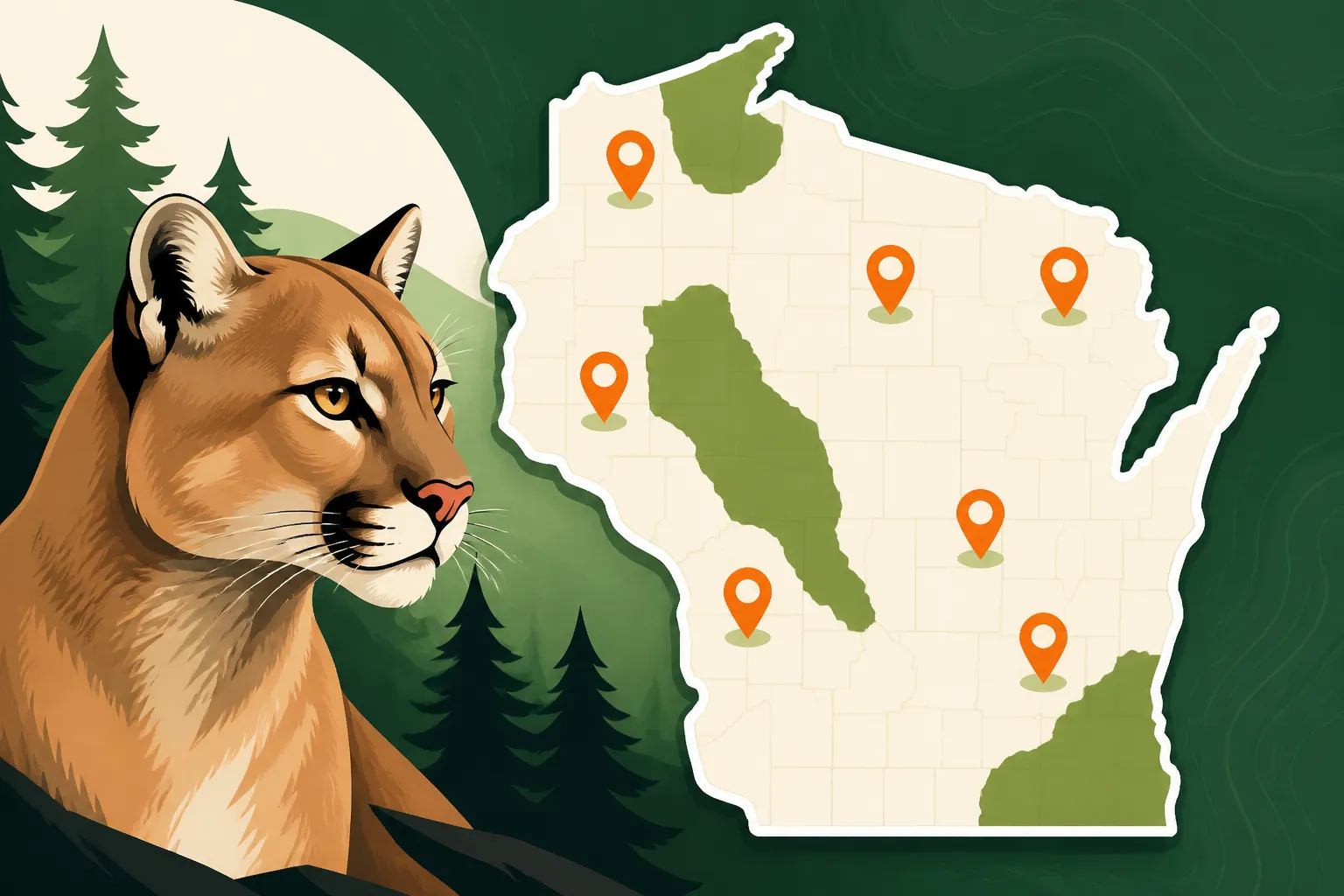
Where Wisconsin Cougars Have Been Confirmed
It’s easy to feel a mix of excitement and skepticism when you hear whispers of cougars roaming Wisconsin. For years, these majestic predators were considered ghosts of the past, but the truth is, they are passing through our state. This guide will cut through the rumors and delve into the confirmed sightings, helping you understand where these elusive animals have been documented and what their presence means for hunters and outdoor enthusiasts across Wisconsin.
The Elusive Nature of Wisconsin Cougars
For many years, the idea of a cougar in Wisconsin felt like something out of a tall tale around a campfire. We'd hear stories, see blurry photos, and wonder if it was truly possible. But the reality is, cougars are incredibly shy, stealthy, and masters of concealment, making confirmed sightings rare and often a subject of intense interest. They aren't seeking out human interaction, which is why encountering one is such an infrequent event, even for those of us who spend a lot of time in the woods.
Understanding "Confirmed" Sightings
When we talk about "confirmed" cougar sightings, it's crucial to understand what that actually means from a wildlife management perspective. It's more than just a fleeting glimpse or a grainy photo someone snapped quickly. A truly confirmed sighting typically involves solid, undeniable evidence. This can include clear, high-quality photographs or video footage from trail cameras, identifiable track casts that are consistent with known cougar prints, or even DNA evidence collected from scat, hair, or a kill site.
The reason for this strict standard is simple: many other animals can be mistaken for cougars, especially bobcats, domestic dogs, or even deer in poor lighting. Plus, people are naturally excited, and sometimes that excitement can lead to misidentification. So, when the Department of Natural Resources (DNR) confirms a cougar, you can be sure they've meticulously examined the evidence to remove any doubt. This rigorous verification process ensures that the data collected is accurate and reliable for understanding their presence.
How Cougars Return to Wisconsin
It’s important to clarify that Wisconsin does not currently have a known breeding population of cougars. The cougars that are confirmed here are almost exclusively young, dispersing males. Think of it like a young person leaving home to find their own way in the world. These male cougars typically originate from the healthy, established populations in states to our west, particularly the Black Hills of South Dakota. They're on an epic journey, sometimes traveling hundreds or even a thousand miles, crossing state lines, rivers, and even highways in search of new territory and potential mates.
This dispersal pattern explains why sightings are often sporadic and widespread, rather than concentrated in one particular area. A cougar might travel through an area for a few days or weeks, hunting and moving on, before being detected again many miles away or simply disappearing without further trace. Their journey is fraught with challenges, including crossing agricultural landscapes, dealing with vehicle traffic, and navigating areas with human activity. Wolves and Predators in Wisconsin and other large carnivores have their own territories and challenges, so these cougars are truly charting new paths.
Documented Sightings and Their Locations
When a cougar is confirmed in Wisconsin, it often makes the news, sparking a flurry of discussion among hunters and nature lovers. While these events are exciting, they also provide invaluable data that helps wildlife biologists understand the movements of these animals. It’s not about fear, but about respectful awareness of all the creatures that share our wild spaces.
Patterns in Confirmed Detections
Over the years, a pattern has emerged regarding where confirmed cougar sightings tend to occur. While they could theoretically pop up anywhere, many of the verified detections have happened in the more rugged, less populated regions of the state. We’re talking about areas that offer vast tracts of forest cover, good deer populations (a primary food source), and limited human disturbance. The Driftless Area, with its deep coulees and heavily wooded ridges, as well as parts of the Hunting the Wisconsin Northern Forest for Deer, have seen their share of confirmed activity. Large river systems, like the Wisconsin River or areas along the Mississippi River, can also serve as natural travel corridors, providing cover and water for these transient animals.
One might use a tool like GoHunt to analyze habitat characteristics in areas where sightings have occurred, looking for common denominators such as dense timber, remote public lands, or proximity to wilderness areas. Understanding these patterns helps us appreciate the landscape features that might appeal to a dispersing cougar on the move. Even without a resident population, tracking these movements gives us a glimpse into the potential for future recolonization.
Here’s a simplified look at what confirmed sightings might reveal:
| Region of Wisconsin | Typical Type of Evidence | Habitat Characteristics Often Involved |
|---|---|---|
| Western/Central Driftless | Trail camera photos, track casts | Steep coulees, dense hardwood forests, river bluffs |
| Northern Forests | Hair samples, occasional visual | Expansive timber, remote logging roads |
| River Corridors (e.g., Wisconsin, Mississippi) | Track casts, occasional visual | Riverine forests, bluffs, undisturbed banks |
| Isolated Rural Areas | Trail camera photos, sometimes scat | Woodlots, agricultural edges, remote farms |
The Role of Trail Cameras and DNA Evidence
In the past, confirming a cougar sighting was incredibly difficult. It often relied on skilled trackers finding perfect prints in soft soil or very clear, but rare, eyewitness accounts. Today, technology has become an absolute game-changer. Trail cameras, which many hunters use for Where to Hang a Camera on a Logging Road or monitoring deer activity, are now the primary tool for documenting cougar presence. These cameras operate 24/7, silently capturing images and videos of anything that passes by, often in remote locations where humans rarely tread.
When a clear image of a cougar is captured, it provides indisputable proof. Beyond photos, DNA analysis has become another powerful method. If a cougar scrapes against a tree, leaves hair on a fence, or deposits scat, forensic geneticists can analyze these samples to confirm the species and even identify individual animals, sometimes even tracing their origin back to known populations in western states. This scientific rigor eliminates doubt and replaces anecdotal stories with hard facts, truly enhancing our understanding of Wisconsin's Black Bear Population and Wisconsin's Northern and Central Elk Herds movements through the state.
What a Confirmed Sighting Means for Hunters and Outdoor Enthusiasts
Knowing cougars are occasionally in Wisconsin might raise some questions or even a little bit of anxiety for those of us who spend a lot of time outdoors. But honestly, the primary takeaway is awareness, not fear. The presence of a cougar is a rare and exciting event that speaks to the wildness of our state, not an immediate threat.
Safety and Awareness in Cougar Country
Let's be realistic: the chances of you having a negative interaction with a cougar in Wisconsin are extremely low, statistically almost negligible. They are far more interested in avoiding humans than confronting them. However, it's always smart to be aware, just as you would be with bears or any other large wild animal. General safety advice includes never approaching a cougar, especially a cub. If you do happen to see one, make yourself look big by raising your arms, make noise, and back away slowly without turning your back. Don't run, as that can trigger a chase instinct. Traveling in groups and making noise when hiking through dense cover can also help alert animals to your presence.
When you're out hunting for White-Tailed Deer Across Wisconsin or Wild Turkeys in Wisconsin, always be observant of your surroundings. Look for tracks, scat, or other signs of wildlife activity that might indicate a large predator has recently passed through. This isn't about paranoia, but about being a knowledgeable and respectful participant in the ecosystem. Your safety equipment, including a good first-aid kit, should always be a priority, regardless of cougar presence.
Reporting a Potential Cougar Sighting
If you believe you’ve seen a cougar or found compelling evidence of one, your report can be very valuable to wildlife managers. However, it's crucial to report it accurately and with as much detail as possible. Simply saying "I saw a cougar near my deer stand" isn't enough to confirm it. The Wisconsin DNR asks that you gather specific information to aid in their verification process.
What helps immensely?
- Clear photographs or video: This is the gold standard. A crisp, in-focus image that clearly shows the animal's features is incredibly helpful.
- Detailed track photos: If you find tracks, take photos with a ruler or common object (like a coin) for scale. Note the number of toes (cougars have four distinct toe pads, usually without claw marks) and the overall shape. Consider making a plaster cast if you know how.
- Precise location: Provide GPS coordinates if possible, or very specific landmark descriptions. The Scouting With the Wisconsin Hunt Wild App or GoHunt app on your phone can provide exact coordinates, which is invaluable.
- Date and time: When exactly did you see it or find the evidence?
- Description of behavior: What was the animal doing? How did it react to you (if at all)?
- Physical evidence: If you find scat or hair, do not handle it directly. Bag it carefully, note the location, and contact the DNR for collection instructions.
Reporting credible sightings helps the DNR track these animals' movements, understand dispersal patterns, and keep tabs on any potential changes in their distribution. This data is critical for understanding Game You Cannot Hunt in Wisconsin and other protected species.
The Bigger Picture: Cougars in the Midwest
Cougars showing up in Wisconsin aren't isolated incidents. They are part of a larger, fascinating story of wildlife dispersal and potential recolonization across the broader Midwest. These animals are powerful symbols of wilderness, and their sporadic appearances remind us that even in heavily settled areas, wildness can persist and even expand.
Dispersal Routes and Movement Patterns
The journey for a dispersing cougar is an incredible feat of endurance and navigation. Typically, these young males set out from their natal territories, often in the western Dakotas, driven by instinct to find new hunting grounds and establish their own space away from dominant males. Their travel paths often follow natural corridors – river valleys, large swaths of public forest, and even less developed agricultural areas with significant woodlots. They're trying to stay out of sight, moving primarily at night, and covering vast distances.
Sometimes, a cougar might settle in an area for a few months, finding sufficient prey and cover, only to continue its journey later. Other times, they might cross into Wisconsin, be detected, and then move further east or north, perhaps even into Michigan or Canada. Each confirmed sighting, therefore, is a data point on a much larger map of cougar movement across North America. Tools like GoHunt can help visualize large, connected habitat areas that could serve as these vital dispersal routes, highlighting the connectivity of landscapes important to many species, including Wisconsin's Black Bear Population.
The Future of Cougars in Wisconsin
The question that always follows a confirmed cougar sighting is, "Will they ever establish a breeding population here?" That's a complex question without a simple "yes" or "no" answer. For a breeding population to take hold, you need a sustained presence of both male and female cougars, sufficient prey (primarily deer, and Wisconsin has a healthy Wisconsin Deer Herd Size), and extensive, undisturbed habitat. While Wisconsin certainly has areas with ample prey and large forested tracts – consider the vastness of the Chequamegon-Nicolet National Forest Hunting or the Wisconsin County Forest Hunting lands – the biggest challenge is the consistent arrival of females.
Currently, the vast majority of dispersing cougars reaching Wisconsin are males. Females typically don't travel as far from their birth territories. Until a consistent stream of female cougars starts arriving and successfully finding mates, a breeding population is unlikely to become established. However, the consistent, albeit rare, presence of dispersing males shows that the landscape can support them, at least for a time. Monitoring these movements and understanding these habitat needs is an ongoing effort for wildlife managers, as they track the health and distribution of all species, even the most elusive.
Disclaimer
This article is for general informational purposes only and does not constitute professional advice. Laws, prices and regulations vary by location and change over time. Consult a qualified professional for guidance on your specific situation.