Breaking Up a Fall Turkey Flock
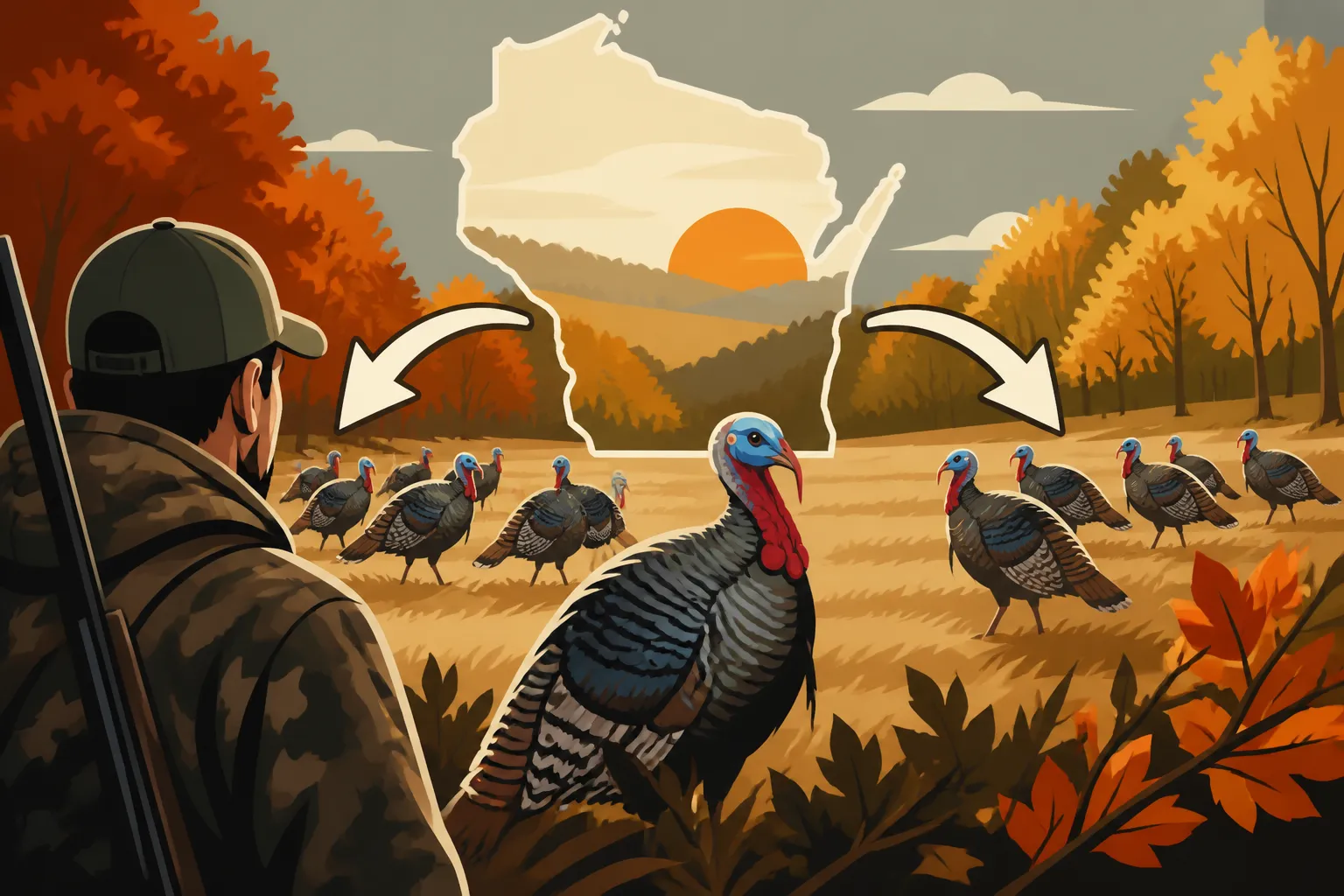
Finding a big flock of turkeys in the Wisconsin fall woods can be a real head-scratcher. They’re often wary, sticking together like glue, and much less inclined to gobble back than their spring counterparts. This guide is all about tackling that challenge head-on, showing you how to effectively break up these large fall turkey flocks to create individual hunting opportunities and increase your chances of filling a tag.
Understanding Fall Turkey Dynamics in Wisconsin
The fall woods of Wisconsin are a stark contrast to the vibrant, gobbler-crazy spring. Turkeys behave differently, and if you approach them with spring tactics, you're likely to end up frustrated, watching a whole flock disappear over the ridge. It’s crucial to understand these distinctions to hunt them effectively.
Why Fall Flocks are Formed and Their Behavior
In the fall, turkeys transition from breeding activities to survival mode. This means family groups, often composed of a hen and her poults (young turkeys), will consolidate into larger flocks. These groups can range from a dozen birds to fifty or more, especially later in the season. There’s safety in numbers, and these larger units offer more eyes and ears to detect predators. They're primarily focused on feeding, roosting, and avoiding danger.
Think about it: a single hen with ten poults needs a lot of calories. Joining forces with other family groups helps them locate better food sources and provides a collective defense. You'll often find these super-flocks in areas rich with acorns, like big oak ridges in the Driftless Area, or moving through agricultural fields in southern Wisconsin, picking up waste grain after harvest. Their daily routine becomes highly predictable, centered around feeding grounds, watering holes, and secure roost sites. They're constantly on the move, but generally within a defined home range. This predictability is something you can exploit, but only if you understand that getting them to respond to a love-sick gobble isn't going to happen.
The Contrast to Spring Hunting
Many hunters, fresh off a successful spring season, carry those same expectations into the fall. That’s where the trouble starts. In spring, male turkeys are strutting, gobbling, and actively seeking hens. They're driven by the urge to breed, making them more vocal and often more susceptible to calling. In the fall, however, that hormonal drive is largely absent. You're not trying to entice a gobbler with seductive yelps; you’re trying to communicate with a lost, often young, turkey.
Fall turkeys are, by and large, much quieter. They're less prone to respond to aggressive calling and are more attuned to subtle sounds from their flock mates. While gobblers might still make an appearance in fall flocks, they're usually silent and just tagging along with the hens and jakes. The key difference is that fall turkeys often want to regroup. They are social creatures, and being separated from the flock makes them vulnerable and anxious. This innate desire to reassemble is the entire premise behind the "flock break" tactic. Without this understanding, you're essentially speaking a different language than the birds. For more on the calendar shifts, check out Wisconsin Fall Turkey Seasons.
Executing the Perfect Flock Break
The flock break is a classic, highly effective fall turkey hunting technique. It's not about subtlety; it's about shock and awe, followed by patient, precise calling.
Locating and Approaching the Flock
Before you can scatter a flock, you need to find one. This is where scouting, both before the season and in the days leading up to your hunt, is absolutely essential. Look for areas with abundant food sources like white oak or red oak stands, cornfields, or soybean fields. You'll often find fresh tracks, droppings, and scratch marks where they've been feeding. Dusting bowls in sandy soil or along logging roads are also tell-tale signs of turkey activity. Using tools like the GoHunt app to identify potential food plots or timber stands can give you a significant advantage. Its detailed mapping features can show you access points and terrain features that might funnel turkeys.
Once you’ve identified an active area, your goal is to find the flock during daylight hours, typically when they are feeding or moving between food and water. This usually means a mid-morning or early afternoon encounter. Move slowly and deliberately, using binoculars to scan ahead. Fall leaves can make stealthy movement difficult, so use the wind to your advantage to muffle your sound and carry your scent away from the birds. A slight drizzle or light rain can also work in your favor, softening the forest floor and reducing visibility, making your approach easier.
The approach itself needs to be calculated. You want to get as close as possible without being detected, but not so close that you can't get a good, wide scatter. Aim to get within 50 to 100 yards of the feeding or loafing flock. Position yourself to burst into their midst, maximizing the chaos. Think about their escape routes and how you can cut them off or at least ensure they scatter in multiple directions.
The Charge and Scatter
This is the most adrenaline-pumping part of the entire process. Once you're in position and have a clear path to charge, you need to commit fully. The goal is to get right into the heart of the flock, causing them to explode in every direction. Don't be timid; this isn't the time for a quiet stalk. Run towards them, yelling, waving your arms, and making as much noise as possible. The more disoriented and separated they become, the better.
Imagine a group of kids playing hide-and-seek; if they all run in the same direction, they'll just reassemble quickly. You want them to panic and fly off in individual or small groups, completely unaware of where their flock mates have gone. This chaos is critical. Some birds might fly a long way, others might just run a short distance and hide. The ideal outcome is that no two birds fly or run off in the same direction, creating the maximum number of "lost" birds. This scattering effectively resets their social order and creates a deep-seated desire to regroup, which is what you'll leverage for your calling strategy. This tactic is detailed further in guides like Fall Turkey Tactics in Wisconsin.
The Post-Scatter Waiting Game
After the charge, everything goes silent. This is perhaps the hardest part for many hunters: waiting. You've just created a scene of utter pandemonium, and your natural inclination might be to immediately set up and start calling. Resist this urge! Moving too quickly or calling too soon will only alert any nearby birds to your presence, potentially spooking them for good.
The waiting period is crucial for two main reasons. First, it allows the turkeys to calm down after the shock of being scattered. Their initial reaction is fear and confusion. Second, and perhaps more importantly, it allows enough time for their instinct to regroup to kick in. They need to feel truly alone and vulnerable before they will be receptive to calling.
The ideal waiting time can vary, but generally, you should plan for at least 30 minutes to an hour, sometimes even longer on very quiet days or with particularly wary birds. Use this time wisely. Find a good, comfortable setup spot with good back cover and a clear field of view for your shot. Position yourself where you think the birds will naturally try to regroup, often near the point of the scatter. Be absolutely still and quiet, listening intently for any soft clucks or yelps from distant birds already trying to re-establish contact. When considering your setup, think about how Decoy Placement for Pressured Birds might influence your choice of location, even if you’re not using decoys immediately.
Setting Up and Calling Lost Birds
Once the waiting period is over, the real magic of the flock break begins. You're now ready to mimic the calls of a lost turkey, preying on the scattered birds' innate desire for companionship and security.
Choosing Your Setup Location
Your setup after a scatter is critically important. You want to be in a position where you can see incoming birds from multiple directions, especially if the flock scattered widely. Think about natural travel corridors, logging roads, or subtle terrain features that might funnel turkeys. Positioning yourself on a slight rise or ridge finger can offer better visibility, but always ensure you have solid back cover to break up your silhouette. A big oak or a thick cluster of pines can be perfect.
Consider where the birds might have flown. If they flew into a thick cedar swamp, they might re-emerge along its edge. If they flew over a hill, they’ll likely come back over that same hill. Using a hunting app like GoHunt can help you visualize the terrain, showing elevation changes and dense cover where birds might feel safe regrouping. You want to be comfortable and still, as any movement will likely be detected by sharp-eyed turkeys. It's a good idea to have several potential setup spots in mind before you even initiate the scatter.
Mastering Lost Calls
The key to calling in scattered fall turkeys is to sound like a lost bird yourself. Forget the loud, aggressive gobbler calls of spring. You're aiming for soft, pleading, and slightly anxious sounds. The main calls you'll use are:
- Soft Yelps: Simple, low-volume yelps, mimicking a hen or jake trying to locate its flock.
- Clucks: Very soft, single clucks. These are reassuring sounds that say, "I'm here, where are you?"
- Kee-Kee Run: This is the most important call for fall turkeys. It's a series of high-pitched whistles (kee-kee-kee) followed by soft yelps. This call is specifically used by young turkeys (poults and jakes) when they are separated and trying to find their family. It perfectly conveys the distress and desire to regroup.
Start with very soft, infrequent calling. A few kee-kees, then a long silence (10-15 minutes), then a few soft yelps. Listen intently for responses. Sometimes, a bird will answer with an even softer, almost imperceptible call. Don't immediately call back loudly. Play hard to get, making them come to you. As the birds get closer, you might call even less frequently, letting their curiosity and natural urge to regroup do the work. Remember, the goal isn't to bring them to you in a frenzy, but to coax them back cautiously. This delicate balance is part of the art of fall turkey hunting. For insights into different calling strategies, refer to Calling a Wisconsin Gobbler Off the Roost or When Wisconsin Gobblers Go Quiet.
Using Decoys (When Appropriate)
While not always necessary for a flock break, a single hen or jake decoy can sometimes seal the deal, especially if the birds are hesitant to commit. If you're using a decoy, place it where it's highly visible from the direction you expect birds to approach, but also within your effective shooting range. A jake decoy can be particularly effective, as it appeals to both lost jakes looking for companionship and a dominant hen who might want to chase it off.
However, use decoys with caution on public land, especially during gun seasons, to avoid accidental identification by other hunters. Make sure your decoys are realistic and positioned naturally. Sometimes, no decoy is better than a poorly placed or artificial-looking one. If the birds hang up out of range, a decoy might be just enough to draw them those final few yards.
Here's a quick comparison of spring vs. fall turkey hunting characteristics:
| Feature | Spring Turkey Hunting | Fall Turkey Hunting |
|---|---|---|
| Primary Goal | Attract gobblers for breeding | Scatter flocks, call lost birds to regroup |
| Key Calls | Gobbles, aggressive yelps, cutts, purrs, clucks | Kee-kees, soft yelps, clucks, lost calls |
| Typical Target | Gobblers (males) | Hens, jakes, adult gobblers (any turkey with a tag) |
| Turkey Behavior | Vocal, strutting, seeking hens, territorial | Social, food-focused, wary, less vocal, desire to regroup |
| Scouting Focus | Roost sites, strut zones, travel corridors | Food sources, dusting areas, large flock sightings |
| Tactic Examples | Fly-down calls, shock gobbling, run-and-gun | Flock breaks, still-hunting, ambushing feeding flocks |
| Patience Level | Can be fast-paced, quick responses | Often requires significant patience, long waits |
Advanced Tactics and Common Mistakes
Even with the best intentions, the flock break isn't always foolproof. Understanding common pitfalls and refining your approach can turn a challenging hunt into a successful one.
Avoiding Common Mistakes
- Not getting a full scatter: This is probably the biggest mistake. If you don't break up the flock thoroughly, they'll simply regroup out of range, and your efforts will be in vain. Don't be shy; run hard and make noise.
- Calling too soon or too loudly: As mentioned, patience is paramount. Starting to call immediately after the scatter, or using calls that are too aggressive, will likely alert the birds to your presence as a hunter, not a lost turkey. Give them time, and keep calls soft.
- Moving too much: Turkeys have incredible eyesight. After the scatter, they're hyper-alert. Any movement, even subtle shifts, can blow your setup. Remain absolutely still once you've chosen your post-scatter location.
- Ignoring the wind: Fall leaves can be crunchy, and your scent can travel. Always use the wind to your advantage during your approach and setup to help mask your sounds and scent.
- Not adapting to bird responses: If birds are answering frequently, you might call less to draw them in. If they're hesitant, a slightly more persistent, but still soft, calling sequence might be needed. Don't stick rigidly to a plan if the birds are telling you something different. This flexibility is key, much like understanding different strategies when Hunting the Wisconsin Rut in November.
Refined Strategies and Tips
- Scout, scout, scout: I can't emphasize this enough. Knowing where turkeys roost, where they feed, and their travel patterns is invaluable. This knowledge, combined with GoHunt's detailed property information (like checking your GoHunt subscription for property lines and land ownership), can help you anticipate their movements and set up for an effective scatter. Scouting is like building a puzzle; the more pieces you have, the clearer the picture. For general scouting tips, consider reading Scouting Wisconsin Public Land Before Season.
- Double up: If you're hunting with a partner, this tactic can be even more effective. One hunter initiates the scatter while the other sets up further down a potential escape route. The second hunter can then act as the caller, giving the scattered birds a point to regroup towards, while the first hunter can quietly circle around after the scatter.
- Be mobile after the wait: If you wait an hour and get no responses, don't be afraid to quietly reposition. Sometimes, a slight shift in your location can put you in a better calling position relative to where the birds settled.
- Utilize natural funnels: Look for thick creek bottoms, narrow ridges, or strips of timber connecting larger woods. These are natural travel corridors that birds will often use to regroup, making them excellent spots for your post-scatter setup. This is similar to how you'd look for good spots when Hunting a Funnel Between Two Swamps.
- Carry multiple call types: A slate call for soft clucks and yelps, a mouth call for hands-free kee-kees, and a box call for reaching out a bit further if needed. Versatility in calling is your friend.
- Patience, patience, patience: Seriously, this cannot be overstated. A successful flock break can take hours from start to finish. The moments after the scatter are often boring, but they are absolutely essential. Don't give up too soon.
By understanding the unique behaviors of fall turkeys in Wisconsin, effectively executing the scatter, and then patiently and skillfully calling in lost birds, you can turn those seemingly impossible-to-hunt flocks into a productive and thrilling hunting experience. Remember, the data available on platforms like GoHunt and your own boots-on-the-ground scouting are your best allies in pinpointing these elusive birds. When you finally hear that soft answer to your kee-kee run, you'll know all the effort was worth it.
Disclaimer
Hunting is an inherently dangerous activity. Always prioritize safety, follow all Wisconsin Department of Natural Resources regulations, and obtain appropriate licenses and tags. Be aware of your surroundings and other hunters. This guide is for informational purposes only and does not guarantee hunting success.