Wisconsin Bear Harvest Trends
Wisconsin black bear harvest trends, management strategies, historical data, and quota systems determine annual tag allocations across six zones.
Know what you’re after.
Big game, small game, upland birds, and waterfowl — identification, behavior, rut and migration timing, and how each species moves through the season.
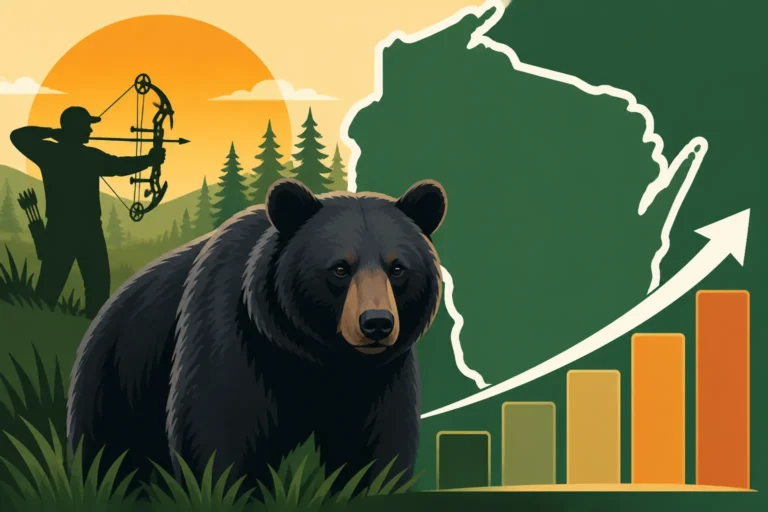
Wisconsin black bear harvest trends, management strategies, historical data, and quota systems determine annual tag allocations across six zones.
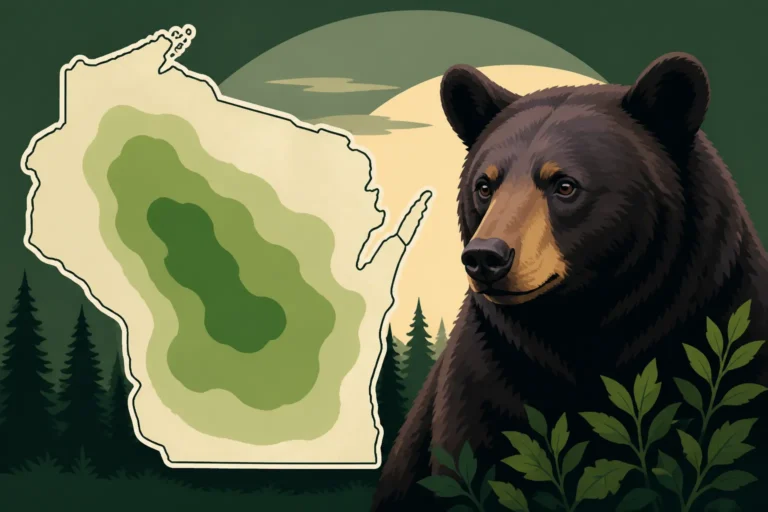
Wisconsin black bears expanded from traditional northern forests into central and southern counties due to effective wildlife management.
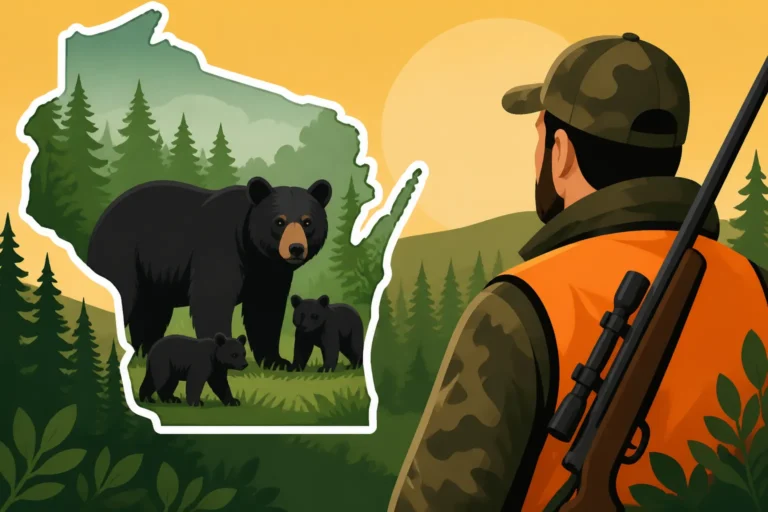
Wisconsin black bear population estimates range from 25,000 to 30,000 animals, determined through capture-recapture studies and computer models.
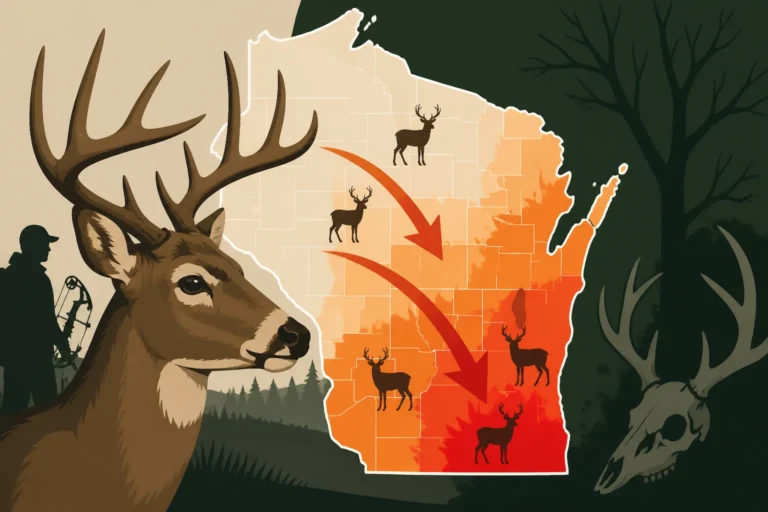
Chronic Wasting Disease spread across southern Wisconsin starting in 2002, moving through deer populations from initial cases in Mount Horeb.
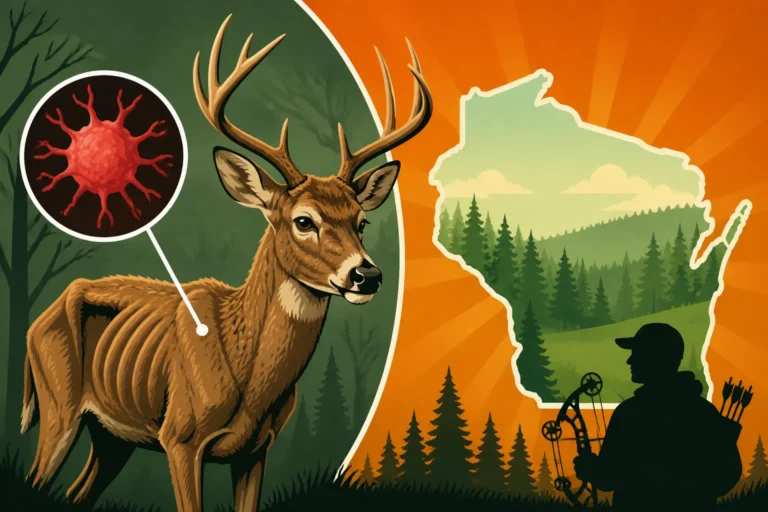
Chronic Wasting Disease in Wisconsin deer is caused by prions that destroy the brain, spreading silently for over two decades.
Wisconsin deer harvest records show how the Department of Natural Resources tracks population health using hunter registration data.
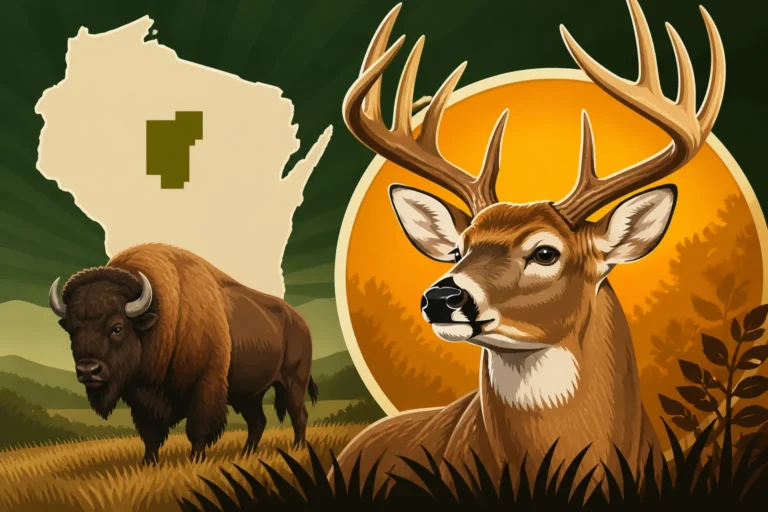
Buffalo County in Wisconsin grows giant whitetail bucks because of its rugged Driftless Area terrain and abundant food sources.
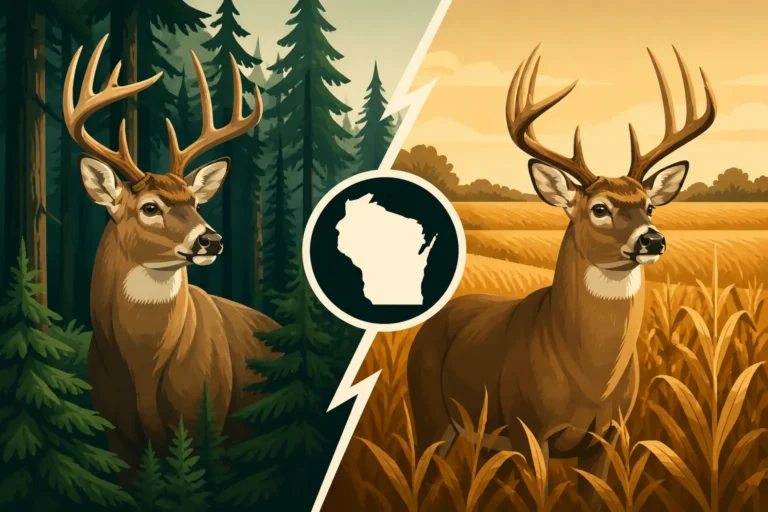
Wisconsin deer hunting zones differ significantly in habitat, food sources, and deer behavior between northern forests and southern farmland regions.
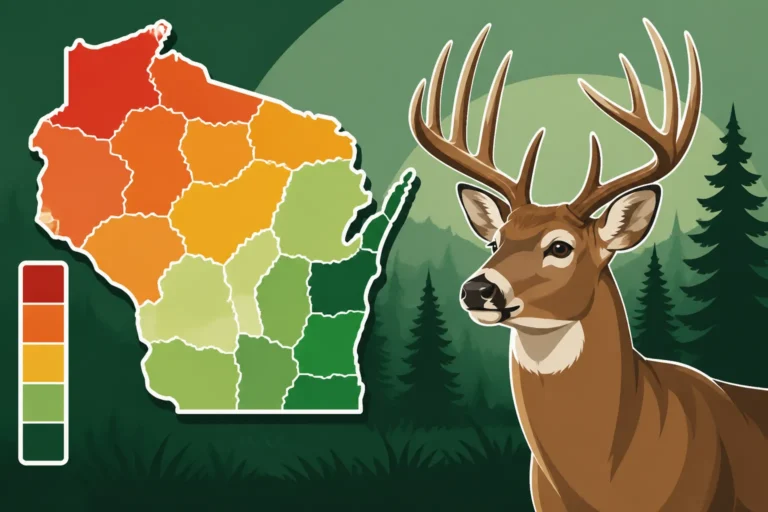
Wisconsin deer density by management zone, explaining Northern Forest, Central Forest, Farmland, and Chronic Wasting Disease zones.
Wisconsin deer population estimates rely on harvest data, public sightings, and aerial surveys to manage herd health and hunting.