Wisconsin Legal Shooting Hours
It's incredibly frustrating when you're out in the woods, the light is fading or just starting to break, and you're constantly glancing at your watch, wondering if you're actually legal to take that shot. Wisconsin's hunting regulations, especially around shooting hours, can feel like a moving target sometimes. This comprehensive guide will clear up the confusion, helping you understand and confidently navigate Wisconsin's legal shooting hours for various game species, ensuring you stay safe, ethical, and on the right side of the law.
Understanding Wisconsin's Legal Shooting Hours
The thrill of dawn breaking or the quiet hush of dusk are prime hunting times, but they're also the trickiest when it comes to legal shooting hours. Knowing exactly when you can and cannot pull the trigger is paramount, not just for legal compliance but for safety and ethical hunting practices.
Why Shooting Hours Matter So Much
Think about it: those low-light periods are often when deer, turkeys, and other game are most active, moving between bedding and feeding areas. It’s tempting to want to extend your time on stand, but there are solid reasons why precise shooting hours are enforced. Firstly, and most importantly, it's about safety. In dim light, it's significantly harder to accurately identify your target, ensuring it's the legal game animal you're pursuing and not a non-target species, or worse, another hunter. A deer's brown coat can blend seamlessly into the shadows, making it tough to confirm antlers or shot placement.
Secondly, it maintains the principle of fair chase. Hunting is about skill and respect for the animal, and artificially extending shooting light into true darkness would give hunters an unfair advantage, diminishing the challenge and the ethical standards of the sport. It's about giving the animal a fair shake. And let's not forget the legal side; violating shooting hours can lead to hefty fines, confiscation of equipment, and even loss of hunting privileges, which no one wants to experience. Ignorance of the law isn't a valid excuse, so understanding these rules is crucial for every hunter who steps foot in the Wisconsin woods.
The Basic Rule: How It's Calculated
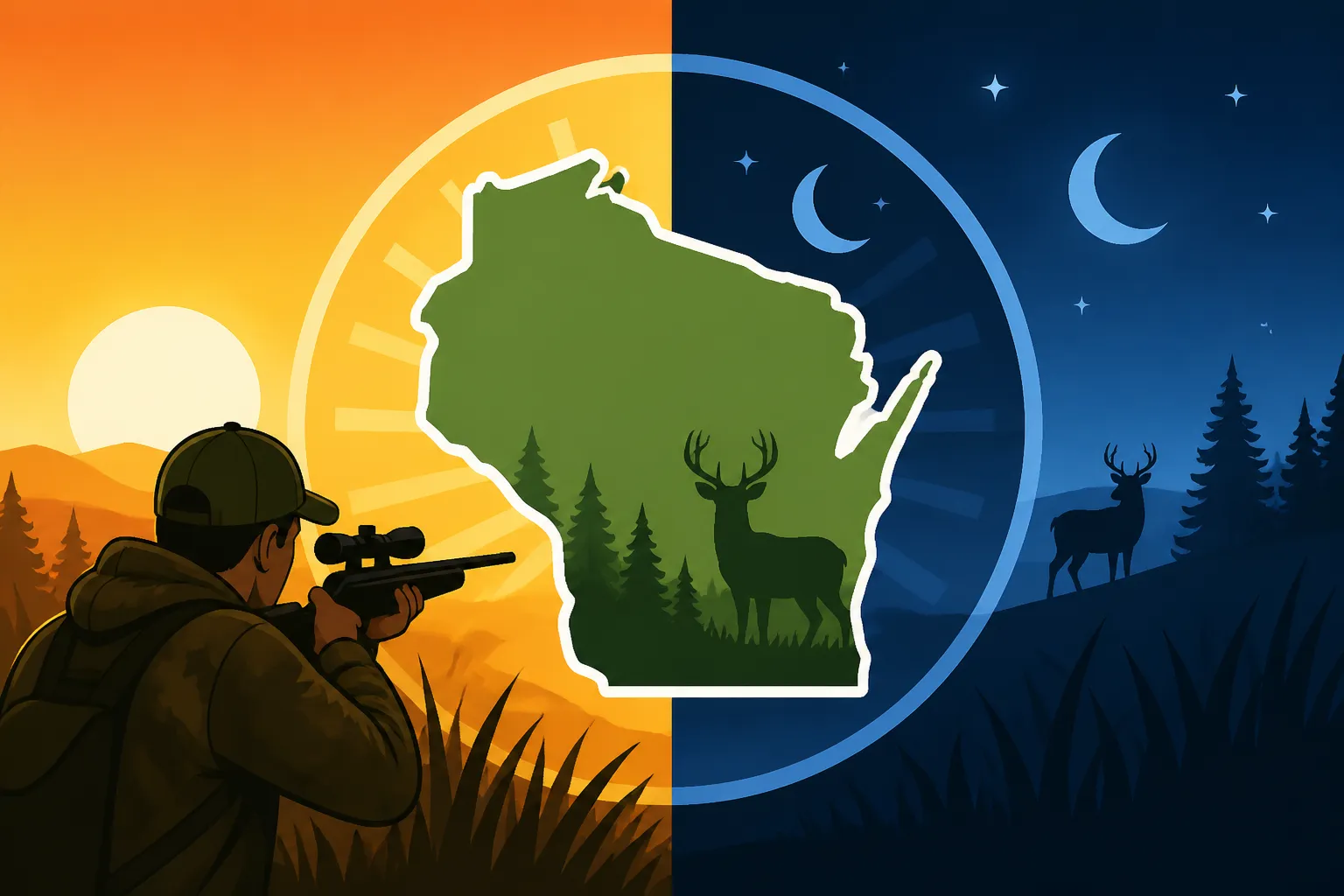
For most game in Wisconsin, the general rule is pretty straightforward: legal shooting hours are defined as 30 minutes before sunrise to 30 minutes after sunset. Sounds simple enough, right? The trick is, "sunrise" and "sunset" aren't just when you first see light on the horizon or when the sun dips below it. The Wisconsin Department of Natural Resources (DNR) uses specific calculations, often based on official civil twilight times, which can vary significantly from what a generic weather app might tell you or what your eyes perceive. This calculation changes daily and is unique to your specific location within the state, meaning that sunrise in Green Bay won't be the exact same minute as in La Crosse.
It's not just about the moment the sun breaches the horizon, but rather a scientifically determined period of ambient light that ensures reasonable visibility. This uniform approach provides a consistent baseline for hunters across the state. This strict adherence to official times is why relying on an eyeball estimate of "first light" or "last light" is a recipe for trouble.
Exceptions and Special Seasons
While the 30-minutes-before-sunrise to 30-minutes-after-sunset rule covers a lot of ground, Wisconsin hunting wouldn't be Wisconsin hunting without a few exceptions to keep us on our toes!
One of the most notable exceptions applies to waterfowl hunting. If you're out in the marsh chasing ducks and geese, your legal shooting hours begin at a specific time, often aligned with federal regulations, which might not always be exactly 30 minutes before sunrise. These times are published well in advance, usually tied to the specific "Wisconsin Waterfowl Seasons and Zones" you're hunting in. It’s critical to check the current waterfowl regulations carefully each season, as these can sometimes shift a bit.
Another area with specific considerations is bear hunting. For those participating in "Bear Hunting With Bait and Dogs in Wisconsin," while the general daylight rule usually applies to the actual harvest, there can be specific restrictions on when you can bait or tend bait stations, which often falls outside standard shooting hours. Always double-check the bear hunting pamphlet for detailed rules related to baiting and actual hunting times in your specific bear zone.
Spring turkey hunters also have their own set of rules, often broken down into distinct periods within the "Spring Turkey Hunting in Wisconsin" season. Typically, legal shooting hours for gobblers are from 30 minutes before sunrise until noon. This midday cutoff is designed to allow birds to return to normal activity patterns later in the day, reducing pressure and providing opportunities for hunters in subsequent periods. Fall turkey hunting, however, usually reverts to the standard 30-minutes-before-sunset rule, but still often maintains that noon closing time.
Trapping, while not "shooting," also has unique time restrictions for checking traps. So, while deer, small game, and general furbearer hunting usually fall under the standard 30-minute rule, always verify for specialized seasons or specific game species.
Practical Application and Staying Legal in the Field
Knowing the rules is one thing, but applying them accurately and consistently in the field, especially when your adrenaline is pumping, is another challenge entirely. It’s about leveraging the right tools and making sound judgments.
Tools for Tracking Accurate Times
Gone are the days when you had to eyeball the horizon or carry a complicated sunrise/sunset chart. Today, we have excellent tools at our disposal to help us stay perfectly legal. The absolute first stop should always be the official Wisconsin DNR website or their annual hunting regulations pamphlet. These resources provide the official times, sometimes even broken down by major cities or regions, ensuring you're working with the exact numbers the wardens use.
Beyond that, modern technology is your best friend. Many dedicated hunting apps, like GoHunt, are incredibly precise. They use your phone's GPS location to calculate the exact sunrise and sunset times for your specific spot, updating daily. This means whether you're deep in the Chequamegon-Nicolet National Forest or tucked into a Driftless Area coulee, you'll have accurate information at your fingertips. These apps often go a step further, providing you with "prime time" windows, moon phase data, and other useful metrics, all while keeping the legal shooting hours front and center. I personally use an app that lets me set an alarm for 30 minutes before sunrise and 30 minutes after sunset, so I don't have to constantly check my watch.
Many hunters also use the official Wisconsin Hunt Wild App, which provides layers for public land, property boundaries, and can also help with real-time location and navigation, though its primary focus isn't always on minute-by-minute shooting hours like some dedicated hunting apps. However, for a quick reference, checking a reputable weather app or your phone's built-in weather function can sometimes give you a general idea of sunrise/sunset, but always cross-reference with an official source or a specialized hunting app like GoHunt for that critical 30-minute buffer calculation.
Navigating Low Light Conditions Ethically
Let's be real: hunting in low light is tough. That magical period just before legal shooting time and just after is often when game is most active, but it's also the time when ethical judgment is most crucial. Even if the clock says it's legal, if you can't clearly identify your target, its sex, whether it's legal (e.g., antlered vs. antlerless in certain seasons), or confirm a clean shot path, you absolutely should not take the shot.
This means being able to confidently see the animal's vitals, accurately judge distance, and ensure there's a safe background beyond your target. A deer that looks like a ghost in the shadows might turn into a doe once the light improves, or it might be standing in front of a hiking trail you didn't know was there. Optics play a huge role here. High-quality binoculars and rifle scopes with good low-light performance can certainly help, but they don't replace common sense and ethical restraint.
If you wound an animal in those waning minutes of legal light, you're faced with a tough choice: do you risk a potentially poor blood trail in the dark, or do you wait until morning, knowing coyotes or other predators might find it first? Most experienced hunters will tell you that if there's any doubt about shot placement or recovery, it's better to pass on the shot. A responsible hunter always prioritizes an ethical kill and recovery over punching a tag. Sometimes, the most ethical thing to do is simply wait for another day.
Common Mistakes and How to Avoid Them
It’s easy to make mistakes with shooting hours, especially when you’re passionate about hunting and trying to maximize your time in the woods. One of the most frequent errors is misinterpreting "sunrise" or "sunset." Many hunters go by what their eyes see as "first light" or "last light," which can be significantly different from the official times used by the DNR. For example, on a clear morning, you might see ambient light well before the legal 30-minutes-before-sunrise window, but that doesn't make it legal to shoot. Conversely, on a heavily overcast day, it can feel much darker, even if it's still legally within shooting hours. The legal times are fixed, regardless of cloud cover.
Another common pitfall is relying on general weather apps or smartphone default clocks without verifying their accuracy for hunting regulations. These apps often display astronomical sunrise/sunset, not the specific 30-minute buffer used by hunting laws. Always use a dedicated hunting app like GoHunt or consult the official DNR charts. Don't assume.
Time zone confusion isn't typically an issue within Wisconsin itself, as the entire state is in the Central Time Zone. However, if you're hunting near a state border (like Michigan or Minnesota) that might be in a different time zone, or if your phone automatically adjusts, always double-check. It's rare, but it can happen!
To avoid these blunders, make it a habit each hunting day to look up the exact legal shooting hours for your specific location using a reliable source. Write them down, set an alarm on your phone, or use a sophisticated hunting app. This small effort can save you a lot of grief and ensure your hunt remains enjoyable and legal.
| Season/Species | General Shooting Hours | Specific Exceptions/Notes |
|---|---|---|
| Deer (Gun, Archery, Muzzleloader) | 30 minutes before sunrise to 30 minutes after sunset | Applies to all regular deer seasons, including "Wisconsin's Nine-Day Gun Deer Season" and "Muzzleloader Deer Hunting in Wisconsin." |
| Small Game (Rabbits, Squirrels, Pheasants) | 30 minutes before sunrise to 30 minutes after sunset | This includes most general small game seasons. |
| Bear | 30 minutes before sunrise to 30 minutes after sunset | While hunting hours are standard, specific rules apply to when bait sites can be tended or established. |
| Spring Turkey | 30 minutes before sunrise to Noon | This midday cutoff is critical and applies to all spring turkey hunting periods. |
| Fall Turkey | 30 minutes before sunrise to 30 minutes after sunset | Typically follows the general deer season rule, but often maintains a noon closure. Check current regulations. |
| Waterfowl (Ducks, Geese, Coots) | Specific times published by the DNR, often starting later than 30 mins before sunrise | Always check current year's waterfowl regulations for precise opening times. Varies by zone and often later than general rule. |
| Crow | 30 minutes before sunrise to 30 minutes after sunset | Standard hours apply during open seasons. |
| Furbearers (Fox, Coyote, Bobcat, Raccoon) | 30 minutes before sunrise to 30 minutes after sunset | For hunting furbearers; trapping has different regulations on checking traps. |
The Importance of Knowing Your Location and Regulations
While Wisconsin tries to keep things consistent, the sheer diversity of its landscapes and the different types of game you can pursue mean that you've got to pay attention to where you are and what you're hunting.
County and Zone Specifics
When it comes to actual shooting hours, Wisconsin is pretty consistent across the state for most species. Unlike other regulations, which might have "Wisconsin Deer Management Zones" with different antlerless tag allocations, or "Wisconsin Baiting and Feeding Bans" that vary by county due to CWD outbreaks, the 30-minutes-before-sunrise to 30-minutes-after-sunset rule largely holds true statewide. The primary difference will be the actual minute of sunrise/sunset depending on your east-west and north-south coordinates, but the rule remains the same.
However, it's crucial not to let this consistency on shooting hours lull you into a false sense of security about other regulations. Always, always check the specific rules for your county and deer management unit, especially concerning baiting, antlerless permits, and CWD sampling requirements. You can easily find this information in the annual regulations or using tools like the Wisconsin Hunt Wild App.
Federal vs. State Regulations
Here's where things can get a little nuanced, especially if you venture onto federal lands. While the Wisconsin DNR sets most of the hunting rules within the state, federal regulations come into play for migratory birds, like ducks, geese, and some other waterfowl. If you're hunting on a National Wildlife Refuge, such as Necedah National Wildlife Refuge or parts of the Upper Mississippi River National Wildlife and Fish Refuge, you might find that the shooting hours (and other rules) are set by the U.S. Fish and Wildlife Service, which can sometimes differ slightly from general state regulations.
For example, on federal refuges, waterfowl shooting hours might be even more restricted than the state's already specific waterfowl times. Similarly, certain areas might have different access restrictions or equipment limitations. If you plan to hunt federal land, it's absolutely essential to consult both the Wisconsin DNR regulations and the specific regulations for that federal property. A good starting point would be understanding the broader "Wisconsin Waterfowl Hunting on Marsh and River" rules, then drilling down into federal specifics for your chosen location, like "Hunting Horicon Marsh Waterfowl," which has both state and federal components.
The Role of Enforcement and Penalties
Game wardens are dedicated professionals whose job it is to protect Wisconsin's natural resources and ensure fair and safe hunting practices. They take violations of shooting hours very seriously. When you're in the field, it's not uncommon for a warden to be watching known hotspots, especially around dawn and dusk, looking for early or late shots.
The consequences of being caught hunting outside legal shooting hours can range from significant monetary fines to more severe penalties. Depending on the egregiousness of the violation and any prior offenses, you could face equipment confiscation (your firearm, bow, or crossbow), revocation of your hunting license, and a loss of hunting privileges for a period of time, not just in Wisconsin but potentially in other states as well through interstate compacts. These penalties are designed to be a strong deterrent, emphasizing the importance of adherence to these fundamental rules.
Beyond the legal ramifications, there's also the impact on the hunting community's reputation. One hunter making an illegal or unethical shot can cast a shadow over all responsible hunters. By diligently following "Wisconsin Legal Shooting Hours" and all other regulations, you're not just protecting yourself, but also contributing to the positive public perception and long-term viability of hunting in our beautiful state. If you ever have questions about a specific rule, don't hesitate to contact the DNR directly. It's always better to ask than to guess.
Disclaimer
Please remember that hunting regulations, including legal shooting hours, can change. While this guide aims to be comprehensive and up-to-date, it is your responsibility as a hunter to consult the most current Wisconsin Department of Natural Resources (DNR) hunting regulations pamphlet or their official website before heading afield. This content is for informational purposes only and should not be considered a substitute for official legal guidance.