Squirrel Hunting a Wisconsin Oak Ridge
There's something incredibly nostalgic and satisfying about squirrel hunting in Wisconsin. While some might dismiss it as a mere pastime, anyone who's chased a wary fox squirrel or tried to outwit a quick gray knows it's far from simple. Navigating those rolling oak ridges, especially when the woods are alive with the rustle of leaves and the chatter of busy bushy-tails, requires more than just a keen eye; it demands strategy, patience, and a deep understanding of the habitat. If you've ever felt like the squirrels were always one step ahead, or wondered how to truly unlock the potential of a prime oak ridge, this guide is for you. We're going to dive deep into making your Wisconsin squirrel hunts as productive and enjoyable as possible.
Understanding Wisconsin Oak Ridge Dynamics for Squirrels
Wisconsin's oak ridges are a treasure trove for squirrels, and by extension, for squirrel hunters. It's not just about the trees themselves; it's about the entire ecosystem these ridges create. Understanding this dynamic is your first step toward consistent success.
Why Oak Ridges are Squirrel Magnets
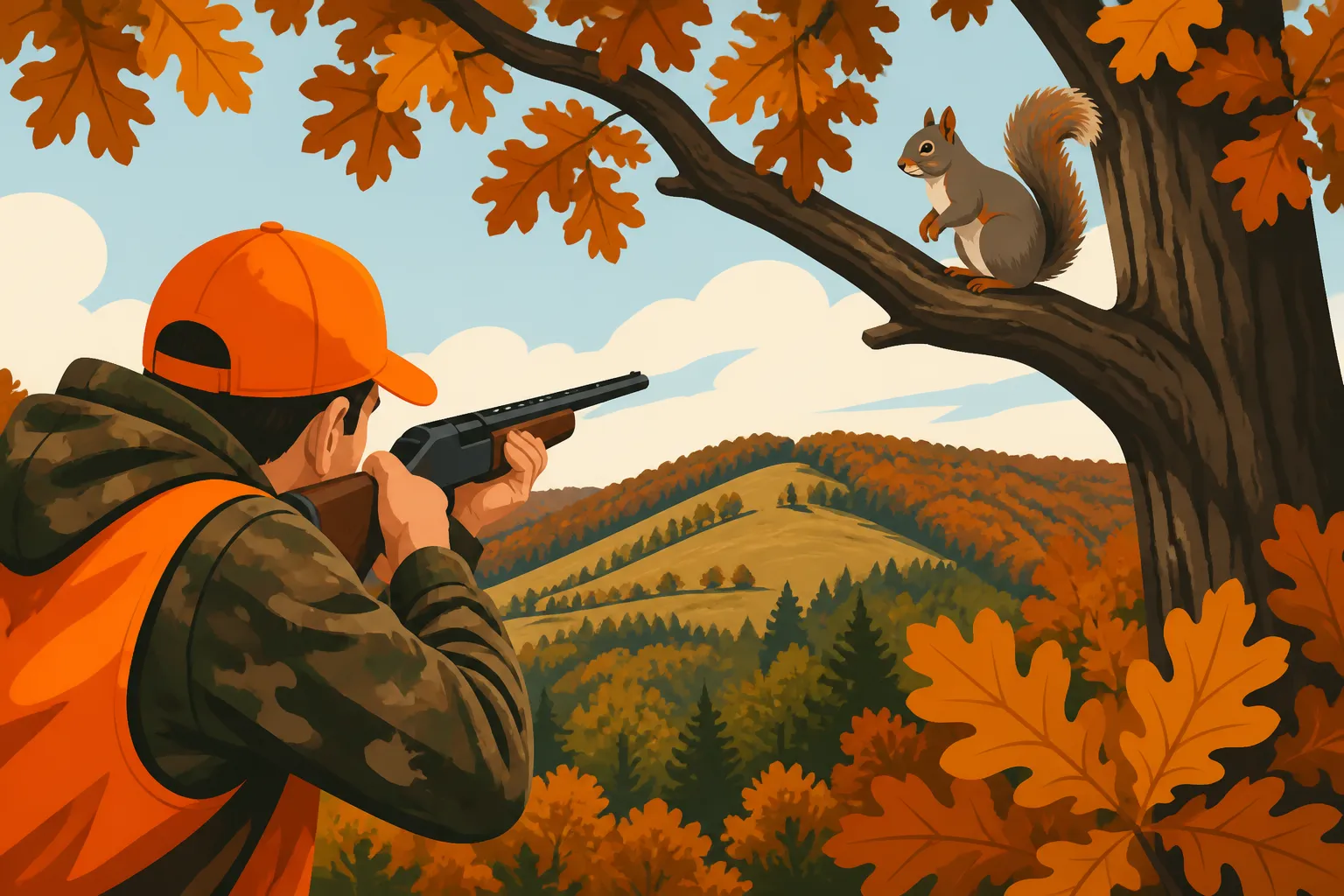
Oak ridges, whether they're sweeping lines through agricultural fields or prominent features in our vast forests, are undeniably prime squirrel habitat. The reason is simple: food and shelter. Acorns are a staple for both fox and gray squirrels, providing a high-energy, readily available food source from late summer through winter. We have a variety of oak species here in Wisconsin, and they don't all drop their acorns at the same time, which is a huge advantage for squirrels.
Think about the majestic white oaks, with their sweet, less tannic acorns that often drop earlier in the fall. Squirrels absolutely love these, and you'll often find them franticly gathering and burying white oak acorns as soon as they hit the ground. Then there are the red oaks, producing acorns with more tannins that are often preferred later in the season, even after a hard freeze, because they store better. A ridge with a mix of both white and red oaks is like a five-star restaurant for a squirrel, offering a continuous buffet. Beyond food, these mature oak trees provide critical denning sites in their hollows and crotches, along with endless branches for constructing leaf nests, or "drays," for refuge and rearing young. The natural topography of a ridge also offers elevated vantage points for squirrels to spot predators, including us hunters, making them feel secure while they forage.
Seasonal Squirrel Behavior on the Ridge
Squirrel behavior isn't static; it shifts dramatically with the seasons and even throughout the day. In the early archery season, when the leaves are still thick and green, squirrels are often less cautious, focused on the abundant early mast crops. They might be out for longer periods, actively feeding and caching. This is a great time to be out, especially on a quiet morning, as the dense foliage offers concealment for you, too.
As fall progresses into winter, and the leaves drop, squirrel behavior becomes more nuanced. They become incredibly focused on their buried caches, often digging through snow to retrieve a meal. Their activity peaks tend to be in the earlier mornings and later afternoons, particularly on sunny days after a cold snap. Midday can be slower, but don't count it out entirely, especially if it's a mild, overcast day. During the deepest parts of winter, squirrels might hunker down for a few days during severe cold or heavy snow, but they'll emerge hungry when conditions improve. Understanding these shifts is key. You can often predict peak activity by simply looking at the weather forecast and the time of year. A general understanding of Wisconsin Small Game and Furbearer Seasons will give you the overarching framework for when you can even be out there.
Reading the Ridge: Identifying Key Squirrel Hotspots
You can't just walk into any oak stand and expect to find squirrels everywhere. Learning to "read" the ridge for active squirrel hotspots is a game-changer. It starts with keen observation. The most obvious sign is "cuttings"—the small, chewed-up pieces of acorn shells or nut fragments left behind after a squirrel has dined. A pile of fresh cuttings under an oak is a clear sign that squirrels are actively feeding there. You can learn a lot about what squirrels are eating, and how recently, by Reading Cuttings Under an Oak.
Beyond cuttings, look for other signs:
- Bark rubs: Sometimes squirrels will rub their scent glands on branches or tree trunks.
- Active dens: Look for well-worn holes in tree trunks, often with smooth edges, indicating regular use. You might even see a squirrel poking its head out!
- Drays: These are the leafy nests, usually high up in the crotches of trees. While not always indicating an active den, a cluster of fresh drays suggests a healthy local population.
When you're walking the ridge, keep your eyes peeled for individual trees that are particularly productive, perhaps a sprawling white oak loaded with acorns, or a red oak whose branches show signs of recent feeding. These are the spots to focus your efforts and where you'll likely find consistent action.
Essential Gear and Tactics for Oak Ridge Squirrel Hunting
Once you understand the "where" and "when," it's time to focus on the "how." Squirrel hunting isn't about brute force; it's about precision, stealth, and using the right tools for the job.
Firearms and Ammunition Choices
The classic squirrel rifle is, without a doubt, the .22 rimfire. It's quiet, accurate, and the ammunition is affordable, making it perfect for honing your marksmanship. A well-placed shot with a .22 ensures a clean kill and minimizes meat damage. When choosing a .22, consider a rifle that's comfortable to carry through the woods and accurate enough to consistently hit a small target at varying ranges, typically out to 50 yards or so. Some hunters prefer a scope for magnified precision, while others enjoy the challenge of open sights.
However, the .22 isn't your only option. For those fast-moving squirrels darting through heavy brush or if you prefer a wider pattern for quicker shots, a small-gauge shotgun can be incredibly effective. A .410 or 20-gauge with light game loads (like #6 shot) will do the trick, especially if you're Shotguns for Wisconsin Grouse Cover and want to double-dip on game. Air rifles are also gaining popularity for squirrel hunting due to their low noise profile, making them excellent for hunting areas where you don't want to disturb other game or nearby properties. Whichever firearm you choose, practice is paramount. Knowing your gun and its capabilities will make all the difference when that fleeting shot opportunity arises.
Stealth and Approach Strategies
Squirrels have incredible eyesight and hearing. They're constantly on alert for predators, and even the slightest unnatural movement or sound can send them scurrying. This means stealth is your best friend.
- Move Slow, Stop Often: This is the golden rule of still-hunting for squirrels. Take a few slow steps, then stop and listen. Watch the trees. Scan the branches. Often, squirrels will freeze when they detect movement, hoping to blend in. If you stop and wait, they might resume activity, or you might spot that tell-tale twitch of a tail you missed while moving.
- Use Binoculars: A good pair of binoculars is invaluable. Instead of constantly moving your head and body, which can spook game, use your optics to scan tree trunks for hidden squirrels, peer into dense canopies, and confirm if that lump on a branch is a squirrel or just part of the tree.
- Utilize the Wind: Whenever possible, approach with the wind in your face. While squirrels don't rely on smell as heavily as deer, it can still play a role, and more importantly, the wind can mask the subtle sounds of your approach.
- Still-Hunting vs. Sitting: Both methods have their place. Still-hunting, as described above, involves slowly moving through prime areas. Sitting and waiting, perhaps near a particularly productive oak or an active den tree, can also be highly effective. This is where you might consider Using a Ground Blind on Wisconsin Public Land if the cover allows, giving you a distinct advantage in concealment. The key is to be patient and let the squirrels come to you once you've settled into a spot.
Maximizing Success with Calls and Decoys
While not as common as in turkey or predator hunting, squirrel calls can definitely add an edge to your hunt. The most effective calls imitate squirrel barks or distress sounds. A good squirrel call can do a couple of things:
- Locate Squirrels: Sometimes you're in a prime area but just can't seem to spot any movement. A few barks on a call might provoke a squirrel to respond, giving away its position.
- Draw Them In: A distress call, particularly one mimicking a young squirrel in trouble, can sometimes draw in curious or protective adult squirrels. However, use these sparingly, as overcalling can make them wary.
- Calm Jumpy Squirrels: Interestingly, a soft, intermittent bark can sometimes reassure a squirrel that might be a bit jumpy after detecting your presence. It mimics natural squirrel chatter and can make them feel safe enough to resume activity.
Decoys are less frequently used in squirrel hunting compared to other game, but in some scenarios, a realistic squirrel decoy placed near a feeding area might draw the attention of other squirrels. However, your best "decoy" is often simply waiting patiently and letting your target's natural curiosity or feeding drive bring it into range.
Navigating and Scouting Wisconsin Oak Ridges
Successfully hunting squirrels on an oak ridge involves more than just showing up on opening day; it demands proactive scouting and smart navigation. Knowing how to use modern tools and understand the lay of the land will give you a significant advantage.
Utilizing Mapping Tools and Aerial Imagery
In today's hunting world, mapping apps are indispensable, and they're not just for deer hunters. For squirrel hunting on oak ridges, tools like GoHunt, or the free Scouting With the Wisconsin Hunt Wild App, can be incredibly powerful. These apps allow you to:
- Identify Oak Stands: By studying satellite imagery, you can often discern large stands of oak trees, especially those with mature canopies, which show up distinctly on a map. Look for clusters of larger, rounder crowns that signify healthy oak trees.
- Locate Ridge Lines: Topographical maps within these apps will clearly show the elevation changes, helping you pinpoint those crucial ridge lines and saddles where squirrels frequently travel.
- Check Land Ownership: Crucially, these apps overlay public and private land boundaries. This helps ensure you're hunting legally and, if on public land, identifying potential access points. For broader context, you might also use these tools when Finding Your Wisconsin Deer Management Unit, as squirrel regulations don't vary by DMU but it helps you understand the overall landscape.
- Mark Hotspots: As you scout or hunt, you can mark specific trees with active cuttings, den trees, or areas of high squirrel traffic directly on your map for future reference. This digital breadcrumb trail is far more efficient than relying on memory or handwritten notes.
Before you even step foot in the woods, spend some time studying these maps. Look for ridges that connect to other food sources, water, or dense cover, as these are often major travel corridors for squirrels.
Early Season Scouting for Productive Areas
The best time to scout for squirrels on oak ridges is actually before the season opens, typically in late summer or early fall. This pre-season reconnaissance allows you to identify which trees are producing the most mast (acorns) and where the squirrels are currently concentrating their efforts.
- Check for Mast Production: Walk the ridges and actively look up into the oak canopies. Are the trees heavily laden with acorns? Are there signs of early drops? The year-to-year mast crop can vary wildly, so knowing which trees are producing that season is vital. A good mast crop often translates to a healthy and active squirrel population.
- Look for Fresh Sign: Even without being able to hunt, you can spot fresh cuttings on the ground, indicating where squirrels are currently feeding. Observe squirrel activity patterns without the pressure of a hunt. Are they more active on one side of the ridge, or in certain pockets of trees?
- Identify Travel Routes: Pay attention to how squirrels move. Do they primarily use fallen logs as highways? Are there specific "squirrel bridges" where branches connect two trees, allowing them to travel without touching the ground? Identifying these routes can help you position yourself for successful ambush points.
This early scouting isn't just about finding squirrels; it's about understanding their current habits and adapting your strategy before the season even begins.
Understanding Hunting Pressure and Finding Seclusion
Wisconsin's public lands can experience significant hunting pressure, especially on opening day or during peak weekends. Squirrels, being small and quick-witted, are highly sensitive to this pressure. Heavily hunted areas will see squirrels become more nocturnal, more cautious, and often retreat to denser, less accessible cover.
- Seek Out Less Traveled Areas: If you're hunting public land, be willing to walk further than most. Often, the best squirrel hunting isn't right next to the parking lot. Look for ridges or pockets of timber that require a bit more effort to reach. These are the spots where squirrels are less likely to have been disturbed. This is a critical factor when dealing with Hunting Pressure on Wisconsin Public Land.
- Hunt During Off-Peak Times: Weekdays, especially mid-week, will almost always have less pressure than weekends. Hunting during periods of inclement weather (light rain, snow) can also deter other hunters, leaving the woods quieter and the squirrels potentially more active as they're driven by hunger.
- Consider Smaller, Private Tracts: If you have access to Hunting Small Private Tracts in Wisconsin, these can offer exceptional squirrel hunting opportunities with minimal pressure. Always ensure you have proper permission before stepping onto private land.
- Utilize Natural Barriers: Look for natural barriers like swamps, thick briar patches, or steep ravines that deter casual hunters. Often, beyond these obstacles, you'll find undisturbed pockets of game. Squirrels will use these areas as refuge, making them prime targets if you're willing to put in the effort to get there.
Field Care and Regulations for Wisconsin Squirrels
Bringing a squirrel to bag is just one part of the equation. To truly honor the animal and enjoy the fruits of your labor, you need to understand proper field care and, of course, abide by Wisconsin's specific hunting regulations.
Proper Field Dressing and Meat Care
Squirrel meat is delicious, often compared to a lean, darker chicken. But to ensure it tastes its best, proper field dressing and care are crucial, especially if you're hunting in warmer early season temperatures.
- Field Dress Promptly: As soon as you recover your squirrel, the best practice is to field dress it. This involves removing the entrails, which helps the carcass cool down quickly and prevents spoilage. You can do this by making a small incision near the anus and carefully opening the body cavity up to the sternum, then removing all internal organs. Some hunters even remove the head and feet in the field to reduce weight and size for transport.
- Skinning Techniques: There are several ways to skin a squirrel, and practice makes perfect. A common method involves cutting a ring around the middle of the squirrel's back, then stepping on the head (or tail) and pulling the hide off like a jacket. Many online videos demonstrate this effectively. The goal is to get the hide off cleanly and efficiently.
- Cooling the Meat: Once field dressed and skinned, the meat needs to be cooled as quickly as possible. In cooler weather, simply hanging it in a game bag (if clean) will suffice. In warmer temperatures, get the meat into a cooler with ice as soon as possible. Don't let it sit in a hot pack or vehicle for long. Squirrel meat is considered by many to be among the Best-Eating Game in Wisconsin, so take care of it!
- Storage: Once home, rinse the meat thoroughly, pat it dry, and then either cook it fresh, vacuum seal and freeze it, or process it for recipes like squirrel stew or fried squirrel.
Understanding Wisconsin's Squirrel Season and Limits
Before you even head out, you absolutely must be familiar with Wisconsin's current hunting regulations for squirrels. These details can change, so always check the latest Wisconsin Department of Natural Resources (DNR) hunting regulations pamphlet or their website.
Generally, the season for squirrels (both gray and fox squirrels) in Wisconsin is quite generous, often running from mid-September through late February. The daily bag limit is typically five squirrels. This means you can harvest up to five squirrels per day. There's also usually a possession limit, which is the maximum number of squirrels you can have in your possession at any one time (often double the daily bag limit, but again, always verify).
You don't need a special squirrel stamp; your small game license covers squirrels. Be aware of any local restrictions, such as city ordinances prohibiting discharge of firearms. Additionally, understanding Game You Cannot Hunt in Wisconsin will help avoid accidental targeting of protected species that might resemble squirrels.
It's your responsibility as a hunter to know and follow these rules. Ignorance of the law is never an excuse, and violating regulations can lead to fines and loss of hunting privileges.
Safety Considerations in Oak Ridge Terrain
Hunting squirrels, especially with a firearm, demands strict adherence to safety principles. The oak ridge environment can also present its own unique hazards.
- Firearm Safety Always: Treat every firearm as if it's loaded. Keep the muzzle pointed in a safe direction, keep your finger off the trigger until you're ready to shoot, and be absolutely certain of your target and what is beyond it. This is especially crucial when shooting into trees; a missed shot could travel a significant distance.
- Target Identification: Squirrels can move quickly and blend into the environment. Be 100% sure it's a squirrel and not a protected species, or even worse, another hunter.
- Uneven Terrain: Oak ridges, particularly in the Driftless Area, can be steep and rugged. Fallen leaves can hide slippery roots, loose rocks, and holes. Wear appropriate footwear with good ankle support. Use trekking poles if you're navigating particularly treacherous slopes.
- Weather Awareness: Wisconsin weather can change rapidly. A sunny fall morning can quickly turn into a cold, wet afternoon. Dress in layers, carry rain gear, and bring enough water and snacks.
- Tell Someone Your Plans: Always inform a friend or family member of your hunting location, your expected return time, and who you're with. Even on a seemingly simple squirrel hunt, accidents can happen, and having someone know your whereabouts is vital for your safety.
Stay vigilant, stay safe, and enjoy the rich tradition of squirrel hunting in Wisconsin.
Disclaimer
The information provided in this guide is for general informational purposes only and is based on typical Wisconsin hunting regulations and practices. Hunting laws and regulations are subject to change by the Wisconsin Department of Natural Resources (DNR). It is the sole responsibility of the hunter to verify and comply with all current local, state, and federal hunting laws, regulations, and licensing requirements before engaging in any hunting activities. Always refer to the official Wisconsin DNR hunting regulations pamphlet or website for the most up-to-date and accurate information. The author and publisher are not responsible for any incidents, accidents, or legal consequences resulting from the use of this information.