Hunting Deer in Deep Northern Wisconsin Snow
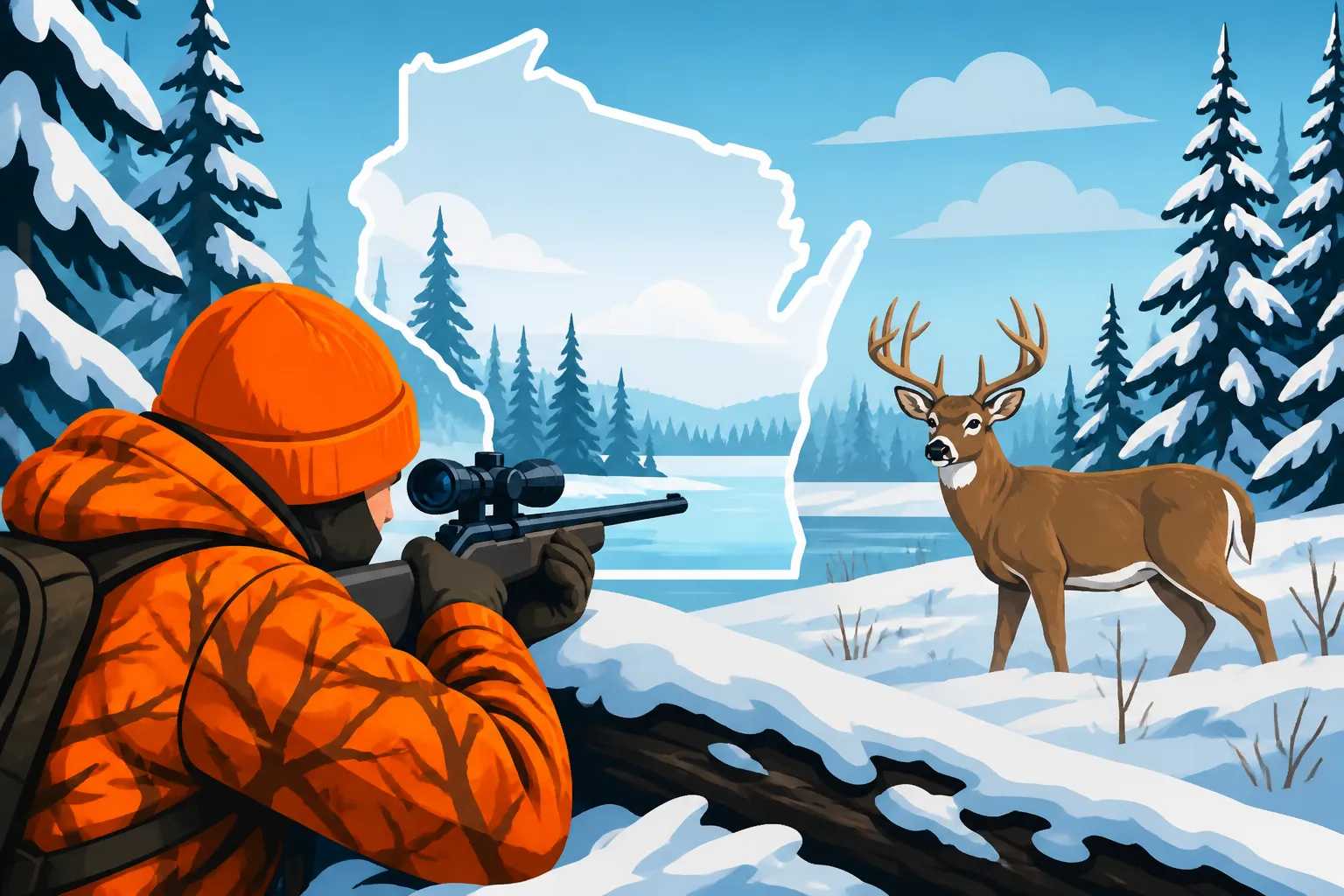
That feeling when you step out into knee-deep snow in the Northern Forest, and the quiet is broken only by the crunch under your boots – it's beautiful, yes, but also incredibly intimidating when you're deer hunting. Many hunters dream of a fresh blanket of snow, but when it starts piling up, it transforms the landscape and the hunt entirely. This guide is all about tackling the unique challenges and incredible rewards of hunting deer in deep Northern Wisconsin snow, helping you understand how deer survive and how you can successfully pursue them in these truly wild, often unforgiving, conditions.
Understanding Deer Behavior in Deep Snow
Deep snow isn't just a pretty backdrop; it's a monumental challenge for whitetails, fundamentally altering their behavior and survival strategies. If you want to be successful, you need to think like a deer trying to conserve every ounce of energy.
How Deep Snow Changes Deer Movement
When snow depths exceed 18-24 inches, especially if it's crusty, a deer's life becomes a constant struggle against gravity and energy drain. Every step costs them precious calories they can ill afford to lose during the lean winter months. This is why you'll see a dramatic shift in their movement patterns. Instead of wandering widely, deer will seek out what we call "deer yards" or "wintering areas." These aren't just random patches of woods; they're critical sanctuaries, often dense stands of conifers like cedar swamps, pine plantations, or thick balsam fir thickets.
These areas offer vital thermal cover, acting like natural blankets that trap heat and block brutal winds, allowing deer to bed down and maintain their body temperature without expending excessive energy. The snow within these yards also tends to be shallower and softer, making movement slightly less strenuous. It's in these yards that you'll find higher concentrations of deer, often packed together, creating a network of well-worn trails, almost like miniature deer highways. Understanding How Severe Winters Hit Northern Deer is key here; prolonged periods of deep snow can lead to significant mortality, especially among fawns and older deer. Knowing where these deer yards are located is perhaps the most crucial piece of information for a winter hunter.
Identifying Winter Food Sources and Cover
In these harsh conditions, deer are hyper-focused on two things: thermal cover and accessible food. The primary food sources become woody browse that is still exposed above the snow, like twigs and buds of red-osier dogwood, sumac, maples, and young aspen sprouts. Balsam fir, though not a preferred food, can also become a critical emergency food source when other options are buried. You won't find deer pawing through two feet of snow for acorns; that energy expenditure just isn't worth the caloric return.
Therefore, when scouting or hunting, look for those dense conifer stands that provide both shelter and a limited, but vital, food supply. These are the classic "deer yards" you've heard about. Within these areas, deer will create bedding sites in the thickest cover, often facing into the wind to detect predators, but protected from its bite. They will often bed on south-facing slopes or under dense conifer canopies that catch more sun, offering a slight warmth advantage. Focusing your efforts on locating these key areas where Late-Season Food Sources for Whitetails are combined with heavy cover will dramatically increase your chances. This is where a mapping app like GoHunt becomes invaluable, allowing you to identify dense conifer cover and potential south-facing slopes even before you step foot in the woods.
Essential Gear for Extreme Cold and Deep Snow
Hunting in Northern Wisconsin's deep snow isn't for the faint of heart, and it certainly isn't for the unprepared. Your gear choices can literally be the difference between a successful, safe hunt and a miserable, potentially dangerous outing.
Layering for Warmth and Mobility
The biggest challenge is staying warm without overheating and sweating, which can quickly lead to dangerous hypothermia once you stop moving. This is where strategic layering comes into play. Forget cotton; it holds moisture and loses its insulating properties when wet. Instead, invest in high-quality synthetic or merino wool base layers that wick moisture away from your skin. For your mid-layers, think fleece or puffy insulation, something that provides warmth without excessive bulk, allowing for freedom of movement. For instance, a good merino wool base layer from a brand like Smartwool or Sitka, followed by a mid-weight fleece, and then a heavier puffy jacket, gives you options to shed or add as your activity level changes. As for what you put on your feet, choosing Insulated Boots for All-Day Sits is paramount. Look for boots with at least 800-1200 grams of Thinsulate or equivalent, and make sure they are waterproof with a sturdy rubber sole for traction.
Your outer shell needs to be both waterproof and windproof, but also breathable. Think Gore-Tex or similar technology. It needs to keep the snow and wind out, but allow some body vapor to escape to prevent internal dampness. Don't forget extremities: a warm hat that covers your ears, insulated gloves or mittens (with removable liners are great for shooting), and a neck gaiter are absolutely critical. Many experienced Northern Wisconsin hunters swear by Wool for Wet Snow and Quiet Movement in their outer layers due to its silent nature and ability to insulate even when damp. Remember, you're going to be moving a lot in deep snow, so mobility is key; avoid overly bulky clothing that restricts your range of motion.
Navigation and Extraction Tools
Deep snow can make familiar terrain look entirely different, burying trails and landmarks. Getting lost is a real concern, especially when visibility drops. A reliable GPS unit, or a robust mapping app on your phone like GoHunt, loaded with satellite imagery and topographic maps, is non-negotiable. Don't rely solely on your phone; bring a portable charger, and consider a backup handheld GPS. Always have a physical map and compass, and know how to use them, as electronic devices can fail in extreme cold. Mark your starting point and plan your route.
Beyond finding your way, you need to consider how you'll get a deer out once you've harvested it. Dragging a mature whitetail through waist-deep snow is an exhausting, if not impossible, task for one person. This is where a deer sled becomes an absolute lifesaver. Even better, plan on hunting with a partner or two. A strong, durable Deer Sleds for Snow Country can make a huge difference, allowing you to pull a deer out with far less effort than a direct drag. If you're alone, you might need to bone out the deer on site, carrying it out in pieces with a quality frame pack. Either way, plan for the extraction before you even head into the woods.
Hunting Tactics: Tracking and Still-Hunting
In deep snow, the usual tactics of sitting on food plots or stand hunting over scrapes often become less effective. The game changes, and the most successful hunters adapt by embracing active pursuit strategies.
Reading Tracks and Sign in Snow
Deep snow transforms the forest floor into a giant canvas, recording every movement. Learning to read these tracks is paramount to success. You're looking for fresh sign: crisp, well-defined tracks where the snow has not melted back into the edges. Older tracks will look rounded or partially filled in. Pay attention to the depth of the track and the splay of the hooves – deeper tracks indicate a heavier, possibly larger deer, while a wider splay can suggest a running deer or one struggling through deep drifts.
The stride length can tell you if the deer is walking, trotting, or bounding. Look for evidence of browsing along the tracks. If a deer is moving purposefully with a consistent stride, it might be heading to a bedding area or a specific food source. If it's meandering, browsing as it goes, it's likely feeding. Importantly, a single, fresh set of tracks leading into a thick cedar swamp is often worth following. You might even be able to discern a buck from a doe by the size and shape of the track, especially if there are other, smaller tracks nearby. This is a critical skill for Tracking a Deer in Wisconsin Snow. You'll need to develop an eye for what's fresh and what's old; a fresh track from the previous night or early morning is golden.
The Art of Still-Hunting in Deep Snow
Still-hunting is perhaps the most effective method for deer in deep snow. It involves moving incredibly slowly and deliberately, stopping frequently to scan, listen, and glass. The advantage of deep snow is that it muffles sound, allowing you to move much more quietly than in dry leaves. However, the deer also benefit from this sound dampening, so you might not hear them coming either.
The technique involves taking just a few steps, then pausing for several minutes, scanning every shadow and thicket for a glimpse of an ear, a flick of a tail, or the horizontal line of a deer's back against the vertical trees. Use binoculars constantly to pick apart dense cover. Move into the wind, or with a slight crosswind, allowing your scent to be carried away from where deer are likely to be. Focus on moving through those identified deer yards, following the networks of deer trails. Be prepared to stop and set up for a shot at a moment's notice. The goal is to spot the deer before it spots you, which is easier said than done in the labyrinthine cover of the Northwoods. This methodical approach is the essence of Still-Hunting After a Wisconsin Snow.
Targeting Deer Yards and Thermal Cover
As mentioned, deer yards are the focal points in deep snow. These are areas Where Northern Forest Bucks Bed alongside does and fawns, creating a dense concentration of deer. Your still-hunting efforts should be concentrated on working these thick areas. Look for natural funnels within the yard, points where deer trails converge, or edges where the thick cover meets a slightly more open area that might still offer some food.
When you locate a deer yard using mapping software or by finding heavy sign, approach it very carefully. Deer will often be bedded in the thickest part of the cover, relying on their excellent senses and the cover itself for protection. They will sometimes let a hunter walk right past them if they feel they are sufficiently hidden. Go slow, move into the wind, and use any available cover to break up your silhouette. Once you penetrate the outer edges of a deer yard, the hunt becomes intensely intimate, often resulting in close-range encounters. A helpful strategy is to have an aerial map like the one on GoHunt, highlighting known thickets and low-lying areas. This can give you an edge in identifying prime areas for Finding Sign in Big Timber and then executing your still-hunt plan. Remember that during periods of extreme cold, deer will prioritize staying warm over feeding, so targeting their bedding areas within these thermal covers becomes even more important. Even applying a Cold Weather Sitting Strategy in areas bordering these yards can be effective if you know deer are moving in and out.
Safety and Recovery in Northern Wisconsin's Winter
Hunting in deep snow, especially in the remote reaches of Northern Wisconsin, demands an even higher degree of safety planning and a realistic understanding of game recovery challenges.
Preparing for Emergencies
The cold itself is a serious threat. Hypothermia and frostbite can set in quickly if you're not careful. Always carry an emergency kit including fire starters (waterproof matches, lighter, fire steel), a small first-aid kit, extra layers of clothing (especially socks and gloves), high-energy snacks, and plenty of water (an insulated water bottle to prevent freezing). Tell someone exactly where you're going and when you expect to return. Consider carrying a satellite communication device like a Garmin inReach, especially if you're heading deep into areas with no cell service, which is common in much of the Northern Forest where the Northern Forest Deer Density in Wisconsin is often lower, requiring more expansive hunting.
Knowing basic wilderness survival skills, like building a quick emergency shelter or a fire, could literally save your life. The weather can change rapidly in Wisconsin, turning a pleasant snowy day into a full-blown blizzard in a matter of hours. Always monitor the forecast closely and be prepared to cut your hunt short if conditions become too dangerous.
Efficient Game Recovery
Once you've made a successful shot, the challenge isn't over. Recovering a deer in deep snow can be incredibly difficult. First, mark the spot of the shot carefully, and the last place you saw the deer. Deep snow can make blood trailing tough, as snow can fall into tracks, or the deer might not bleed heavily due to the cold constricting vessels. Take your time, look for disturbed snow, broken twigs, or even gut piles if it was a poor hit.
As mentioned, a deer sled is invaluable. If you're alone and the snow is truly deep, you might need to consider field dressing and then quartering or boning out the animal to pack it out in stages. This is where a good frame pack and game bags come in handy. Never underestimate the physical toll of dragging a deer in deep snow; it's arguably harder than packing it out in pieces. Be realistic about your physical capabilities and call for help if needed. Trying to drag a deer out of a deep ravine or a swamp by yourself after a long day in the cold is a recipe for exhaustion and potential injury. Many a hunter has called friends or family for assistance, because Getting a Deer Out of a Wisconsin Swamp or a coulee bottom in deep snow is a monumental task. The best recovery plan is to have a plan before you pull the trigger, including knowing your route out and having the right tools for the job.
| Snow Depth Impact | Deer Behavior | Hunter Tactics | Gear Considerations |
|---|---|---|---|
| 0-6 inches | Minimal impact; normal movement. | Standard stand hunting, still-hunting. | Regular cold-weather gear. |
| 6-12 inches | Start using established trails; prefer denser cover. | Focus on trails, still-hunting edges of cover. | Good insulated boots, layers. |
| 12-18 inches | Restricted movement; concentrate near thermal cover. | Still-hunting deer yards, tracking. | Deer sleds, robust layers, insulated boots. |
| 18-24+ inches | Heavily restricted; "yarding up" is common; energy conservation paramount. | Aggressive still-hunting in dense thermal cover; tracking fresh sign a priority. | High-quality deep snow boots, full layering system, deer sled, emergency comms, GoHunt app for identifying dense cover. |
Disclaimer
Hunting is an inherently dangerous activity. The information provided in this guide is for informational purposes only and should not be considered a substitute for proper training, experience, local regulations, and personal responsibility. Always prioritize safety, understand and follow all Wisconsin hunting laws, and be prepared for potential emergencies in the field.