Keeping a Muzzleloader Dry in Wet Snow
There’s nothing quite as gut-wrenching as lining up a shot on a late-season Wisconsin deer, squeezing the trigger of your muzzleloader, and hearing nothing but a hollow click. When the wet snow starts to fall, or the mist hangs heavy in the air, keeping your powder dry can feel like an impossible task. This guide is all about equipping you with the practical knowledge and field-tested strategies to ensure your muzzleloader fires reliably, even when Mother Nature throws her worst at you during Wisconsin's demanding late hunts.
The Unique Challenges of Wisconsin's Late Season Muzzleloader Hunt
Hunting Wisconsin with a muzzleloader in December often means facing conditions that would make less hardy souls stay home by the fire. It’s a rewarding pursuit, but it demands an extra layer of preparation, especially when it comes to keeping your primary tool, your muzzleloader, in prime working order against the elements.
Understanding Wisconsin's Muzzleloader Season Conditions
Wisconsin's muzzleloader season typically runs in early December, often overlapping with or directly following the nine-day gun season. This timeframe frequently brings unpredictable and often challenging weather. We're not usually talking about crisp, dry, single-digit cold where snow crunches underfoot. Instead, you're more likely to encounter freezing rain, sleet, or that heavy, wet snow that clings to everything. This kind of moisture is particularly insidious because it melts on contact with a warmer surface, like your gun, and then re-freezes or seeps into every tiny crevice.
The frustration of spending hours on a stand, patiently enduring the cold, only to have a once-in-a-season opportunity ruined by a damp primer or wet powder charge is a common lament. Many hunters have experienced that devastating "click" instead of the thunderous roar, leaving them with nothing but regret and a cold, wet walk back to the truck. It’s a completely different ballgame than hunting earlier in the season, and your gear needs to be ready for it. Understanding these specific conditions is the first step in formulating a successful strategy for your hunt during Wisconsin's Muzzleloader and Holiday Hunts.
How Moisture Infiltrates Your Muzzleloader
A muzzleloader, by its very design, has several vulnerable points where moisture can wreak havoc on its functionality. Unlike modern cartridge firearms, which are largely sealed units, a muzzleloader has open paths to its internal workings. The primer or percussion cap is the ignition source, and if it gets wet, it simply won't ignite. The flash hole, which transfers the flame from the primer to the main powder charge, can become obstructed by moisture or ice.
The main powder charge itself is incredibly susceptible. Even "water-resistant" powders can degrade significantly when exposed to moisture for prolonged periods, leading to a hang fire (delayed ignition) or a complete misfire. And let's not forget the bore. Falling wet snow or even heavy fog can introduce moisture directly down the barrel, sitting on top of your bullet and powder, making ignition a pipe dream. Condensation is another silent killer. Bringing a cold gun into a warm cabin or vehicle can cause moisture to form inside and out, which then freezes when you head back into the cold. This constant cycle of freezing and thawing, melting and seeping, makes keeping a muzzleloader dry a constant battle during the late season.
Essential Gear and Preparations Before the Hunt
Success with a muzzleloader in wet snow isn't just about what you do in the field; it starts long before you ever step foot into the woods. Proper preparation and selecting the right components can make all the difference when those snowflakes start sticking.
Selecting the Right Muzzleloader Components
The type of muzzleloader and its components play a significant role in its resistance to moisture. For many modern in-line muzzleloaders, 209 primers offer a distinct advantage over traditional percussion caps. 209 primers are essentially miniature shotgun primers and are inherently more resistant to moisture, often featuring a protective lacquer seal. When paired with a breech plug designed to fully enclose or seal around the 209 primer, you create a much more waterproof ignition system. Brands like CVA often utilize systems that offer excellent primer sealing, providing a tighter fit that minimizes moisture intrusion.
When it comes to powder, while pelletized powders are convenient, loose granular powder can sometimes offer a slight edge if moisture does find its way into the bore. Loose powder, when dampened, tends to clump, but its greater surface area can sometimes allow for more consistent ignition even with minor moisture compared to a solid pellet. However, the best defense is to prevent moisture intrusion altogether. Look for breech plugs with tight tolerances or O-rings designed to seal the breach. Some manufacturers even offer specialized breech plugs that are treated for enhanced corrosion resistance, which can be a small but helpful detail. Consider researching different options available when Choosing a Muzzleloader for December Cold.
Pre-Hunt Waterproofing Techniques
Before you even think about loading your muzzleloader, there are several crucial waterproofing steps you can take. The goal is to create barriers against moisture at all vulnerable points.
- Greasing the Nipple/Primer Pocket: For traditional percussion cap guns, a thin layer of waterproof grease (like Bore Butter or even petroleum jelly) around the base of the nipple where the cap sits can prevent water from seeping in. For 209 primer systems, a dab of grease around the primer itself, where it meets the breech plug, can also help create a seal.
- Tape it Up: This is a classic, simple, and highly effective method. After loading and seating your bullet, place a small square of electrical tape over the muzzle. This prevents snow, rain, or condensation from entering the bore. Don't worry, the projectile will easily blow through it upon firing, often without affecting accuracy at typical muzzleloader ranges. For the primer area, a small strip of electrical tape can be carefully placed over the 209 primer or percussion cap, sealing it from the elements. Just be sure to practice peeling it off quickly and quietly before your hunt. Some hunters even use Teflon tape wrapped around the threads of their breech plug for an extra layer of sealing, especially if it’s an older model with less precise tolerances.
- Water-Repellent Coatings: A light application of a water-repellent gun oil or silicone spray on the external metal surfaces can help shed moisture, preventing rust and ice buildup. Avoid getting any oil inside the bore or on the powder charge.
- Protecting Your Ammunition: Carry extra primers or percussion caps in a small, waterproof container, like a 35mm film canister or a dedicated primer caddy. This ensures you always have dry ignition sources readily available if the ones on your gun get compromised. Similarly, if you're using loose powder, carry it in a sealed, waterproof dispenser.
These steps, though seemingly minor, drastically increase your chances of a successful shot when hunting in the unpredictable late-season weather.
Field Tactics for Keeping Your Muzzleloader Dry
Even with the best pre-hunt preparation, the real test comes in the field. Wisconsin's wet snow, freezing rain, and constant dampness are relentless. Smart field tactics are essential to maintain your muzzleloader's readiness throughout the day.
Protecting Your Muzzleloader on the Stand and on the Move
Whether you're sitting patiently in a stand or actively Still-Hunting After a Wisconsin Snow, your muzzleloader needs constant protection.
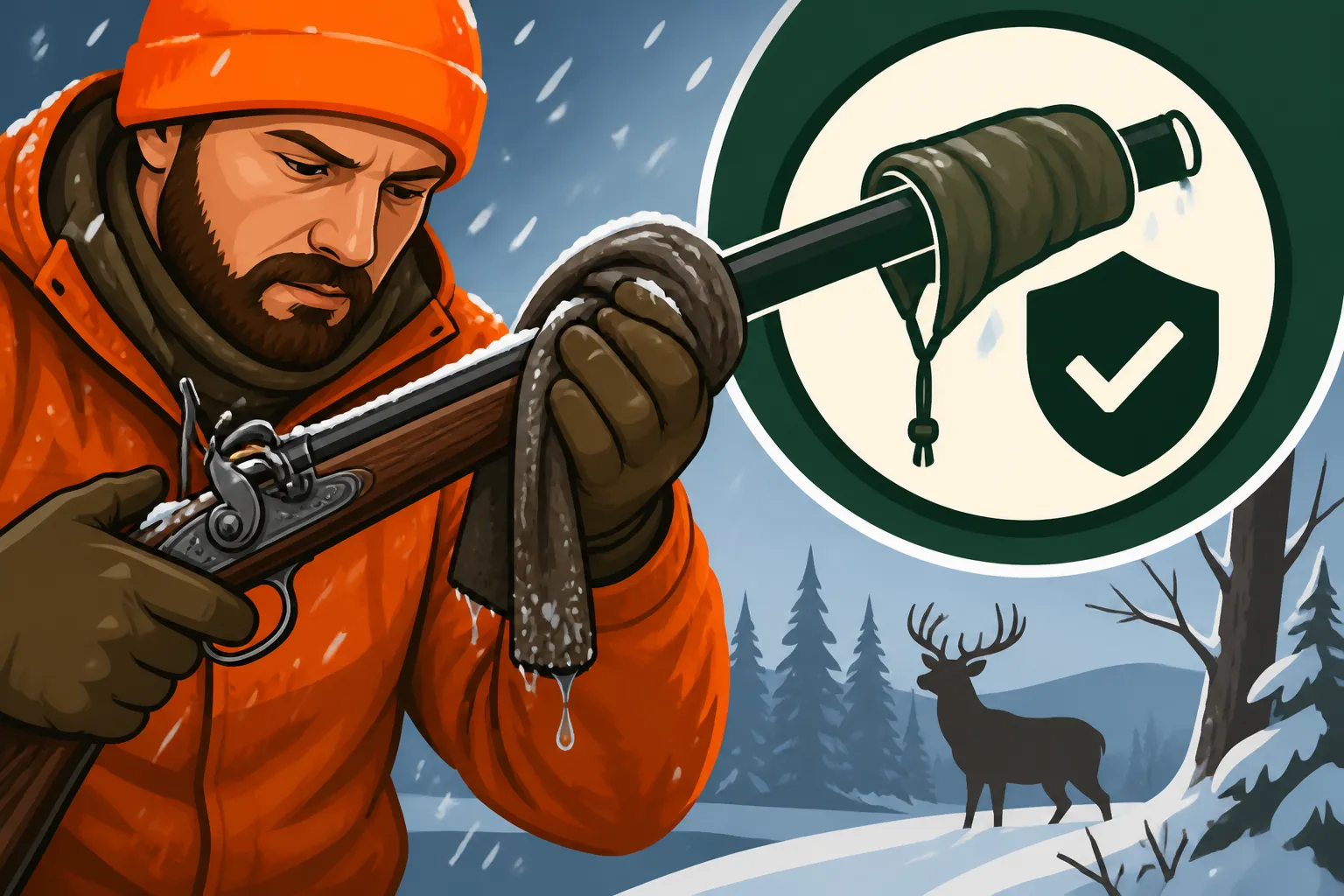
- Muzzle Covers are Your Friend: The electrical tape over the muzzle is a good start, but there are also commercial options like specialized rubber muzzle covers that stretch over the barrel end. A simple latex balloon works wonders too. These are crucial for preventing snow, rain, or even ice from falling directly into your bore and contaminating the powder.
- Action Covers: The primer or percussion cap area is the most critical point. Many hunters use a piece of an old inner tube, a custom-sewn fabric cover, or even just another strip of electrical tape to create a "hood" over the breech or hammer area. This shields it from direct precipitation. You'll need to practice quietly removing or flipping this cover for a shot, but it's a small price to pay for a working gun.
- Carrying Position: When walking, the debate often arises: muzzle up or muzzle down? Muzzle up keeps direct precipitation out of the barrel but exposes the breech more. Muzzle down protects the breech but could allow snow or rain to enter the muzzle (though a muzzle cover mitigates this). A good compromise, especially when hiking through thick brush or in heavy snow, is to keep the muzzle slightly angled downwards and use a quality sling that allows you to hold the gun securely under your arm or close to your body, shielding it from the worst of the weather.
- Frequent Wiping: Carry a small, absorbent cloth, like a microfiber towel, in your pack. Periodically wipe down all exposed metal surfaces of your muzzleloader to remove melting snow or rain. This helps prevent moisture from finding its way into vulnerable areas and also reduces the chance of rust.
- Using Natural Cover: When setting up your stand or finding a vantage point, prioritize locations that offer some overhead cover. Dense pine branches or the canopy of a thick cedar swamp can significantly reduce the amount of direct precipitation your muzzleloader receives. This applies whether you're planning a long sit or moving through the timber.
Addressing Muzzleloader Malfunctions in Wet Conditions
Even with the best precautions, a malfunction can occur. Knowing how to safely and effectively deal with a misfire or hang fire in the field is paramount.
- The Misfire Protocol: If you pull the trigger and hear only a "click" (a misfire) or a delayed ignition (a hang fire), always keep the muzzle pointed in a safe direction for at least 30 to 60 seconds. A hang fire can still ignite the powder after a significant delay, and you absolutely do not want the gun to discharge unexpectedly.
- Troubleshooting the Primer: After the safe waiting period, carefully open the breech or replace the percussion cap with a fresh, dry one. Ensure it’s seated correctly. Try firing again. If it still misfires, the issue is likely deeper.
- Clearing the Bore Safely: If a fresh primer doesn't solve the problem, the powder charge itself is likely compromised. In the field, clearing a loaded muzzleloader requires extreme caution. If your muzzleloader has a removable breech plug, this is often the easiest (and safest) way to unload it. Simply remove the breech plug, and the powder and bullet can often be pushed out from the breech end. Some hunters even carry a spare, pre-loaded breech plug for a quick swap if they need to clear a fouled one. If your gun doesn't allow this, you'll need a CO2 discharger or a bullet puller (often requiring specialized tools that aren't practical for most field situations). Never attempt to dig out the bullet or powder with improvised tools. If you can't safely clear it in the field, you'll need to take it to a qualified gunsmith immediately. This is one of those frustrating scenarios where having a digital mapping tool like GoHunt on your phone can really help you quickly mark your deer's last known location before you have to leave the area to deal with your gun. This quick marking capability on GoHunt can save precious time and help prevent a lost animal.
- Prepared for the Worst: Always carry a small cleaning kit with you, including a bore brush, patches, and a ramrod extension. Being able to address a minor issue or clean some condensation from the bore can save your hunt.
Post-Hunt Care and Storage for Longevity
The hunt might be over, but your muzzleloader’s journey isn’t. What you do after the hunt, especially when it’s been exposed to Wisconsin’s wet snow, is just as critical for its performance and longevity. Ignoring post-hunt care almost guarantees rust, pitting, and future malfunctions.
Immediate Post-Hunt Cleaning and Drying
Never, ever put a muzzleloader away wet, especially if it's been out in the snow or rain. Moisture is the archenemy of black powder and its substitutes, and even stainless steel can rust if neglected.
- Full Disassembly: The moment you get home, and certainly within a few hours, completely disassemble your muzzleloader. This means removing the breech plug, stock (if applicable), and all other components that allow access to the internal parts.
- Thorough Drying: Use clean rags and paper towels to wipe down every single component. Pay special attention to the bore, breech plug, and any areas where water could have seeped in. For hard-to-reach nooks and crannies, compressed air (from a can or an air compressor) is your best friend. Blast away any lingering moisture. You can even use a hairdryer on a low, cool setting, but be cautious not to overheat plastic or synthetic components.
- Rust Preventative: Once everything is bone dry, apply a generous (but not excessive) coat of quality gun oil or rust preventative to all metal surfaces, inside and out. Ensure the bore is well-oiled. For long-term storage, some hunters pack the bore with a heavier rust-preventative grease.
- Breech Plug Care: The breech plug often takes the brunt of the abuse from powder residue and moisture. Scrub it thoroughly with a wire brush designed for breech plugs, then clean out the flash hole with a drill bit sized appropriately (check your manual for the correct size). Ensure it’s sparkling clean and dry before oiling.
Proper Storage in Variable Wisconsin Conditions
Once your muzzleloader is clean and dry, how you store it can greatly impact its condition for future seasons. Wisconsin's climate, with its wide swings in temperature and humidity, can be tough on firearms.
- Avoid Drastic Temperature Swings: Storing a muzzleloader in an unheated garage, shed, or attic in Wisconsin is a recipe for condensation and rust. As temperatures fluctuate, moisture in the air will condense on the colder metal surfaces of your gun. Ideally, store your muzzleloader in a climate-controlled environment, such as inside your home.
- Desiccant Packs and Dehumidifiers: In gun safes or cases, place desiccant packets (those little silica gel packs) or a small, rechargeable electric dehumidifier (like a GoldenRod). These will actively absorb moisture from the air, creating a drier microclimate around your firearm. Remember to "recharge" or replace desiccant packs regularly according to their instructions.
- Gun Socks: A silicone-treated gun sock can provide an additional layer of protection against moisture and scratches while allowing the gun to breathe, unlike some airtight cases that can trap moisture.
- Regular Checks: Even with the best storage, it’s a good practice to periodically inspect your muzzleloader during the off-season. Pull it out every few months, wipe it down, check for any signs of rust, and reapply oil if necessary. This proactive approach ensures your muzzleloader is always ready for your next hunt. Just imagine if you could easily access the information about Wisconsin Muzzleloader Season Tactics right when you need it while planning your next outing.
Here's a quick comparison of common waterproofing techniques for muzzleloader components:
| Muzzleloader Component | Common Moisture Threat | Recommended Waterproofing Method | Pros | Cons |
|---|---|---|---|---|
| Muzzle | Rain, snow, condensation in bore | Electrical tape, rubber muzzle cover, latex balloon | Very effective, inexpensive, easy to apply and remove | May need to be reapplied, can be visible, slight noise when removed |
| Primer/Cap | Direct precipitation, humidity | Electrical tape over primer, waterproof grease on cap/primer pocket | Good seal, prevents direct water contact | Tape can be noisy to remove, grease can attract dirt |
| Flash Hole/Breech Plug | Moisture seeping in from primer area | Tight-fitting breech plug, O-rings, Teflon tape on threads, grease | Enhances seal, prevents ignition failure | Requires proper installation, may need specialized parts |
| Powder Charge | Bore intrusion, humidity in breech | Muzzle cover, proper bullet seating, dry storage of powder | Direct protection for propellant | No direct field waterproofing after loading for charge itself |
| External Metal Parts | Rust, ice buildup, general corrosion | Water-repellent gun oil, silicone spray | Prevents rust, sheds water, helps protect finish | Needs reapplication, can make gun slippery if over-applied |
Remember, successful late-season hunting in Wisconsin is about preparation, patience, and attention to detail. By implementing these strategies for keeping your muzzleloader dry in wet snow, you'll significantly increase your chances of a reliable shot and a memorable hunt. GoHunt's mapping features can help you scout areas like those mentioned in Hunting Pressure on Wisconsin Public Land to find less disturbed spots for your stand, further enhancing your overall hunting strategy.
Disclaimer
This guide provides general information for keeping a muzzleloader dry in wet snow for hunting in Wisconsin. Always consult the most current Wisconsin Department of Natural Resources (DNR) regulations and guidelines for specific hunting seasons, equipment requirements, and safety protocols. Adhere to all firearm safety rules at all times.