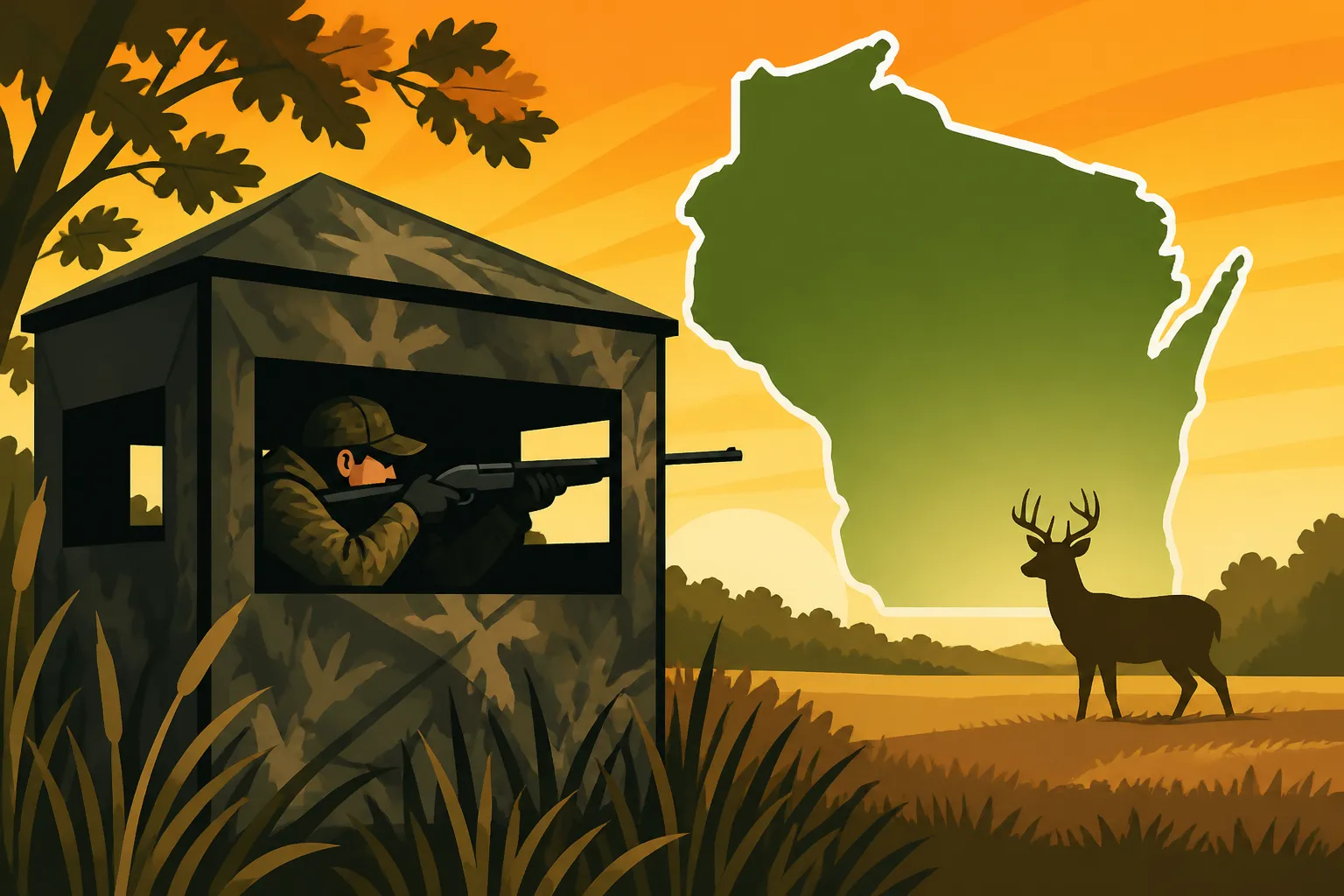
Using a Ground Blind on Wisconsin Public Land
Hunting Wisconsin’s vast public lands can feel like a constant battle between staying hidden and staying comfortable. You spend hours scouting, studying maps, and finding that perfect pinch point or feeding area, only to realize the ideal tree for a stand is nowhere in sight, or perhaps you're simply tired of freezing your tail off 20 feet up. This guide is all about embracing the ground blind as a powerful, versatile tool for success on Wisconsin's public hunting grounds, helping you understand the rules, strategize your placement, and maximize your comfort and concealment.
Understanding Wisconsin's Rules for Ground Blinds on Public Land
Navigating the regulations for using ground blinds on Wisconsin's public lands can sometimes feel like trying to hit a moving target. It’s not always as straightforward as you’d hope, and the last thing any hunter wants is to be on the wrong side of the law. The key is understanding that public lands are managed for multiple uses, and the rules are in place to ensure fair access, minimize impact, and maintain a natural aesthetic.
Legalities and Regulations for Temporary Structures
Wisconsin DNR rules are pretty clear about "permanent" structures on public land: they're generally a no-go. This means you can't build a tree stand that requires cutting or defacing a tree, nor can you construct a permanent ground blind out of lumber or other lasting materials. The good news is that commercially manufactured pop-up ground blinds are considered temporary structures, which usually means they are allowed. However, there's a crucial distinction: when and how you can leave them.
Many public properties, including State Forests and Wildlife Areas, explicitly state that temporary structures like ground blinds must be removed daily. This is a big one for public land hunters, as it means you can't just set up your blind on opening weekend and leave it there until Thanksgiving. Other properties, like some County Forests, might have slightly more lenient rules, allowing blinds to be left for a specific duration (e.g., 72 hours) or if they are clearly marked with the owner's name and address or DNR customer ID number. Always, always check the specific regulations for the property you plan to hunt. The Wisconsin DNR's website or directly contacting the property manager are your best bets. For more specific insights, make sure you know the Ground Blind Rules on Wisconsin State Land.
Placement Restrictions and Considerations
Beyond the "temporary" aspect, where you can actually place your ground blind also comes with guidelines. Think about the common sense rules of hunting ethics and safety, which often align with official regulations. For instance, while it might seem obvious, you cannot place a blind in a way that obstructs public trails, roads, or access points. These are for everyone, and blocking them can lead to fines and a lot of frustration for fellow outdoor enthusiasts.
You also need to be acutely aware of private land boundaries. Placing your blind too close to a property line can lead to uncomfortable situations or even trespassing if you're not careful. Always use mapping tools like GoHunt or the Wisconsin Hunt Wild App to verify property lines. These apps are invaluable for ensuring you're well within public land boundaries and not encroaching on a neighbor's hunting ground. Different public land types might also have unique rules regarding setbacks from these boundaries or even designated safety zones around developed areas. Before you even think about brushing in that blind, double-check these specifics. Getting familiar with Wisconsin Public Access Lands Maps can save you a lot of headache.
Strategic Placement and Concealment on Public Ground
The beauty of a ground blind lies in its inherent camouflage and ability to provide a contained, scent-reducing environment. But simply popping one up in the middle of a field won't cut it. On public land, where deer are often more pressured and wary, strategic placement and meticulous concealment are absolutely non-negotiable for success.
Scouting for Optimal Ground Blind Locations
Successful ground blind hunting starts long before the season opener, with dedicated scouting. You’re not just looking for deer sign; you’re looking for the perfect confluence of deer movement, natural cover, and blind placement opportunities. Think about what dictates deer travel in your chosen area. Are there natural funnels created by terrain features like hills, ridges, or thickets? Is there a pinch point between a swamp and a logging road that deer routinely use to travel between bedding and feeding areas? These are prime candidates.
Consider the edges of different cover types – a transition line where a mature oak forest meets a younger aspen cut, or where a thick cedar swamp gives way to an open field. Deer often skirt these edges, using the denser cover for security. Using advanced mapping tools, whether it's a dedicated hunting app like GoHunt or satellite imagery, can help you identify these hotspots from home. Then, it's boots on the ground to confirm the sign: rubs, scrapes, tracks, and droppings. Identify multiple potential blind locations based on predominant wind directions for different times of day. Remember, you might need a couple of spots to hunt effectively depending on the wind. For deeper strategies on finding these locations, check out Scouting Wisconsin Public Land Before Season and learn about Hunting a Funnel Between Two Swamps.
Blending Your Blind into the Landscape
Once you’ve identified your ideal spot, the next critical step is making your blind disappear. A ground blind, even one with a great camo pattern, will stick out like a sore thumb if it’s just dropped in an open area. The goal is to break up its outline and integrate it seamlessly into the existing natural surroundings. This is where "brushing in" comes into play.
Start by placing your blind tight against existing cover – a fallen log, a dense thicket of saplings, a cluster of evergreens, or even a large boulder. This immediately breaks up the hard lines of the blind. Then, gather dead branches, leaves, grasses, and other natural debris from the immediate area to pile around and over your blind. Think about creating a "roof" of branches to eliminate the flat top profile. Be careful not to cut live vegetation, as this is often prohibited on public land and is poor etiquette. If you're on the edge of an agricultural field, you can use cornstalks or hay bales to your advantage. The idea is to make your blind look like just another part of the natural landscape, an irregular bump in the topography rather than a perfectly symmetrical box. Different Wisconsin habitats demand different concealment methods; a blind that blends into the Northwoods pine forest will stand out in the southern Wisconsin farmlands. Mastering the art of Brushing In a Blind on a Field Edge is crucial here.
Tactical Advantages and Disadvantages of Ground Blinds
Ground blinds, while incredibly useful, aren’t a one-size-fits-all solution for every hunting scenario. Understanding their strengths and weaknesses on public land will help you decide when to deploy one and how to make it most effective.
Benefits of Hunting from a Ground Blind
There are some truly compelling reasons to choose a ground blind, especially on Wisconsin's public lands:
- Superior Concealment and Reduced Scent: Modern ground blinds are fantastic at hiding movement. You can shift, stretch, and adjust your position without spooking wary deer. The enclosed nature of a blind also helps contain your scent, especially when placed strategically with the wind in mind. This is a massive advantage on pressured public ground where deer are experts at picking up human intrusion.
- Comfort and Protection from Elements: Wisconsin weather is notoriously unpredictable. A ground blind offers a welcome respite from biting winds, rain, snow, and even intense sun. This enhanced comfort can dramatically increase your sit time, especially during bitter cold archery or late antlerless firearm seasons. Being able to stay warm and dry means you can focus on the hunt, not on shivering. For tips on battling the cold, read about Cold Weather Sitting Strategy.
- Versatility for Different Hunters and Methods: Ground blinds are incredibly inclusive. They are excellent for youth hunters, providing a contained space for them to move around a bit without giving away your position. They're also perfect for hunters with mobility issues who might struggle with climbing a tree stand. Whether you're bowhunting or using a firearm, a ground blind offers a stable, concealed platform.
- Easier Gear Management: You can bring more gear into a ground blind – extra layers, a thermos of coffee, a portable heater, a comfortable chair, even a book for slow periods. All that extra space makes for a much more enjoyable hunt, which often translates to more patience and more success.
Challenges and How to Overcome Them
Despite their advantages, ground blinds do come with their own set of hurdles:
- Limited Sight Lines and Peripheral Vision: This is perhaps the biggest drawback. Unlike a tree stand, which offers an elevated, panoramic view, a ground blind restricts your field of view to the shooting windows. You can easily miss deer approaching from an unexpected angle. To mitigate this, choose your setup location carefully, ideally with natural openings that align with likely deer travel paths. Also, using GoHunt’s satellite imagery and topo maps to understand terrain can help predict approach routes.
- Scent Pooling and Thermals: While blinds contain scent, if the wind swirls or thermals drop, your scent can still be pushed out and pool in undesirable locations. This is particularly true in hilly or coulee country. Always be acutely aware of wind direction, and if possible, place your blind on a slightly elevated spot or a ridge line where air currents are more predictable. Studying Wind and Thermals in a Coulee is crucial here.
- Setup Time and Noise: Setting up a pop-up blind can be noisy, especially if you're trying to do it quietly in the dark. This is why practicing setup at home is so important. Once it's up, brushing it in takes time and can create noise and disturbance in your hunting area. If you plan to leave your blind out for a few days (where permitted), set it up well in advance of your hunt to let deer acclimate to its presence and for human scent to dissipate.
- Visibility to Other Hunters: On public land, you're not alone. A brushed-in blind can be hard for other hunters to spot. While the primary goal is to conceal yourself from deer, you also need to ensure other hunters can identify your location for safety. Always display the required amount of blaze orange or pink on the exterior of your blind when hunting during firearm seasons, and consider putting it up even during archery season for visibility.
Practical Tips for Ground Blind Success on Public Land
You’ve got your permit, you’ve found your spot, and you’ve brushed in your blind – now it’s time to make the most of it. There are a few practical considerations that can make or break your ground blind hunting experience on Wisconsin’s public lands.
Practice Setup and Shot Angles
Don't let opening morning be the first time you deploy your ground blind or take a shot from it. Set up your blind in your backyard and practice. Get a feel for how it pops up and folds down, identify any noisy zippers or Velcro strips you might need to silence, and familiarize yourself with the window configurations.
Crucially, practice shooting from your blind, both standing and sitting. This is especially important for bowhunters. The tight quarters of a blind can feel very different from an open-air shot. Pay attention to how your broadhead or bullet clears the mesh windows. A small piece of mesh can easily deflect an arrow or bullet, leading to a missed shot or, worse, a wounded animal. Position your chair to maximize your range of motion for shots in various directions, and trim any internal mesh or fabric that might interfere with your draw or firearm barrel. You want your shot to be smooth and unobstructed from every angle you anticipate needing.
Leaving and Retrieving Your Blind
As touched on earlier, the rules regarding leaving blinds on public land vary significantly. If the property allows temporary blinds to be left for a period, ensure it's clearly labeled with your name, address, or DNR customer ID number. Some hunters even use a small cable lock to secure their blinds, not just to deter theft (which, unfortunately, can happen on public land) but also to prevent strong winds from blowing it away.
However, many prime public hunting areas, especially State Wildlife Areas, require blinds to be removed at the end of each hunting day. This can be a pain, but it’s the rule. Plan your hunts accordingly, carrying a blind that’s easy to pack in and out. If you do leave a blind out, make sure to retrieve it within the legally allowed timeframe. Abandoned blinds create litter and can lead to restrictions on everyone. Be a responsible hunter and always leave the public land better than you found it. This practice directly affects future regulations and helps maintain good relations with land managers and other users. Understanding the potential for Hunting Pressure on Wisconsin Public Land makes these ethical considerations even more important.
| Feature | Ground Blind Advantages | Ground Blind Disadvantages | Treestand Advantages | Treestand Disadvantages |
|---|---|---|---|---|
| Concealment | Hides movement, contains scent, offers full enclosure | Can stick out if not brushed in, scent can pool | Elevated position reduces scent cone, good vantage point | Movement easily detected, less forgiving for fidgeting |
| Comfort | Excellent protection from elements, roomy, can bring more gear | Can be colder on the ground, less airflow | Open to elements, can be cold/wet, limited gear space | Requires more physical exertion to climb, less stable |
| Sight Lines | Limited through windows, potential for blind spots | Can miss approaching game, challenging for peripheral vision | Wide, elevated view, good for spotting distant game | Limited by tree placement, can be noisy adjusting |
| Mobility | Easy to set up/take down, good for multiple locations | Requires packing in/out daily (often) | Often left in place (private), quick to ascend | More permanent (less mobile), limited to suitable trees |
| Accessibility | Great for youth, physically challenged hunters | Requires climbing ability, not suitable for all hunters | ||
| Public Land Use | Often restricted to daily removal, labeling required | Generally allowed if temporary, often requires labeling | Can be stolen or vandalized if left |
Disclaimer
Please remember that hunting regulations, especially regarding public land use, can change. Always consult the most current Wisconsin Department of Natural Resources (DNR) regulations and specific property rules before heading afield. This guide is for informational purposes only and does not supersede official legal requirements.