GPS Units Versus Phone Apps
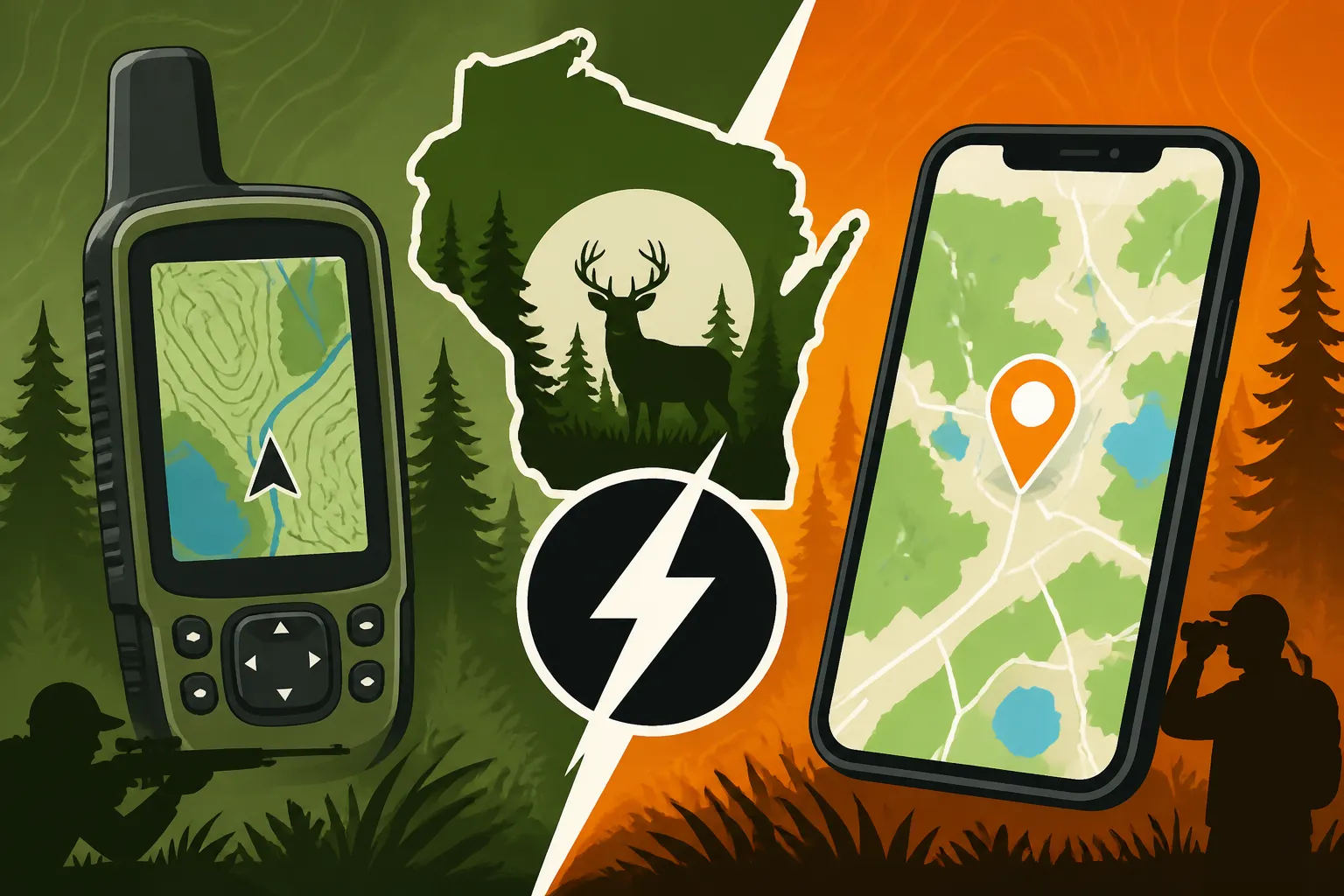
Many of us have stood on the edge of a new piece of public land in Wisconsin, staring at a downloaded map on our phones or fumbling with a bulky GPS unit, wondering which tool will truly keep us on track and out of trouble. The frustration of trying to navigate thick timber or sprawling marshland when the stakes are high—whether it's finding a remote stand site, respecting a property line, or recovering a downed animal—is all too real. This guide dives deep into the debate of dedicated GPS units versus smartphone apps, helping you choose the best navigation companion for your specific Wisconsin hunting adventures.
The Enduring Appeal of Dedicated GPS Units
Even with advanced smartphones in our pockets, many seasoned Wisconsin hunters still swear by their dedicated GPS units. They might seem a bit old-school, a relic from a time before everyone had a supercomputer in their hand, but these devices offer a distinct set of advantages that are hard to beat in certain situations. When you're miles deep in the Chequamegon-Nicolet National Forest, pushing through thick brush and relying on every tool to get you to that remote stand or safely back to the truck, the unwavering reliability of a dedicated GPS unit can feel like an absolute lifeline.
Built for the Backcountry: Ruggedness and Battery Life
One of the most significant arguments for a standalone GPS unit is its inherent toughness. Devices from brands like Garmin or Magellan are purpose-built for the outdoors. They're typically waterproof, shockproof, and designed to handle drops, dust, and extreme temperatures that would send a typical smartphone to an early grave. You can clip them to your pack, toss them in a pocket, or even have them take an accidental dip in a bog without immediately fearing a catastrophic failure. This durability means you worry less about your equipment and more about the hunt itself.
Beyond their physical resilience, dedicated GPS units are engineered for superior battery life. They often run on common AA or AAA batteries, which are incredibly easy to carry spares of and swap out in the field, even with numb fingers on a frigid November morning. Unlike a smartphone that's constantly juggling calls, texts, and background apps, a GPS unit's sole function is navigation, allowing its power source to last significantly longer—often for days, not just hours. This is a crucial consideration when you're planning a multi-day trip into remote wilderness or hunting deep in areas where recharging isn't an option. Imagine being out all day during Wisconsin's Nine-Day Gun Deer Season, tracking a deer in fresh snow, and your phone dies just when you need to pinpoint your location most. A dedicated GPS often keeps chugging along, oblivious to your phone's struggles.
Precision and Performance: Signal Acquisition and Mapping
While phone GPS capabilities have come a long way, dedicated units often boast more robust internal antennas and processors specifically optimized for satellite acquisition. This can mean quicker satellite lock-on, even under heavy canopy in the Hunting the Wisconsin Northern Forest for Deer, and more consistent tracking accuracy, which is vital when every yard counts. In areas with spotty or non-existent cell service, this independent satellite capability is paramount. A dedicated unit doesn't need cell towers to get a fix; it's talking directly to satellites orbiting the Earth, providing location data completely off-grid.
Furthermore, many traditional GPS units come pre-loaded with detailed topographic maps, or allow for easy loading of custom maps and high-resolution aerial imagery. These often include essential features like detailed contour lines, water bodies, and even land ownership boundaries, which are vital for Finding Wisconsin Property Lines and respecting private property, though these advanced map sets sometimes require separate map purchases or subscriptions. The ability to mark waypoints for your stand, rubs, scrapes, or even the precise location of a downed deer, and then confidently navigate back to them with arrow-straight precision, is a core strength. Some advanced models can even integrate with other devices like dog collars, an invaluable asset for those Running Bear Hounds in Northern Wisconsin or guiding bird dogs through grouse cover.
The Rise of Smartphone Hunting Apps
It's no secret that our smartphones have become indispensable tools for just about everything, and hunting is certainly no exception. With powerful processors, high-resolution screens, and constant connectivity, these devices have spawned an entire ecosystem of hunting and outdoor navigation apps that offer an incredible array of features. For many Wisconsin hunters, the idea of carrying an extra piece of gear when their phone already does so much seems redundant, and there's a strong, compelling case to be made for the sheer convenience and powerful capability of a good hunting app.
All-in-One Convenience and Feature-Rich Platforms
The primary draw of smartphone hunting apps is the sheer convenience of having one device handle multiple tasks. Your phone is likely already in your pocket, making it easy to pull out and quickly check your location, mark a waypoint, or review a map. Apps like onX Hunt, BaseMap, and even the Wisconsin DNR's own Using the Wisconsin Hunt Wild App offer a wealth of information at your fingertips. These apps often combine public and private land boundaries, satellite imagery, topographic maps, and even real-time weather forecasts, all within one seamless, intuitive interface.
Many premium apps, like a paid subscription to GoHunt, provide advanced features such as interactive 3D mapping, historical weather data, and detailed habitat overlays that can help you scout effectively from your couch before you ever step foot in the woods. You can easily share waypoints with hunting partners, record your exact tracks, and even integrate with trail camera systems. This integration of features streamlines the entire planning and execution of a hunt. For instance, you could use an app to identify potential Entry Routes on Steep Driftless Ground and then mark those routes for your actual hunt, ensuring you're not guessing in the dark.
Continuous Updates and Community-Driven Content
Unlike dedicated GPS units that might require occasional firmware updates or costly, manual map purchases every few years, smartphone apps benefit from continuous, often automatic, updates. Developers are constantly improving features, adding new data layers, and fixing bugs based on user feedback. This means your navigation tools are always evolving and getting better without you having to buy new hardware or even think about updating. The functionality improves quietly in the background.
Many apps also leverage community-driven content or offer robust user interfaces that make mapping and data input incredibly intuitive. You can often import GPX files, overlay historical harvest data from online sources, or access detailed information about specific wildlife areas. The ability to quickly zoom in on crystal-clear satellite imagery to Reading Aerial Photos for Coulee Deer or identify potential bedding areas near Hunting a Funnel Between Two Swamps is a game-changer for effective scouting. Plus, with cloud synchronization, your marked waypoints and recorded tracks are often backed up and accessible across multiple devices, so if your phone does take a dive into a stream, your critical hunting data isn't necessarily lost forever.
Making Your Choice: Factors for Wisconsin Hunters
Deciding between a dedicated GPS unit and a smartphone app isn't a one-size-fits-all answer. It really boils down to your personal hunting style, the specific terrain you'll be navigating in Wisconsin, and your tolerance for potential tech hiccups. Both tools are undeniably invaluable, but understanding their limitations and strengths in a real-world hunting context is absolutely key to equipping yourself properly for the unpredictable conditions of the woods or marsh.
Connectivity and Remote Areas
Perhaps the most critical factor for Wisconsin hunters to consider is reliable connectivity. If you frequently hunt in vast, remote areas like the Northern Forest or expansive public lands where cell service is non-existent, a dedicated GPS unit's independence from cellular networks is a huge, game-changing advantage. You won't be left guessing your location because your phone can't ping a tower. For instance, when you're deep in the woods during a challenging Wisconsin Waterfowl Hunting on Marsh and River trip, precise, uninterrupted navigation isn't just a convenience; it's a fundamental safety measure.
However, many modern hunting apps like GoHunt allow for comprehensive offline map downloads. This means you can cache detailed maps for your entire hunting area when you do have service, making them fully accessible even when you're completely offline. While this significantly mitigates the connectivity issue for mapping, it doesn't entirely solve the potential for a dead battery or other phone-related failures. It's a fantastic feature for Scouting Wisconsin Public Land Before Season from the comfort of your home, then seamlessly taking those meticulously prepared maps directly into the field.
Durability and Power Management
Consider the ruggedness and demands of your hunt. If you're someone who often finds themselves scrambling through thick brush, crawling through mucky swamps, or hunting in heavy, freezing rain or driving snow, a dedicated GPS unit's robust construction might give you far more peace of mind. A sharp drop onto rocks or an accidental splash that would potentially render a typical smartphone useless might just be a minor, shrugged-off inconvenience for a tough, purpose-built GPS.
Battery life is another colossal differentiator. While external power banks can certainly extend your phone's operational life, they undeniably add another item to carry, another charging cable to potentially lose or break, and another thing to remember to charge. Dedicated GPS units, with their exceptionally long-lasting, easily replaceable batteries, offer unparalleled reliability for extended outings. You need to honestly assess if you're comfortable actively managing your phone's battery, perhaps keeping it in airplane mode for much of the day or constantly tending to a power bank, or if you prefer the simpler, more "set-it-and-forget-it" nature of a dedicated unit's power.
Cost and Learning Curve
The financial aspect can certainly play a role in your decision. While a premium hunting app subscription from a provider like GoHunt might have an annual fee, it's often significantly less than the upfront cost of a high-end dedicated GPS unit. However, you already own the phone, so the barrier to entry for apps is inherently lower; you're just paying for the software.
The learning curve also differs quite a bit. Many smartphone apps are incredibly intuitive, leveraging familiar touch interfaces and gestures that most people use daily. Dedicated GPS units, especially those with more advanced features, can sometimes have a steeper learning curve with their often button-based navigation and proprietary menus. Consider how much time you're willing to invest in mastering your primary navigation tool before heading into critical, time-sensitive hunting situations.
Beyond the Primary Tool: Backup and Best Practices
Regardless of whether you primarily rely on a dedicated GPS unit or a smartphone hunting app, the wise Wisconsin hunter always has a backup plan. Technology, no matter how reliable it seems, can and will fail at the most inopportune moments. Batteries die unexpectedly, screens crack, devices can be lost in the muck, or simply glitch out. Having a secondary navigation method isn't being paranoid; it's simply being prepared, especially when you're miles from the nearest road during Deer Drives on Wisconsin Public Land or pushing hard during Hunting the Wisconsin Rut in November.
The Importance of Redundancy
Think of your navigation setup like your bow or rifle: you'd never go into the woods without backup arrows or extra ammunition, would you? The same critical principle applies to finding your way safely. Many experienced hunters find that the ideal solution is a powerful combination of both a dedicated GPS unit and a robust smartphone app. You might use your phone for detailed, large-screen scouting and quick, convenient checks in the field, leveraging its expansive screen and rich mapping features, while keeping a rugged, fully charged GPS unit tucked away in your pack as a dependable failsafe.
For example, you could use a powerful app with detailed onX Layers for Wisconsin Land Status for all your pre-season scouting and meticulous planning, marking key waypoints like potential stand locations or natural funnels and pinch points. Then, when you're actually in the field, you rely on your dedicated GPS for real-time tracking and precise navigation, knowing it will hold up to the harsh elements and last all day without fail. This hybrid approach essentially gives you the best of both worlds: the advanced features, stunning visual clarity, and ease of use of a sophisticated app, combined with the battle-tested durability and rock-solid reliability of a dedicated unit.
Essential Offline Preparation
Even if you solely use a smartphone app for all your navigation needs, always, always download and save your maps for comprehensive offline use before you ever leave home. This step is absolutely non-negotiable, especially when hunting in the more remote, cell-service-deprived areas of the state. Make absolutely certain your phone's battery is fully charged, and consider carrying a portable power bank or two as extra insurance. Keep your phone in airplane mode to meticulously conserve battery life, and only switch on location services when you actively need to check your precise position. Many prudent hunters also carry a small, highly protective, waterproof case for their phone, regardless of its inherent IP rating, just to be safe.
Beyond electronics, never, ever underestimate the timeless power and fundamental importance of a physical map and compass, and more importantly, the practiced knowledge of how to competently use them. A detailed paper map of your specific hunting area, coupled with a good, reliable compass, is the ultimate, non-electronic failsafe. Knowing how to orient yourself using prominent terrain features, even if just to get a general direction of travel, can literally save you from a lot of grief and potential danger. Practice with these traditional tools in familiar areas before you ever rely on them in a genuine emergency. This fundamental understanding of land navigation will undoubtedly make you a more confident, more self-reliant, and ultimately, a safer hunter, no matter what cutting-edge digital tools you choose to carry.
| Feature | Dedicated GPS Unit | Smartphone Hunting App (e.g., GoHunt, onX) |
|---|---|---|
| Durability | Highly rugged, waterproof, shockproof | Varies by phone; less robust without protective case |
| Battery Life | Excellent, often 20+ hours; replaceable batteries | Varies greatly; typically 4-8 hours of active use; external battery packs needed |
| Connectivity | Satellite-based; no cell service needed | Relies on cell service for live data; offline maps essential for remote areas |
| Map Detail | Excellent topo, aerial (often subscription/purchase) | Excellent topo, aerial, land ownership (subscription-based) |
| GPS Accuracy | Generally high, robust antenna | Very good, but can be impacted by phone hardware/software |
| Cost | Higher upfront cost (typically $100-$600+) | Lower upfront (you own phone); annual subscription (typically $30-$100+) |
| Ease of Use | Can have a learning curve; button interface | Very intuitive; touch screen interface |
| Additional Features | Limited; often focused on core navigation | Weather, 3D maps, habitat, sharing, game cameras |
| Reliability | Very high, purpose-built | High, but vulnerable to phone failures (cracks, water damage, low battery) |
| Wisconsin Relevance | Ideal for remote Northwoods, long treks | Great for detailed scouting, farm country, quick checks |
Ultimately, the best navigation tool for your Wisconsin hunting adventures is the one you know how to use best and that fits your personal hunting style and the specific conditions you'll face. Whether you lean on the robust, unwavering reliability of a dedicated GPS or the versatile power and feature-rich interface of a smartphone app, remember that preparedness, thoughtful planning, and redundancy are your most valuable assets. Test your gear thoroughly, understand its inherent limitations, and always, always have a solid backup plan. Happy hunting, and stay found out there!
Disclaimer
This article is for general informational purposes only and does not constitute professional advice. Laws, prices and regulations vary by location and change over time. Consult a qualified professional for guidance on your specific situation.