Choke Choice for Fast Flushes
There's nothing quite like the heart-stopping flush of a ruffed grouse exploding from a thick aspen stand, or a woodcock twisting and turning through a dense alder run. But let's be honest, those fast-flushing birds can be incredibly frustrating to hit, often leaving us with a missed shot and a bewildered "what just happened?" feeling. This guide is all about helping you understand shotgun chokes and choose the perfect one to increase your chances of connecting with those quick-moving upland birds in the varied cover Wisconsin has to offer.
The Basics of Shotgun Chokes for Upland Hunting
Before we dive into specific game, let's nail down what a shotgun choke actually is and why it's such a critical piece of the puzzle for any upland hunter. It's more than just a metal tube; it's a finely tuned device that dictates your shot pattern, which directly impacts your success in the field.
What is a Shotgun Choke and Why Does it Matter?
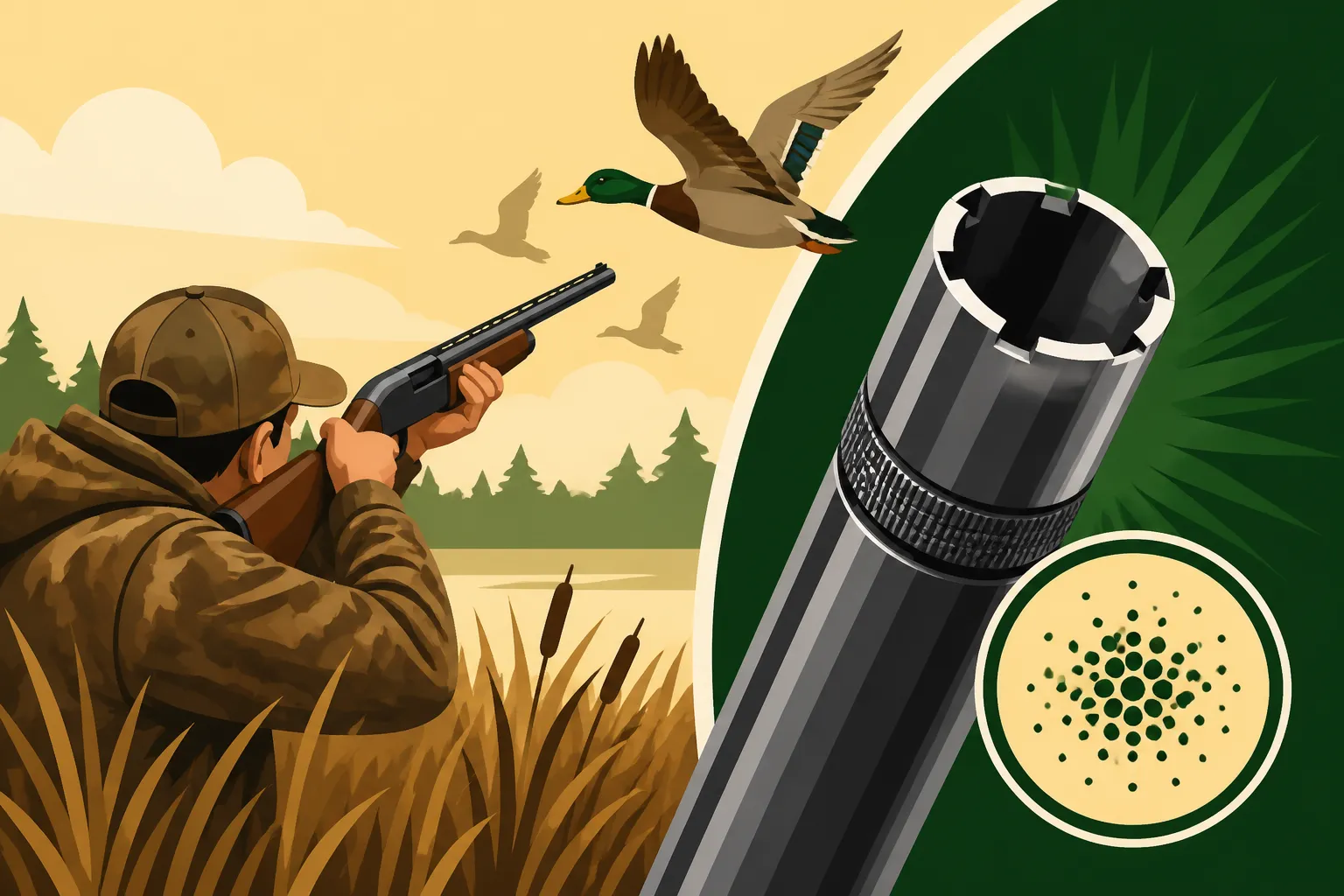
At its simplest, a shotgun choke is a constriction at the muzzle end of your shotgun barrel. Its entire purpose is to control how tightly or openly your shot string spreads after leaving the barrel. Think of it like a nozzle on a garden hose: a wide-open nozzle spreads water broadly, while a constricted one creates a tight stream. In hunting, a tight pattern means more pellets concentrated in a smaller area, ideal for longer shots. A more open pattern spreads pellets wider, increasing your chances of hitting a fast-moving target at closer range. This becomes paramount when you're hunting species that often flush just a few yards in front of you, or conversely, birds that might get up at the edge of shotgun range. The right choke ensures you have enough pellet density to make a clean, ethical kill without peppering the air with a pattern too wide to be effective.
Understanding Common Choke Constrictions
Shotgun chokes come in a range of constrictions, each designed for a different purpose. For upland hunting, especially in Wisconsin's diverse habitats, you'll mostly be focusing on the more open end of the spectrum, but it's good to know the full lineup.
- Cylinder (Cyl): This is basically no constriction at all, giving the widest, most open pattern. It's excellent for very close ranges, often within 15-20 yards.
- Skeet (Sk): A slight constriction, designed for skeet shooting where targets are very close. It provides a wide pattern, often effective out to 20-25 yards, and is a fantastic choice for tight cover and fast-flushing birds.
- Improved Cylinder (IC): A popular all-around choke for upland hunting, offering a good balance between spread and density. It's generally effective out to 30-35 yards and is a go-to for many grouse and woodcock hunters.
- Modified (Mod): This choke provides a tighter pattern than IC, extending your effective range out to 35-40 yards. It's often favored for pheasants in more open fields or for hunting birds that tend to flush a bit further out.
- Full (F): A significant constriction, designed for maximum range and tight patterns, typically for waterfowl, turkeys, or long-range clays. For most fast-flushing upland birds, it's usually too tight and makes hitting close targets exceptionally difficult.
The Trade-off: Pattern Density Versus Target Size
Here's the rub: a tighter choke might put more pellets in a small circle at 40 yards, but it makes that small circle incredibly difficult to put on a bird that flushes at 10 yards and is gone in a blink. Conversely, an open choke gives you a much bigger "kill zone" at those close ranges, but the pellet density quickly falls off as the distance increases, leading to wounded birds or clean misses. The key is finding that sweet spot for the typical range and size of the game you're pursuing in the habitat you're hunting. For a tiny woodcock or a darting grouse in thick cover, a wide-spreading pattern is your friend, giving you the best chance to connect without having to be surgically precise. For a pheasant that might give you a slightly longer shot over a field, you can afford a bit more constriction for better reach.
Matching Chokes to Wisconsin's Fast-Flushing Game
Wisconsin's diverse landscapes offer incredible opportunities for upland hunting, but each species and habitat presents its own unique challenges. Choosing the right choke is about understanding these challenges and preparing for the most common shot scenarios.
Ruffed Grouse and Woodcock: Masters of Close Cover
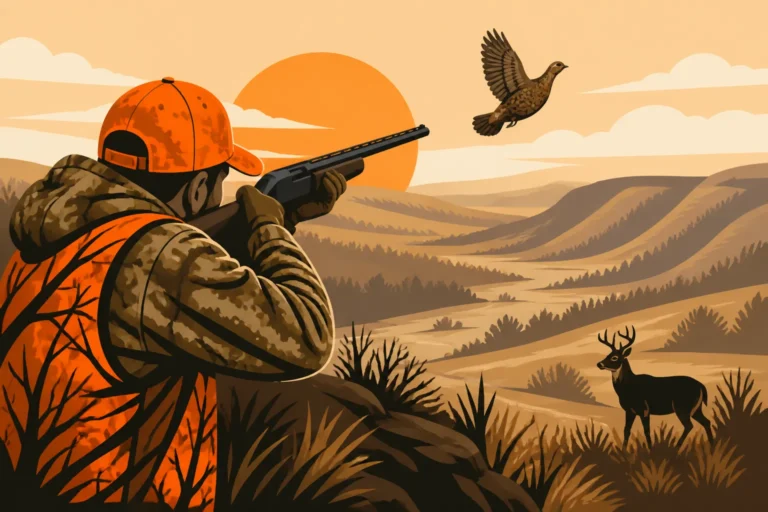
If you've spent any time chasing ruffed grouse in Wisconsin's aspen thickets or searching for woodcock in the soggy alder runs, you know they are the undisputed champions of the fast flush. These birds often hold tight, exploding from cover literally at your feet, giving you mere seconds for a shot. For this reason, open chokes are almost always the preferred choice. An Improved Cylinder (IC) or even a Skeet (Sk) choke is your best bet. These provide a wider pattern that is much more forgiving at the typical 10-25 yard ranges where most grouse and woodcock shots occur. Trying to shoot these birds with a Modified or Full choke is like trying to hit a fly with a needle – you'll likely miss entirely, or worse, wound the bird with the sparse edge of your pattern. The dense cover itself, whether it's the regenerating timber of an aspen cut or the tangled branches of an alder bog, also contributes to the need for a quick-spreading pattern, as your shot window is often small and obstructed. If you're hunting in particularly dense areas, using a resource like the GoHunt app to identify cover density can help you decide if an even more open choke, like Skeet, might be beneficial for that day's specific terrain. Grouse Hunting Wisconsin Aspen Cover and Woodcock Hunting Wisconsin Alder Runs are excellent resources to dive deeper into these specific hunting methods.
Pheasants and Other Field Birds: A Bit More Breathing Room
While pheasants can certainly surprise you with a close flush from underfoot, they are often found in more open environments like cornfields, CRP (Conservation Reserve Program) fields, and grassy waterways. This means they might flush a bit further out than a grouse or woodcock, and often provide a slightly clearer shot. For pheasants, a Modified (Mod) choke or a Light Modified (LM) is a very popular choice. These chokes offer a denser pattern than an IC, giving you more pellet energy and a tighter group for those 30-40 yard shots that are common in pheasant country. If you're hunting with a good pointing dog, the dog's ability to hold a bird might allow for a more controlled flush and potentially a longer shot, further favoring a tighter choke. However, if you're push-hunting thick cattails or heavy cover, where birds might get up closer, an Improved Cylinder can still be a wise choice. It really depends on the specific cover and how the birds are behaving. If you're unsure, starting with an IC in the first barrel (if you have an over/under or side-by-side) and a Modified in the second is a classic and versatile setup for Pheasants and Wisconsin Farmland.
Rabbits and Squirrels: Close-Range Scramblers
Don't forget about Wisconsin's abundant small game! Rabbits busting out of brush piles or snowshoe hares bolting through cedar swamps, and squirrels scrambling up oaks after you kick them out of a den tree, are all incredibly fun to hunt and present unique choke challenges. Like grouse and woodcock, these are almost exclusively close-range encounters. For rabbits and squirrels, you'll want to lean heavily towards the most open chokes: Cylinder, Skeet, or Improved Cylinder. A wide pattern is crucial for hitting these quick, erratic targets in dense cover. Whether you're still-hunting an oak ridge for squirrels or running beagles on a rabbit drive, the shots are almost always under 25 yards. Using anything tighter than an IC will often result in frustration and missed opportunities. The goal is to maximize your chances of hitting these small, fast-moving targets with enough pellets to bring them down cleanly. For more on these pursuits, check out Rabbit Hunting Thick Wisconsin Brush or Squirrel Hunting Wisconsin Hardwoods.
Practical Considerations for Your Upland Shotgun
Choosing a choke isn't just about the bird; it's also about your shotgun, your ammunition, and your personal hunting style. Let's delve into some practical aspects that will help you make the most informed decision for your next trip afield.
Fixed Chokes Versus Interchangeable Chokes
The world of shotguns generally offers two main choke types: fixed and interchangeable. Many older shotguns, especially classic doubles, have fixed chokes, meaning the choke constriction is permanently part of the barrel. You might have a gun with, say, Improved Cylinder and Modified barrels, and you're stuck with that combination. This isn't necessarily a bad thing; many hunters swear by their fixed-choke guns, learning to adapt their hunting style to the gun's capabilities. However, modern shotguns, particularly pumps and semi-automatics, almost universally feature interchangeable choke tubes. This flexibility is a game-changer for upland hunters. You can easily swap out chokes in the field (though most prefer to do it before the hunt) to match the conditions or the species you're pursuing. Heading out for woodcock in the morning? Pop in a Skeet choke. Later in the day, transitioning to a pheasant field? A quick change to a Modified choke is all it takes. This adaptability means your single shotgun can be optimized for a wider range of scenarios. When planning your hunt, an app like GoHunt can be invaluable; it allows you to scout potential cover types from home, helping you decide which choke to screw in before you even leave.
Patterning Your Shotgun: The Essential Step
I cannot stress this enough: you must pattern your shotgun with your chosen choke and ammunition. Simply screwing in an Improved Cylinder choke doesn't guarantee a perfect pattern with every brand or shot size. Different ammunition manufacturers use different wads, shot, and powders, all of which can affect how your pattern looks downrange. To pattern your gun, grab some large sheets of paper (at least 3×3 feet), a sturdy stand, and a measuring tape.
- Set up: Place your target at the typical range you expect to shoot your target species (e.g., 20-25 yards for grouse, 30-35 yards for pheasants).
- Shoot: Aim precisely at the center of the target and fire.
- Analyze: Examine the pattern. You're looking for a relatively even distribution of pellets across the target, with enough pellets within a vital area (think about the size of the bird's body) to ensure a clean kill. Avoid large gaps in the pattern, known as "holes," where a bird could potentially slip through unharmed.
- Experiment: Try different chokes and different brands/loads of ammunition. What works perfectly in your buddy's 12 gauge with IC might be too tight or too open in your 20 gauge with the same choke. This is also where you can see how different shot sizes, like #7.5 or #6 for grouse, behave. Knowing your pattern intimately, courtesy of patterning, will boost your confidence immensely in the field. When reviewing maps on GoHunt to determine likely shot distances, you'll already know how your gun performs at those exact ranges.
Adapting to Conditions and Hunting Style
Your choke choice isn't just a one-and-done decision for the season. It's something you might adapt based on daily conditions or even your evolving hunting style. Are you still-hunting through incredibly dense cedar swamps, where visibility is minimal and shots are always up close? An open choke like Skeet or Cylinder might be ideal. Are you hunting the edge of a standing cornfield with a strong wind, knowing pheasants might flush higher and further out? A Modified choke might be more appropriate. Your hunting companions can also influence your choice; if you're participating in a Deer Drives With Three or Four Hunters style push for pheasants, birds might be flushing at various distances, making an all-around IC or Light Modified a safe bet. Ultimately, it comes down to personal preference and what gives you the most confidence. Some hunters prefer to stick with a single choke and adapt their shooting, while others love the flexibility of interchangeable chokes. Practice, experience, and an honest assessment of your typical shooting scenarios will be your best guides.
Here's a quick reference for common upland game and recommended choke choices:
| Game Species | Typical Flush Range (Yards) | Recommended Choke(s) | Key Considerations |
|---|---|---|---|
| Ruffed Grouse & Woodcock | 10-25 | Skeet, Improved Cylinder | Very fast, close, dense cover, small target. |
| Pheasant | 20-40 | Improved Cylinder, Modified, Light Mod | Variable range, can be in open or thick cover. |
| Rabbit & Snowshoe Hare | 5-20 | Cylinder, Skeet, Improved Cylinder | Extremely fast, close-quarters, often in heavy brush. |
| Squirrel (tree/bush) | 15-30 | Improved Cylinder, Modified | Quick, climbing, often shot in timber. |
Ultimately, becoming proficient with your shotgun and understanding its capabilities, combined with a thoughtful choke selection, will significantly improve your success rate on Wisconsin's fast-flushing upland game. It’s all about putting in the time to scout, practice, and then fine-tune your gear to the conditions.
Disclaimer
This article is for general informational purposes only and does not constitute professional advice. Laws, prices and regulations vary by location and change over time. Consult a qualified professional for guidance on your specific situation.