Do You Need Written Permission in Wisconsin?
It's a common question that pops up around hunting camps and online forums all over Wisconsin: "Do I really need written permission to hunt private land, or is a verbal okay?" The truth is, navigating private land access in our state can feel like a tangled thicket of unspoken rules and legal nuances, especially when you're just trying to enjoy a quiet morning in the woods. This guide aims to clear up the confusion surrounding written permission, ensuring you can hunt confidently and lawfully while respecting the rights of landowners.
Understanding Wisconsin's Private Land Access Laws
Wisconsin's hunting traditions are deeply rooted, and much of our landscape is privately owned. Understanding the legal framework around accessing that land is absolutely crucial, not just for staying out of trouble, but for fostering positive relationships between hunters and landowners. It’s not always as simple as a yes or no, and there are critical differences to be aware of.
The General Rule: Implied Consent vs. Posted Land
Here in Wisconsin, we have a somewhat unique approach to private land access compared to some other states. Historically, there's often been an "implied consent" idea for unposted lands, meaning that if land isn't specifically posted against trespassing, the assumption might be that it's okay to enter for recreational purposes, unless the owner has directly told you otherwise. However, this is a dangerous assumption to make for hunting, and it's certainly not a legal right to hunt without permission. This implied consent concept primarily applies to non-consumptive activities like walking or hiking, and even then, it's best to always ask. For hunting, fishing, or trapping, the expectation should always be to seek permission first.
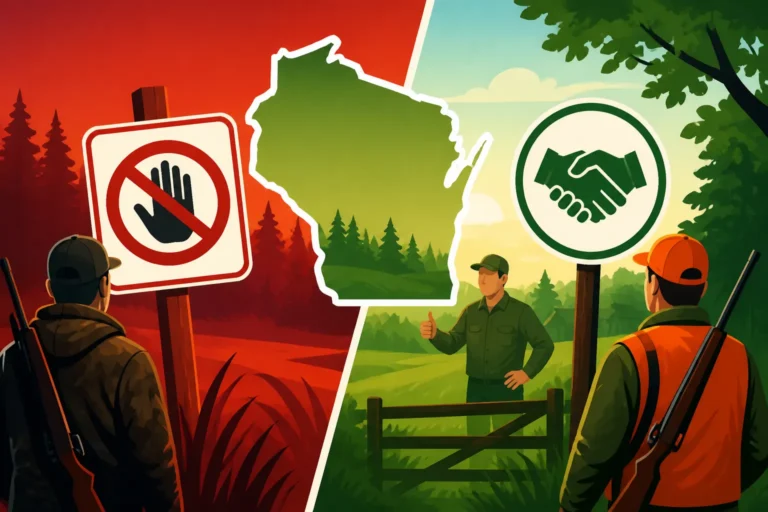
The clearer legal standard revolves around "posted land." If a landowner doesn't want people on their property, they typically post it with signs. In Wisconsin, these signs need to be placed at intervals of not more than 500 feet, where the property adjoins other land, and at all normal entry points. They should clearly state that entry is forbidden or that permission is required. This isn't just a suggestion; these signs carry legal weight. Hunting on land that is clearly posted "No Trespassing" or "No Hunting" without explicit permission is a direct violation of trespass laws, and ignorance of the signs is generally not a valid defense. It’s always your responsibility as a hunter to know where you are and whose land you’re on.
What often complicates this is the sheer variety of land types and how people perceive them. Is it an active farm field, a woodlot behind someone's house, or a sprawling acreage in the northwoods? While the posting laws apply universally, the perceived 'friendliness' of landowners can vary. You might find a farmer who doesn't mind you still-hunting a woodlot if it's not posted, but that's a rare and risky assumption. It's far better to operate under the assumption that all private land requires permission to hunt, regardless of posting.
When Written Permission Becomes Essential
While a verbal "yes" from a landowner is absolutely wonderful and the foundation of countless hunting memories, there are specific situations where having that permission in writing isn't just a good idea, it's either legally required or incredibly beneficial for both parties. Understanding these scenarios can save you a lot of headaches and potential legal trouble down the road.
One of the most common instances where written permission becomes vital is when dealing with land enrolled in specific programs like the Managed Forest Law (MFL) or Forest Crop Law (FCL). Many hunters seek out these lands because, depending on how the landowner enrolled them, they can be "open" to public access for hunting and other recreational activities. However, even on these "open" MFL/FCL lands, the rules can get a little fuzzy. While you might have general access for walking and hunting, specific activities might still require direct landowner approval. For example, leaving a treestand or ground blind overnight, placing bait, or even driving off a designated trail might be prohibited unless specifically granted by the landowner in writing. It's always best to check the specific MFL or FCL order for that parcel and, if in doubt, get written clarification from the owner. You can often find MFL and FCL parcel information using tools like the onX Hunt app or by checking with the DNR's public access maps. Finding Open MFL Parcels in Wisconsin can give you more details on locating these areas.
Beyond MFL/FCL, written permission becomes a safeguard against misunderstandings. Imagine you got verbal permission from a landowner in September, but come deer season, their spouse, another family member, or even a new tenant disputes your right to be there. A simple handshake agreement, while often honored, can be hard to prove. A written permission slip, even a basic one, avoids these awkward and potentially confrontational situations. It outlines the specific agreement: who can hunt, for what species, during what dates, and any other agreed-upon conditions (e.g., parking location, access routes, areas off-limits). This is particularly important if you're traveling a distance to hunt or if there's any ambiguity about the property boundaries or specific rules. It shows you're serious about being a responsible hunter and respects the landowner's concerns.
Furthermore, if you ever plan to do something more involved than just walk and hunt – like put up a permanent food plot, hang multiple trail cameras, or drive a vehicle onto a remote part of their property – written permission is almost certainly a necessity. Landowners have liability concerns, and a written agreement can sometimes help clarify expectations around responsibility. It's about clear communication and mutual respect, turning a potential point of contention into a solid foundation for a positive hunting relationship.
Navigating Private Land Permission Ethically and Practically
Building and maintaining positive relationships with landowners is one of the most rewarding aspects of hunting in Wisconsin. It's not just about securing a place to hunt; it's about being a good steward of the land and a respectful member of the community. Approaching permission ethically and practically will open more doors than any legal loophole ever could.
The Courtesy Factor: Why Asking Always Matters
Even in situations where the law might imply consent on unposted land (which, again, we strongly advise against assuming for hunting), the simple act of asking for permission demonstrates respect and builds goodwill. Think about it from the landowner's perspective: they own the land, pay taxes on it, and likely have strong feelings about who is on it and what they're doing there. A hunter who just shows up, even unknowingly on unposted land, can feel intrusive and disrespectful. A hunter who takes the time to knock on the door, introduce themselves, and politely ask for access immediately establishes a different kind of relationship.
This courtesy isn't just about avoiding a confrontation; it can actually enhance your hunting experience. Landowners often have a wealth of knowledge about their property. They know where the deer typically cross, where the turkeys roost, or where a particular old buck has been seen. They might even guide you to a specific stand location or a "honey hole" they've observed. Sharing your hunting plans can also alleviate any concerns they might have. For example, letting them know you'll be out of the woods by a certain time or that you won't be hunting near their home can make a huge difference in their comfort level. Asking a Wisconsin Farmer for Permission offers some great tips for these conversations.
Moreover, a positive interaction with one landowner can sometimes lead to introductions to others. Farmers and rural residents often know their neighbors well, and a good recommendation from a trusted person can be invaluable for gaining future access. A handshake agreement, solidified by mutual trust and respect, can be far more valuable than a signed document if both parties are committed to it. However, for peace of mind and clarity, having something in writing is generally superior, even if just a basic outline of what was agreed upon verbally. This reinforces good communication and shows you value their property and their generosity.
Tools and Strategies for Securing Permission
The modern hunter has some incredible tools at their disposal that make finding landowners and reaching out to them much easier than it used to be. Gone are the days of just driving around hoping to spot a mailbox. Leveraging these tools, combined with a respectful approach, can significantly increase your chances of securing private land access.
One of the most revolutionary tools for this is a mapping application like onX Hunt or GoHunt. These apps, often used on a smartphone or tablet, overlay property boundaries and landowner names directly onto satellite imagery and topographical maps. This means you can identify the exact parcel you're interested in, know who owns it, and often find contact information or an address. Before you even leave your couch, you can pinpoint potential hunting grounds and research the owners. This not only makes your initial outreach more efficient but also ensures you're asking the right person. Imagine walking up to a house knowing the owner's name and having a clear idea of their property lines – it immediately shows you've done your homework. onX Layers for Wisconsin Land Status details how these tools can assist you.
Once you've identified the landowner, how do you make contact? The classic method of knocking on doors is still very effective, especially if you're local or hunting close to home. Timing is key – avoid meal times or late evenings. Be polite, dress neatly (not in full camo unless you're already hunting!), and be ready to explain who you are, what you're asking for, and your commitment to ethical hunting. If direct contact isn't feasible, a polite letter or phone call can also work. In your outreach, be specific about what you're asking for: "I'm interested in bowhunting for deer on your northern woodlot this fall, if you allow hunting." State your intentions clearly, mention your commitment to safety and respect for their property, and offer to provide references if needed.
When you do secure permission, whether verbal or written, it’s beneficial to have a simple, written agreement that can be adapted. This doesn't need to be a complex legal document, but rather a clear understanding on paper. It should include:
- Landowner's Name and Contact Information
- Hunter's Name and Contact Information
- Description of the Property: Address or legal description
- Species Allowed to Hunt: Deer, turkey, small game, etc.
- Dates Permission is Valid: Specific season, entire year, etc.
- Specific Rules or Restrictions: Parking areas, areas off-limits, use of ATVs, treestand placement, baiting rules, etc.
- Signatures of Both Parties and Date
This kind of document can prevent future misunderstandings and ensures everyone is on the same page. It’s a great way to manage expectations and ensure both hunter and landowner feel secure in the arrangement.
Avoiding Trespass and Protecting Your Hunting Future
Trespassing, whether intentional or accidental, can have serious consequences for a hunter. Beyond the legal penalties, it damages the reputation of all hunters and makes it harder for everyone to gain future access to private land. Understanding boundaries and practicing responsible behavior are paramount.
Recognizing and Respecting Property Boundaries
One of the most common ways hunters inadvertently trespass is by simply not knowing exactly where property lines lie. This is especially true in areas with mixed public and private parcels, or in large tracts of timber where fences or obvious markers are few and far between. It’s a completely avoidable mistake with modern tools, and it’s your responsibility to know.
Mapping applications like onX Hunt are invaluable for this. Using GPS, your phone or tablet can show your exact location relative to property lines in real time. Before you even set foot on private land, use these apps to study the boundaries, identify potential access points, and note any tricky corners or confusing sections. When you’re in the field, regularly check your position. If you’re hunting near a boundary, be extra vigilant. Don't rely solely on flagging tape left by others or old fence lines, as these can be misleading or outdated. Always double-check.
What happens if you shoot a deer and it crosses onto private land where you don't have permission? This is a tricky and stressful situation. Legally, you generally cannot retrieve game from private land without the landowner's permission. The ethical thing to do is to immediately attempt to contact the landowner to explain the situation and ask for permission to track and retrieve your animal. If you can't reach them, or they deny permission, you might be out of luck, and attempting to retrieve it anyway would be trespassing. This scenario underscores the importance of having permission in surrounding parcels if possible, or at least knowing who owns them beforehand. Retrieving Game From Private Land explores this further. Always remember, the privilege of hunting relies heavily on respect for property rights.
Best Practices for Hunters on Private Land
Once you've secured permission to hunt on private land, your actions become a reflection not just on you, but on all hunters. Adhering to best practices is vital for maintaining that permission and ensuring others might have similar opportunities in the future. Treat the land as if it were your own, and then some.
Always leave the property in better condition than you found it. This means picking up any trash, including your own spent shell casings, snack wrappers, and water bottles. If you open a gate to access a field or woodlot, close it behind you. If it was closed, leave it closed. If it was open, leave it open. Don't drive across fields when it's wet and muddy, creating ruts, unless specifically told it's okay. Avoid damaging crops, fences, or other infrastructure. These might seem like small things, but they add up in a landowner's mind and directly influence their willingness to grant permission again.
Beyond general courtesy, strictly adhere to any specific requests or rules the landowner set forth. If they said no ATVs, then walk. If they asked you to park in a specific spot, don't deviate. If certain areas near their home or livestock are off-limits, respect those boundaries completely. Over time, demonstrating this level of responsibility can even lead to increased trust and greater access. I've known hunters who started with access to a small woodlot and, after years of respectful behavior, gained permission to hunt entire farms because they proved themselves trustworthy. This table summarizes some key considerations:
| Feature | Verbal Permission | Written Permission |
|---|---|---|
| Legal Standing | Often sufficient, but difficult to prove if disputed | Clear legal documentation, easily proven |
| Clarity | Relies on memory, prone to misunderstanding | Explicitly states terms, dates, and restrictions |
| Landowner Liability | Less formal, potential for unclear boundaries | Can specify liability waivers/agreements |
| Hunter's Confidence | Good, but can be anxious near property lines | High, clear understanding of access rights |
| Building Trust | Excellent starting point for relationships | Reinforces professionalism and mutual respect |
| Flexibility | Easier to change on the fly, informal | More formal, changes might require new document |
| Best For | Casual, short-term, or trusted long-term relationships | MFL/FCL lands, new landowners, specific activities, long-term arrangements |
Ultimately, protecting your hunting future in Wisconsin's private land landscape means being an exemplary hunter. It means going above and beyond what's legally required to be respectful, responsible, and ethical. Good relationships with landowners are the golden tickets to consistent hunting opportunities, and they are built on a foundation of trust that starts with asking permission, ideally in writing where appropriate, and always upholding your end of the bargain.
Disclaimer
This article is for general informational purposes only and does not constitute professional advice. Laws, prices and regulations vary by location and change over time. Consult a qualified professional for guidance on your specific situation.