Hunting the Kickapoo Valley Reserve
Hunting the steep, winding coulees and timbered ridges of Wisconsin's Driftless Area can be a truly rewarding challenge, but knowing where to start on public land can feel like finding a needle in a haystack. Many hunters look at a map and see a sea of green, but understanding the nuances of specific areas is key to success. This guide is designed to cut through the confusion and give you a detailed look at how to effectively hunt the Kickapoo Valley Reserve, one of the region's hidden gems, making your next hunting trip both productive and enjoyable.
Understanding the Unique Landscape of the Kickapoo Valley Reserve
The Kickapoo Valley Reserve (KVR) isn't just another patch of public land; it's a testament to the rugged beauty and ecological diversity of Wisconsin's Driftless Area. This 8,600-acre parcel, nestled primarily in Vernon and Monroe counties, offers a unique hunting experience that differs significantly from hunting flatter agricultural lands or expansive northern forests. The dramatic topography, shaped by millennia of erosion rather than glaciers, presents both incredible opportunities and distinct challenges for the observant hunter.
The Driftless Topography and Its Impact on Wildlife
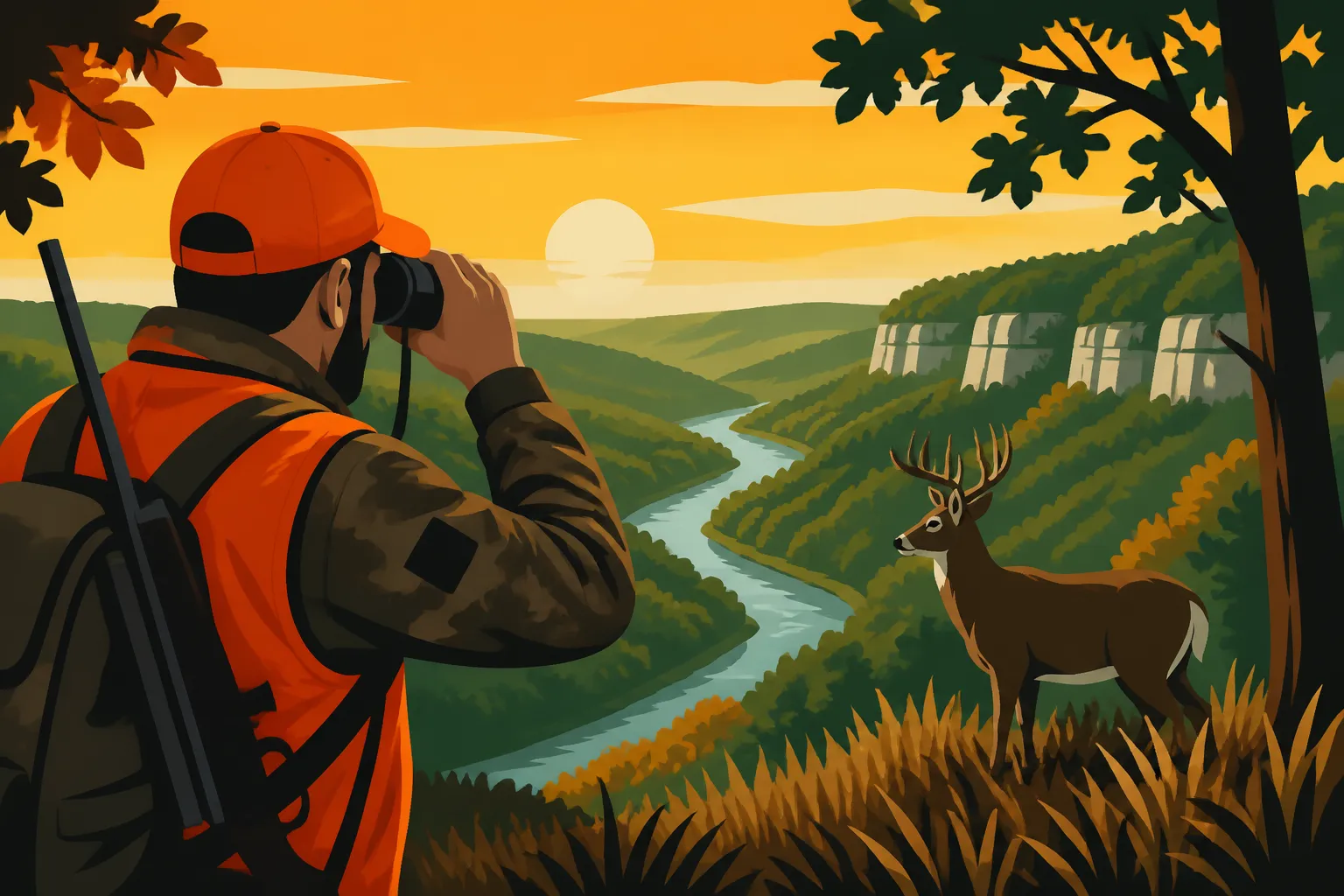
When you step foot into the Kickapoo Valley Reserve, you're immediately struck by the dramatic landscape. Picture deep, winding coulees—local speak for valleys—that cut through towering bluffs, often with small, spring-fed streams at their bottoms. The ridge tops are often narrower than in other parts of the state, creating natural travel corridors and pinch points. This "up-and-down" terrain is what defines the Driftless Area, and deer, turkeys, and other wildlife have adapted their movements and bedding habits to it. Deer, for example, often bed on benches along the sides of these steep ridges, using the elevation to their advantage for spotting danger and catching thermal drafts.
The dense timber, primarily hardwoods like oak, maple, and hickory, mixed with areas of conifer, especially cedar thickets in protected draws, provides excellent cover. This cover, combined with the broken terrain, makes it easy for game to disappear quickly, but it also means that patient hunters who learn to read the landscape can find unpressured animals. Understanding how these elevation changes influence deer movement is paramount. Deer will often travel along the contours of the hills, using the less strenuous path, or drop into the coulees to move unseen between food sources and bedding areas. It's a landscape that rewards physical fitness and keen observation.
Key Game Species: Deer, Turkey, and Small Game Opportunities
The Kickapoo Valley Reserve is primarily renowned for its excellent whitetail deer and wild turkey hunting. The rich hardwood forests provide abundant mast crops, particularly acorns, which are a primary food source for deer in the fall. The broken terrain and dense cover also allow deer to grow to maturity, making it a viable spot for those seeking a mature buck. Hunters often find good sign along the edges of agricultural fields that border the reserve, or deep within the timber where deer seek refuge. The challenges of the terrain mean that many hunters stick to more accessible areas, leaving deeper pockets relatively untouched.
For turkey hunters, the KVR is a paradise. The mature oaks and hickories provide excellent roosting habitat, and the open understory in some areas allows for good visibility for spotting birds. Spring turkey hunting here can be incredibly exciting, as gobblers echo across the valleys. Fall turkey hunting, which is a different beast entirely, also sees good success for hunters willing to break up flocks and call birds back in. Beyond the big two, the reserve also offers opportunities for small game suchers as squirrels and rabbits, especially along the edges of timber and in brushy draws. Waterfowl hunting is limited, mostly to the Kickapoo River itself, but the focus here truly shines on deer and turkey.
Habitat Diversity and Its Role in Hunting Success
The mosaic of habitats within the KVR is a major draw. You'll find mature timber stands on the ridge tops and slopes, offering excellent bowhunting opportunities when leaves are down. The bottomlands along the Kickapoo River and its tributaries feature riparian zones, some wetlands, and occasional small, open fields managed for wildlife. These varied habitats mean that deer and turkeys have everything they need within a relatively small area: food, water, and cover.
Look for areas where different habitat types converge – for instance, where a cedar thicket meets an oak ridge, or where a steep hardwood slope levels off into a bench. These transition zones are often hotspots for game movement. The presence of spring-fed creeks and seeps in the coulee bottoms also provides vital water sources, especially during dry periods, further concentrating game. Understanding this habitat diversity and how game utilizes each component throughout the day and the season is fundamental to crafting a successful hunting strategy in the KVR.
Navigating the Reserve: Access, Rules, and Essential Tools
Hunting the Kickapoo Valley Reserve requires a bit more planning than simply showing up. Its unique status and rugged terrain mean you need to be prepared for both the physical demands and the specific rules that govern this exceptional public land. Knowing how to access the property and understanding the regulations are crucial for a safe and legal hunt.
Public Access Points and Parking Considerations
The Kickapoo Valley Reserve offers various public access points, many of which are designated parking areas or pull-offs along the roads that traverse or border the property. The primary road running through the heart of the reserve is often the most straightforward way to access different sections. However, these more obvious access points can also be magnets for other hunters, especially on opening day or during peak rut. To find less pressured areas, you'll often need to look for smaller, less obvious turn-offs or park along a road and walk in further.
It's absolutely essential to respect private property boundaries when accessing the KVR. The reserve is interspersed with private parcels, and what looks like an obvious path might lead onto posted land. Always double-check your location, especially when parking. Be mindful of not blocking gates or driveways, even if they appear unused. The rural nature of the area means that good relationships with locals are built on respect. Parking can sometimes be limited, so having a backup plan or being willing to walk a bit further from your vehicle is always a good idea.
Kickapoo Valley Reserve-Specific Rules and Regulations
While general Wisconsin hunting regulations apply, the Kickapoo Valley Reserve often has its own set of rules that supersede or complement state-wide mandates. For instance, while some counties in Wisconsin might allow baiting, the KVR typically prohibits it. Always check the most current KVR specific regulations published by the managing entities before your hunt. This information is usually available on their official website or by contacting the Reserve office directly. Ignoring these specific rules can lead to fines or the loss of hunting privileges, which nobody wants after putting in the effort to hunt such a special place.
Other common rules to be aware of might include restrictions on ATVs or other motorized vehicles, designated trails, and regulations regarding treestand placement and removal. Some areas might have specific non-hunting zones, particularly near visitor centers or residential properties within the reserve's boundaries. It’s not enough to know the general Wisconsin Hunting Licences and What They Cost or Wisconsin Deer Seasons and Zones; you need to delve into the specific local rules for the KVR.
Essential Maps and Technology for the Driftless Hunter
In a place as geographically complex as the Kickapoo Valley Reserve, good mapping tools are your best friend. Relying solely on a basic paper map won't cut it when you're navigating deep coulees and dense timber. Modern mapping applications, like onX Hunt, are invaluable. They allow you to see property boundaries, topographic lines, and aerial imagery all on your phone or GPS device. This is crucial for staying on public land and identifying key terrain features like benches, saddles, and potential bedding areas.
Using an app like onX Hunt to mark your vehicle, potential stand locations, and fresh sign can save you countless hours and prevent you from getting lost. You can download maps for offline use, which is critical because cell service can be spotty to non-existent in the deeper parts of the reserve. Before you even set foot in the woods, spend time studying the topography. Identify ridge points, natural funnels, and areas that look hard to access. These are often where mature deer seek refuge from hunting pressure. Don't underestimate the power of a detailed topo map to reveal the secrets of this rugged terrain. Reading Aerial Photos for Coulee Deer can give you a significant edge in pre-season scouting.
Proven Hunting Strategies for the Kickapoo Valley Reserve
Hunting the Kickapoo Valley Reserve demands a nuanced approach. The terrain, combined with potential hunting pressure, means that generic tactics often fall short. Success here comes from understanding how deer and turkeys use the landscape and adapting your strategies accordingly.
Deer Hunting Tactics in Coulees, Ridges, and Bottoms
Deer in the KVR are masters of their environment. They use the steep coulees and dense cover to move unseen, and the ridge tops for travel between bedding and feeding areas. One of the most effective strategies for deer here is careful still-hunting or methodical stand placement. Instead of trying to cover vast amounts of ground quickly, focus on moving slowly and deliberately, stopping frequently to glass and listen. Deer will often hold tight on a hillside, letting hunters walk right by them.
When setting up a stand, look for terrain features that naturally funnel deer. Saddles connecting two ridges, benches along a steep hillside, or pinch points where cover narrows between a field and a bedding area are prime locations. Consider thermals, especially in the morning and evening. In the mornings, cold air sinks into the coulees, then rises as the sun warms the slopes. In the evenings, the reverse happens. Positioning yourself accordingly, often midway up a slope where thermals are more stable, can be critical. A great resource to dive deeper into this is Hunting Wisconsin Coulees and Ridge Tops. Don't forget about Wind and Thermals in a Coulee when making your setup choices.
Another tactic that can pay off, especially if the rut is on, is focused rattling and grunting. The steep terrain can carry sound surprisingly well, and during the peak rut, bucks will cruise these ridge systems looking for does. Find an area with good cover and clear shooting lanes, and try a rattling sequence followed by some grunts. Patience is key, as deer might take their time responding, often circling downwind before committing.
Spring and Fall Turkey Hunting Success
The Kickapoo Valley Reserve is a turkey hunter's dream, offering incredible opportunities for both spring and fall seasons. In the spring, locating roosting birds is often the first step. Listen for gobblers on the roost from a high point before dawn, then plan your approach to get as close as possible without spooking them. The steep terrain means birds often roost high on the bluffs. Once they fly down, try to call them to an accessible bench or open area. Be prepared to be mobile; sometimes a gobbler just won't come to you, and a run-and-gun approach, moving and calling, might be necessary. Using an aggressive calling sequence, moving quickly, and setting up on terrain features that force a gobbler to come into your shooting lanes can be highly effective.
Fall turkey hunting in the KVR is a different game. Instead of calling gobblers, the focus shifts to breaking up flocks and calling individuals back in. Locate a flock, ideally scattering them as widely as possible, then set up in the middle of where they dispersed. Wait 20-30 minutes, then begin making lost calls – soft yelps and kee-kees. It’s a patience game, but often, the flock will try to regroup, presenting excellent shot opportunities.
Overcoming Hunting Pressure and Finding Unpressured Pockets
Like any popular public hunting ground, the Kickapoo Valley Reserve can see significant hunting pressure, especially on opening weekends. However, the rugged terrain is your ally in finding unpressured pockets. Most hunters will stick to within a half-mile of established roads and parking areas. To escape the crowds, you need to be willing to hike further and climb steeper.
Look at your mapping app for areas that are difficult to access, perhaps requiring crossing a creek or traversing an exceptionally steep slope. These are the spots where fewer hunters venture, and where mature animals will seek refuge. Don't be afraid to put in the effort to reach these out-of-the-way places. Often, just walking an extra 15-20 minutes beyond where most people stop can put you in a completely different hunting scenario. Studying aerial maps for areas with dense, dark cover that's a long way from any road can also reveal sanctuary areas. Hunting Pressure on Wisconsin Public Land is a real thing, and the KVR is no exception, but smart hunters can mitigate its effects.
Planning Your Kickapoo Valley Reserve Adventure
A successful hunt in the Kickapoo Valley Reserve isn't just about what you do in the field; it's also about thorough preparation. From pre-season scouting to understanding local amenities, every detail contributes to a smoother, more enjoyable, and potentially more successful trip.
Pre-Season Scouting and Trail Camera Strategies
Effective scouting is paramount in the KVR. This isn't flat ground where you can cover miles easily. Pre-season visits allow you to learn the lay of the land, identify key deer trails, rub lines, and scrapes. Look for natural funnels, bedding areas (often on south-facing slopes in thick cover), and potential food sources. Pay attention to water sources in the coulee bottoms. Using a mapping app like GoHunt to mark these observations on your phone will help you build a comprehensive picture of deer movement.
Trail cameras can be incredibly useful, but their placement requires thought. With the rugged terrain, setting cameras on primary travel corridors or over scrapes along logging roads can yield valuable intel. Be mindful of public land rules regarding trail camera placement and retrieval. Some hunters place cameras on benches where deer pause, or near perennial water sources. The more intel you gather before the season, the better your chances are of being in the right place at the right time. Scouting Wisconsin Public Land Before Season is always recommended, and even more so in challenging terrain like the KVR.
Local Amenities, Lodging, and Emergency Preparedness
The Kickapoo Valley Reserve is situated in a rural part of Wisconsin, so don't expect a bustling metropolis. Nearby towns like La Farge, Ontario, and Viola offer basic amenities, including gas stations, small grocery stores, and sometimes a local diner or two. If you're looking for more extensive services or lodging options, larger towns like Viroqua or Reedsburg are a bit further out. Camping options might be available within or near the reserve, but always check regulations beforehand.
Given the remoteness and ruggedness, emergency preparedness is non-negotiable. Cell service can be spotty, so have a plan for communication. Carry a first-aid kit, extra layers of clothing, plenty of water, and high-energy snacks. Inform someone of your hunting plans and expected return time. The steep terrain means that a simple fall can lead to a serious injury, and help might be a long time coming. Being self-sufficient is key.
Recovering Game and Meat Care in Hilly Terrain
One of the biggest challenges in the KVR can be recovering your game, especially if you harvest an animal deep in a coulee or on a steep bluff. Dragging a mature deer out of these areas can be incredibly demanding work. Consider the use of game carts for easier terrain, but be prepared for a physically taxing drag if you're in the deep timber or steep slopes. Many hunters who frequent the Driftless Area learn the gutless method of field dressing to quarter an animal and pack it out in stages, saving their back and making the process more manageable. A good frame pack can be a lifesaver in these situations.
Even if you field dress the animal, getting it back to your vehicle can take hours of arduous work. Planning your hunting strategy to be within a reasonable distance of a suitable extraction point can make a huge difference. Think about entry routes that might allow for a downhill drag to a vehicle, rather than an uphill climb. Recovering a Deer From a Coulee Bottom is no easy feat and planning for it beforehand is crucial. Additionally, if hunting in early archery season, be mindful of warm temperatures and take immediate steps for proper meat care to prevent spoilage.
| Feature | Description | Hunter Impact |
|---|---|---|
| Topography | Steep coulees, narrow ridges, bluffs, river bottoms | Creates natural funnels, challenging drags, thermal influence. Rewards fitness. |
| Habitat | Mixed hardwoods (oak, maple), cedar thickets, riparian zones | Excellent cover and food sources for deer/turkey. Diverse game opportunities. |
| Access | Various public access points, roads, limited designated parking | Can be crowded; look for less obvious entry points. Respect private land. |
| Primary Game | White-tailed deer, Wild Turkey, Squirrels, Rabbits | Focus on big game, but small game adds to the experience. |
| Regulations | General Wisconsin rules apply, plus KVR-specific rules (e.g., no baiting) | Always check current KVR regulations before hunting. |
| Technology Need | High – GPS/mapping apps (onX Hunt, GoHunt) for boundaries, topo, offline maps | Essential for navigation, staying legal, and identifying terrain features. |
| Physical Demands | High – Expect significant walking, climbing, and difficult game recovery | Be physically prepared and have a game recovery plan. |
Disclaimer
This article is for general informational purposes only and does not constitute professional advice. Laws, prices and regulations vary by location and change over time. Consult a qualified professional for guidance on your specific situation.