Flambeau River State Forest Access
Stepping into the vast, wild expanse of the Flambeau River State Forest for a hunting trip can feel like a journey back in time, away from the hustle and bustle, but it also presents a unique set of challenges that can overwhelm even seasoned hunters. This guide is designed to cut through the confusion and provide you with actionable insights and detailed information on accessing and successfully hunting the Flambeau, ensuring you're prepared for its rugged beauty and the incredible opportunities it offers.
Understanding Flambeau River State Forest for Hunters
The Flambeau River State Forest, nestled in the north-central part of Wisconsin, isn't your typical state park or county forest. This is a place where the wild still reigns, where the Flambeau River carves its path through ancient forests, and where the sense of solitude is almost palpable. For hunters, it represents a true wilderness experience, offering a stark contrast to the more accessible farmlands or smaller public tracts found elsewhere in the state.
Character of the Forest: Remote and Wild
When you talk about the Flambeau, you're talking about big timber, diverse ecosystems, and miles upon miles of unadulterated northwoods. Unlike some managed forests that might feature a grid of logging roads every half-mile, the Flambeau can feel genuinely remote once you step off the main arteries. You'll encounter dense stands of northern hardwoods like maple, oak, and birch, mixed with significant areas of conifer swamps and pine plantations. The topography, while not as dramatic as the Driftless Area, includes rolling hills, winding river bottoms, and numerous smaller creeks and lakes. It's a land shaped by glacial activity, leaving behind a complex mosaic of habitats. This wildness is precisely what draws many hunters—it's a chance to truly test your skills against nature on a grand scale. Expect to encounter fallen timber, thick undergrowth, and wetland crossings that can make travel challenging but incredibly rewarding.
Why Hunters Choose the Flambeau
Hunters are drawn to the Flambeau for its promise of a more traditional, challenging hunt. This isn't a place for quick sits and easy harvests. It demands effort, patience, and a deep understanding of woodsmanship. The primary draw for many is the white-tailed deer, particularly the chance at a mature buck that has grown old and wary in this unforgiving environment. While deer densities might be lower than in some agricultural areas, the size and quality of bucks can be exceptional. Beyond deer, the forest is a prime destination for ruffed grouse hunters seeking explosive flushes in aspen thickets. Bear hunters, too, find the vast, secluded reaches of the Flambeau appealing, whether they're setting up a bait site or running hounds through the thick cover. Turkey hunting, while not as prevalent as in southern Wisconsin, offers a unique opportunity for those willing to scout hard. Wisconsin's Black Bear Population is robust in this region, making it a prime destination for those lucky enough to draw a tag.
Management and Conservation Efforts
The Flambeau River State Forest is managed by the Wisconsin Department of Natural Resources (DNR) with a multi-use philosophy, balancing timber production, recreation, and wildlife habitat. This means that while some areas are actively logged, creating valuable early successional habitat for deer, grouse, and other species, large tracts are maintained for old-growth characteristics. The timber sales often create a patchwork of different age classes, which is fantastic for wildlife diversity. You'll find areas of young aspen regeneration next to mature hardwoods, offering varied food sources and cover. Understanding these management practices can be a huge asset to hunters, as recent cuts or replanted areas often concentrate game. The DNR actively monitors wildlife populations and habitat health, ensuring the long-term sustainability of hunting opportunities here.
Navigating Access Points and Terrain
Accessing the heart of the Flambeau River State Forest requires some planning and often a willingness to get off the beaten path. While there are main roads, the true wildness begins where the pavement ends.
Main Roads and Entry Points
The Flambeau River State Forest is primarily accessed via State Highway 70, which runs east-west through its northern portion, and various county roads that lead into the interior. County Highway M, running north from Phillips, and County Highway W, heading west from Park Falls, are key entry points that will take you deep into the forest. These roads provide the primary arteries for vehicles, leading to designated parking areas, boat launches, and trailheads. However, don't expect a dense network of well-maintained gravel roads like you might find in some national forests. Many of the interior forest roads are gravel or dirt, and their condition can vary dramatically with weather. After a heavy rain or during spring thaw, some roads may become impassable to two-wheel drive vehicles. It's always a good idea to check local road conditions before venturing too far. Familiarize yourself with the main campgrounds like Connors Lake or Lake of the Pines if you plan on extended stays, as they offer more established access points.
Foot Access and Interior Travel
Once you leave your vehicle, prepare for a workout. The Flambeau's terrain demands sturdy boots, good physical conditioning, and reliable navigation. Expect to encounter dense brush, swampy areas, and often uneven ground. For those looking to escape hunting pressure, this means going deeper than most. A good rule of thumb is that if it looks hard to get to on a map, it probably is, and that's exactly where the mature animals will be. Carrying a compass in addition to your GPS device or smartphone app is highly recommended, as electronics can fail in remote areas. Using Hunt Wild Without Cell Service is a real concern here, so ensure your maps are downloaded offline. This deep country is where a quality mapping application like onX Hunt really shines, showing you property lines, forest roads, and topographic features that are critical for planning your route and finding hidden pockets of cover. Without detailed maps, navigating the forest's interior can quickly become disorienting, especially when following game trails or pushing through dense underbrush.
River Access for Waterfowl and Remote Spots
The Flambeau River itself offers a unique dimension to hunting access, particularly for waterfowl and reaching otherwise inaccessible pockets of big timber. Canoeing or kayaking the river allows hunters to float into areas far from road access, setting up for ducks or accessing remote hunting grounds for deer and bear. The river has several designated canoe landings, making put-in and take-out points relatively straightforward. However, this method requires careful planning. You'll need to coordinate shuttle vehicles or plan multi-day floats. Waterfowl hunters might find success jump-shooting ducks along quieter stretches or setting up decoys in smaller backwater sloughs. Remember that river conditions can change rapidly, and strong currents or logjams can pose hazards. Always prioritize safety and wear a personal flotation device. This type of access can lead you to areas that see very little human disturbance, giving you a distinct advantage.
Key Hunting Opportunities in the Flambeau
The diverse habitat of the Flambeau River State Forest supports a variety of game species, each requiring its own unique approach and understanding of the forest's characteristics.
Deer Hunting in the Big Woods
Deer hunting in the Flambeau is a quintessential Northern Forest experience. This isn't the farmland hunting of southern Wisconsin where deer densities are sky-high. Instead, you're looking for pockets of high-quality browse, travel corridors, and bedding areas in vast tracts of timber. Focus on areas with varied forest age classes—young clearcuts provide food, while dense conifer swamps offer thermal cover, especially as winter approaches. Look for subtle terrain features like ridge points, creek bottoms, and logging road intersections that funnel deer movement. Scouting before the season is absolutely critical; glassing from high points to identify natural clearings or rubs and scrapes along old logging roads can reveal heavily used areas. Bucks in the Flambeau often have large home ranges, making them challenging to pattern. Still-hunting or slow-walking through promising areas, paying close attention to wind direction, can be very effective. Where Northern Forest Bucks Bed often comes down to the thickest, nastiest cover they can find, sometimes miles from the nearest road.
Bear and Grouse Hunting
The Flambeau River State Forest is a premier destination for bear hunters. Its vastness and thick cover provide ideal habitat for black bears. Hunters typically employ one of two main methods: baiting or hunting with hounds. Baiting requires significant time and effort, establishing a consistent food source to draw bears to a specific location. Remember to check Wisconsin Baiting and Feeding Bans as these rules can change. For hound hunters, the expansive forest offers plenty of room to run dogs, although navigating the dense undergrowth and swampy terrain can be grueling for both dogs and handlers. Understanding bear travel patterns, especially around water sources or areas of natural food like acorns and berries, is key.
For grouse hunters, the Flambeau is a dream come true. The mix of aspen stands at various stages of regeneration provides perfect cover and food. Focus your efforts on clearcuts that are 5-15 years old, where young aspen and tag alder create dense tangles. These areas, particularly those with a bit of moisture, will hold birds. Walking logging roads or old skid trails adjacent to these covers can lead to explosive flushes. A good bird dog is an incredible asset here, but even without one, methodical still-hunting through prime cover can yield results. Grouse Hunting Wisconsin Aspen Cover is a classic strategy that works well in the Flambeau. Listen for drumming in the spring to identify active territories, and look for food sources like clover, berries, and buds.
Turkey and Waterfowl Opportunities
While not as renowned for turkey hunting as some southern Wisconsin zones, the Flambeau does hold pockets of wild turkeys. These birds are often more dispersed and wary, requiring diligent scouting and a patient approach. Focus on the edges of agricultural fields if they exist nearby, or areas with mature oak stands that provide roosting sites and acorn crops. Locating roosts and being in position well before dawn is crucial. The terrain can make calling challenging, as sounds don't travel as far in the thick timber.
Waterfowl hunting, primarily for local ducks, can be found along the Flambeau River itself and on the numerous small lakes and flowages within the forest. Wood ducks, mallards, and sometimes teal are common. Jump-shooting smaller creeks and sloughs can be productive, as can setting up a small spread of decoys in a quiet backwater. Always be mindful of other river users, as canoeing and kayaking are popular activities. Understanding duck migration patterns and local conditions is vital for success. Wisconsin Waterfowl Hunting on Marsh and River can give you more insights into the strategies that might apply here, even in a different river system.
Planning Your Hunt: Tools and Regulations
A successful hunt in the Flambeau River State Forest relies heavily on thorough preparation, the right tools, and a solid understanding of local regulations.
Mapping and Navigation Tools
In a forest as vast and wild as the Flambeau, reliable mapping and navigation are non-negotiable. Forget about relying solely on paper maps; while they're great backups, digital tools offer a level of detail and real-time positioning that is indispensable. A robust mapping app like onX Hunt or GoHunt on your smartphone or dedicated GPS unit will be your best friend. These apps provide satellite imagery, topographic maps, and crucially, public land boundaries overlaid with private parcels. This is vital for staying legal and avoiding trespassing, especially when hunting near the forest edges. You can mark waypoints for potential stand sites, rubs, scrapes, or areas of dense cover, and track your movements to avoid getting disoriented. Remember to download offline maps before you lose cell service, which is common deep within the Flambeau. Scouting With the Wisconsin Hunt Wild App is also a good starting point, offering additional DNR-specific information that can complement commercial apps.
Key Mapping Features to Utilize in the Flambeau:
| Feature | Utility for Flambeau Hunters |
|---|---|
| Satellite Imagery | Identifies clearcuts, conifer swamps, water bodies, and terrain features. Ideal for remote scouting. |
| Topographic Maps | Shows elevation changes, ridges, valleys, and creek bottoms that funnel animal movement. |
| Public/Private Land | Crucial for identifying huntable public land and avoiding trespass. Essential for access planning. |
| Waypoint Marking | Saves locations of promising sign, bedding areas, or parking spots for future reference. |
| Tracking Function | Records your path, helping you navigate out of dense cover or find your way back to camp. |
| Offline Maps | Absolutely critical due to limited cell service in much of the forest. Download before heading out. |
Key Regulations and Safety
Hunting in Wisconsin, especially on state forest land, comes with a set of specific rules and safety considerations. Always double-check current DNR regulations for the Flambeau River State Forest, as rules can change annually.
- Blaze Orange/Pink: During specific firearm seasons, fluorescent orange or pink requirements are mandatory. Understand what How Much Blaze Orange Wisconsin Requires and when it's necessary. This isn't just a rule; it's a critical safety measure in high-pressure seasons.
- Treestand Rules: If you're using a treestand, be aware of rules regarding leaving stands overnight or using screw-in steps on public land. Generally, stands must be removed daily unless specific allowances are made. Always use a safety harness.
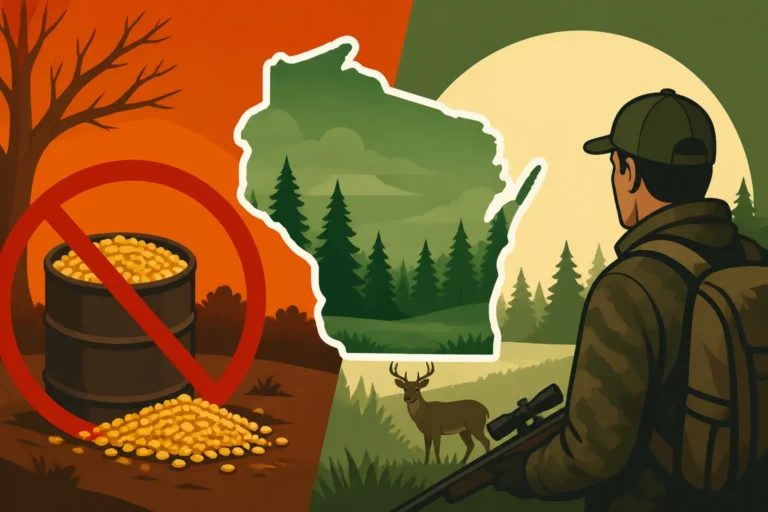
- Baiting and Feeding: As mentioned, be acutely aware of Wisconsin Baiting and Feeding Bans. These bans are often county-specific and can be triggered by CWD detections in adjacent counties, so what was legal last year might not be this year.
- CWD Monitoring: While the Flambeau area is generally considered a lower-risk zone for Chronic Wasting Disease (CWD), stay informed about any new developments or testing requirements in surrounding counties. Know Wisconsin CWD Testing for Hunters and where to find testing kiosks.
- Ethical Hunting: Beyond the legal rules, practice ethical hunting. Know your target, ensure a clean shot, and properly field dress and recover your animal. The deep woods mean a long drag, so be prepared for efficient meat care.
Camping and Logistics
For many, hunting the Flambeau involves camping. The forest offers several developed campgrounds, but also allows for primitive camping in designated areas, often along smaller forest roads. Camping on Wisconsin Public Land can provide general guidance, but always check specific rules for the Flambeau. Primitive camping usually means packing everything in and out, including your trash. Be prepared for self-sufficiency.
Logistically, consider the sheer size of the area. A long drag for a deer can turn into an all-day affair. Think about how you'll get a harvested animal out—deer carts can be helpful on old logging roads, but in thick timber, you might be boning out the animal and packing it out in pieces. Dress in layers, as weather can change quickly in northern Wisconsin, especially in the fall. Proper hydration and nutrition are vital for covering miles of rugged terrain. Tell someone your plans and expected return time, especially if you're venturing deep into remote areas where cell service is non-existent. The Flambeau offers an unparalleled hunting experience, but it demands respect and thorough preparation.
Disclaimer
This article is for general informational purposes only and does not constitute professional advice. Laws, prices and regulations vary by location and change over time. Consult a qualified professional for guidance on your specific situation.