Finding Access Near Wisconsin Cities
It’s a common frustration for many Wisconsin hunters: you live in or near one of our great cities, maybe Madison, Milwaukee, or Green Bay, and it feels like all the good hunting spots are hours away, deep in the Northwoods or out in the far reaches of the Driftless. You might only have a few hours after work or on a Saturday morning, and the thought of driving for ages just to get to a public land parking lot can be disheartening. This guide is here to tell you that quality hunting opportunities do exist closer to home, and we’ll walk through how to find and access them, often within a reasonable drive from Wisconsin’s urban centers.
The Challenge of Urban-Adjacent Hunting
Let’s be honest, hunting near a city isn't the same as slipping into a vast wilderness area. There's a unique set of challenges that can make it feel like an uphill battle, from crowded access points to seemingly endless "No Trespassing" signs. It’s easy to get discouraged when you picture pristine timber or secluded marshes and instead find yourself staring at subdivisions or bustling farm roads.
The Myth of Empty Woods
One of the biggest misconceptions is that if you're close to a city, all the woods are either developed or overrun with other hunters. While it's true that population density often correlates with increased hunting pressure, it doesn't mean every acre is "ruined" or "empty" of game. Deer, turkeys, and even some waterfowl are incredibly adaptable creatures, often thriving in fragmented habitats right on the fringe of suburban areas. They learn to move at different times, use thicker cover, and avoid human activity.
The key isn't to find truly empty woods, but to find unpressured corners within those woods, or land that holds animals despite the presence of people. This often means looking for overlooked parcels, odd-shaped pieces of public land, or private landowners who are amenable to hunters. Thinking outside the box is crucial here. You might not find sprawling, pristine forests, but you might discover pockets of thick brush, overlooked woodlots, or marsh edges that hold surprising numbers of game, especially during the week or later in the season when many fair-weather hunters have packed it in. These areas often require a different approach than the classic "big woods" strategies, demanding more stealth and an understanding of how game uses smaller, more isolated cover.
Navigating Regulations and Restrictions
Hunting near populated areas almost always means encountering more nuanced regulations and restrictions. You’re not just dealing with statewide hunting laws; you might be facing county ordinances, township rules, or even specific restrictions on certain public properties. This can range from noise ordinances for target shooting to bans on certain types of firearms, or even stricter blaze orange requirements on popular trails. It's not uncommon to find areas where archery hunting is permitted, but firearms are restricted, creating unique opportunities for bowhunters.
Understanding these layers of rules is paramount to avoiding trouble and ensuring a legal hunt. For example, some municipal lands might prohibit hunting entirely, while adjacent state or county lands might have specific seasons or bag limits that differ slightly from the general statewide rules. Always consult the local ordinances and the specific property regulations before heading out. This might mean an extra call to a county land department or a visit to the DNR website for a particular wildlife area. Ignoring these details can quickly turn a hopeful hunting trip into a frustrating encounter with law enforcement, which nobody wants.
Leveraging Public Lands Near Population Centers
Fortunately, Wisconsin has a fantastic network of public lands, and many of these are surprisingly accessible from our major cities. These aren’t just vast tracts up north; they include a variety of smaller, managed areas that serve as crucial hunting grounds for city-dwelling sportsmen and women.
State Wildlife Areas and Their Appeal
State Wildlife Areas (SWAs) are often the first place urban hunters turn, and for good reason. These lands are managed specifically for wildlife habitat and public recreation, which frequently includes hunting. They tend to be well-marked, often have designated parking areas, and their regulations are usually clearly outlined on the Wisconsin DNR website. Many SWAs are strategically located in areas with strong populations of deer, turkeys, pheasants, and waterfowl, often utilizing farmland, wetlands, or mixed forest habitats that game species thrive in.
The appeal of SWAs lies in their consistent management. Habitat work, food plot maintenance, and water level control are common practices aimed at supporting robust game populations. This means that even if you're close to a city, you're hunting on land actively being improved for hunting success. However, this appeal also means they can see significant hunting pressure, especially on opening weekends or during peak rut. To succeed, you might need to scout thoroughly, walk further than others, or focus on weekdays. Consider hunting during Hunting the Second Week of Gun Season or Late Antlerless Hunting in Wisconsin when crowds thin out. Knowing the specific SWA's characteristics is key; some might be sprawling marshes like Horicon, while others are a mosaic of small woodlots and farm fields. Southern Wisconsin Wildlife Areas offer a diverse range of opportunities.
County Forests: Hidden Gems for City Dwellers
While the big county forests in the Northwoods get a lot of attention, many counties, even those adjacent to larger cities, maintain their own public forest lands. These "county forests" are often less managed for intense hunting pressure compared to some SWAs and can offer a more secluded experience. They might not have the same level of habitat manipulation, but they often consist of mature timber, brushy clearcuts, and swampy bottoms that provide excellent cover for deer and other game. How County Forests Work in Wisconsin is worth a read to understand their structure.
These areas can be real hidden gems because many hunters overlook them, assuming they’re either too small or too close to development to be productive. But diligent scouting using digital mapping tools like onX Hunt can reveal surprising pockets of accessible land. These tools allow you to quickly identify county forest parcels, see access points, and scout for natural funnels or bedding areas. Sometimes, the best spots are just a short walk off a quiet county road, tucked behind a residential area, where deer feel safe from the constant pressure found elsewhere. These areas can be fantastic for still-hunting or setting up a portable stand, especially if you prioritize quiet entry and exit. Don't underestimate a thick, swampy block of county land that neighbors a small town – deer will often gravitate to such places.
State Parks and Forests: Limited but Possible Access
Wisconsin's State Parks are generally not open to hunting, but there are exceptions, and many State Forests do permit hunting, sometimes even within a reasonable drive of larger cities. These properties offer a different feel, often with more recreational trails and less emphasis solely on hunting, but they can still hold game. Wisconsin State Park Hunting Rules lays out the specifics. It's crucial to check the specific rules for each park or forest unit, as regulations can vary. For example, some might open only for specific seasons, like the late antlerless hunt, or restrict hunting to certain areas within the park boundaries.
The Kettle Moraine State Forest, with its Northern and Southern Units, for instance, offers hunting opportunities within striking distance of Milwaukee and Madison. These forests provide a unique glacial landscape of hills, valleys, and wetlands, offering diverse habitat for deer and turkeys. While you might share the woods with hikers, mountain bikers, or cross-country skiers, especially during certain times of the year, these areas can still be productive. Success often comes from hunting mid-week, during less popular times, or by venturing deeper into less accessible sections. This often means embracing the idea of carrying your gear further or using a ground blind in overlooked corners.
Strategies for Finding Private Land Permission
While public land is a fantastic resource, expanding your options to include private land can dramatically increase your hunting opportunities near cities. Many private landowners, especially those with smaller parcels or properties that aren't actively hunted, are receptive to responsible hunters.
The Art of Knocking on Doors
This is perhaps the oldest and most effective method for gaining private land access, but it requires courage, politeness, and persistence. Living close to a city, you might find more fragmented parcels of private land, sometimes with smaller woodlots or brushy creek bottoms tucked between developments or agricultural fields. Many of these landowners might not even realize they have a deer or turkey problem until you ask. Asking a Wisconsin Farmer for Permission is an art form, not a science.
Start by identifying potential properties using digital mapping tools like onX Hunt or GoHunt to see property lines and landowner names. Look for properties that have good cover, food sources, or act as travel corridors for game. Then, choose your moment to approach. Weekends or evenings are often best, but avoid meal times or early mornings. Dress respectfully, introduce yourself clearly, state your intentions (e.g., "I'm looking for a spot to bowhunt for deer this fall"), and be prepared for "no." More importantly, be ready to offer something in return, even if it's just a promise to be respectful, share some venison, or offer to help with chores. Offering to help keep an eye on their property, pick up trash, or even assist with small tasks around the farm can go a long way. Always leave a contact number and respect their decision, whatever it may be. Remember, a polite "no" today doesn't mean "no" forever.
Understanding Managed Forest Law (MFL) and Voluntary Public Access (VPA) Lands
Wisconsin has programs designed to encourage private landowners to manage their forests sustainably, and some of these programs include provisions for public access. Managed Forest Law (MFL) is one such program. Landowners enrolled in MFL can choose to open their land to public access for hunting, fishing, hiking, and cross-country skiing. Not all MFL lands are open, so it's critical to check. The DNR provides maps and resources to help hunters identify open MFL parcels. What Managed Forest Law Land Allows and Finding Open MFL Parcels in Wisconsin are invaluable resources.
Similarly, the Voluntary Public Access (VPA) program incentivizes landowners to allow public hunting, fishing, and trapping on their property. These lands are typically leased from private owners by the DNR for short-term public access. VPA lands are specifically marked with distinctive yellow signs and are often excellent opportunities, particularly for small game and deer. These lands can be a real boon for urban hunters, as they often consist of smaller, productive parcels closer to population centers that might otherwise be entirely private. Again, digital mapping apps are essential for finding and navigating these specific parcels. How Wisconsin Voluntary Public Access Works explains the program in detail, and Finding Wisconsin VPA Parcels will guide you to where to find them.
Hunting Leases and Clubs as an Option
While often associated with larger, more remote properties, hunting leases and clubs can also be a viable option for hunters seeking consistent access closer to home. Leasing a small parcel of private land, perhaps with a few friends, provides guaranteed access and the ability to manage the property for your specific hunting goals without the long-term commitment of land ownership. This can be especially attractive for those living near cities who want to avoid the crowds of public land but don't have the time or resources for extensive scouting far away.
The cost of a lease can vary wildly depending on location, size, and game potential, but Wisconsin Hunting Lease Costs can give you an idea of what to expect. While a full-fledged deer camp might be out of reach, a smaller, more affordable lease can often be found within an hour or two of a major city. Joining a hunting club, which might already have leased land, offers a similar benefit but with shared costs and responsibilities. These options provide predictability and exclusivity that public land cannot, and they can be a great way to build community with other hunters who share similar values and a desire for close-to-home hunting.
Tools and Technology for Urban-Fringe Scouting
In today's hunting world, technology is your best friend, especially when trying to pinpoint overlooked opportunities near urban areas. Gone are the days of relying solely on paper maps; modern tools provide an unprecedented level of detail and efficiency.
Digital Mapping Applications and Their Power
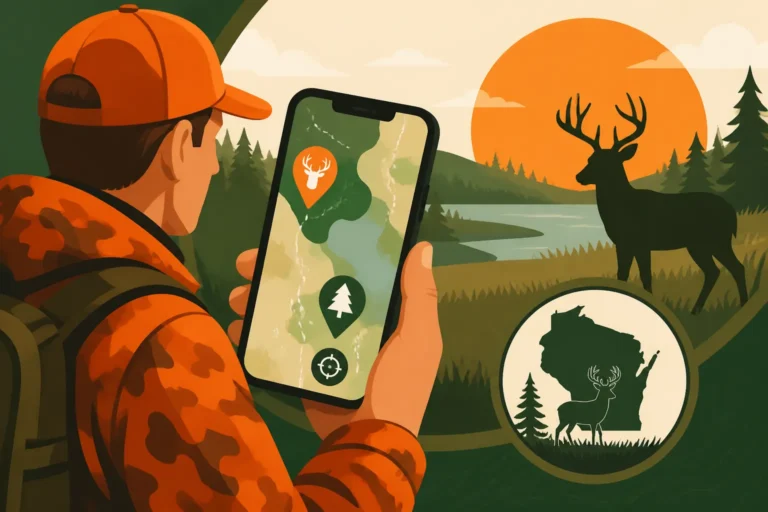
Digital mapping applications, such as onX Hunt or GoHunt, are indispensable for any hunter, but they are particularly powerful for navigating the complex land ownership patterns found near cities. These apps allow you to see property boundaries, landowner names, public land designations (including MFL and VPA parcels), and often even topographic features and aerial imagery all in one place. They transform the daunting task of finding legal access into a manageable one. onX Layers for Wisconsin Land Status highlights how useful these tools are.
Imagine sitting at home, scrolling through your phone, and being able to identify a small block of county forest tucked between a subdivision and a farm field that you never knew existed. You can then toggle to an aerial view to scout for potential bedding areas, travel corridors, or pinch points without ever setting foot in the woods. These apps also provide GPS functionality, allowing you to mark waypoints for treestand locations, game sign, or legal access points, making your in-person scouting far more efficient. They are truly game-changers for identifying and understanding hunting opportunities in fragmented, urban-adjacent landscapes.
Aerial Photos and Topographic Maps for Close-to-Home Recon
Beyond identifying land ownership, detailed aerial photos and topographic maps are crucial for understanding the lay of the land, even on smaller parcels. Aerial imagery, readily available on most mapping apps, allows you to identify different types of cover – open fields, thick brush, mature timber, marsh grass – and how game might move between them. Look for pinch points, funnels formed by natural features or fences, and areas of dense cover that might serve as bedding sanctuaries close to human activity.
Topographic maps, with their contour lines, reveal elevation changes, which are vital for understanding how deer use terrain, especially in areas with subtle rolls and dips that might be overlooked on a flat map. A slight rise could be a bedding area, or a small draw could be a hidden travel route. Combined, these mapping tools help you piece together the puzzle of game movement and habitat use without physically walking every acre. Reading Aerial Photos for Coulee Deer applies equally to urban-fringe habitats, helping you pick out those subtle features from above. Even a seemingly small woodlot can hold significant numbers of deer if it offers thick cover and access to food and water.
The Importance of Boots-on-the-Ground Scouting
No matter how sophisticated your digital tools are, nothing replaces boots-on-the-ground scouting. While apps can guide you to potential spots, only by walking the property can you confirm what you see on the screen and discover the fresh sign that tells you where deer and turkeys are currently spending their time. Scouting in the off-season is particularly beneficial near cities, as it allows you to explore without interfering with other hunters or disturbing game during the season. Scouting Wisconsin Public Land Before Season should be a year-round mantra.
Look for rubs, scrapes, tracks, droppings, and feeding areas. Identify subtle trails that might not show up on aerial photos. Pay attention to how game animals are using cover relative to human activity – they might be much more active at night or stick to the thickest sections during daylight hours. Discovering an overlooked bedding area just a short walk from a busy road can be the difference between seeing nothing and tagging out. You might even find some hidden shed antlers, a great way to confirm the presence of bucks.
Specific City Examples: Where to Look
While the principles for finding access are universal, let's explore some general strategies and areas to consider near a few of Wisconsin's major population centers. Remember, these are starting points; specific opportunities will always require your own detailed scouting.
Public Ground Near Madison
Madison, with its surrounding lakes and the Wisconsin River, offers unique challenges and opportunities. While the immediate city limits are densely populated, the surrounding counties (Dane, Columbia, Iowa, Green, Rock) have a mix of agricultural land, river bottomlands, and some rolling hills that provide habitat.
- Lodi Marsh Wildlife Area (Columbia County): A great option for waterfowl and some deer, offering a mix of marshland, woods, and open fields. It's a bit of a drive north but still very accessible from Madison.
- Mazomanie Bottoms State Natural Area (Dane County): Located along the Wisconsin River, this area offers diverse habitat, including floodplain forest, wetlands, and some upland timber. It's fantastic for deer and waterfowl, but be prepared for potential flooding in certain seasons. Access can sometimes be tricky, requiring a good map.
- Mud Lake Wildlife Area (Columbia County): Another diverse property with wetlands, woods, and grasslands, popular for waterfowl and deer.
- Units of the Kettle Moraine State Forest – Southern Unit (Jefferson/Walworth/Waukesha Counties): While a bit further east, parts of the Southern Unit are within a reasonable drive and offer excellent deer and turkey hunting in a unique glacial landscape. Pay attention to specific hunting zone boundaries within the forest. Public Ground Near Madison delves deeper into these and other local opportunities.
- County Parks and Forests: Don't overlook smaller county-owned properties in Dane, Columbia, and Iowa counties. While many county parks are non-hunting, some smaller forest parcels might be open. Use your mapping apps to check.
Public Ground Near Milwaukee
Milwaukee is Wisconsin's largest city, and finding extensive hunting ground close by can feel like a daunting task. However, within an hour's drive, you can find a surprising array of options, particularly to the west and south.
- Kettle Moraine State Forest – Southern Unit (Waukesha/Walworth/Jefferson Counties): This is probably your best bet for larger tracts of forest land, offering excellent deer and turkey hunting. It's a fragmented forest, so use your maps to find less-pressured sections, especially during the week.
- Scuppernong River Habitat Area (Jefferson County): Part of the Kettle Moraine complex, this area offers wetlands, uplands, and some forest, providing habitat for deer, turkeys, and waterfowl.
- Vernon Marsh Wildlife Area (Waukesha County): Primarily marsh and wetlands, excellent for waterfowl and some deer hunting in the brushier edges. Be prepared for wet conditions.
- Theresa Marsh Wildlife Area (Dodge/Washington Counties): A bit further north but still very accessible, this large SWA is renowned for waterfowl but also offers deer and turkey opportunities in its diverse habitats.
- Private Land in Walworth, Washington, or Jefferson Counties: Focus on knocking on doors in these more agricultural and rural counties just outside Milwaukee's immediate sprawl. Small woodlots and creek bottoms can hold significant deer. More detailed information can be found at Public Ground Near Milwaukee.
Public Ground Near Green Bay
Green Bay, situated on the western shore of Lake Michigan, has access to diverse habitats including agricultural lands, river systems, and coastal marshes. Opportunities exist both to the north in more forested areas and to the south in rich farmland.
- Navarino Wildlife Area (Shawano/Waupaca Counties): A large, diverse SWA with extensive wetlands, forests, and grasslands. It's a fantastic spot for deer, turkeys, waterfowl, and even some grouse. It's a bit of a drive west, but well worth it for the variety of hunting.
- Sensiba Wildlife Area (Brown County): Located right on Green Bay, this marshy area is primarily a waterfowl hunter's paradise, but the upland fringes can hold deer. Be aware of water levels and tides.
- Outagamie County Forest (Outagamie County): Small, scattered blocks of county forest exist west of Green Bay. While not massive, they can offer secluded spots for deer and turkeys if you put in the scouting work.
- Green Bay Shoreline Waterfowl Hunting: While often pressured, access points along the bay can provide excellent jump-shooting or decoy opportunities for ducks and geese, especially early in the season. Consider private permission for field hunting geese in the surrounding agricultural areas. Public Ground Near Green Bay will offer additional specific areas.
Public Ground Near Eau Claire
Eau Claire sits in a region characterized by a mix of agriculture, river systems (Chippewa, Eau Claire Rivers), and some significant blocks of forest, particularly to the north. This offers a different flavor of hunting from the more urbanized eastern and southern parts of the state.
- Chippewa County Forest (Chippewa County): Large blocks of county forest land are accessible north of Eau Claire. These areas offer excellent opportunities for deer, grouse, and turkeys in a more traditional "big woods" setting. Expect mixed hardwoods, pines, and aspen cuts. This is prime territory for Grouse Hunting Wisconsin Aspen Cover and Where Northern Forest Bucks Bed.
- Eau Claire County Forests (Eau Claire County): Smaller, scattered parcels of county forest within Eau Claire County offer closer-to-home options. Again, digital maps are key to finding these.
- Tiffany Bottoms Wildlife Area (Pepin/Buffalo Counties): While a bit of a drive southwest into the Mississippi River floodplain, this massive SWA is unparalleled for waterfowl and offers fantastic deer hunting in its river bottom forests.
- Augusta Wildlife Area (Eau Claire County): A good option for mixed bag hunting, including deer, turkeys, and small game. It features wetlands, grasslands, and some timber. Public Ground Near Eau Claire provides a deeper dive.
Public Ground Near Wausau
Wausau is centrally located in a region that quickly transitions from agricultural land to the vast forests of Northern Wisconsin. This offers a unique advantage, as more extensive public lands are often closer than for other major cities.
- Marathon County Forest (Marathon County): Marathon County has extensive county forest lands surrounding Wausau, particularly to the east, south, and west. These are fantastic for deer, bear, grouse, and turkeys. They represent a more significant public land resource right on your doorstep.
- Lincoln County Forest (Lincoln County): Just north of Wausau, Lincoln County also has large tracts of public forest, providing similar opportunities to Marathon County. These areas offer a genuine Northwoods experience without an extremely long drive.
- Eau Pleine Flowage Wildlife Area (Marathon/Portage Counties): This large SWA focuses on wetlands and associated uplands, making it a prime destination for waterfowl hunters but also offering deer and turkey in the timbered edges.
- George W. Mead Wildlife Area (Marathon/Wood Counties): A massive complex of wetlands, forests, and grasslands, the Mead is a destination for deer, turkeys, waterfowl, and small game. It's a bit further south and west but a premier hunting spot. Public Ground Near Wausau offers more local spots.
Remember, regardless of the city, persistent scouting, courteous interaction with landowners, and smart use of modern tools are your best assets for finding those overlooked, close-to-home hunting opportunities. You don't always need to drive five hours north to find quality hunting.
| Public Land Type | Typical Location Near Cities | Primary Game Opportunities | Common Challenges | Key Advantage Near Cities |
|---|---|---|---|---|
| State Wildlife Areas (SWAs) | Often rural fringe, mixed habitats | Deer, Turkey, Waterfowl, Pheasant | High pressure, especially early season | Active habitat management, diverse game, clearly marked access |
| County Forests | Rural-to-semi-rural, scattered | Deer, Turkey, Grouse, Small Game | Variable size, may lack amenities | Overlooked by many hunters, good cover, often less pressured |
| State Forests | Larger blocks, usually more rural | Deer, Turkey, Grouse, Bear (North) | Shared with other recreation | Expansive, traditional forest hunting, good diverse habitat |
| MFL Open/VPA Lands | Fragmented, interspersed w/ private | Deer, Turkey, Small Game | Smaller parcels, specific rules | Access to otherwise private land, often near food sources |
| State Parks (Limited Hunt) | Urban fringe, specific units | Deer (archery often) | Highly restricted, non-hunting crowds | Proximity, often good deer numbers in specific pockets |
Disclaimer
This article is for general informational purposes only and does not constitute professional advice. Laws, prices and regulations vary by location and change over time. Consult a qualified professional for guidance on your specific situation.