Wisconsin Wolf Hunting Status
It’s no secret that the legal status of wolf hunting in Wisconsin has been a source of immense confusion and frustration for many years. One minute, there's talk of a season; the next, it's shut down by a court order. This constant back-and-forth leaves many hunters wondering what the current rules actually are. This guide is here to untangle that knot, providing a clear, detailed look at where things stand right now and why it's been such a complicated journey.
The Rollercoaster History of Wisconsin Wolf Management
Understanding the current situation requires a quick look back at the dramatic saga of wolf management in Wisconsin. It hasn't been a straightforward path by any means, and the frequent shifts have left a lot of people scratching their heads. For decades, the wolf population in Wisconsin was recovering, and as those numbers grew, so did the debate about how to manage them.
From Recovery to Delisting Debates
Gray wolves were once widespread across North America but were largely eradicated from Wisconsin by the mid-20th century. Thanks to protection under the federal Endangered Species Act (ESA) and natural recolonization from Minnesota, their numbers slowly started to rebound. This success story eventually led to discussions about "delisting" the wolf, meaning removing its federal protections and allowing states to manage their populations. However, every time a delisting occurred, it seemed to be met with immediate legal challenges, setting off a chain reaction of court battles.
For example, there have been several instances where wolves were delisted, and the Wisconsin Department of Natural Resources (DNR) moved forward with establishing a hunting and trapping season. These periods, however brief, allowed the state to implement a management plan, often with a quota designed to maintain a healthy population while addressing concerns from agricultural interests and deer hunters. But these delistings were often temporary, pulled back into federal protection by subsequent court decisions, much to the exasperation of hunters and farmers.
The Brief Open Seasons and Swift Closures
Perhaps the most vivid example of this volatility occurred in 2021. After being delisted nationally in the waning days of the previous administration, Wisconsin quickly held a wolf hunt in February of that year. It was a condensed, intense season, drawing a massive amount of attention and controversy. Quotas were met very quickly, and the season ended early. This swift action, while legal at the time, highlighted the deep divisions on the issue.
However, that delisting was short-lived. In February 2022, a federal judge once again placed gray wolves back on the endangered species list across much of the contiguous United States, including Wisconsin. This ruling effectively halted any state-managed wolf hunting or trapping seasons, reinstating federal protections. This kind of legal whiplash is precisely what makes understanding Wisconsin's wolf hunting status so challenging for anyone trying to plan their outdoor activities. It underscores the profound impact legal rulings have on wildlife management, even overriding state-level decisions. You can learn more about the specifics of this turbulent past by looking into Wisconsin Wolf Delisting History.
Current Federal Protection and Its Implications
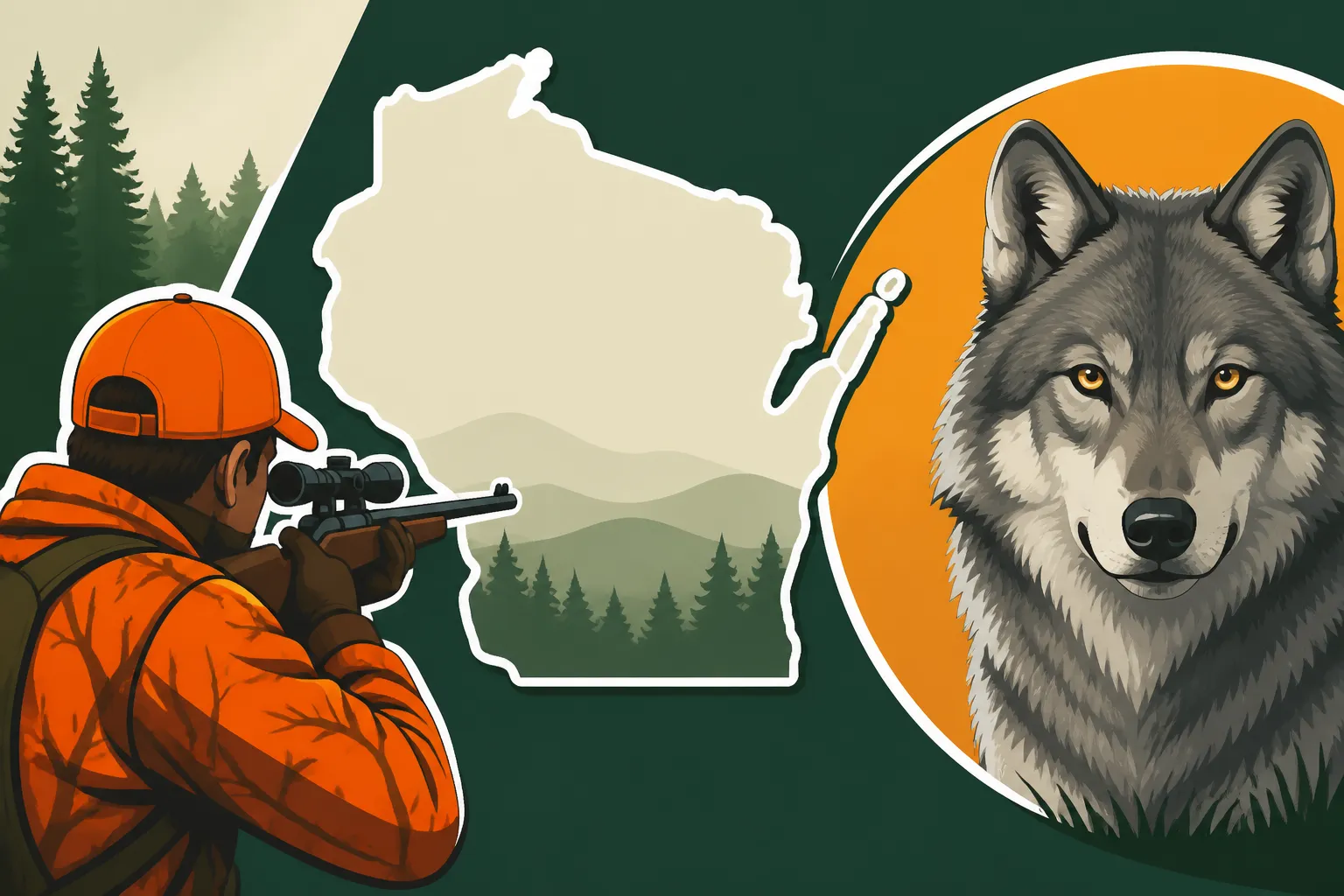
As of the present moment, the situation is clear: gray wolves in Wisconsin are federally protected under the Endangered Species Act. This means there is no state-managed hunting or trapping season for wolves. This status isn't just a recommendation; it's a federal mandate that carries significant legal weight.
What Federal Protection Means for Hunters
For the average hunter in Wisconsin, this federal protection has very direct implications. Simply put, it is illegal to intentionally hunt or trap a wolf in Wisconsin. This isn't a gray area; it's a black-and-white rule. Any intentional take of a wolf could lead to severe penalties, including hefty fines and potential jail time, not to mention the loss of hunting privileges. Hunters are expected to be able to identify their target species, and mistaking a wolf for a coyote, for example, is not a valid defense if a wolf is illegally killed. The Wisconsin DNR actively monitors the wolf population and investigates any suspected illegal take.
Even accidental encounters require careful consideration. If a hunter accidentally kills a wolf, perhaps mistaking it for another animal in low light or thick cover, they are legally obligated to report it to the DNR immediately. Failure to do so could still result in charges. It's a heavy responsibility that falls on every hunter's shoulders to know the rules and positively identify their target.
The DNR's Role Under Federal Protection
While the DNR cannot establish a hunting season, their work doesn't stop. Under federal protection, the DNR’s role shifts from managing a harvest to monitoring the population and managing conflicts. This includes conducting population surveys, tracking wolf movements, and investigating depredation incidents. Depredation, primarily livestock predation, is a significant concern for farmers, particularly in areas where wolf populations are dense.
The DNR works with landowners to implement non-lethal deterrents and, in some specific cases of confirmed depredation, can authorize lethal control of individual wolves by federal wildlife services or authorized agents. This is a targeted effort to address specific problem animals, not a general management tool, and it operates under strict federal guidelines. They also continue to monitor How Many Wolves Wisconsin Has and Where Wisconsin Wolves Live to track population health and range expansion. The uncertainty surrounding future delistings or relistings means the DNR is always prepared to adjust its management strategies as legal and biological conditions evolve.
The Ongoing Uncertainty of Future Changes
The one constant in Wisconsin wolf management is change. While wolves are currently federally protected, this status is not necessarily permanent. There are always ongoing debates, scientific studies, and potential legal challenges that could shift their status again. Conservation groups, hunting organizations, and agricultural interests all have strong, often conflicting, views on how wolves should be managed.
This means hunters need to stay vigilant and informed. Policies could change with new court rulings, legislative action, or shifts in federal administration. For now, the safest and most legal approach is to assume wolves are protected and plan your hunting activities accordingly. The legal landscape is as dynamic as the wildlife itself, making it crucial to consult official DNR resources and federal wildlife agency updates regularly.
Why the Wolf Status Matters to Wisconsin Hunters
The presence and management of wolves in Wisconsin aren't just an abstract conservation issue; they have tangible impacts on the hunting community and the broader ecosystem. From deer populations to hunting practices, the wolf's status resonates throughout the state's outdoor traditions.
Impact on Other Game Species and Hunting Seasons
One of the most frequently debated impacts of a healthy wolf population is its effect on prey species, particularly white-tailed deer. In some northern areas of Wisconsin, where wolves are more prevalent, hunters often voice concerns about lower deer densities. While wolves are natural predators and play a vital role in ecosystem health, including culling sick or weak animals, their presence can certainly make deer hunting more challenging. This naturally leads to questions about What Wolves Eat in Northern Wisconsin and how that might affect local deer populations.
However, scientific studies on wolf predation are complex. Factors like severe winters, habitat quality, and human hunting pressure also heavily influence deer numbers. It's rarely a single cause. For hunters, a high wolf population might mean adapting tactics, exploring different areas, or focusing more on older age-class bucks that are harder to catch. It can necessitate more extensive scouting and understanding deer movement in areas where predation pressure is higher.
Conflict with Hound Hunters
Another significant point of contention, especially when discussions of wolf hunting seasons arise, is the impact on hound hunters. Bear hunting with hounds is a deeply ingrained tradition in Wisconsin, particularly in the northern forests. When wolves are present, there's always a risk of conflict between wolves and hunting dogs. Wolves can view hounds as competitors or threats, leading to confrontations that can injure or kill the dogs.
This issue of Wolf Depredation on Wisconsin Hounds is a very sensitive topic, creating a strong desire among many hound hunters for active wolf management, including regulated hunting seasons, to help reduce these conflicts. The DNR, even under federal protection, tracks and sometimes compensates owners for verified wolf depredation on hunting dogs. This real-world impact on hunting companions adds another layer of emotional and practical concern to the wolf management debate.
The Broader Conservation and Management Debate
The wolf's status is really at the heart of a much larger conservation debate, touching on predator-prey dynamics, wildlife management philosophy, and the role of humans in ecosystems. Some argue that as a keystone species, wolves naturally regulate ecosystems, improving the health of deer herds by removing weaker individuals and preventing overgrazing. Others contend that unchecked wolf populations can have negative economic impacts on livestock owners and significantly reduce game animal populations, making hunting less successful.
This complex interplay of ecological benefits, economic concerns, and hunting traditions is why the wolf issue is so polarizing. The continuous legal back-and-forth reflects a fundamental disagreement on the balance between federal protection and state management, and how best to ensure both healthy wildlife populations and the traditions of Wisconsin's outdoor enthusiasts.
Staying Informed and Responsible Hunting Practices
Given the ever-changing nature of Wisconsin's wolf hunting status, being a responsible and informed hunter is more important than ever. Ignorance of the law is never an excuse, especially when it comes to federally protected species.
How Hunters Can Keep Up with Changes
The best way to stay informed is to regularly check official sources. The Wisconsin Department of Natural Resources (DNR) website is your primary resource for all state-specific regulations. They will post updates on legal changes, population status, and any management actions. Additionally, federal agencies like the U.S. Fish and Wildlife Service (USFWS) will provide information on the national listing status of gray wolves.
Reliable outdoor news outlets that specifically cover Wisconsin hunting and conservation are also excellent resources. These often provide analysis and context around the legal jargon. Joining local hunting organizations or conservation groups can also keep you connected to real-time discussions and updates within the community. Sometimes, these organizations are directly involved in the legal or legislative processes that influence wolf management.
Reporting Sightings and Understanding the Rules
While you cannot hunt wolves, reporting sightings of wolves to the DNR is a valuable contribution to wildlife management. This data helps the DNR monitor population trends, distribution, and overall wolf health. There's an official reporting system, often online or through designated phone numbers, for submitting wolf observations. Providing accurate details, like location, date, time, and number of animals, helps wildlife biologists in their crucial work.
It's also essential to understand what constitutes a wolf versus a coyote. While coyotes are a huntable species in Wisconsin, often targeted by those participating in Coyote Calling in Wisconsin Winter, wolves are not. Wolves are generally larger, have broader muzzles, and often carry their tails lower than coyotes. Misidentification can have severe legal consequences, as emphasized by Wisconsin's strict Wisconsin Wildlife Violation Penalties. Always be absolutely sure of your target before taking a shot. When in doubt, don't shoot.
Utilizing Resources for Informed Decisions
Many hunters find great value in using mapping and information platforms to navigate Wisconsin's diverse hunting landscape. While GoHunt might be known for western hunting, similar robust mapping platforms are available that integrate public land boundaries, habitat types, and even some regulatory information. Utilizing such tools can help you plan your hunts, understand potential wildlife interactions, and stay within legal boundaries, whether you're deer hunting in the Chequamegon-Nicolet National Forest Hunting or scouting Public Hunting Land in Wisconsin elsewhere.
These digital resources often allow you to overlay different data sets, helping you identify wolf habitat and high-density areas, which might influence your approach to hunting deer or other game. By combining official DNR information with advanced mapping tools, hunters can make more informed decisions, enhancing their experience while remaining compliant with all wildlife regulations.
Key Dates in Wisconsin Wolf Management
| Year | Event | Impact on Hunters |
|---|---|---|
| 1974 | Federal ESA protection begins | Illegal to hunt wolves |
| 2004 | First federal delisting (later reversed) | Brief period of state management planning |
| 2012 | Wolves delisted by Congress | State-managed hunting and trapping seasons established |
| 2014 | Federal court reinstates ESA protection | Hunting/trapping seasons halted |
| 2021 | Wolves delisted (January) | Emergency state hunting season held (February) |
| 2022 | Federal court reinstates ESA protection (February) | All wolf hunting and trapping prohibited |
| Present | Federally protected under ESA | No legal wolf hunting or trapping in Wisconsin |
Remember, this table reflects key moments, but the legal and biological discussions are ongoing. The current status is always subject to change based on new court rulings or legislative actions.
The bottom line is that the responsibility for knowing the rules rests firmly on each hunter. The wolf's presence is a testament to successful conservation efforts, but its management remains one of Wisconsin's most dynamic and often contentious wildlife issues. Always prioritize ethical and legal hunting practices, and stay connected to official sources for the most up-to-date information.
Disclaimer
The information provided in this guide is for general informational purposes only and is subject to change. Wildlife regulations, especially concerning protected species like the gray wolf, can change frequently due to legal challenges, scientific assessments, and policy shifts. Always consult the official Wisconsin Department of Natural Resources (DNR) website and federal wildlife agencies for the most current and accurate regulations before engaging in any hunting activities.