Wisconsin Deer Feeding Rules Outside Season
It's incredibly frustrating when you want to connect with wildlife, maybe even give the deer in your backyard a little boost, but you're constantly worried about breaking a rule or, worse, actually harming them. Wisconsin's deer feeding regulations, especially outside the traditional hunting seasons, can feel like a tangled mess of good intentions and complex mandates. This guide is here to untangle all that for you, explaining exactly what you can and can't do, and why these rules are so vital for the health of our deer herd and the integrity of our wild spaces.
The Core Rules: What "Feeding Deer" Really Means in Wisconsin
Let's be honest, the terms "feeding" and "baiting" can be confusing. Many folks just want to see deer close to home or feel like they're helping the herd, especially after a harsh winter. But the Wisconsin Department of Natural Resources (DNR) has very specific definitions and rules that apply year-round, not just when hunting season opens. Understanding these is your first step to being a responsible wildlife enthusiast or landowner.
Defining "Baiting" and "Feeding" and Why It Matters
In Wisconsin, "baiting" generally refers to placing food, salt, mineral blocks, or other materials to attract wild animals for hunting purposes. This is strictly regulated during hunting seasons, and often completely banned in many areas due to disease concerns. However, "feeding" deer applies even outside of hunting seasons and carries its own set of rules. The distinction might seem subtle, but it's crucial.
Essentially, "feeding" deer means placing any material — whether it's corn, apples, carrots, mineral blocks, or even certain types of pet food — that could attract deer to a specific location, particularly in a manner that allows them to consume it. This isn't just about what you intend for them to eat; it's about what could attract them. For instance, putting out a salt lick intended for livestock near a wooded area where deer frequent could still be considered feeding if deer are drawn to it. The state's primary concern isn't your motivation, but the biological impact of concentrating deer.
Statewide Ban Versus CWD-Affected Counties: The Critical Distinction
This is where things get really specific, and honestly, a bit complicated, because the rules aren't uniform across the entire state.
First, there's a statewide ban on feeding deer within 300 yards of a residence or business. Now, before you panic about your bird feeder, there are some important caveats, which we'll get into shortly. This general rule aims to prevent deer from becoming habituated to human presence and reduce potential conflicts or disease spread in residential areas.
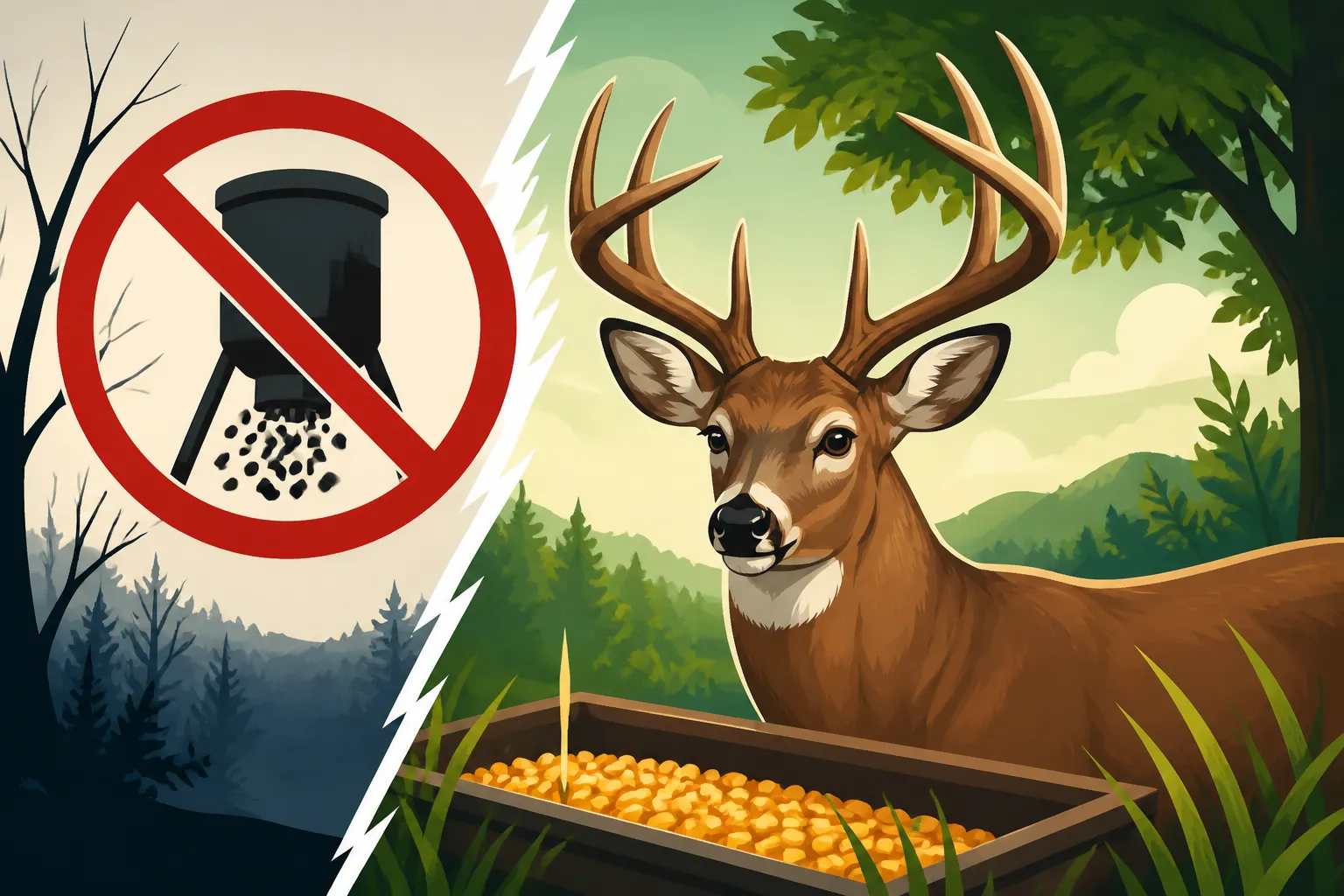
However, the rules become far more stringent in areas affected by Chronic Wasting Disease (CWD). In any county where CWD has been detected, or in counties that directly border a CWD-affected county, there is a complete and total ban on feeding deer year-round. This means absolutely no food, salt, or mineral material can be placed out for deer, period. These bans are serious and often last for two years, even if no new CWD cases are found within that time. You can learn more about How Wisconsin Baiting Bans Are Triggered and their specific duration.
It's vital for every Wisconsin resident and visitor to know the CWD status of their specific county. The DNR maintains maps and lists of affected counties. You can also use mapping tools like GoHunt to check current regulations and identify property boundaries, which is incredibly helpful when you're trying to stay compliant. Understanding Which Wisconsin Counties Have CWD and whether your area falls into an affected zone is absolutely essential for avoiding violations.
Exceptions and Nuances: Bird Feeders, Food Plots, and Accidental Spills
While the rules can seem overwhelming, there are some important exceptions and clarifications that often cause confusion.
Bird feeders are generally allowed, even in CWD-affected areas, as long as they are constructed or placed in a way that makes them inaccessible to deer. This usually means keeping them elevated high enough or contained so that deer can't easily reach or knock down the feed. Spilled birdseed on the ground, however, can attract deer, so regular cleanup is a good practice to prevent unintentional feeding.
Food plots are another common area of confusion. While placing apples on the ground is feeding, planting an entire field of clover, brassicas, or corn is considered habitat improvement, not feeding, and is generally permitted. The distinction lies in whether the food is actively placed by humans or grown as part of a habitat management strategy. Food plots aim to provide natural forage over a longer period, making deer less concentrated than a static feeding pile. For more ideas on legal alternatives, check out Food Plots Instead of Bait.
Accidental spills or garden waste can also inadvertently attract deer. If you're a farmer, spilled grain in your fields or around storage bins could draw deer. Homeowners might find deer munching on fallen fruit from orchard trees or raiding compost piles. While these aren't intentional feeding, landowners are still encouraged to take reasonable steps to minimize deer access, such as fencing off gardens or securing compost. Being proactive about these potential attractants can save you a headache later.
Here's a quick summary table of the core rules:
| County Status (CWD) | General Deer Feeding Rule (Outside Hunting Season) | Specifics/Exceptions |
|---|---|---|
| CWD-Affected Counties | Complete Ban on feeding and baiting | Absolutely no food, salt, or mineral placed for deer. Bird feeders must be deer-proof. |
| Non-CWD Counties | No feeding deer within 300 yards of residence/business | Bird feeders okay if inaccessible to deer. Food plots and natural habitat improvements are permitted. |
The Deeper "Why": Understanding the Impact of Feeding Deer
It's natural to want to interact with wildlife, and many people who feed deer do so with the best intentions. They want to see them up close, or they worry about the deer during harsh winters. However, the science and experience of wildlife biologists tell a very different story about the long-term consequences of supplemental feeding. These rules aren't just arbitrary; they are put in place to protect the deer herd and the entire ecosystem.
The Looming Threat of Chronic Wasting Disease (CWD)
This is arguably the most significant reason behind Wisconsin's stringent deer feeding and baiting regulations. Chronic Wasting Disease, or CWD, is a fatal neurological disease affecting deer, elk, and moose. It's caused by abnormal proteins called prions, which can be shed through saliva, urine, and feces. These prions can persist in the soil for years, infecting other deer long after the original source is gone.
When you put out a pile of corn or a mineral block, you're essentially creating a deer cafeteria. Deer gather around, sharing saliva as they eat, urinating and defecating in the same small area. This dramatically increases the chances of CWD transmission from an infected deer to healthy ones. It creates a hot zone where the disease can spread rapidly. This is why any CWD detection in a county immediately triggers a feeding ban, extending even to adjacent counties, to slow the spread and protect our precious deer herd. The long-term implications of Chronic Wasting Disease in Wisconsin are a constant concern for wildlife managers and hunters alike.
Altering Deer Behavior and Ecosystem Health
Beyond CWD, feeding deer has several other detrimental effects on their natural behavior and the broader ecosystem.
Firstly, it leads to deer habituation. When deer regularly receive food from humans, they lose their natural fear. This might seem charming at first, but it increases conflicts with humans, leading to more deer-vehicle collisions, damage to gardens and landscaping, and even aggressive behavior toward people if they associate humans with food.
Secondly, concentrating deer at feeding sites isn't just about CWD. It also increases the risk of transmitting other diseases and parasites, such as Bovine Tuberculosis (though less common in Wisconsin) or various parasitic worms. It's like sending them to a crowded petri dish. The stress of high densities can also weaken their immune systems.
Furthermore, supplemental feeding can actually alter their natural foraging patterns. Deer are adapted to find diverse food sources throughout the year. When provided with an easy meal, they may neglect natural browse and forage, becoming reliant on handouts. This can make them less resilient during times when supplemental feed isn't available, or if they migrate away from feeding sites. A healthy deer population relies on natural food availability, which you can better understand by learning about Late-Season Food Sources for Whitetails.
Finally, feeding sites don't just attract deer. They can also draw in predators like coyotes, especially to residential areas, creating new safety concerns for pets and livestock, and unnaturally impacting predator-prey dynamics.
Legal Repercussions and Ethical Considerations
Ignoring these rules isn't just a slap on the wrist. Wisconsin's DNR takes deer feeding violations seriously, especially in CWD-affected areas. Fines can be substantial, and repeated offenses can lead to more severe penalties. The intent doesn't matter as much as the action and its potential consequences. It's far better to understand and abide by the regulations than to face legal trouble.
Beyond the legal aspect, there's a deep ethical consideration. While your heart might be in the right place, feeding deer in a way that concentrates them or alters their natural behavior is ultimately doing them a disservice. It's like giving a child candy instead of a balanced meal – it might make them happy in the moment, but it's not good for their long-term health. As stewards of our wildlife, our responsibility is to promote their well-being in the wild, which often means allowing natural processes to unfold, rather than interfering in ways that create dependence or facilitate disease.
Responsible Ways to Support and Attract Deer Legally
Given the strict regulations and the potential harm of supplemental feeding, you might feel like your hands are tied if you want to help or attract deer. But fear not! There are numerous legal, ethical, and biologically sound ways to support a healthy deer population and enjoy their presence on your land without breaking any rules or harming the herd.
Habitat Improvement: The Best Long-Term Solution
If you truly want to support deer, focusing on habitat improvement is, without a doubt, the most effective and responsible approach. Instead of providing handouts, you're building a sustainable, natural buffet and sanctuary for them. This creates stronger, healthier deer that rely on natural processes, not human intervention.
Think about what deer need year-round: food, water, and cover.
- Food: Planting native trees and shrubs that provide browse, acorns, or other mast crops is a fantastic start. Oak trees, for instance, are a phenomenal natural food source. Establishing food plots with crops like clover, brassicas, or winter rye can provide nutrition during different seasons. Unlike a feeding pile, food plots spread deer out as they forage, reducing the risk of disease transmission. Consider exploring ideas found in articles like Food Plots Instead of Bait for specific guidance.
- Cover: Dense thickets, cedar swamps, and clearcuts offer crucial bedding and thermal cover, especially during harsh Wisconsin winters. Managing your timber, even small parcels, can create these vital areas. Learn more about how deer use areas like Hunting Clearcuts and Aspen Cuts for bedding and movement.
- Water: Ensuring access to clean water, whether through natural ponds, streams, or even strategically placed watering holes, is always beneficial.
For landowners, mapping tools like GoHunt can be invaluable for planning habitat improvements. You can analyze topography, soil types, and existing vegetation to identify the best locations for food plots, tree plantings, or creating dense cover. This kind of thoughtful management benefits not only deer but a host of other wildlife as well.
Understanding Deer Movement and Natural Food Sources
Becoming a student of deer behavior and their natural environment is one of the most rewarding aspects of wildlife appreciation. Instead of trying to force deer to come to you with artificial attractants, learn where they already are and why.
Deer movement is heavily influenced by food availability, cover, and breeding cycles. In spring, they seek tender green shoots. Summer brings lush vegetation. Fall is all about acorns and other mast, prepping for winter. And in winter, they rely on browse, evergreens for thermal cover, and leftover crops. By understanding these seasonal changes, you can better appreciate their patterns and know what natural resources are available in your area. Using resources like GoHunt to analyze aerial photos and terrain can help you identify natural funnels, bedding areas, and feeding zones without ever disturbing the deer. This is also key for effective Scouting With the Wisconsin Hunt Wild App to understand deer activity.
Observing Deer Without Interference
If your primary goal is to simply observe and enjoy deer, there are many ethical and non-intrusive ways to do so.
Trail cameras are an absolute game-changer. You can set them up in strategic locations, capture incredible photos and videos of deer and other wildlife, and gain insights into their activity patterns without ever having to be present. This allows you to witness their natural behaviors, not behaviors altered by human handouts. Just be mindful of Trail Camera Rules on Wisconsin Public Land if you're venturing beyond your private property.
Binoculars or spotting scopes allow you to observe deer from a distance, minimizing your presence and ensuring they remain wild. Find a quiet spot, ideally downwind, and simply watch. You'll witness fascinating interactions and natural behaviors that you'd never see if the deer were constantly looking for human-provided food. This is about respectful observation, appreciating wildlife on their terms.
Navigating Common Concerns and Specific Scenarios
Even with a good understanding of the rules, real-world situations can throw a wrench into things. What if your neighbor is feeding deer? What about accidental spills? Let's address some of these common concerns.
My Neighbor is Feeding Deer: What to Do?
This is a scenario that causes a lot of frustration. You're trying to do the right thing, but your neighbor's actions could be attracting deer and potentially spreading disease to your property.
Your first step should always be a polite, educational conversation. Many people simply aren't aware of the specific regulations or the severe biological consequences of feeding deer, especially in CWD-affected areas. Share information from this article or official DNR resources. Explain that it's not about being a "bad neighbor," but about protecting the deer herd from disease and managing potential human-wildlife conflicts. You can direct them to the DNR's official website where they can check their county's specific CWD status, or even help them use tools like GoHunt to understand the regulations in their particular Wisconsin Deer Management Units by County.
If a friendly chat doesn't resolve the issue, or if you feel uncomfortable confronting your neighbor directly, your next step is to contact the Wisconsin DNR hotline or your local conservation warden. Provide specific details, but avoid any direct confrontation yourself once you've made the report. The DNR has the authority to investigate and enforce the rules. It's important to document what you've observed, including dates, times, and types of feed, if possible.
Spilled Grain or Garden Waste: Avoiding Accidental Feeding
While intentional feeding is a clear violation, accidental attractants can also draw deer and put you at risk of violating regulations.
If you have livestock, ensure that their feed is stored and dispensed in a way that is inaccessible to deer. Secure grain bins, clean up spills immediately, and consider deer-proof fencing around feed areas if necessary. This can be particularly challenging for farmers with large operations, but minimizing deer access is key.
For gardeners, fallen fruit from orchard trees should be collected promptly. Compost piles should be enclosed or located far from areas deer frequent. Avoid tossing garden waste or kitchen scraps directly into wooded areas near your property line. These simple actions can prevent deer from becoming accustomed to finding easy meals on your land. Even something as seemingly innocent as a poorly maintained bird feeder that constantly spills seed could contribute to local deer concentrations.
Planning Your Property's Approach with GoHunt
Utilizing modern tools can make understanding and adhering to regulations much simpler. GoHunt is an excellent example of a mapping and scouting application that can help you navigate these complexities.
You can use GoHunt's mapping features to:
- Identify property lines and public land boundaries: This is crucial if you're near public hunting lands or simply want to understand where your property ends and a neighbor's begins.
- Check CWD zones: While GoHunt isn't an official regulatory body, it can often integrate or display CWD zone information, giving you a quick visual reference for your area's feeding restrictions.
- Plan habitat improvements: Mark potential spots for food plots, tree plantings, or areas to enhance natural cover. You can analyze topography and vegetation, much like an expert would do when Reading Aerial Photos for Coulee Deer.
- Scout natural food sources: Use satellite imagery to identify oak ridges, marsh edges, or agricultural fields that naturally attract deer, allowing you to observe them in their natural habitat rather than by artificial feeding.
By leveraging such tools, you can ensure that your efforts to appreciate and support Wisconsin's deer herd are both effective and fully compliant with the state's important wildlife management regulations.
Disclaimer
The information provided in this guide is for general informational purposes only and does not constitute legal advice. Wildlife regulations, especially those pertaining to CWD and feeding, can change. It is your responsibility to always consult the most current Wisconsin Department of Natural Resources (DNR) regulations and guidelines, or contact your local conservation warden, for the most accurate and up-to-date information pertaining to your specific location and situation.