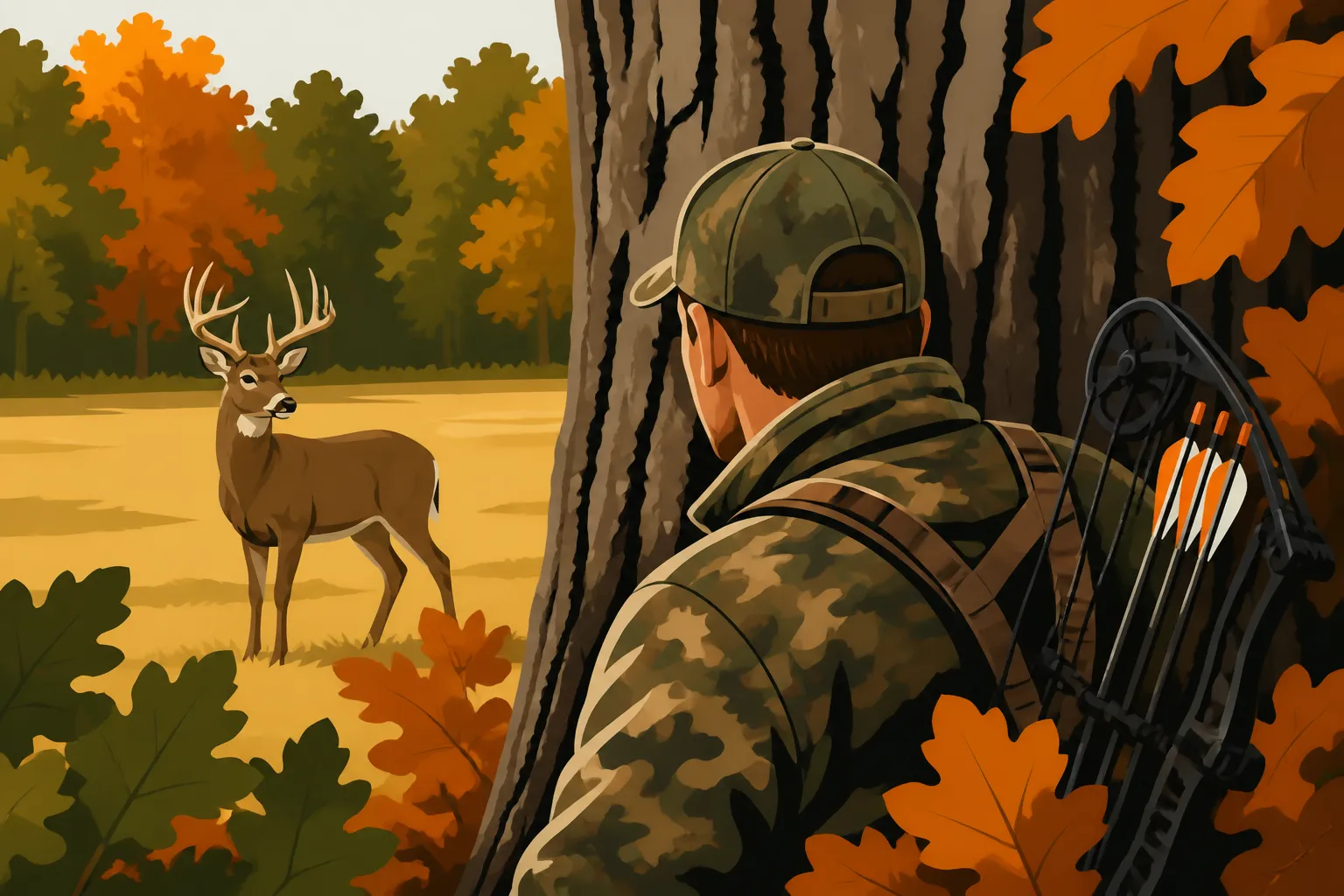
Setting Up Against a Big Oak
Finding that perfect setup spot, especially near one of Wisconsin's majestic big oak trees, can feel like you're trying to solve a puzzle where the pieces keep moving. You scout, you find what looks like prime real estate, but then you question if you're truly putting yourself in the best position to intercept deer. This guide is all about helping you understand why these oaks are so vital to deer and how to strategically position yourself for success, minimizing those frustrating "almost" encounters.
Why a Big Oak is a Prime Location for Wisconsin Deer
Big oak trees aren't just pretty scenery; they're absolute magnets for white-tailed deer in Wisconsin. When you stumble upon a mature oak, especially one that's consistently dropping acorns, you've found a pantry that deer will visit religiously. Understanding why they prioritize these trees will help you refine your setup strategy and predict their movements.
Acorn Production Cycles and Deer Preference
It’s not just any oak, and it’s certainly not every year. Deer absolutely gorge themselves on acorns, which are packed with fat and protein, essential for them to put on weight for the upcoming winter and the rigors of the rut. Here in Wisconsin, we have several types of oaks, but the two main categories are white oaks and red oaks. White oaks, like the bur oak or white oak itself, drop acorns that are less bitter (lower in tannins) and preferred by deer. They tend to drop earlier, usually from late August through September. Red oaks, like the northern red oak or pin oak, have more bitter acorns due to higher tannin content, and they drop later, often into October and November, sometimes even holding onto them until after the leaves fall.
Deer will always hit the sweeter white oak acorns first if they’re available. Think of it like a kid choosing between candy and broccoli – they’ll go for the candy every time. However, once the white oak crop is depleted or if it's a poor white oak year, they'll shift their focus to red oak acorns. A truly "big oak" often means a mature tree with a robust canopy, capable of producing a significant amount of food. Keep in mind that acorn production is cyclical; some years are boom years, and others are busts. A good year can concentrate deer in specific areas, while a poor year might scatter them as they search for alternative food sources. This is a critical factor when you're Hunting After an Acorn Failure.
Cover and Sanctuary Provided by Mature Trees
Beyond just food, a stand of mature oaks, especially a large individual tree, offers deer vital cover and a sense of security. These trees often have sprawling canopies that provide shade in early season, protection from the elements in later months, and a visual break from predators, including hunters. The sheer size of a big oak can also create micro-habitats, offering small pockets of undisturbed ground or dense understory around its base.
In areas with heavy hunting pressure, deer become incredibly sensitive to any perceived threat. A large oak in a secluded pocket of woods, or one that anchors a dense section of timber, becomes a sanctuary. They might bed nearby, using the visual obstruction and the sounds of the rustling leaves to mask their presence. This means that a successful setup isn't just about being near the food, but also about understanding how deer use the surrounding cover in conjunction with that food source. Observing how deer enter and exit these areas of cover will be key to your ambush plan.
Funnels and Travel Corridors
Big oaks rarely stand in isolation. They are often part of larger timber blocks, on ridge lines, or along creek bottoms, which can create natural travel corridors. Deer aren't just going to appear under the oak; they'll use established trails to get there, often moving between bedding areas and other feeding grounds. A large oak, particularly one on a ridge point or nestled in a saddle, can act as a crucial waypoint or a hub in a deer's daily routine.
Consider an old oak situated along a subtle ridge leading down to a field. This tree becomes part of a natural funnel, guiding deer along a predictable path. Or perhaps a massive oak stands at the confluence of two deer trails converging from different directions. These natural funnels are goldmines for hunters. When you're Reading a Ridge Point for Deer Movement, look for those dominant oaks that influence how deer move through the landscape. Your job is to identify these high-traffic routes that lead directly to or past your chosen oak.
Scouting the Oak: Reading the Sign
You can't just pick a big oak on a map and hope for the best. Effective hunting around these trees demands meticulous scouting. You need to read the landscape, interpret the subtle clues deer leave behind, and confirm that the oak you've chosen is truly a hot spot, not just a beautiful tree. This is where tools like the GoHunt app become invaluable, allowing you to mark observations and analyze terrain features right in the field.
Identifying Active Acorn Drops
The freshest sign around a big oak is often the most overlooked: the acorns themselves. Start by observing the canopy. Are there visible acorns hanging? Are squirrels and turkeys actively feeding? Then, inspect the ground. Look for fresh acorns, especially those that have just fallen. Crushed or nibbled acorns are a clear indication that deer (or other critters) are feeding. You might even find fresh droppings, which, combined with chewed acorns, confirm deer activity.
Take your time and really scan the ground under and around the tree. Some acorns might be buried slightly in leaf litter. It's not just about seeing acorns, but also understanding their stage of consumption. If you see abundant fresh acorns with numerous fresh deer droppings, you've found a current feeding hot spot. Conversely, if you see only old, dried acorns and no fresh sign, deer have either moved on or haven't discovered this bounty yet. A good practice is to regularly check multiple oak trees in your hunting area, using GoHunt to log your findings and track which trees are actively dropping and being used.
Interpreting Rubs and Scrapes
While acorns are all about food, rubs and scrapes around a big oak indicate a different, equally important aspect of deer behavior: communication and territorial marking, especially during the rut. A rub on a sapling or small tree is where a buck has polished his antlers, leaving behind scent and visual markers. Scrapes, on the other hand, are bare patches of earth pawed by a buck, often with a licking branch overhead, where he deposits urine and scent from his pre-orbital glands.
When you find rubs and scrapes near a big oak, it tells you a buck is actively traveling through the area and claiming it. Pay attention to the size and freshness of the rubs. Large, fresh rubs suggest a more mature buck. Scrapes with fresh paw marks and a well-worked licking branch are actively being used. If these signs are concentrated around an oak that's also dropping acorns, you've hit the jackpot. This tree is not only providing food, but it's also a significant point of interest for bucks during the Hunting the Pre-Rut in Late October and peak rut.
Reading Deer Trails and Movement Patterns
Deer are creatures of habit, and their travel routes around a prominent food source like a big oak will become worn trails. Look for these paths leading into and out of the oak stand. Not all trails are created equal; some might be old, seldom-used routes, while others are highways of current deer movement. Distinguishing between them requires keen observation.
Fresh tracks, disturbed leaves, and broken twigs on a trail all indicate recent use. Pay attention to the direction of travel – are deer primarily coming from a bedding area to feed, or are they simply passing through on their way to another destination? Note if trails bottleneck or merge near the oak. These convergence points are prime ambush locations. Using an app like GoHunt can help you map these trails, noting directions and identifying key intersections. Often, deer will use specific trails during daylight hours to access these preferred feeding spots, so understanding those patterns is vital for a successful setup.
Strategic Setup: Wind, Thermals, and Entry/Exit
You've found your prime oak, identified the active feeding and travel patterns. Now comes the critical part: setting up without being detected. This involves a delicate balance of understanding environmental factors and your own movements. Ignoring any of these elements can quickly spoil your hunt, no matter how good the oak.
Playing the Wind in Hardwood Stands
The wind is arguably the single most important factor when setting up for deer. A deer's nose is its primary defense, and if your scent is blowing towards its approach path or current location, your hunt is over before it begins. When setting up near a big oak, you need to determine the prevailing wind direction for your hunt and position yourself so your scent cone is blowing away from where you expect deer to approach.
In hardwoods, especially with a bit of elevation change, wind can swirl, making it tricky. Always try to set up downwind of the anticipated deer travel routes to the oak. If the wind is consistently shifting, you might need a backup setup, or consider a ground blind that offers more concealment from multiple directions. Even a slight breeze can carry your scent for hundreds of yards. Don't compromise on wind; if it's not right, you're better off waiting for another day or finding an alternative spot. This is a core tenet for any Treestand Setups in Wisconsin Hardwoods.
Understanding Thermals in Rolling Terrain
Thermals are essentially localized air currents caused by temperature changes, and they play a huge role in how scent moves, especially in areas with elevation, like Wisconsin's coulees and ridge tops. In the morning, as the sun rises and warms the earth, thermals tend to rise, carrying scent uphill. In the evening, as the air cools, thermals drop, pulling scent downhill.
If your chosen oak is on a ridge or in a valley, understanding these thermal shifts is paramount. For example, if you're hunting an oak in a bottomland feeding area in the morning, your scent will likely rise with the thermals. If deer are bedding higher up, they might catch your scent. Conversely, in the evening, your scent will be pulled downhill, potentially alerting deer coming down to feed. Combining your knowledge of Wind and Thermals in a Coulee with a good weather app that provides localized wind data, possibly integrated with GoHunt's mapping features, will give you a significant advantage. Adjust your setup height or even your exact tree choice based on these daily thermal patterns.
Stealthy Approaches and Departures
The hunt doesn't just start when you're in your stand; it begins the moment you step out of your vehicle. A noisy, careless approach or departure can ruin your entire effort. Deer feeding under a big oak are often relaxed but incredibly vigilant. You need to plan your entry and exit routes just as carefully as your stand location.
Choose a path that minimizes noise and avoids known deer bedding areas or active travel corridors. Use terrain features like creek beds, ridge lines, or dense cover to mask your movement and scent. Try to approach with the wind in your face or crosswind, never directly downwind of your target area. For morning hunts, arrive well before daylight. For evening hunts, stay until well after dark to ensure all deer have dispersed before you climb down. Remember that deer will often use the exact same trails you're hoping to hunt, so avoid walking on them. An app like GoHunt can help you plot these stealthy routes on your aerial maps, marking potential obstacles or high-risk areas.
Considering Different Hunting Methods Near an Oak
The beauty of a productive oak is its versatility. Whether you're a bowhunter meticulously picking your spot, a gun hunter looking for a clear shot lane, or a muzzleloader enthusiast braving the late season cold, a big oak can provide opportunities. Each method, however, comes with its own set of considerations for maximizing your chances.
Bowhunting Considerations Near an Oak
Bowhunting requires getting incredibly close to your quarry, making a setup near a big oak particularly challenging and rewarding. You need to identify a specific tree within easy bow range (20-30 yards) of where you expect deer to feed or pass. This means not just any tree, but one that offers good concealment, a solid anchor point for your stand, and clear shooting lanes in multiple directions without overly exposing you.
Height is also a factor. Too low, and deer will spot your movement. Too high, and your shot angle can become too steep, affecting penetration. Aim for a height that gives you good visibility but maintains a ethical shot angle. Consider the foliage during different seasons. Early archery season might offer more natural cover, while late season might leave you more exposed. Clear just enough shooting lanes to make a clean shot, but don't clear so much that you remove natural concealment. Remember to practice Bow Sights for Timber Shots to be ready for those close-range opportunities.
Gun Hunting for Longer Shots or Drives
Gun hunting around a big oak often allows for slightly longer shot opportunities, making your exact proximity to the tree a bit less critical than with a bow. However, precision and clear shooting lanes are still paramount. When setting up with a rifle or shotgun, consider sight lines that cover not only the area directly under the oak, but also the trails leading to and from it.
Position yourself to take advantage of natural openings or clearings. If you're hunting in dense timber, you might need to find an elevated position that offers a wider view. For Wisconsin's Nine-Day Gun Deer Season, an oak might be a stand location, or it could be a strategic post for a deer drive. If participating in a drive, know the anticipated direction of deer movement and position yourself accordingly, always prioritizing safety and clear identification of your target. Your optics become incredibly important here; a good Rifle Scopes for Low-Light Timber can make all the difference during those prime early morning or late evening hours.
Muzzleloader Season Tactics
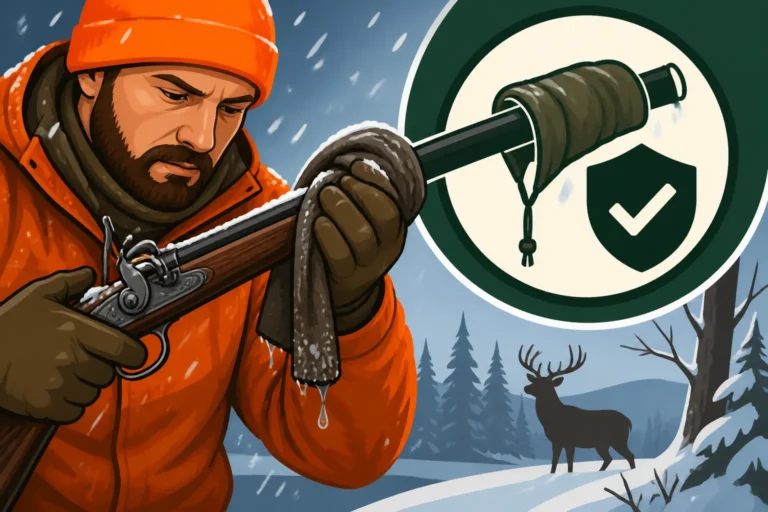
Muzzleloader season in Wisconsin often takes place in colder weather, sometimes with snow on the ground, adding another layer of challenge. Deer, after surviving archery and gun seasons, are warier, and food sources might be scarcer. A big red oak that still has acorns falling in December can be an absolute lifeline for deer, making it an excellent target for muzzleloader hunters.
Your setup needs to account for the cold – proper layering and insulation are crucial for long, still sits. Also, remember that muzzleloaders typically offer only one shot, so patience and precise shot placement are more critical than ever. In winter, deer often yard up in thicker thermal cover, so an oak located near a cedar swamp or dense conifer stand can be a perfect intercept point as they move from bedding to feeding. Consider scouting for fresh tracks in the snow leading to the oak; these patterns will tell you exactly how deer are utilizing the area in late season. For more specific cold-weather advice, check out Muzzleloader Tactics in December Cold.
Oak Species and Acorn Drop Times in Wisconsin
Understanding the general differences between white and red oaks can really fine-tune your scouting efforts and expectations throughout the season.
| Oak Species Group | Acorn Characteristics | Typical Drop Period (Wisconsin) | Deer Preference | Best Hunting Period |
|---|---|---|---|---|
| White Oak Group | Less bitter, sweeter, lower tannins | Late August – September (often earlier) | High (preferred first) | Early Archery Season |
| Red Oak Group | More bitter, higher tannins | October – November (can extend) | Moderate (after white oaks) | Mid-Late Archery, Gun, Muzzleloader |
(Note: These are general guidelines; exact timing can vary significantly based on weather, specific tree health, and location within Wisconsin.)
Keep this in mind when you're out there. If it's early September and you're not seeing much action under the red oaks, it's probably because the white oaks are the main attraction. As the season progresses, those red oaks become increasingly important, drawing deer in when other food sources dwindle.
Disclaimer
Hunting is a challenging endeavor with inherent risks. This information is provided for educational purposes only and should not be considered a substitute for personal research, professional guidance, or adherence to all applicable Wisconsin hunting regulations. Always prioritize safety, respect wildlife, and obtain the necessary licenses and permissions before hunting. Conditions on public and private lands can change, so always scout thoroughly and be aware of your surroundings.