Where Deer Go on Opening Weekend
Every year, the anticipation for opening weekend of Wisconsin's gun deer season is palpable, but for many hunters, that excitement quickly turns to frustration when the deer they've scouted for months seem to vanish into thin air. It’s a common experience to feel like the woods suddenly become barren after the first few hours of hunting pressure. This comprehensive guide will pull back the curtain on where those whitetails disappear to and, more importantly, how you can adjust your strategies to still find success when deer go completely ghost on opening weekend.
The Immediate Impact of Hunting Pressure
The moment the first shots ring out across Wisconsin's woods, deer behavior changes drastically. It's not just a subtle shift; it's a fundamental rewrite of their daily routines. Understanding this immediate impact is key to knowing where they've gone.
Deer Movement Shifts from Daylight to Nocturnal
Imagine you're a deer. One day, the woods are relatively quiet, and you can move about freely during daylight hours, browsing and heading to water. The next, a flurry of human activity, gunshots, and scent lines fills your world. It's not surprising that deer, especially mature bucks, quickly become almost entirely nocturnal in response. They're masters of adaptation, and survival is their top priority.
This shift means that the prime daylight movement you might have observed during the pre-rut or archery season is largely gone. Deer will still feed and water, but they'll do it under the cover of darkness. This makes morning and evening hunts much trickier, as deer might not leave their bedding until well after shooting hours begin, and they'll likely be back in their beds before the sun even thinks about rising. Hunters who spend all day in a stand on opening weekend often report seeing nothing until just before dark, and even then, it's often a fleeting glimpse of a doe or a younger buck scurrying by. The big ones are already wise to the game.
Retreat to Thick Cover and Sanctuaries
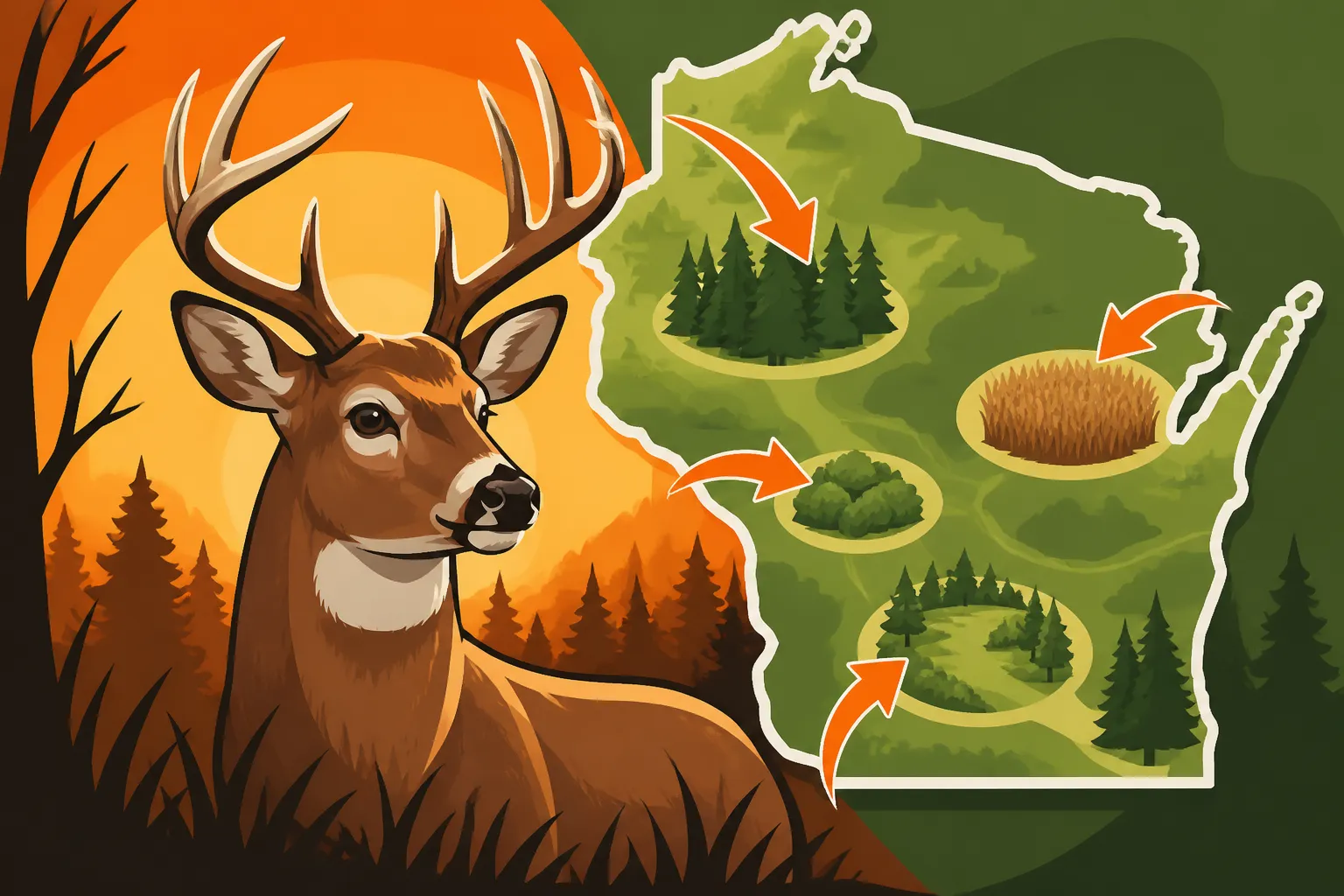
When the pressure mounts, deer don't just go nocturnal; they seek the densest, most difficult-to-access cover they can find. These are their sanctuaries, places where they feel safe from human intrusion. In northern Wisconsin, this often means vast cedar swamps, impenetrable tag alder thickets, or extremely remote pockets of the Chequamegon-Nicolet National Forest. Deer will dive into these areas and rarely emerge during daylight.
In the rolling hills of the Driftless Area, deer will head for the steepest, nastiest coulees and ridge tops, bedding in areas with commanding views and heavy undergrowth, often on the leeward side of ridges to avoid prevailing winds. These areas might seem too thick or too difficult for a hunter to navigate, and that's precisely why deer choose them. Even in agricultural zones, deer will gravitate towards the thickest CRP fields, deep ditch lines, or unharvested standing cornfields, which offer both cover and a food source. They know these places offer refuge, and they'll stick to them like glue. For hunters, this means abandoning the easy-access spots and being willing to push into the places most others avoid. Knowing where to look for these spots is crucial, and using tools like the Scouting Wisconsin Public Land Before Season or a mapping app like GoHunt can help you identify these overlooked havens.
The Role of Food and Water Sources Under Pressure
Even under immense pressure, deer still need to eat and drink. However, their patterns around these necessities become incredibly cautious. Instead of openly feeding in destination food plots or agricultural fields during the day, they will utilize these areas primarily at night. During daylight, they'll seek out less obvious food sources within their thick bedding areas, such as browse or acorns that have fallen into heavy cover.
Water access also changes. Instead of visiting open ponds or streams, they might rely on small seeps, puddles, or even dew collected on vegetation deep within their chosen sanctuary. They'll minimize travel in exposed areas, preferring to move covertly along dense cover edges or through swamps to reach a drink. This is where subtle rubs or tracks in an otherwise unlikely, thick area can tell a story. If you find fresh sign deep in what appears to be impenetrable cover, it's a strong indication that deer are not only bedding there but also finding resources without exposing themselves. It's a game of hide-and-seek, and the deer have perfected their camouflage.
Identifying Opening Weekend Deer Sanctuaries
Finding deer on opening weekend requires a shift in mindset from hunting where you expect them to be, to hunting where they feel safe. These sanctuary areas are often overlooked or deemed too difficult to hunt by the majority, which is precisely why they become so effective.
Undisturbed Public Land Pockets
Many hunters think public land gets "hunted out" on opening weekend. While heavily trafficked areas certainly do, there are always pockets of public land that remain relatively undisturbed. These are often areas that are difficult to access, either requiring a long walk, crossing tricky terrain, or navigating dense, wet cover. For instance, in the vast county forests of northern Wisconsin, like those in Marinette or Langlade counties, there are often expansive swamps or timber blocks several miles from any road. These areas require significant effort to reach, and most hunters simply won't put in the time.
Similarly, even in smaller state wildlife areas in southern Wisconsin, there might be deep cattail marshes or thickets surrounded by open fields that hunters overlook. Using satellite imagery on apps like GoHunt is invaluable here. Look for dark green patches indicating dense cover, areas crisscrossed by small creeks or swamps, or sections that appear to have no easy road access. These are the places where deer, especially mature bucks, will gravitate. They understand that a human must be willing to expend considerable energy and time to reach them, and that effort often translates to less pressure. Think about those "nasty" spots you always drive past because they look too difficult—that's exactly where the deer are. You might even find some prime ground for Where Northern Forest Bucks Bed in these overlooked spots.
Private Land and Safety Zones
It's a stark reality that deer often seek refuge on private land, especially parcels that aren't hunted, or areas designated as safety zones. If you're hunting public land adjacent to private property, pay close attention to the boundaries. Deer will often bed just inside the private line, feeling secure from the pressure on the public side. They might only cross onto public land after dark or during intense pushes from deer drives.
Similarly, areas around homes, cabins, or even busy roads that fall within legal safety zones effectively become sanctuaries. While you can't hunt in these zones, understanding their influence on deer movement is crucial. Deer will often stage in these areas, waiting for a lull in activity before moving. This means setting up on the edge of a safety zone, where legal, can be a highly effective strategy. These deer are still wild, but they've learned to associate human structures or property lines with a lack of pressure. Hunting Small Private Tracts in Wisconsin often reveals how quickly deer will use these smaller, unpressured havens.
Topographical Influences
Topography plays a massive role in where deer hide when pressured. Natural features like steep ravines, bluffs, thick creek bottoms, or expansive swamps offer both visual obstruction and scent advantages. In the famous Driftless Area, the steep coulees and ridge systems provide natural escape routes and bedding areas. Deer will bed high on a ridge point to catch thermals and wind, giving them an advantage to detect danger approaching from below. Conversely, they might drop into a deep, brushy coulee bottom, using the terrain to muffle sounds and block sightlines. Finding key Entry Routes on Steep Driftless Ground is essential.
In flatter, more forested regions, large swamps or extensive coniferous stands become prime sanctuaries. These areas often feature standing water, thick undergrowth, and dense canopy cover, making them difficult for hunters to penetrate silently. Deer can navigate these environments with ease, blending into the shadows and moving through areas that would be noisy and cumbersome for a human. Understanding how wind and thermals interact with these features is critical, as deer will use them to their advantage to remain undetected. Learning to read these natural features on a detailed map is like getting inside a deer's head.
Adapting Your Strategy for Pressured Deer
Knowing where deer go is only half the battle; the other half is adjusting your hunting strategy to effectively pursue them in their opening weekend hideouts. This often means abandoning conventional tactics and embracing patience and stealth.
Changing Your Hunt Times and Approach
Forget the idea of a quick morning hunt and an afternoon nap. On opening weekend, pressured deer often won't move much during the early morning frenzy. Instead, consider later starts or focusing on all-day sits in key areas. Deer that have been bumped early might resettle in dense cover, and the midday lull can sometimes be the best time to catch them slipping from one bedding area to another, or moving cautiously to a nearby food source within their sanctuary.
Still-hunting becomes an art form. Instead of walking quickly to cover ground, you need to move at a snail's pace, pausing for minutes at a time, looking, and listening. This slow, deliberate approach allows you to detect deer that are bedded tight or moving subtly through heavy cover. Focus on hearing faint sounds – a rustle in the leaves, a twig snap, a deer exhaling. You might only take a few steps in 15 minutes, but those steps are calculated. This is especially true when Still-Hunting Wisconsin Cedar Swamps, where visibility is often limited, and scent control is paramount. You're not looking for deer actively moving, but rather for a flicker of an ear, a patch of brown hide, or the subtle outline of a deer hunkered down.
Focusing on Funnels and Escape Routes
Pressured deer are still animals of habit, and they will utilize the path of least resistance when moving between bedding, feeding, and water, especially when escaping danger. Your job is to identify these natural funnels and escape routes and position yourself accordingly. These could be narrow strips of cover between open fields, a saddle between two ridge points, a dry creek bed winding through a swamp, or even a fence line or hedgerow that provides cover. Deer that are pushed from one area will often travel along these predictable pathways to reach another perceived sanctuary.
By studying aerial maps, you can identify these pinch points. Look for terrain features that constrict deer movement, forcing them through a smaller area. A small stand of pines between two clearcuts, or a narrow strip of timber connecting two larger woodlots, can be a highly effective ambush point. Similarly, if hunters are conducting Deer Drives With Three or Four Hunters in one area, anticipate where the deer will likely try to escape and set up along those routes. A well-placed stand overlooking a Hunting a Funnel Between Two Swamps can turn a frustrating opening day into a successful one. These aren't necessarily feeding or bedding areas themselves, but rather the highways deer use when under stress.
Hunting Near Pressure, Not In It
This might sound counterintuitive, but understanding where other hunters are can actually be a huge advantage. Most hunters will gravitate towards popular access points, obvious trails, or known feeding areas. Instead of joining the crowd, position yourself intelligently around that pressure. Deer will naturally move away from heavy human activity. If a property line or a dense block of public land is getting hammered, try to get downwind of it, or along a likely escape corridor that deer will use when pushed.
For example, if a large group of hunters is pushing a section of woods, deer will often filter out of that area, moving along subtle contours or through dense cover to reach a safer zone. By using a sophisticated mapping app like GoHunt, you can analyze topographical features and understand how deer might navigate when pressured, allowing you to set up on the exit ramps, so to speak. This strategy requires patience and the ability to interpret the sounds of distant hunting activity, positioning yourself to intercept deer that are actively trying to evade other hunters. It's about being the quiet observer, letting others do the pushing, and being ready when the deer come to you. This is a prime example of Finding Ground Others Walk Past.
Patience and Persistence
Ultimately, hunting pressured deer on opening weekend demands a level of patience and persistence that often goes against our natural inclinations. It's easy to get discouraged when the woods seem empty, but giving up early means missing out on potential opportunities. An all-day sit in a well-chosen, secluded spot can sometimes pay off in the late afternoon when deer, feeling slightly less threatened after hours of relative quiet, start to make their cautious moves.
Maintaining scent control is more critical than ever, as pressured deer are highly sensitive to human odor. Dress in layers for long sits, especially with a Cold Weather Sitting Strategy in mind, ensuring you can remain comfortable and still for extended periods. Your movements must be minimal, slow, and deliberate. Don't be afraid to sit in a less-than-ideal spot simply because it offers excellent cover and you can remain completely still and undetected. The deer know they're being hunted, and the hunter who can disappear into the landscape and wait them out often comes out on top.
| Opening Weekend Deer Behavior | Recommended Hunter Tactics |
|---|---|
| Shifts to nocturnal movement | Hunt midday; longer sits; adjust entry/exit |
| Retreats to thick, remote cover | Scout difficult-access areas (swamps, steep coulees); use mapping apps |
| Uses less obvious food/water sources | Focus on browse within bedding; check subtle seeps |
| Sensitive to human scent & noise | Prioritize scent control; move slowly (still-hunt); minimize talking |
| Utilizes natural funnels/escape routes | Identify pinch points on maps; set up on downwind side of pressure |
| Seeks refuge on private land/safety zones | Hunt public land adjacent to unpressured private property legally |
Disclaimer
Hunting is an inherently risky activity. Always prioritize safety, follow all Wisconsin Department of Natural Resources regulations, and obtain appropriate licenses and permits. The information provided here is for educational purposes and should not replace proper hunter education or professional guidance.