Rattling Volume in Thick Cover
The rustle of leaves, the snap of a twig – in Wisconsin's dense woods, these subtle sounds are often all a hunter hears before a deer materializes, seemingly out of thin air. Many of us try rattling antlers, expecting those crashing sounds to bring in a buck, only to be met with silence, especially in thick cover where sound gets swallowed up. This guide is all about mastering the art of rattling in those challenging, close-quarters environments, focusing on adjusting your volume and technique to pull in curious deer that might otherwise slip by unnoticed.
Understanding Deer Behavior in Thick Cover
When you're hunting those gnarly cedar swamps, thickets, or young aspen cuts that define so much of Wisconsin's deer habitat, you're dealing with deer that live a different kind of life than their open-country cousins. These bucks aren't often running wide-open fields; they're navigating a labyrinth of tight trails and heavy brush. This means their reactions to sounds, especially rattling, are going to be nuanced.
Why Less Can Be More
In dense cover, the sound of traditional, loud antler rattling just doesn't carry far. Imagine standing in a thick pine plantation or a dense dogwood thicket; even a person shouting can sound muffled and distant after just a short distance. Deer are acoustically aware, and an unnaturally loud or sustained rattling sequence can easily alert them to your presence without drawing them in. Instead, it might just send them sneaking off in the opposite direction. Bucks in thick cover are often already on high alert, relying heavily on their hearing to detect threats. A sudden, intense barrage of rattling might just trigger their flight response, thinking it's a fight they want no part of, or worse, a human trying to draw them out. It’s a common frustration, especially if you’ve been watching hunters on TV crash antlers together like gladiators, expecting the same results in your local woods.
The Element of Surprise and Curiosity
What you're really aiming for in thick cover is to pique a buck's curiosity, not to simulate an all-out brawl. Deer are naturally inquisitive, especially during the pre-rut and rut phases. A subtle, realistic sound that mimics sparring, rather than a full-blown fight, is often far more effective. It suggests that there might be a challenger in their territory, but not one so dominant or aggressive that it warrants immediate retreat. This is where a more controlled, lower-volume approach shines. You want them to think, "What was that? Should I check it out?" rather than "Uh oh, danger!" This is particularly true for younger bucks who are less likely to charge into a full-scale battle but are curious enough to investigate subtle sounds. Using the right technique and understanding what triggers their interest is crucial.
Adjusting Your Rattling Technique for Dense Woods
Forget those dramatic, hour-long rattling sessions you see in hunting videos. In Wisconsin's thickest areas, your approach needs to be more precise, more subtle, and much more sensitive to the immediate environment. It's about crafting an acoustic illusion that sounds natural and close-by, not like something out of a wildlife documentary.
Mimicking Light Sparring, Not a Brawler's Brawl
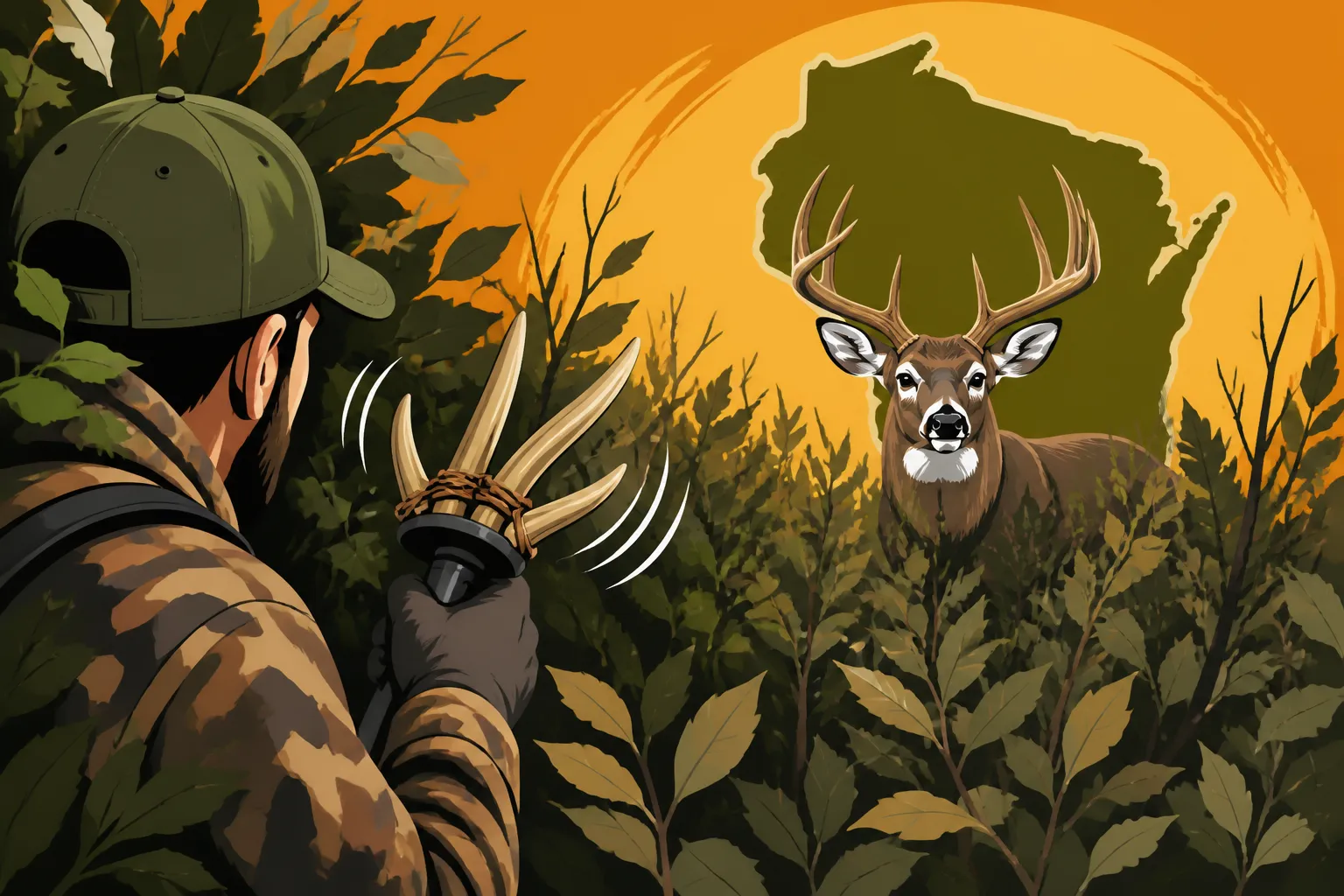
Instead of crashing antlers together with all your might, think about replicating the sounds of two bucks lightly sparring or rubbing antlers. This means shorter, softer sequences. Start with a few gentle clicks and rubs, simulating two bucks testing each other out. Follow this with a brief pause, then maybe a few more soft clacks. You want to suggest presence, not aggression. Consider using a smaller, lighter set of rattling antlers or even rattling bags that allow for more controlled, muted sounds. The goal is to make it sound like something a buck might genuinely encounter just out of sight in the brush. You could even incorporate a few light branch rakes with your antlers to simulate the environment naturally.
When you're dealing with heavy cover, the sound waves don't travel efficiently. They get absorbed and deflected by every leaf, branch, and tree trunk. A quiet, precise sequence will sound more natural and localized. If a buck is bedded down or slowly moving nearby, these subtle sounds are less likely to blow him out and more likely to make him cautiously approach. Remember, in these environments, deer are often within 50-75 yards before you even see them. A little goes a long way. This careful approach is particularly effective when you're hunting the pre-rut in late October or the peak rut week in Wisconsin, when bucks are highly responsive to any signs of competition.
Incorporating Grunt Calls and Snort Wheezes Subtly
Rattling shouldn't be a solo act in thick cover. Combining it with vocalizations can significantly increase your chances, but again, subtlety is key. After a soft rattling sequence, try a quiet grunt or two. This simulates a buck looking for his sparring partner or another deer in the vicinity. Use a deep, guttural grunt call, but keep the volume low. You're not trying to challenge a buck across a field; you're speaking to one that's potentially 30-50 yards away, hidden in the brush.
A short, controlled snort-wheeze can also be highly effective, but use it sparingly and strategically. A snort-wheeze is an aggressive challenge, and in thick cover, it can be intimidating if overdone. Think of it as the exclamation point to your quiet rattling and grunting sentence. It’s best used after a buck has shown some interest or if you suspect a more dominant buck is in the area. The key is to make these calls sound like they're coming from just beyond the nearest screen of brush, not booming across the landscape. Tools like those offered by GoHunt often emphasize realistic sound profiles, which is exactly what you need when you’re trying to replicate authentic deer behavior in tight quarters. Many hunters find that when they're learning to use grunt calls in mature timber, it's the quiet, almost questioning grunts that draw deer in most effectively.
Optimal Setup and Timing for Rattling in Thick Cover
Location, wind, and timing are always critical in deer hunting, but they become absolutely paramount when you're trying to coax a deer out of dense cover with rattling. A slight miscalculation can send a wary buck spiraling away without you ever knowing he was there.
Positioning for Success: Visibility and Escape Routes
When you choose a spot to rattle in thick cover, your primary concern should be visibility and controlling the wind. You want to be positioned where you can see a deer approaching from multiple directions, even if those lines of sight are limited to 30-40 yards. This might mean setting up on a subtle ridge point for deer movement, at the edge of a small clearing, or in a funnel between two swamps. The idea is to create a small "killing zone" where you have a shot if a buck comes in. Remember, a deer drawn to rattling in thick cover is likely to be extremely cautious, moving slowly and deliberately, trying to circle downwind to scent-check the source of the sound.
Always set up with the wind in your favor, anticipating a buck's downwind approach. This means having your back to the wind, or at least a quartering wind, that will carry your scent away from where you expect the deer to appear. You'll also want to consider your own escape route or an easy way to remain undetected if a buck hangs up just out of sight. A good ground blind on Wisconsin public land can be excellent for this, offering concealment and scent containment. Alternatively, a well-placed treestand setup in Wisconsin hardwoods can give you the height advantage needed to spot a deer through the underbrush before it spots you.
Timing Your Sequences and Patient Waiting
The most common mistake hunters make when rattling is impatience. They rattle for a minute, wait for five, then give up. In thick cover, patience is even more vital. A buck might hear your subtle rattling, move 20 yards, stop, listen, circle, and then continue. This process can take a significant amount of time.
Your rattling sequences should be short – perhaps 15-30 seconds of gentle clacking and rubbing – followed by a long period of silence, usually 10-15 minutes, or even longer. During these silent periods, stay absolutely motionless and scan constantly. Use your binoculars to pick apart every shadow and piece of cover. Bucks often come in slowly, picking their way through the densest parts of the woods, trying to pinpoint the source of the sound without exposing themselves. Some days, especially when you're hunting the Wisconsin rut in November, you might need to commit to a location for an hour or more, performing several sequences before a buck finally commits. Don't be afraid to try this method even if you're hunting without bait in a banned county, as it relies on natural deer behavior rather than attraction.
Here's a quick comparison of rattling strategies based on cover type:
| Cover Type | Rattling Volume | Sequence Length | Frequency | Vocalizations | Best Time of Day | Notes |
|---|---|---|---|---|---|---|
| Thick Cover (Cedar Swamps, Clearcuts) | Low, Subtle | Short (15-30 sec) | Infrequent (10-15 min) | Quiet Grunts, Soft Snort-Wheeze | Anytime | Focus on curiosity, close range. Stay put. |
| Moderate Cover (Mixed Hardwoods) | Medium | Moderate (30-60 sec) | Moderate (7-10 min) | Varied Grunts, Occasional Wheeze | Morning/Evening | Mix light sparring with short, sharp clashes. |
| Open Country (Farm Edges, Large Timber) | Loud, Aggressive | Longer (1-2 min) | Frequent (5-7 min) | Loud Grunts, Snort-Wheeze | Morning/Evening | Aim for long-distance attraction. |
Common Mistakes and How to Avoid Them
Even with the best intentions, it's easy to fall into old habits or make missteps that can blow your chances. Rattling, especially in thick cover, is as much about what not to do as it is about what to do.
Over-Rattling and Being Impatient
One of the biggest pitfalls is rattling too loudly or too often. In dense cover, an excessive amount of noise can be a huge red flag for a wary buck. It sounds unnatural, especially if it's sustained for long periods. Deer are used to quick, intense bursts of sparring, not a continuous racket. If you rattle too much, you risk making the buck think the "fight" is just for show, or worse, that something is truly off about the sounds. He might simply choose to bypass the area, thinking the competition is too intense or that there's a predator involved. This is where the discipline to sit still and wait, even when your mind tells you to make more noise, becomes your greatest asset. Keep your sequences brief and spaced out, allowing the quiet woods to reset between calls. It’s often the stillness that really sets the stage for a buck to commit.
Ignoring Wind Direction and Thermals
This might sound obvious, but it's astonishing how many hunters compromise their setup by not paying absolute attention to the wind. In thick cover, deer often use the terrain and dense vegetation to mask their approach, making it even more likely they will try to circle downwind to get a whiff of whatever is making the noise. If your scent blows into the approach path, even the most curious buck will likely scent you and vanish without a trace. Always consider the wind, not just at ground level but also how it might be swirling through pockets of thick timber or down a coulee. Using an app like GoHunt or a simple wind checker can give you critical real-time information. Understanding how wind and thermals in a coulee affect deer movement is crucial, especially in the Wisconsin Driftless Area.
Lack of Visual Concealment and Movement
You've successfully rattled in a buck, and he's slowly picking his way through the brush towards you. This is the moment when many hunts go south. If you're not perfectly concealed or if you make even the slightest unnecessary movement, that buck will pick you off in an instant. In thick cover, deer are often within 20-30 yards before you even get a clear look. You need to be a statue. Avoid the urge to constantly scan with your head; instead, use your eyes to pick apart the cover, and rely on subtle peripheral vision. Having a good backdrop, like a thick pine tree or a dense clump of sumac, is vital. Remember, deer have an incredible ability to detect even minor movements against an open background. Before you even start rattling, make sure your position is locked down, your weapon is ready, and you're mentally prepared for a close-range encounter. This is especially true if you're trying to draw a buck into a scrape line along a logging road – they will be on high alert.
Beyond Rattling: Complementary Strategies in Thick Wisconsin Cover
Rattling is just one arrow in your quiver. To truly be successful in Wisconsin's challenging thick cover, it often requires a multi-faceted approach, combining observation, strategic movement, and an understanding of the deer's natural patterns.
Scouting as Your Foundation
Before you even think about rattling, thorough scouting is non-negotiable, especially on public land. Learn to identify natural pinch points, funnels, and bedding areas within the thick stuff. These are the locations where your rattling efforts will have the highest chance of success because deer are already using these routes. Look for fresh rubs and scrapes that indicate bucks are actively using the area, and pay attention to trails that lead into or out of dense cover. Using the Wisconsin Hunt Wild App can help you identify public access points and analyze aerial photos for coulee deer or other features. You want to set up where a buck is already likely to be, not just hoping he'll travel a long distance through impenetrable cover to find you. Knowing where Northern Forest bucks bed, for instance, can drastically improve your chances.
Still-Hunting the Edges and Pockets
Sometimes, the best rattling technique is to still-hunt your way into a prime location before rattling. Instead of sitting and calling into a vast expanse of thick cover, slowly and quietly still-hunt Wisconsin cedar swamps or the edges of dense clearcuts, paying close attention to the wind. Once you find a promising pocket or a fresh sign, set up for a short rattling sequence. This approach allows you to cover more ground and put yourself closer to where deer are already present. It also gives you a better feel for the immediate environment. If you're hunting clearcuts and aspen cuts, slowly moving along their edges and then pausing to rattle and listen can be incredibly effective.
Post-Rattling Movement and Follow-Up
What do you do if your rattling sequence doesn't immediately yield results? In thick cover, a buck might hang up just out of sight, trying to figure things out. Sometimes, a very subtle, slow, and quiet still-hunt towards where you think the buck might be can pay off. This isn't a deer drive; it's a careful, calculated movement, perhaps 20-30 yards, to try and get a visual on a hung-up buck. You're trying to simulate a buck that’s been sparring, maybe broke it off, and is now moving subtly through the woods.
Alternatively, if you've done several sequences over an hour and nothing has shown up, pack up quietly and move to a new location. Don't overstay your welcome. Repeating the same rattling in the same spot endlessly in thick cover rarely works. The deer either heard you and left, or they're simply not interested or present. Being adaptable and willing to move is a key trait of successful hunters in challenging environments.
The Mental Game of Rattling in Dense Cover
Hunting in thick cover, especially when trying to lure deer with rattling, is as much a mental game as it is a physical one. It tests your patience, your belief in the strategy, and your ability to remain focused when nothing seems to be happening.
Patience as Your Ultimate Tool
It's easy to get discouraged when rattling, especially after hearing stories of bucks charging in from across open fields. In thick Wisconsin cover, however, the reward often goes to the most patient hunter. You might go several rattling sessions without seeing a single deer, only to have a monster buck materialize silently 15 yards away when you least expect it. This unpredictability is part of the thrill, but it also demands incredible self-control. Resist the urge to fidget, check your phone, or give up too early. The deer you're trying to call in might be right there, just waiting for you to make a mistake.
Trusting Your Instincts and Adapting
Every day in the woods is different. The wind, the deer activity, the specific piece of cover – all these variables change. Don't be afraid to trust your gut feeling. If a rattling sequence feels too loud, quiet it down. If you feel like a grunt call is appropriate, add one in. The techniques discussed here are guidelines, but the real art comes from adapting them to the moment. A hunter who masters this flexibility, constantly evaluating the conditions and the deer's potential reactions, will find more consistent success. Learning how to read cuttings under an oak or understanding late-season food sources for whitetails are examples of instinctual knowledge that contribute to overall hunting success, regardless of the calling technique.
Rattling in thick cover demands a shift in mindset from aggressive calling to subtle invitation. By understanding deer behavior, refining your technique, optimizing your setup, and cultivating patience, you can turn those seemingly impenetrable woods into a productive hunting ground.
Disclaimer
Hunting involves inherent risks, and conditions can change rapidly. Always prioritize safety, adhere to all Wisconsin Department of Natural Resources regulations, and scout your hunting area thoroughly. The information provided here is for educational purposes and personal enjoyment.