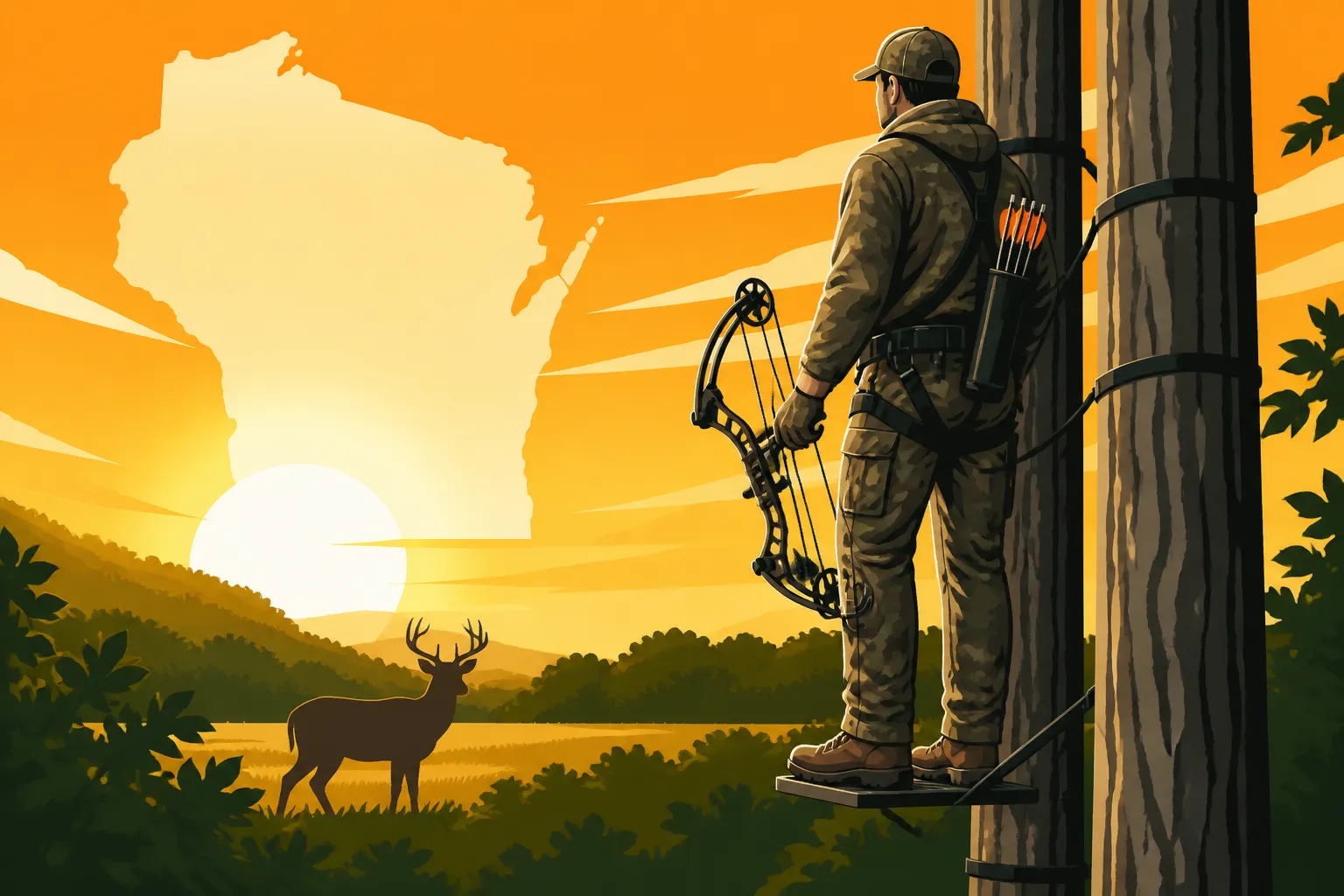
Climber Stands on Straight Trunks
Finding the perfect treestand spot in Wisconsin's vast and varied landscape can be a real headache, especially when you're trying to stay mobile and adaptable. You know the feeling: you scout a promising area, only to find the "perfect" tree is either too crooked for your lock-on, or too small for your ladder stand. This guide is all about embracing the climber stand, specifically how to maximize its potential on those beautiful, straight trunks found throughout our Wisconsin woods, giving you the flexibility to hunt new ground effectively.
The Undeniable Appeal of Climber Stands for Wisconsin's Straight Trees
When it comes to adaptability and stealth, very few treestand options can hold a candle to a good climber stand, especially here in Wisconsin. We've got so many incredible pockets of public land, from the sprawling Chequamegon-Nicolet National Forest up north to the numerous county forests and wildlife areas. The beauty of these places is their wildness, but that also means the perfect, pre-scouted tree isn't always waiting for you. This is where a climber stand shines, turning a previously inaccessible hunting spot into prime real estate.
Unmatched Mobility and Adaptability
One of the biggest frustrations for us hunters is being tied to a fixed location. Maybe you've hung a couple of lock-ons before the season, feeling confident, only to have the deer change their patterns due to food sources drying up, increased pressure, or even just a shift in the wind. A climber stand frees you from that. Imagine scouting a new section of state land, perhaps using a mapping tool like GoHunt to pinpoint likely bedding areas or travel corridors, and then identifying a perfect, straight oak or pine right in the middle of it. With a climber, you can be up that tree and hunting within minutes of arriving, adjusting your setup as the conditions dictate. This kind of flexibility is a game-changer, especially during the rut when deer can pop up anywhere, or when you're hunting without bait in a banned county and need to be where the natural food sources are.
You’re not limited to a single tree or even a single area for the entire season. You can hunt a morning sit deep in a cedar swamp, then pack up, move a half-mile, and set up on an aspen cut edge for the afternoon. This mobility is particularly valuable on public land where pressure can push deer into unexpected places. If your initial spot isn't producing, or you notice fresh sign a few hundred yards away, you can simply descend, relocate, and re-ascend. It's truly a tool for the hunter who doesn't want to be static.
Reaching Untouched Whitetail Sanctuaries
Many of us know that the biggest bucks often hold tight in the thickest, nastiest cover. These are the places that are a pain to get into, let alone hang a traditional stand. But often, within these sanctuaries, you'll find mature timber with perfectly straight trunks that are ideal for a climber. Think about those dense pockets of pine plantations or mature hardwood ridges in the Driftless Area. Other hunters might shy away from these spots because they can't easily hang a ladder or a complicated lock-on. With a climber, you can penetrate these areas, getting above the thick understory to see into those hidden pockets where mature deer feel safe.
This ability to access previously "unhuntable" trees means you can often find unpressured deer. While others are hunting logging roads or easy-access ridges, you can be a quarter-mile deeper, perched silently in a towering pine overlooking a secret buck bedding area. It's about getting creative and using your gear to overcome physical barriers. This strategy works particularly well when trying to Find Ground Others Walk Past on crowded public lands or when hunting those secluded funnels between swamps.
The Stealth Factor of Setting Up On-The-Fly
A huge advantage of climber stands is their relatively quiet and quick setup. Unlike hauling in multiple sections of a ladder stand or dealing with a rattling lock-on and sticks, a two-piece climber can be carried in a single, backpack-style unit. When you reach your chosen tree, the process of ascending is generally far less disruptive. You're not making multiple trips up and down the tree, strapping in different sections. Instead, you're slowly and steadily moving upwards, blending into the environment.
This stealth is critical, especially when you're heading into an area you've just scouted and suspect deer are already nearby. Imagine you're on a morning hunt, and you've found a new scrape line along a logging road you hadn't noticed before. Instead of having to abandon the spot or return later, you can find a suitable tree, quietly set up your climber, and be ready to hunt within minutes. This immediate response capability is fantastic for capitalizing on fresh sign and fleeting opportunities, giving you an edge over less flexible setups.
Choosing the Right Climber for Wisconsin's Diverse Forest Types
Not all climber stands are created equal, and what works beautifully in a uniform pine forest might be a nightmare in a gnarly oak stand. Making the right choice means understanding the trees you'll be climbing and what features will serve you best during a long, cold Wisconsin hunt.
Understanding Your Tree Species: Pines, Oaks, and Maples
Wisconsin's forests are incredibly diverse. Up north, you'll encounter vast tracts of pine, spruce, and fir, often with very straight, limbless trunks. These are a climber's paradise! In the central and southern parts of the state, especially in the Driftless Area, you'll find more hardwoods – oak, maple, hickory, and cherry. These trees, while often tall and straight, can have rougher bark, more low-hanging limbs, or occasional bulges that make climbing a bit trickier.
- Pines and other evergreens: For these smoother, often sappy trunks, a climber with a more aggressive "bite" to its traction chains or cables can be beneficial. Some models have a slightly more open front section to accommodate larger, more uniform trunks.
- Oaks and rough-barked hardwoods: Here, you want a climber with robust, dependable traction teeth or a solid cable system that won't slip on uneven bark. A stand with a larger platform can also be more forgiving if you encounter a slight bulge you need to maneuver around. Consider stands with a wider range of adjustability in their cable or chain systems to adapt to varying tree diameters as you ascend. Using a platform like GoHunt to examine aerial photos can often help you identify predominant tree types in an area before you even set foot in the woods.
Weight, Comfort, and Features for Long Wisconsin Hunts
Let's be honest, we often put in some serious miles on a Wisconsin hunt. Whether it's the long walk into a remote public land parcel or repositioning multiple times throughout the day, the weight of your gear matters. A heavy climber stand, while potentially more robust, can wear you down quickly. Look for stands that offer a good balance of durability and lightweight construction, often utilizing aluminum.
Key features to consider:
- Weight: This is paramount for mobility. Aim for something you can comfortably carry for extended periods. A lighter stand means more energy for the hunt.
- Platform Size: A larger platform offers more room to move, which is a huge comfort, especially during an all-day sit in November. It also provides more stability for standing shots.
- Seat Type: Some climbers come with a sling-style seat, others with a padded bench. For those all-day sits in colder weather, a comfortable, well-padded seat can make or break your hunt. Swivel seats can also be a nice feature, though they add complexity and weight.
- Backpack Straps: Ensure the integrated backpack straps are comfortable and well-padded. You'll be carrying this stand a lot, so good ergonomics are crucial.
- Camo vs. Solid Color: While camo might seem obvious, often a solid dark green or brown blends just as well, and sometimes even better, especially if you're above the canopy. What truly matters is breaking up your silhouette.
- Bow vs. Gun Hunters: Many modern climbers are designed to accommodate both. Bow hunters will appreciate a clear shooting lane and ample room to draw, while gun hunters might prioritize a solid shooting rail or a stand that allows them to remain seated and comfortable for long stretches.
Essential Accessories and Upgrades for Climber Efficiency
You wouldn't head into the woods without the right layers for a Cold Weather Sitting Strategy, and the same goes for optimizing your climber stand. A few key accessories can significantly enhance your experience.
- Good Backpack Straps: If your stand's stock straps aren't cutting it, invest in aftermarket ones. Your back will thank you.
- Comfortable Seat Cushion: For those extended sits, especially during the colder Wisconsin Gun Deer Season Dates, a thick, waterproof seat cushion is a must. Many come with straps to secure them in place.
- Haul Rope: Essential for pulling up your bow, rifle, or backpack once you're safely secured in your stand. Never climb with gear attached to you or in your hands.
- Accessory Hooks/Holders: Small hooks or organizers to keep your binoculars, rangefinder, grunt tube, or calls easily accessible and silent.
- Stealth Strips/Insulation: Applying stealth strips to metal parts can eliminate metallic clangs that can spook wary whitetails. Even a little bit of felt or rubber tape can make a big difference.
- Tree Saw/Pruner: While you want to minimize disturbance, a small, quiet folding saw or pruner can be invaluable for clearing a critical shooting lane once you're in position. Just be mindful of local regulations regarding trimming on public land.
| Feature | Benefits | Considerations |
|---|---|---|
| Lightweight Build | Easy transport, less fatigue | May sacrifice some stability or comfort |
| Large Platform | More room to move, stable for standing shots | Heavier, larger to transport |
| Padded Seat | Increased comfort for long sits | Can add bulk and weight |
| Adjustable Cables | Adaptable to various tree diameters | Can be more complex to set up initially |
| Aggressive Teeth | Better grip on rough bark | Can damage smoother bark, potentially harder to adjust |
| Backpack Straps | Essential for comfortable carrying | Quality varies, upgrade if necessary |
Mastering the Art of Safe and Silent Climbing
Using a climber stand effectively isn't just about finding the right tree; it's about executing a safe and silent ascent. Safety is paramount, and silence is key to not alerting every deer in the county to your presence. Nobody wants to be the hunter making a ruckus while trying to get into position during Opening Weekend Tactics in Wisconsin.
Pre-Climb Checks and Gear Preparation
Before your feet even leave the ground, a thorough pre-climb check is absolutely non-negotiable. This isn't just about the stand; it's about you, your gear, and the tree itself.
- Inspect Your Stand: Look for any cracks, loose bolts, frayed cables, or worn straps. Pay close attention to the pivot points and the traction components that grip the tree. If anything looks suspect, do not use the stand until it's repaired or replaced.
- Check Your Safety Harness: Ensure your full-body safety harness is in good condition, free of tears or fraying. Make sure all buckles and straps are functioning correctly. This is your lifeline, quite literally. You can learn more about this in Safety Harnesses and Lifelines.
- Secure All Gear: Ensure your weapon is unloaded (if applicable) and securely attached to your haul rope, ready to be pulled up after you've reached your desired height. Your backpack, rangefinder, and other essentials should also be ready for hoisting.
- Evaluate the Tree: This is critical for climber stands.
- Straightness: Is the trunk straight enough for the full height you intend to climb? Even a slight curve can cause issues.
- Limbs: Are there any limbs that will impede your ascent? Can you easily prune them or climb around them?
- Bark: Is the bark too loose, mossy, or icy? Slippery conditions are a huge risk.
- Diameter: Is the tree within the stand's recommended diameter range at both the base and your intended climbing height?
- Deadfall: Check the base of the tree for any dead branches or loose debris that might create noise as you approach or begin to climb.
Taking these few extra minutes can prevent an accident and ensure a quiet start to your hunt. It's easy to rush when you're excited, but patience here pays dividends.
The Step-by-Step Climbing Technique
Once your pre-climb checks are done, you're ready to ascend. The key is a smooth, controlled, and quiet motion.
- Attach Your Harness: Don your full-body harness and attach your tether line to the tree before you even lift the stand. As soon as you leave the ground, you should be connected. Many hunters use a rope-style lineman's belt or similar system to maintain constant connection.
- Position the Stand: Place the bottom (foot) section of your climber around the base of the tree, ensuring a snug fit. Then, place the top (seat) section above it. Make sure both sections are level.
- Ascend in Sections:
- Top Section First: Lean forward slightly, pushing the top section up the tree as far as you can comfortably reach. The "teeth" or cables should bite into the bark.
- Foot Section Next: Stand up on the foot section, using your legs to push the bottom section up the tree, just below the top section. You can use your knees to help guide it up.
- Repeat: Continue this alternating motion – top section up, then bottom section up – slowly and steadily.
- Maintain Contact: Always keep at least three points of contact (two hands and one foot, or two feet and one hand) with the stand. Your safety harness should always be attached to the tree above you, moving it up as you climb.
- Silence is Golden: Move deliberately. Avoid scraping the stand against the bark or letting pieces clang together. Practice in your backyard beforehand to get a feel for the rhythm and identify any potential noise points. Think about how a stealthy predator moves – slow, deliberate, and silent.
- Reaching Your Height: Once you've reached your desired height, ensure both sections of the stand are firmly gripping the tree and are perfectly level. Make sure your harness tether is short enough to prevent a fall to the ground but long enough for comfortable movement and shooting. Then, you can use your haul rope to bring up your gear.
This methodical approach minimizes noise and maximizes safety, allowing you to settle into your spot without alarming every critter in the woods.
Safety Harness Usage: Non-Negotiable Protection
I can't stress this enough: a safety harness is not optional. It is the single most important piece of gear you carry when using any treestand, especially a climber. Accidents happen, and they happen quickly. A simple slip, a piece of bark breaking off, or even a moment of dizziness can lead to a fall.
A full-body harness, properly worn and connected, will catch you. But it's not enough to just wear it. You need to be connected to the tree from the moment your feet leave the ground until they touch back down. This is where a lineman's belt or a continuous rope system comes into play, allowing you to remain tethered while ascending, descending, and adjusting your stand.
Regularly inspect your harness for wear and tear, and always follow the manufacturer's instructions for use. Treat your harness like your life depends on it – because it does. Don't compromise on safety for the sake of a few minutes or perceived convenience. It's just not worth the risk.
Maximizing Your Hunt: Placement, Shooting Lanes, and Post-Hunt Care
Once you're safely up in your climber, the real work begins. It's not just about being in a tree; it's about being in the right tree, set up in the right way, to capitalize on those precious hunting opportunities. And when the hunt is over, proper care ensures your gear is ready for the next adventure.
Strategic Placement for Optimal Hunting Opportunities
Choosing the actual tree to climb isn't just about its straightness; it's about its strategic value. Even with the best gear from GoHunt for scouting, on the ground is where the real decisions are made.
- Wind Direction: Always, always, always hunt with the wind in your favor. Your scent cone is your biggest giveaway. A climber allows you to be flexible, choosing a tree that works with the prevailing wind for that specific hunt, rather than being stuck with a predetermined angle. This is crucial whether you're still-hunting Wisconsin cedar swamps or setting up on a Reading a Ridge Point for Deer Movement.
- Sun Angle: Consider where the sun will be throughout your hunt. Early morning or late afternoon sun in your eyes can ruin a shot, and a blinding glare can make it impossible to spot approaching game. Position yourself so the sun works in your favor or is at your back.
- Travel Corridors and Funnels: Look for natural pinch points – saddles, creek bottoms, fence lines, or timber edges – where deer are likely to travel. A climber allows you to get directly on these routes. If you've been doing your Scouting Wisconsin Public Land Before Season, you'll already have an idea of where these might be.
- Bedding Areas and Food Sources: Position your stand between known bedding areas and feeding areas. Morning hunts might be closer to bedding, while evening hunts closer to food. However, always be mindful of your entry and exit routes so you don't bump deer.
- Background Cover: Try to choose a tree that offers some background cover to break up your silhouette. Even with full camouflage, a human form silhouetted against an open sky is easy to spot. A cluster of evergreens behind you, or the thicker canopy of a hardwood, can make a huge difference.
Clearing Shooting Lanes Without Giving Yourself Away
Once you're at height and securely settled, take a moment to assess your shooting lanes. This is often an afterthought, but it's critical.
- Identify Critical Lanes: Determine your primary shooting lanes based on where you expect deer to approach. Don't go overboard and clear everything; focus on the most probable angles.
- Minimal Trimming: Use a small hand saw or pruners to remove only what's absolutely necessary. Every cut branch is a sign to a deer that something is amiss. Aim for minimal disturbance.
- Height Advantage: Remember, you're elevated. Many small branches that seem to block a shot from the ground might be easily shot over from your stand.
- Practice Your Shots: Mentally (or physically, if safe and legal) practice drawing your bow or shouldering your rifle in all critical directions. Are there any branches that interfere with your draw cycle or scope clearance?
- Post-Trim Clean-up: If you're trimming, try to kick or throw the cut branches away from your immediate area. Leaving a pile of fresh cuttings directly under your stand can be a red flag.
The goal is to open up just enough space to get a clean shot, without turning your area into a glaring signpost for every deer walking by. Think like a deer: what looks out of place?
Proper Care and Storage for Longevity
Your climber stand is an investment, and like any good piece of gear, it deserves proper care. This not only extends its lifespan but also ensures its safety and reliability for future hunts.
- Clean After Each Hunt: Especially after wet or muddy hunts, wipe down your stand. Dirt, sap, and moisture can lead to rust and corrosion, or cause moving parts to stick. Use a damp cloth, then dry thoroughly.
- Inspect Regularly: Beyond the pre-climb check, give your stand a more thorough inspection periodically throughout the season and before long-term storage. Check all welds, bolts, cables, and straps.
- Lubricate Moving Parts: Lightly lubricate any pivot points or moving parts with a dry lubricant to keep them functioning smoothly and silently. Avoid oily lubricants that can attract dirt or leave a scent.
- Store Properly: When not in use, store your climber stand in a dry, cool place, ideally indoors or in a shed. Keep it off the ground to prevent moisture accumulation. Avoid leaving it exposed to the elements for extended periods, as UV rays and temperature fluctuations can degrade materials.
- Replace Worn Components: If you notice any fraying on cables, straps, or excessive wear on the traction teeth, replace those components immediately. Most reputable manufacturers offer replacement parts. Don't try to "get one more season" out of compromised equipment.
- De-scent: Before putting your stand away for the season, and especially before your first hunt, consider de-scenting it. Washing with scent-free soap and storing it with natural materials (like pine needles or cedar branches) can help keep it free of foreign odors.
A well-maintained climber stand can serve you faithfully for many seasons, opening up new hunting opportunities and helping you adapt to the ever-changing Wisconsin woods. It’s an invaluable tool for the mobile and adaptable hunter who thrives on accessing those hard-to-reach, untouched spots.
Disclaimer
This article is for general informational purposes only and does not constitute professional advice. Laws, prices and regulations vary by location and change over time. Consult a qualified professional for guidance on your specific situation.