Climbing Sticks for Rough Bark
When you're trying to set up a treestand in Wisconsin's diverse forests, it often feels like you're fighting the tree itself, especially when that bark is as gnarly and rough as an old oak. Traditional climbing aids can slip, damage the tree, or just plain fail to feel secure on uneven surfaces. This guide is all about mastering those difficult climbs, focusing on how the right climbing sticks can provide the stability and confidence you need to get into your stand safely and quietly, even on the roughest bark.
The Unique Challenges of Wisconsin's Trees for Treestand Hunters
Wisconsin's landscape is a patchwork of hardwoods, pines, and mixed forests, each presenting its own set of challenges for the deer hunter looking to elevate their position. From the dense northern forests to the rolling Driftless Area Deer Hunting in Wisconsin coulees, the trees are a crucial part of the habitat, but they're not always cooperative with our climbing gear.
Understanding Different Bark Textures in Wisconsin
Think about the difference between a smooth-barked young maple and a shaggy, ancient shagbark hickory. Or the deeply furrowed bark of a mature white oak, a prime spot for deer activity, compared to the scaly plates of a red pine. These variations aren't just cosmetic; they significantly impact how well your climbing equipment can bite and hold. On one hand, smooth bark can be slippery, offering little purchase. But on the other, rough, deeply textured bark, while seemingly offering more to grip, can also be incredibly uneven, making it hard for flat climbing stick attachments to sit flush. This unevenness can create pressure points or gaps that lead to instability, or even worse, cause the stick to shift under your weight. It's a constant balancing act between friction and a stable contact point.
The Impact of Tree Condition and Size
It's not just the bark texture, but the overall condition and size of the tree that throws wrenches into our plans. We often pick a tree based on its location relative to a trail, a food source, or a bedding area, only to find it's riddled with dead limbs that need to be cleared for a safe ascent. Or maybe it's got a significant lean, making the climb feel precarious even before you start. Large diameter trees, common in some older stands of timber, can pose a problem for climbing stick straps that are simply too short to wrap around them, or for sticks that aren't designed to flex and conform to a wider trunk. Conversely, finding a solid, straight tree with ideal bark in the perfect hunting spot can feel like hitting the jackpot. This is where Scouting Wisconsin Public Land Before Season really pays off, allowing you to identify these challenges before the pressure of opening day. We're looking for that sweet spot where a tree offers good concealment, a clear shot, and a manageable climb.
Why Climbing Sticks Are the Go-To for Rough Bark
Given the diverse and often challenging tree types found across Wisconsin, climbing sticks have become a favored tool for many serious hunters. Their design inherently addresses many of the issues presented by rough bark in a way that other climbing systems sometimes struggle with.
How Climbing Sticks Grip and Stay Secure
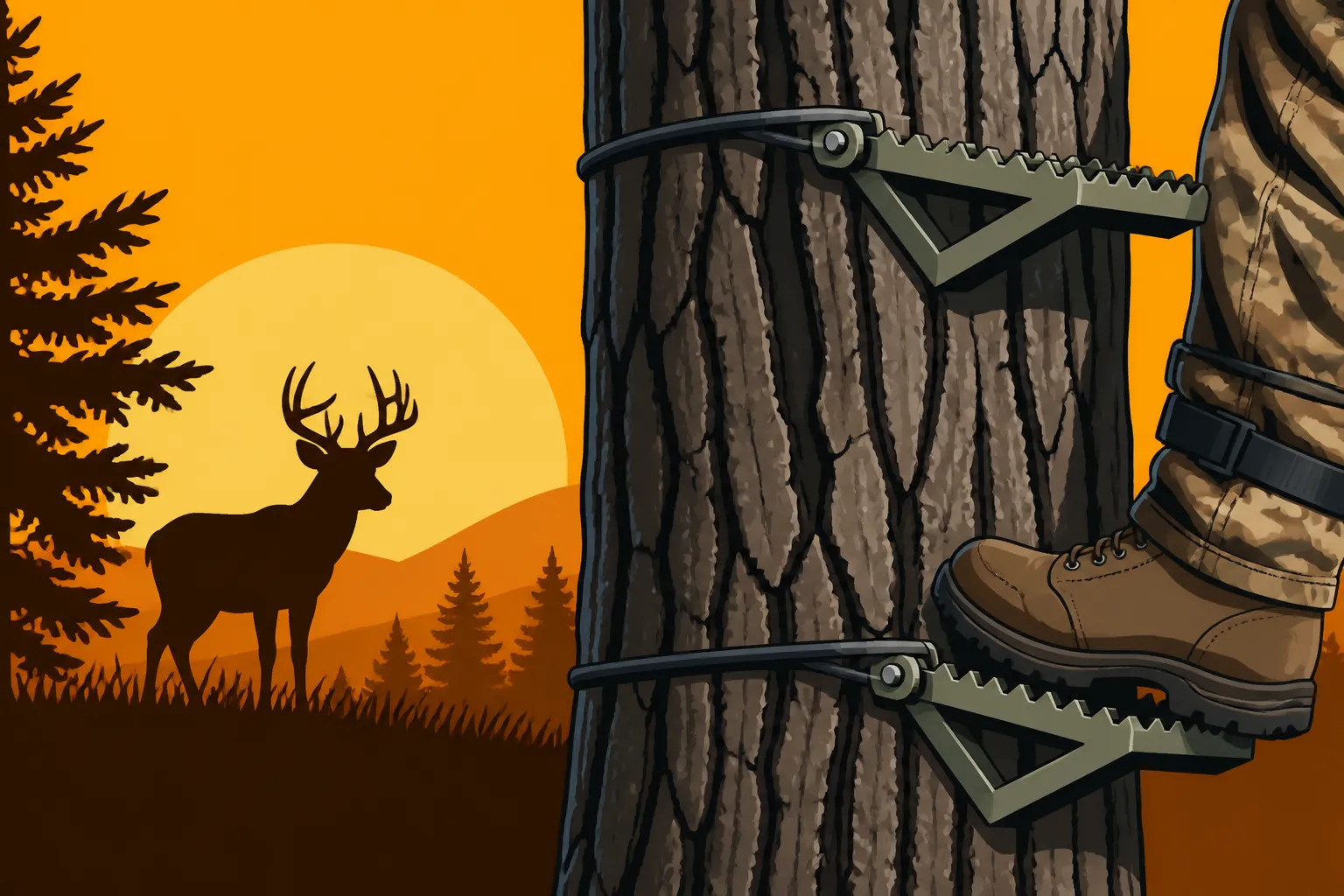
At their core, climbing sticks are designed for modularity and adaptable grip. Unlike a traditional climbing stand that uses a fixed biting arm, individual climbing sticks employ robust strap systems, often featuring cam buckles, that cinches them tightly to the tree. Many models also incorporate aggressive teeth or V-shaped attachments on the tree-facing side. These features are specifically engineered to dig into the bark, even the rough, uneven kind. This "bite" is what prevents slippage, creating a secure anchor point with each step. The beauty of it is that each stick can be adjusted slightly to find the best purchase on a unique section of bark, providing an unparalleled level of customized security as you ascend. It’s like each step has its own tailored grip, ensuring you're stable all the way up.
Stability and Safety on Uneven Surfaces
The individual nature of climbing sticks is a huge advantage when dealing with trees that aren't perfectly straight or have large knots and burrs. Instead of trying to force a rigid climber into an awkward position, you can place each stick independently, adjusting its angle and height to bypass obstructions or find the most stable contact points. This reduces the risk of the entire system rocking or shifting, which is a major safety concern. The weight is distributed more evenly across multiple attachment points, rather than relying on just two main contact points as with some ladder stands or self-climbing units. This modular approach also means that if one stick encounters a particularly tricky spot, the stability of the entire ascent isn't compromised. It gives you incredible confidence, especially when you're 20 feet up a massive oak in the Northern Forest Deer Density in Wisconsin. Being able to adjust for a slight curve in the trunk or a protruding branch is invaluable.
Key Features to Look for in Climbing Sticks for Rough Bark
Choosing the right climbing sticks for Wisconsin's rugged trees isn't about picking the cheapest or lightest option; it's about finding the ones that offer maximum security and ease of use on challenging bark. Several design elements contribute significantly to this.
Strap and Attachment Systems
The strap and attachment system is the heart of a climbing stick's security. Look for straps that are generously long, especially if you anticipate hunting older, larger-diameter trees common in many parts of Wisconsin. A strap that's too short means you're limited in your tree choices, which can be frustrating when you've found the perfect hunting location. The cam buckle or attachment mechanism itself needs to be robust and easy to operate, even with cold hands or gloves. A good cam buckle will cinch down incredibly tight without slipping, creating immense pressure on the tree. Some sticks feature an offset post design or even a dual-post system that allows the stick to grip the tree more effectively around its circumference, rather than just pressing against one side. Aggressive, angled teeth or rubberized grippers on the tree-contacting surface are also vital for biting into rough bark and preventing any downward creep once weight is applied. Companies like GoHunt often showcase gear that prioritizes these critical security features, understanding the demands of real-world hunting conditions.
Step Design and Spacing
The steps themselves might seem secondary, but they play a huge role in both safety and comfort. Steps that offer a non-slip surface, whether through texture, expanded metal, or rubberized coatings, are crucial, especially when conditions are wet, icy, or muddy – all common occurrences during Wisconsin's deer seasons. Wide steps provide better foot placement and reduce fatigue during the climb, which is important if you're making multiple trips up and down to adjust gear or retrieve a deer. Some sticks feature steps that fold in for quieter transport, which is a major benefit when still-hunting or trying to slip into a stand without alerting nearby deer. The spacing between steps is also critical. Too far apart, and it becomes a strenuous, awkward climb; too close, and you're taking too many small, inefficient steps. A consistent, comfortable spacing allows for a smooth, rhythmic ascent, minimizing noise and effort. Consider how you'll be wearing heavy boots and potentially carrying a bow or rifle as you climb.
Material and Construction
Climbing sticks are typically constructed from either aluminum or steel, each with its own pros and cons. Aluminum sticks are prized for their lightweight nature, making them ideal for run-and-gun tactics or situations where you're covering long distances on public land. This lightweight advantage is significant when you're packing in multiple sticks, a stand, and your pack. However, aluminum can sometimes be less durable under extreme stress or impact, and occasionally can be more prone to creating creaking noises if not properly secured. Steel sticks, while heavier, are renowned for their strength and rigidity. They often feel more solid underfoot and can withstand more abuse. The trade-off is the added weight, which might deter hunters who prioritize portability. Regardless of the material, look for solid welding or robust attachment points where the steps connect to the main upright. Any weak link in the construction can compromise safety. Durability extends to the finish as well; a good powder coat will protect against rust and reduce glare, making your sticks last longer and blend better into the environment. When comparing options, check out resources like the GoHunt gear reviews, which often detail the material and construction quality, helping you make an informed decision for hunting in places like Hunting the Wisconsin Rut in November.
Tips for Optimal Climbing Stick Setup on Gnarly Trees
Even the best climbing sticks can fail if not deployed correctly, especially when facing a tree with rough, uneven bark. A methodical approach to setup is key to ensuring both safety and stealth.
Pre-Season Scouting and Tree Selection
The work of a successful treestand setup begins long before the season opens. Scouting With the Wisconsin Hunt Wild App is invaluable for identifying potential treestand locations. When you're out there, look for trees that offer natural cover, a clear shot lane, and a relatively straight trunk without too many low-hanging limbs. Even with great climbing sticks, avoiding excessively crooked trees or those with massive burrs that will prevent proper seating of the stick is smart. Pay attention to wind direction, thermals (especially in coulees), and sun position relative to your chosen tree. Make sure the tree is healthy – dead or dying trees are never a safe option, no matter how good the hunting spot might seem. It's much better to walk past a "perfect" hunting tree if it means sacrificing safety. A little extra legwork in the pre-season to find the right tree can save a lot of headaches and potential hazards when it matters most.
The Installation Process for Maximum Security
When it comes time to hang your sticks, a systematic approach is crucial. Start by clearing any brush or small limbs around the base of the tree to ensure you have a clean workspace. Attach your first stick low enough to step onto comfortably from the ground, ensuring it's level and tightly cinched. Always use a safety harness from the moment your feet leave the ground. As you ascend, work one stick at a time, ensuring each is snug and stable before moving on. For rough bark, you might need to slightly adjust the angle of each stick or even try a different side of the tree to find the best purchase for its teeth or grippers. The goal is to maximize the contact points and eliminate any wobble. If a stick feels unstable, don't force it; re-adjust. A little extra time spent ensuring stability during setup will pay dividends in confidence and quietness during your actual hunt. Many experienced hunters advocate for a slight upward angle on the stick's attachment to encourage it to bite down even harder when weighted.
Practicing for Quiet and Efficient Ascent
Getting into your stand quietly is paramount, especially during the early morning hours or when slipping into a midday hotspot. Practice setting up your sticks and ascending the tree in your backyard or a non-hunting area. This allows you to identify any creaks, squeaks, or potential hang-ups in your system or technique. Pay attention to how your boots interact with the steps – any scuffing or scraping can alert deer. Consider adding small pieces of athletic tape or felt to any metal-on-metal contact points if you notice noise. The goal is to develop a smooth, fluid climbing rhythm. The more you practice, the more natural and silent your ascent will become, allowing you to focus on your hunting strategy rather than wrestling with your gear. This practice also helps build muscle memory, making the climb safer when you're tired, cold, or in low light. Mastering your ascent is just as important as mastering your shot when you're Hunting Wisconsin Farmland Deer where every little sound carries.
| Feature | Benefit for Rough Bark | Considerations |
|---|---|---|
| Aggressive Teeth/Grippers | Bites securely into uneven, furrowed bark. | Can sometimes slightly damage soft bark (minor issue). |
| Longer Straps | Accommodates large diameter trees, common in older forests. | May have more excess strap to manage. |
| Cam Buckle System | Cinch down tightly, providing strong, non-slip hold. | Requires clean operation; can be noisy if not careful. |
| Adjustable Standoff | Allows stick to hug various tree shapes and sizes. | Adds a little weight; ensure it's robust. |
| Foldable/Non-slip Steps | Quieter transport, safer climbing in all conditions. | Check for step width and comfortable spacing. |
| Aluminum Construction | Lightweight for easy packing over long distances. | Can be prone to noise if parts are loose or vibrate. |
| Steel Construction | Maximum strength and rigidity, very durable. | Heavier to carry, which may impact mobility. |
Disclaimer
This article is for general informational purposes only and does not constitute professional advice. Laws, prices and regulations vary by location and change over time. Consult a qualified professional for guidance on your specific situation.