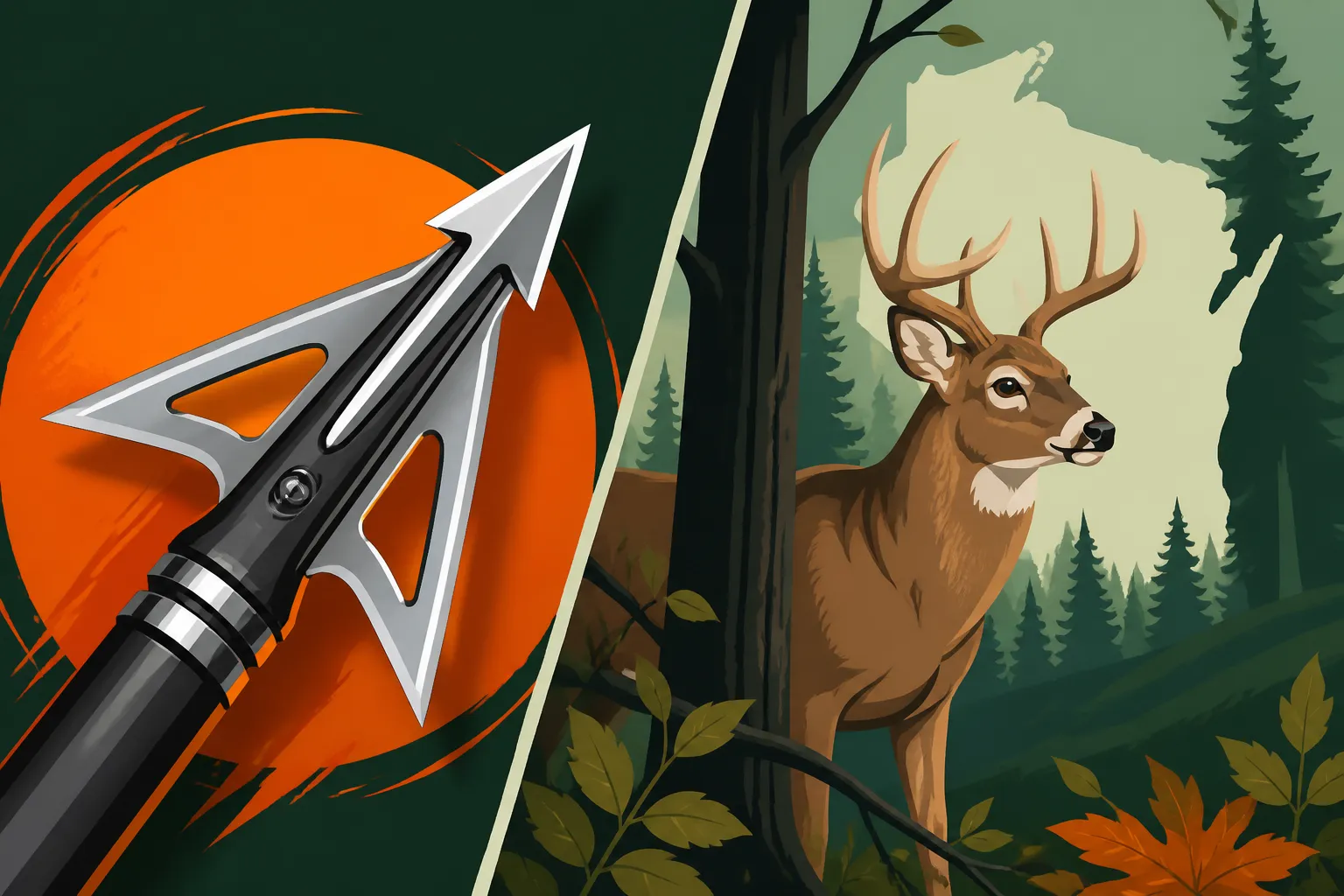
Broadheads for Timber Shots
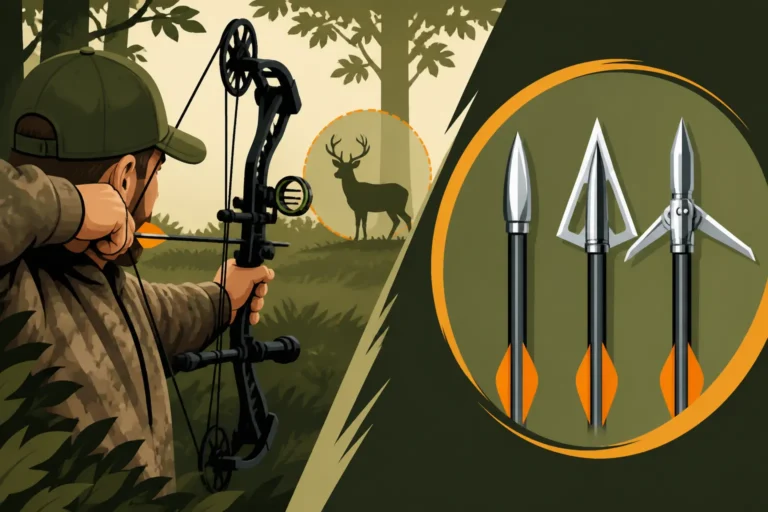
The dense woods and thick cover of Wisconsin present a unique set of challenges for bowhunters, especially when it comes to choosing the right broadhead. It’s a frustrating reality when you spend countless hours scouting, hanging stands, and practicing your shot, only to have a precious opportunity ruined by a broadhead that doesn’t perform in the tight, unforgiving timber. This comprehensive guide will delve into the nuances of broadhead selection specifically for those challenging timber shots, helping you understand the different types available, their pros and cons in dense environments, and critical factors to ensure an ethical and successful hunt.
The Unique Challenges of Timber Shots
Hunting in Wisconsin's forests and woodlots means embracing close encounters, but it also means dealing with a lot more "stuff" between you and your target. Unlike hunting wide-open agricultural fields where shots are often long and clear, timber hunting forces you to contend with a maze of branches, saplings, and brush that can turn a perfect shot into a heartbreaking miss in a split second.
Obstacles and Deflections
Imagine this scenario: you're perched in your stand, having carefully positioned it after extensive scouting. A mature buck, the one you've been after all season, finally steps into your shooting lane. You draw back smoothly, settle your pin, and release. But just as your arrow reaches the deer, a seemingly innocuous twig, invisible in the dim light or overlooked in the excitement, deflects your arrow. Instead of a clean pass-through, the arrow veers off course, resulting in a wounded animal or a complete miss. This isn't just a hypothetical situation; it's a harsh reality for many hunters.
The dense canopy and undergrowth in areas like the Chequamegon-Nicolet National Forest or even smaller woodlots in the Driftless Area are notorious for presenting these kinds of challenges. A branch that might seem insignificant to the naked eye can have a profound impact on an arrow traveling at hundreds of feet per second. The physics of it are simple: any contact, no matter how slight, can alter the arrow's trajectory. This makes broadhead choice incredibly important, as some designs handle these minor deflections better than others, maintaining a truer flight path and ensuring more consistent penetration on impact. When you're aiming for a precise kill zone, even a fraction of an inch matters, and timber frequently throws unexpected variables into the equation.
Shorter Engagement Distances
Another hallmark of timber hunting is the generally shorter engagement distances. Whether you're still-hunting through a cedar swamp or set up on a logging road funnel, deer often appear quickly and close. This proximity demands a broadhead that performs reliably at relatively low speeds, which can sometimes be the case with heavier arrows or less powerful bows, and one that is designed for maximum energy transfer on impact rather than long-range aerodynamic stability.
In these close-quarters scenarios, the animal might not be perfectly broadside, and you might have only a brief window before it steps behind cover again. The shot needs to be quick, decisive, and capable of delivering a devastating wound. This isn't about pinpoint accuracy at 60 yards; it's about reliable performance at 15 or 20 yards, often through potentially tougher hide or bone as the animal might be quartering slightly. You need confidence that your broadhead will perform its job without compromise, ensuring that if you hit the target, you get maximum penetration and a quick, ethical recovery. This is particularly true when you are trying to fill a tag during Wisconsin's Nine-Day Gun Deer Season but with a bow, where every shot counts under immense pressure.
Fixed Blade Broadheads: Reliable and Robust
When it comes to timber hunting, many veteran bowhunters will tell you that fixed blade broadheads are often the most dependable choice. They've been around for a long time for a reason: their simplicity often translates to unwavering performance, especially when navigating the inherent obstacles of the woods.
Straight-Flying and Penetrating Power
Fixed blade broadheads, by their very design, have no moving parts. The blades are rigidly attached to the ferrule, forming a single, solid unit. This structural integrity means there's nothing to deploy, nothing to break, and nothing to fail to open. When you release that arrow, the broadhead flies as it's designed to, relying on its aerodynamic shape and your bow's power for stability and penetration. This fixed design inherently offers a strong, consistent flight path, which is crucial when an unexpected deflection might occur. Even if a blade clips a small twig, the energy transfer to the broadhead itself is often less disruptive than with mechanicals.
This robust construction also contributes to their superior penetrating power. A cut-on-contact fixed blade broadhead, for example, begins slicing the moment it touches the hide, and its sturdy tip is designed to split bone rather than glance off or mushroom. This is invaluable when a deer presents a slightly quartering-away shot, or if your arrow needs to punch through a rib on the entry or exit. Hunters venturing into areas where deer might be larger, like the Best Wisconsin Counties for Big Bucks, often favor fixed blades for their reliability in getting through tough hide and heavy bone, ensuring a cleaner pass-through and a better blood trail. There's a real peace of mind knowing your broadhead is built like a tank and designed to punch through whatever it encounters.
Durability and Confidence in Dense Cover
The sheer durability of fixed blade broadheads is perhaps their greatest asset in dense cover. A mechanical broadhead, while excellent in open scenarios, has intricate parts that can potentially be compromised by a less-than-perfect impact. A fixed blade, however, is much more forgiving. If your arrow clips a small branch on its way to the target, a well-built fixed blade is more likely to maintain its integrity and trajectory, delivering the force you've stored in your bowstring directly to the deer. This resistance to damage means you can have greater confidence that your broadhead will be fully functional upon reaching the target, even after a minor obstacle.
Consider a scenario where you're set up for Still-Hunting Wisconsin Cedar Swamps. The deer are close, and the cover is incredibly thick. You take a shot, and your arrow glances a small, stiff cedar branch that you didn't even notice. With a fixed blade, there's a higher chance that the broadhead will absorb that impact and still fly true enough to hit the vitals and achieve sufficient penetration. With a mechanical, there's a risk of the blades deploying prematurely or being damaged, leading to a much shallower, less effective wound. For me, that kind of reliability when conditions are less than ideal is paramount, and it’s why fixed blades remain a staple in my quiver for timber hunting.
Blade Design and Its Impact
Not all fixed blade broadheads are created equal, and their design features can significantly influence performance. You'll find a spectrum from two-blade designs to three, four, or even six blades, along with different tip configurations and blade ventilation. Two-blade broadheads, especially cut-on-contact designs, are often praised for their maximum penetration due to minimal surface area and drag. They excel at slicing through tissue and bone, making them a favorite for hunters prioritizing pass-throughs.
On the other hand, multi-blade fixed broadheads (three or four blades) offer a larger cutting diameter and potentially a quicker bleed-out, though they might sacrifice a tiny bit of penetration compared to a pure two-blade. The choice often comes down to your bow setup and personal preference. Some fixed blades feature vented blades, which are designed to reduce wind planing and improve flight, while others are solid, offering maximum structural integrity and quiet flight. Cut-on-contact tips are sharp and designed to slice from the moment of impact, while chisel tips are designed to smash through bone. When researching options, I often use resources like GoHunt to compare different blade designs and read reviews from other hunters who use them in similar terrain, allowing me to make an informed decision based on real-world experiences rather than just marketing hype.
Mechanical Broadheads: Expanding for Impact
Mechanical broadheads revolutionized the archery world with their promise of field-point accuracy and devastating wound channels. While they excel in certain situations, their suitability for timber hunting requires a more nuanced consideration due to the unique environment.
Larger Cutting Diameter for Devastating Wounds
The primary appeal of mechanical broadheads lies in their ability to achieve a much wider cutting diameter than most fixed blades. These broadheads feature blades that remain tucked away during flight, achieving aerodynamic stability akin to a field point. Upon impact, these blades deploy, expanding to create a larger wound channel. This larger cutting surface means more tissue damage, leading to faster blood loss and often a quicker, more humane kill. For a hunter, this translates to shorter blood trails and often a deer that doesn't travel far after the shot, which is always the goal.
When they perform as intended, mechanical broadheads are incredibly effective. The wide cutting diameter makes the vitals a larger target, increasing the margin for error within the kill zone. This can be particularly appealing to hunters who prioritize a rapid kill and an easy recovery, especially if they are hunting in more open areas within the timber, such as along the edge of a small food plot or a clear-cut with good shooting lanes. If you have a clear shot and the broadhead deploys perfectly, the results are undeniable and often impressive, delivering a swift and ethical end to the hunt.
Concerns in Timber: Deployment and Reliability
However, the very mechanism that makes mechanical broadheads so effective also introduces potential vulnerabilities in dense timber. The blades, which are designed to deploy upon impact with the animal, can sometimes deploy prematurely if they brush against a branch or heavy brush during flight. This pre-deployment can severely impact accuracy, causing the arrow to plane or tumble, leading to a missed shot or a non-lethal wound. Losing valuable kinetic energy to open the blades before hitting the target means less energy available for penetration into the animal itself.
Even if the blades don't pre-deploy, a glancing blow on a tree trunk or a thick branch could damage the deployment mechanism, causing the blades to fail to open fully or to open unevenly. Imagine taking a shot at a nice buck in a tight lane, only to have your arrow clip a sturdy sapling. Instead of the broadhead deploying perfectly in the deer, it could hit with compromised blades, resulting in insufficient penetration or a poor wound channel. This risk of failure or reduced effectiveness in the event of an obstruction is why many experienced timber hunters approach mechanicals with caution, often preferring the foolproof reliability of a fixed blade in truly dense cover. The last thing any hunter wants is to wound an animal due to equipment failure.
Choosing Mechanicals for Openings within Timber
Despite the concerns, mechanical broadheads aren't entirely off the table for timber hunting, especially if your hunting strategy focuses on specific, clear openings within the woods. For instance, if you've found a primary deer trail leading into a small, secluded food plot, or a bottleneck in a clear-cut where the shooting lanes are absolutely pristine, a mechanical broadhead could certainly be a viable option. In these situations, the risk of deflection or premature deployment is significantly reduced, allowing the mechanical to perform as intended.
The key is meticulous scouting and stand placement. If you're using a tool like the Wisconsin Hunt Wild App or GoHunt maps to identify and confirm truly clear shooting lanes from your Treestand Setups in Wisconsin Hardwoods, and you've trimmed any potential obstructions, then the benefits of a large cutting diameter might outweigh the risks. However, it's crucial to be honest with yourself about the actual conditions. What looks clear from one angle might have a hidden twig from another. When I consider mechanicals, I always ask myself: "Is this lane absolutely, 100% free of any potential contact for the entire arrow's flight?" If there's even a shadow of a doubt, I often lean towards a fixed blade to ensure maximum reliability, especially when hunting the pre-rut in late October or Hunting the Peak Rut Week in Wisconsin when every shot opportunity is precious.
Hybrid Broadheads: The Best of Both Worlds?
As broadhead technology evolves, manufacturers are constantly seeking to combine the best features of existing designs. Hybrid broadheads are a testament to this innovation, attempting to offer the penetration and reliability of a fixed blade with some of the larger cutting diameter benefits of a mechanical.
Combining Fixed and Mechanical Elements
Hybrid broadheads typically feature a fixed blade section, often two small bleeder blades, that are always exposed and provide a consistent cut-on-contact initiation. This fixed component ensures that the broadhead always starts cutting immediately upon impact, and it provides a degree of structural integrity and penetration that traditional mechanicals sometimes lack. Beyond these fixed blades, hybrid broadheads also incorporate expandable main blades that deploy after the initial impact, similar to a mechanical broadhead.
The idea here is to create a "fail-safe" system. If the expandable blades somehow fail to deploy fully or are damaged, the fixed blades still guarantee some level of penetration and a cutting wound channel. This design aims to give hunters the confidence of a fixed blade's initial penetration and reliability, coupled with the enhanced cutting diameter of expandable blades for a larger wound. For hunters who are torn between the two traditional types, a hybrid might seem like the perfect compromise, especially when trying to balance conflicting desires for deep penetration and a wide cutting path.
Assessing Performance in Timber Conditions
The crucial question for timber hunters, however, is how well these hybrid designs truly perform in challenging woods conditions. While the fixed blades offer some protection against complete failure, the expandable blades still present similar concerns to those found in full mechanicals. Can these expandable blades still pre-deploy if they nick a branch? Are they as robust and resistant to damage as a pure fixed blade when encountering an obstacle? The answers often vary significantly between different models and manufacturers.
Some hybrid designs feature very robust deployment mechanisms and durable blades that are less prone to premature opening or damage. Others might still be susceptible to the same issues as standard mechanicals when faced with an unexpected deflection. It's a trade-off: you gain some of the fixed blade's reliability, but you might still lose some of the sheer bulletproof nature that a solid, single-piece fixed blade offers. For serious timber hunting where every yard of arrow flight might encounter unseen obstacles, rigorous testing and researching specific hybrid models (perhaps even reading detailed performance reviews on hunter forums or sites like GoHunt) is essential to determine if they truly meet the demands of dense cover. You need to be confident that the expandable blades won't compromise the shot if a twig intervenes.
Factors Beyond Broadhead Type: Accuracy and Practice
While choosing the right broadhead is a critical decision for timber hunting, it's only one piece of the puzzle. The most advanced broadhead in the world won't matter if your bow isn't tuned, or if you haven't put in the practice time to make accurate shots under pressure. These foundational elements are often overlooked but are absolutely essential for success and ethical hunting.
Tuning Your Bow and Broadheads
A properly tuned bow is non-negotiable for hunting with broadheads, regardless of whether they are fixed, mechanical, or hybrid. "Tuning" essentially means adjusting your bow and arrow setup so that your broadheads fly exactly like your field points. If your broadheads are flying differently than your field points, you have a tuning issue, and it will lead to inconsistent accuracy in the field. This discrepancy can be exacerbated by fixed blade broadheads, which, due to their blades, are more sensitive to subtle tuning issues.
The tuning process often involves paper tuning, where you shoot an arrow through a piece of paper to analyze the tear pattern, and walk-back tuning, where you shoot at varying distances from the same aiming point to see if your arrows group consistently. Small adjustments to arrow rest position, nocking point, or even fletching can make a huge difference. A bow that shoots broadheads perfectly grouped with field points inspires immense confidence. When you're in a stand and a deer is approaching, that confidence that your arrow will go precisely where you aim it is priceless. Don't rush this step; a well-tuned bow is the foundation of accurate shooting, especially when you might only get one shot in the timber.
The Importance of Practice with Your Hunting Setup
Once your bow is perfectly tuned, the next crucial step is consistent practice, and specifically, practicing with your actual broadheads. Many hunters make the mistake of only practicing with field points because broadheads are expensive and can damage targets. However, shooting broadheads regularly is vital to confirm that your tuning holds true and to build confidence in your hunting setup. You need to know how your specific broadhead flies out of your bow.
Practice from various distances that simulate typical timber shots – often closer ranges like 15, 20, and 30 yards. Don't just shoot from flat ground; practice from elevated positions if you hunt from a Treestand Setups in Wisconsin Hardwoods, simulating the angles you'll encounter in the woods. Pay attention to how your Bow Sights for Timber Shots perform at different distances and in varying light conditions. The more you practice with your broadheads, the more familiar you'll become with their flight characteristics, and the more ingrained your shot process will become. This muscle memory and familiarity are what allow you to make a precise shot when adrenaline is pumping and a buck steps out from behind that thick cover in a place like the Hunting the Wisconsin Northern Forest for Deer.
Arrow Weight and FOC (Front of Center)
Beyond the broadhead itself, the arrow you choose and how it's balanced play a significant role in penetration, especially in timber. A heavier arrow, generally speaking, carries more kinetic energy and momentum, which translates to better penetration. While a lighter, faster arrow might offer a flatter trajectory, in the dense woods where shots are typically shorter, penetration often trumps speed. A heavier arrow is less susceptible to minor deflections and carries more "punch" to get through hide and bone.
Front of Center (FOC) refers to the percentage of your arrow's total weight that is located in the front half of the arrow. A higher FOC (typically 12-19% for hunting) can improve arrow flight stability and enhance penetration. By having more weight forward, the arrow acts more like a dart, driving through obstacles more efficiently. This isn't just about total arrow weight; it's about how that weight is distributed. Many hunters are now opting for brass inserts or heavier broadheads to achieve a higher FOC, specifically for the enhanced penetration benefits in timber. When you're thinking about Arrow Weight for Short Shots, consider how a slightly heavier arrow with a higher FOC could give you a decisive edge when that buck is only 20 yards away and a clear pass-through is paramount.
Broadhead Selection for Different Timber Scenarios
The "best" broadhead isn't a one-size-fits-all answer; it depends heavily on the specific timber environment you're hunting and the types of shots you anticipate. Wisconsin's diverse landscapes, from the thick northern forests to the open farm country with woodlots, demand adaptability in your gear choices.
Deep Woods and Thick Cover
For those truly dense, gnarly areas – think Hunting Wisconsin Cedar Swamps in the north, thick clearcuts choked with young aspen, or heavily regenerated logging roads – the overwhelming consensus among seasoned timber hunters often leans heavily towards fixed blade broadheads. In these environments, the likelihood of encountering an unseen branch or a momentary brush with vegetation is significantly higher. The inherent durability and unwavering flight of a fixed blade provide the most confidence in these unpredictable conditions.
You want a broadhead that, if it does make slight contact with an obstacle, will power through and still retain its integrity and fly true. A cut-on-contact, sturdy fixed blade with a two or three-blade design is often preferred here due to its penetration capabilities. It sacrifices a bit of cutting diameter for maximum reliability and the ability to punch through bone if the angle isn't perfect or the animal moves slightly. When you're in the dark timber and that big buck steps out quickly, you don't want to second-guess your broadhead's ability to perform under duress.
Openings within Timber: Food Plots and Edges
Even within timbered landscapes, you'll find areas that offer more open shooting lanes. These might include small, isolated food plots carved out in the woods, the edges of agricultural fields bordering a woodlot, or even well-maintained logging trails. In these more open-ended timber scenarios, mechanical or hybrid broadheads become a much more viable and appealing option. If you are certain that your shot will be clear of any obstructions, the benefits of a larger cutting diameter for a quicker kill are significant.
For instance, if you're set up on the edge of a standing cornfield in farm country, where deer are pouring out into the open, a mechanical broadhead could be an excellent choice. Similarly, if you've meticulously scouted and trimmed out a shooting lane along Hunting a Funnel Between Two Swamps that guarantees a clear path to your target, a hybrid or mechanical can deliver a wider wound channel for better blood trails. The key, again, is certainty. If there's any doubt about potential obstructions, default to the reliability of a fixed blade. But for truly open shots within a timber setting, the greater cutting diameter of mechanicals can be a real asset.
Preparing for the Unexpected
Regardless of your broadhead choice or the specific terrain, the reality of hunting is that the unexpected often happens. A deer might duck at the string, a branch might move in the wind, or your carefully planned shooting lane might suddenly have an obstacle you hadn't accounted for. This is where comprehensive preparation, beyond just broadhead selection, truly shines. Always scout your areas thoroughly, using tools like GoHunt's mapping features to identify potential shooting lanes and dense cover where deer might move. Trim shooting lanes well in advance of the season, but always acknowledge that conditions can change.
Ultimately, knowing your broadhead, knowing your bow, and knowing your own shooting abilities are paramount. Practice shooting from awkward positions, at varying distances, and in different light conditions. Understand the limitations of your equipment and, more importantly, your own limits as a shooter. Being honest about the conditions and your capabilities will lead to more ethical shots and more successful hunts in Wisconsin's challenging timber.
Below is a table summarizing the general characteristics of each broadhead type in the context of timber hunting:
| Broadhead Type | Key Advantage in Timber | Key Disadvantage in Timber | Best Scenario in Timber |
|---|---|---|---|
| Fixed Blade | High penetration, reliable, deflection-resistant | Smaller cutting diameter (generally), sensitive to tuning | Deep woods, thick cover, high chance of obstruction |
| Mechanical | Large cutting diameter, devastating wounds | Risk of pre-deployment/failure on obstruction | Open lanes within timber, food plot edges |
| Hybrid | Combines fixed blade integrity with mechanical expansion | Potential for partial deployment issues, variable robustness | Balanced approach for mixed cover, clear lanes preferred |
Disclaimer
This article is for general informational purposes only and does not constitute professional advice. Laws, prices and regulations vary by location and change over time. Consult a qualified professional for guidance on your specific situation.