Forest and Florence County Ground
The vast, unbroken timberlands of Forest and Florence Counties in Wisconsin can feel intimidating to any hunter. Unlike the familiar patchwork of agricultural fields and small woodlots found further south, this region presents a dense, sprawling wilderness where finding good hunting ground – and then actually finding game – is a unique challenge. This guide will walk you through understanding the public land opportunities, the terrain, and the best strategies to make your hunt successful in these rugged, beautiful northern counties.
Understanding the Landscape of Forest and Florence Counties
When you look at a map of Forest and Florence Counties, what immediately jumps out is the sheer dominance of forest. We're talking about extensive tracts of mixed hardwoods, conifers, swamps, and wetlands that stretch for miles. This isn't your typical southern Wisconsin hunting experience; here, the wilderness truly begins, offering a completely different set of challenges and rewards.
The Northern Forest's Unique Character
The landscape in Forest and Florence is defined by its deep woods. You'll encounter dense stands of maple, birch, and oak, often interspersed with pockets of pine, spruce, and cedar swamps. Elevations are generally gentler than the dramatic bluffs of the Driftless Area, but the terrain can still be surprisingly rugged, with rocky outcrops, steep ravines, and endless hills and valleys carved by ancient glaciers. Water is also a significant feature, with countless small lakes, flowages, rivers, and creeks snaking through the timber, creating natural travel corridors and bottlenecks for wildlife.
The forest floor itself is often a mix of thick underbrush, especially in younger regeneration areas, and more open, mature timber. Tracking snow can be crucial here, not just for following game, but for simply navigating the terrain. This environment demands a different kind of hunter – one who is comfortable with long walks, navigating by compass or GPS, and understanding how game moves through such vast, unbroken cover. It's an immersive experience, where the silence of the woods is only broken by the rustle of leaves or the distant call of a raven.
Key Game Species to Pursue
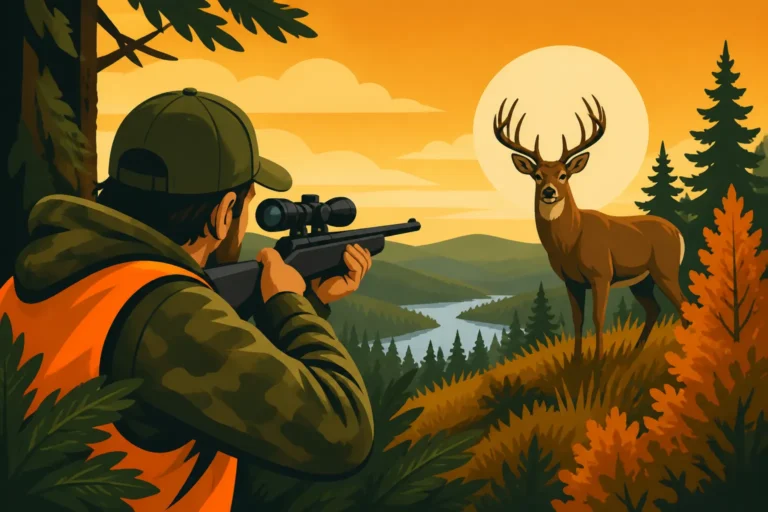
Forest and Florence Counties are quintessential northern Wisconsin hunting grounds, offering a diverse array of game. White-tailed deer are, of course, a primary draw, though their densities might not be as high as in the agricultural zones to the south. However, the deer that live here are often harder-earned, wily creatures that have grown up in pressure-free environments for much of their lives. Bucks, while perhaps not as massive-bodied as their farmland cousins, can carry impressive headgear from years of escaping hunters.
Beyond deer, these counties are prime territory for a variety of other species. Ruffed grouse thrive in the aspen and alder regeneration, offering some of the best wing-shooting opportunities in the state. Woodcock are also prevalent, particularly in the wet, timbered bottoms along creeks and rivers. Bear hunting is another significant pursuit, with both counties offering solid populations and a chance at a true Northwoods trophy. Small game like snowshoe hare and squirrels are abundant, and predators like coyotes are common. The chance of encountering other wildlife, such as elk that have expanded their range, or even wolves, adds an extra layer of wildness to any hunt in this region.
Navigating Public Access and Land Ownership
The good news for hunters eyeing Forest and Florence Counties is the abundance of public land. This isn't a place where you'll spend endless hours knocking on doors for permission; instead, you'll be focusing on understanding the nuances of different public land types and how to best access them.
County Forests: Your Best Bet for Access
The vast majority of public hunting opportunities in Forest and Florence Counties come in the form of County Forests. Both counties manage extensive tracts of timberland under this program, offering open access for hunting, trapping, and other recreational activities. These lands are managed for sustainable forestry, which means you'll often find a mosaic of timber stands – from recent clearcuts to mature forests – providing diverse habitat. This varied habitat is excellent for deer, grouse, and other wildlife.
Access to County Forests is generally excellent, with a network of logging roads and trails crisscrossing the landscape. While some of these roads are gated to vehicle traffic, they often provide fantastic walking access deep into prime hunting areas. Always look for official signage indicating County Forest boundaries, and be sure to consult county-specific maps, which often detail access points and land classifications. These areas are truly the bread and butter for public land hunters in the northern forest. Wisconsin County Forest Hunting is a great resource if you want to dive deeper into the specifics of these land types.
State and National Forest Opportunities
In addition to County Forests, you'll also find segments of the Chequamegon-Nicolet National Forest in both Forest and Florence Counties. The National Forest offers even larger, contiguous blocks of undeveloped wilderness, often with fewer roads and more remote areas than some County Forest tracts. Hunting regulations generally align with state rules, but it's always wise to double-check for any specific National Forest rules regarding camping, vehicle use, or stand placement. These sprawling lands are perfect for hunters seeking a truly solitary experience, willing to walk miles away from any road.
Wisconsin State Forests, while not as dominant in these two counties compared to others, also offer excellent hunting. These lands are managed by the Wisconsin DNR and provide similar opportunities to County Forests, often with good trail systems and habitat diversity. Regardless of whether you're on County, State, or National Forest land, the principles remain the same: respect the land, know your boundaries, and be prepared for primitive conditions.
Utilizing Mapping Tools for Success
In these vast northern woods, a reliable mapping tool isn't just a convenience; it's an absolute necessity. Relying solely on a paper map can lead to confusion, especially when trying to pinpoint specific habitat features or land ownership boundaries. Digital mapping applications, like onX Hunt, have revolutionized how hunters navigate and understand public land. These apps allow you to see property lines, public land boundaries, timber stand types, and topographical features right on your phone or GPS device. This is invaluable for identifying bottlenecks, bedding areas, and food sources that might be invisible on a traditional map.
Another great resource for planning your hunt is GoHunt. While often associated with Western big game, the principles of e-scouting they advocate are highly applicable here. Using satellite imagery and topographic maps before you ever set foot in the woods can save you countless hours of unproductive walking. You can identify potential access points, dense cover for Where Northern Forest Bucks Bed, clearcuts that attract grouse, or beaver ponds that might hold woodcock. Combining the detailed information available from these apps with a thorough understanding of the terrain will significantly increase your odds of success. Remember to download your maps for offline use, as cell service can be spotty, if not entirely absent, in many parts of these counties.
Here's a quick comparison of the main public land types you'll encounter:
| Public Land Type | Primary Manager | Key Characteristics | Access & Terrain | Best For |
|---|---|---|---|---|
| County Forests | County Forest Departments | Managed for timber, diverse age classes, good road systems | Generally good vehicle access, many gated roads for walking | Deer, grouse, bear, general public access |
| National Forests | US Forest Service | Large, contiguous, wilder, more remote | Fewer roads, more primitive, excellent for deep woods hunting | Deer, bear, solitary experience, backcountry camping |
| State Forests | WI DNR | Managed for various uses, often includes recreation | Good road and trail systems, similar to County Forests | Deer, bear, grouse, smaller game, organized recreation areas |
| State Wildlife Areas | WI DNR | Managed specifically for wildlife habitat | Often wetlands, grasslands, specific habitat features | Waterfowl, pheasant (if stocked), specific small game, excellent habitat |
Tactics for Success in Forest and Florence Terrain
Hunting the northern forest is a unique endeavor. It demands patience, perseverance, and a willingness to adapt your strategies to the challenging environment. What works in a cornfield to the south might not even be an option up here.
Deer Hunting Strategies in Big Timber
Deer hunting in Forest and Florence Counties requires a different mindset. Forget glassing vast fields; here, you're hunting cover. The dense timber means visibility is often limited to 50 yards or less, making still-hunting an incredibly effective tactic. Moving slowly, stopping frequently to scan the woods, and listening for the subtle sounds of deer movement is key. Focus on natural funnels created by terrain features, creek bottoms, or changes in timber type. Saddle ridges, points dropping into swamps, and the edges of clearcuts are all prime locations. Scouting before the season is absolutely critical, as deer sign can be subtle and widely dispersed. Scouting Wisconsin Public Land Before Season is an excellent starting point for pre-season prep.
Another successful strategy involves targeting areas with specific food sources. While acorns can be less consistent here than in southern hardwoods, any reliable mast crop will concentrate deer. Look for patches of oak that are dropping, or browse like cedar swamps that offer winter forage. Consider what happens Hunting After an Acorn Failure and adapt by focusing on other browse. Using trail cameras strategically can help you identify deer travel patterns and gauge buck activity, but always remember to check Trail Camera Rules on Wisconsin Public Land as regulations can vary. During the gun season, small, coordinated deer drives can be effective, especially in moving deer out of thickets or swamps. For archery hunters, identifying rub lines and scrape lines along logging roads or ridge tops will tell you where mature bucks are moving. Don't be afraid to walk further than most; the biggest bucks often reside in the most remote pockets.
Upland Bird Hunting in Aspens and Alders
For grouse and woodcock hunters, Forest and Florence Counties are a dream come true. The extensive aspen and alder regeneration, often a result of county and national forest timber management, creates ideal habitat. Ruffed grouse thrive in young aspen stands, particularly those between 5 and 20 years old. These areas provide the dense overhead cover grouse need to avoid predators and the consistent food source they rely on. Hunting these thickets requires stout footwear, brush pants, and a willingness to push through tangles. A good bird dog is an invaluable asset, but walking slowly and pausing frequently can also flush birds. Grouse Hunting Wisconsin Aspen Cover offers more specific tips for this habitat.
Woodcock are typically found in wetter cover, often along stream bottoms, alder runs, or damp aspen thickets. They probe the soft earth for worms, and their migratory patterns mean timing your hunt can be crucial. These smaller birds hold tight, offering close-range shots, but their erratic flight can be challenging. Many hunters target both species simultaneously, moving between dry aspen ridges and wet bottoms. Pay attention to the drumming of grouse in spring to locate prime areas, and look for "splashes" (white droppings) on the ground to confirm woodcock presence. It’s important to understand the overall Grouse and Woodcock Hunting in Wisconsin picture to maximize your efforts.
Planning Your Hunt: Essential Considerations
Hunting in the northern woods is an adventure, but it also requires careful planning to ensure a safe and successful trip. These aren't areas where you can just show up and expect things to fall into place.
Staying Safe and Prepared
Safety is paramount when hunting in the remote areas of Forest and Florence Counties. Cell service is often nonexistent, meaning you need to be self-reliant. Always let someone know where you're going and when you expect to return. Carry a physical map and compass in addition to your GPS or mapping app, and know how to use them. A fully charged power bank for your phone is a must. Proper clothing for the conditions is vital; layers are key, and waterproof outer gear is non-negotiable, especially for Cold Weather Sitting Strategy or unexpected rain. blaze orange or pink is required during certain seasons, so be sure to check current regulations and wear more than the minimum.
Be prepared for potential encounters with large wildlife, including bears and wolves. While rare, understanding basic bear safety can be helpful, especially if you're involved in Bear Hunting With Bait and Dogs in Wisconsin and have bait sites. Carry a first-aid kit, a whistle, a fire starter, and sufficient food and water. If you plan to spend multiple days in the woods, consider camping on public land, but be aware of specific rules for dispersed camping. Having a plan for retrieving game, especially a large deer or bear from a remote location, is also crucial. A sturdy deer cart or even a game sled for snow conditions will be appreciated after a successful harvest.
Understanding Local Regulations
While many hunting regulations are statewide, there are often specific nuances or county-level restrictions you need to be aware of. First and foremost, ensure you have all the necessary Wisconsin Hunting Licences and What They Cost, stamps, and authorizations for the species you intend to hunt. This includes deer tags, bear permits, or turkey authorizations. The Wisconsin DNR's Go Wild system is where you'll purchase these and manage your hunting profile.
Baiting and feeding regulations are particularly important in northern Wisconsin. Due to concerns about Chronic Wasting Disease (CWD), many counties have baiting and feeding bans in place, and these can change. Always verify the current status for Forest and Florence Counties before placing any bait or feed. If you plan to hunt bear, be aware of the specific regulations regarding baiting start dates and what constitutes a legal bear bait site. For deer, understanding the specific deer management unit (DMU) rules for antlerless tags is also critical, as quotas can vary. Finally, review legal shooting hours, equipment restrictions (such as those for Muzzleloader Deer Hunting in Wisconsin), and any blaze orange requirements for all hunters, including archery participants during certain periods. Ignorance of the law is never an excuse, so a quick check of the current hunting regulations pamphlet is always a good idea.
Disclaimer
This article is for general informational purposes only and does not constitute professional advice. Laws, prices and regulations vary by location and change over time. Consult a qualified professional for guidance on your specific situation.