National Forest Camping Near Your Stand
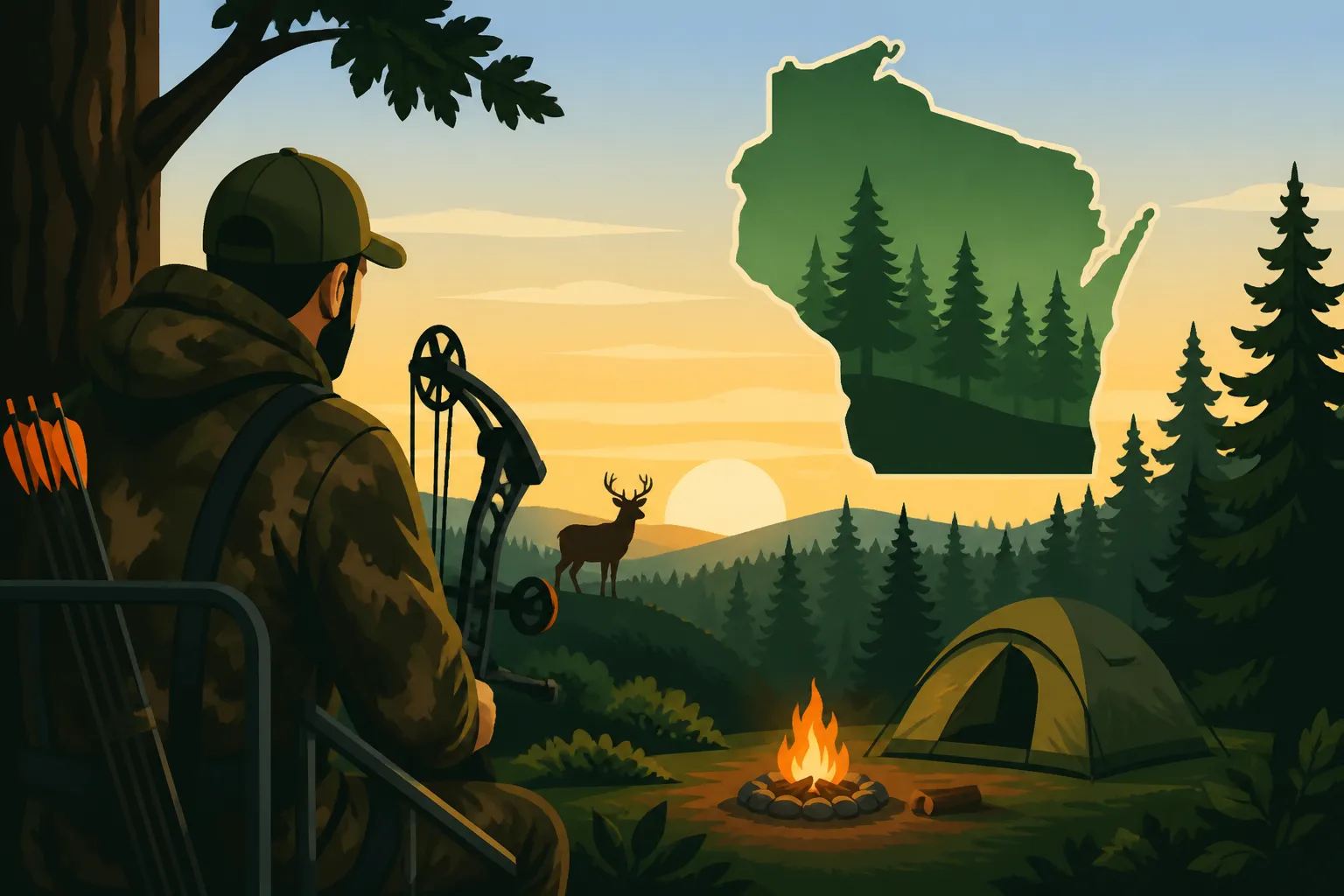
One of the biggest frustrations many Wisconsin hunters face is the constant battle between finding prime hunting ground and having a comfortable, convenient base camp. You want to be deep in the woods, far from the road hunters and the crowds, but the thought of a long drive back to a hotel or distant campground after a grueling day can really take the wind out of your sails. This guide is all about bridging that gap, showing you how to strategically utilize national forest camping in Wisconsin to set up a camp near your stand, maximizing your time in the woods and improving your hunting experience.
Understanding National Forest Camping Regulations in Wisconsin
When you think about hunting deep in Wisconsin's national forests, like the vast Chequamegon-Nicolet, the idea of rolling out of your tent and walking a short distance to your stand is incredibly appealing. However, it's crucial to understand the specific rules that govern camping in these expansive public lands. These aren't your typical state park campgrounds with designated sites and amenities; national forests offer a more primitive, "dispersed" camping experience, which comes with its own set of guidelines to ensure environmental protection and public safety.
Dispersed Camping Versus Developed Campgrounds
Wisconsin's national forests offer two primary types of camping experiences. Developed campgrounds are similar to what you'd find in state parks – designated sites, usually with amenities like picnic tables, fire rings, vault toilets, and sometimes even potable water. These sites often require a fee and are managed for higher use. They're great for families or those who prefer more creature comforts, but they typically aren't going to get you "near your stand" in a remote sense.
Dispersed camping, on the other hand, is the real gem for hunters looking to get off the beaten path. This is primitive camping outside of developed campgrounds, often along forest roads or even deep in the backcountry. There are no services, no fees, and usually no other people for miles. This is where you can truly immerse yourself in the wilderness experience and set up a camp that's within a reasonable walk of your hunting spot. The trade-off is that you must be entirely self-sufficient, packing in and packing out everything you need and ensuring you leave absolutely no trace behind. For more general advice on setting up a temporary home in the wild, check out Camping on Wisconsin Public Land.
Key Rules for National Forest Dispersed Camping
While dispersed camping offers immense freedom, it's not a free-for-all. The U.S. Forest Service has specific regulations to protect the environment and maintain solitude. Generally, you're required to camp a certain distance from designated recreation sites, developed campgrounds, and often a minimum distance from roads and water sources. This typically means setting up at least 100-200 feet away from lakes, streams, and forest service roads. There are also usually limits on how long you can stay in one spot, often 14 days within a 30-day period.
Fire regulations are also critical, especially during dry seasons. Always assume a "no open fire" rule unless you've checked current conditions with the local ranger district. If fires are allowed, they should be small, contained, and completely extinguished before you leave. Remember, you're responsible for any fire you start. Understanding these rules is your first step to a successful and legal hunt camp. Failure to comply can result in fines and, worse, damage to the very wilderness you're trying to enjoy.
Strategic Campsite Selection for Hunters
Choosing the right spot for your national forest hunt camp isn't just about finding a flat piece of ground. For hunters, it’s a strategic decision that can significantly impact your success and overall experience. You want a location that provides quick, quiet access to your hunting area, while also offering basic comfort and minimizing your impact on the game. This requires some careful scouting and a good understanding of the local terrain.
Utilizing Mapping Tools for Remote Access
Modern mapping applications are your best friend when it comes to finding that perfect, secluded campsite close to your hunting stand. Tools like onX Hunt or GoHunt allow you to overlay public land boundaries, forest service roads, topographic maps, and even satellite imagery right on your phone or computer. You can identify potential camp spots that are accessible but far enough off the beaten path to deter casual visitors. Look for small pull-offs on obscure forest roads, or even consider a hike-in spot if you're truly dedicated to remote hunting.
Using these apps, you can mark potential stand locations, game trails, food sources, and bedding areas. Then, you can plot possible camp locations that offer a quick and stealthy approach to your stand each morning. Pay attention to contour lines for flat ground, and consider natural features for cover from wind or other hunters. Scouting Wisconsin Public Land Before Season becomes an extension of your camp planning, as you're not just looking for deer sign, but also for ideal spots to pitch a tent.
Balancing Proximity, Stealth, and Safety
The ideal camp spot is close enough to your hunting area to minimize travel time and scent disturbance, but far enough away that your presence doesn't spook game. Imagine pitching your tent within a quarter-mile of a known deer funnel or bedding area in the Chequamegon-Nicolet National Forest Hunting. This proximity means you can be in your stand before first light with minimal commotion. However, you also need to think about wind direction and human scent. Always choose a camp location where your scent won't blow directly into your hunting zone, especially when cooking or moving around camp.
Safety is paramount, too. While remote, ensure your chosen spot isn't prone to flash floods, falling trees, or other natural hazards. Consider your vehicle access – can you get your truck out if the weather turns? Even a primitive camp should have a clear path for entry and exit. When you're thinking about How Far to Walk From a Logging Road, remember that while deep is good for solitude, it also increases the effort to get your gear and, hopefully, a harvested animal, out.
Essential Gear and Practices for Rustic Camp-to-Stand Hunting
Successfully establishing and maintaining a hunt camp near your stand in Wisconsin's national forests demands specific gear and a commitment to responsible wilderness practices. This isn't glamping; it's about efficiency, resilience, and minimizing your footprint, ensuring both your comfort and the preservation of the wild spaces you cherish.
Packing Smart: Shelter, Sleep, and Sustenance
When you're packing for a remote hunt camp, every item needs to earn its place. Your shelter should be lightweight, durable, and appropriate for Wisconsin's often unpredictable weather. A quality three-season tent is usually sufficient for much of the archery and early gun seasons, but if you're extending into late season or Muzzleloader Deer Hunting in Wisconsin, a four-season tent or a robust hot tent setup might be more appropriate. Pairing this with a comfortable sleeping pad and a sleeping bag rated for temperatures well below what you expect is crucial for a good night's rest, which directly impacts your focus and energy for hunting.
For cooking, simplicity is key. A compact backpacking stove with sufficient fuel is usually better than relying on open fires, especially in areas with fire restrictions. Pack non-perishable, calorie-dense foods that are easy to prepare. Water purification is non-negotiable; bring a filter, purification tablets, or a small boiling pot. Consider the weight of your Packs for a Day on Public Land and aim for multi-use items to keep your load manageable.
| Item Category | Essential Gear Examples | Key Considerations for Hunters |
|---|---|---|
| Shelter | Lightweight tent, tarp, ground cloth | Weather resistance, quick setup/takedown, quiet fabric |
| Sleep System | Sleeping bag (appropriate temp rating), sleeping pad, pillow | Warmth-to-weight ratio, packability, comfort for recovery |
| Cooking | Backpacking stove, fuel, pot, spork, dehydrated meals | Fuel efficiency, minimal scent, easy cleanup |
| Water | Filter/purifier, water bottles/bladder | Reliable purification, ample capacity for hydration and cooking |
| Navigation | GPS device/smartphone with mapping app (onX Hunt, GoHunt), compass, physical map | Redundancy, battery life, knowledge of terrain |
| Safety | First-aid kit, headlamp, fire starter, knife, signaling device | Preparedness for emergencies, visibility in low light |
| Hunting Specific | Optics, calls, treestand/saddle, scent control | Quiet operation, weatherproofing, compliance with Treestand Rules on Wisconsin Public Land |
Minimizing Impact: Leave No Trace Principles
The success of dispersed camping for hunters depends heavily on everyone adhering to Leave No Trace principles. This means packing out everything you pack in, including all trash and food scraps. Don't bury garbage; animals will dig it up. Human waste should be buried in a cathole at least 6-8 inches deep and 200 feet from water sources, trails, and campsites.
Fires, if permitted, should be built in existing fire rings when possible, or in a small, contained mound on mineral soil. Ensure they are completely cold to the touch before leaving. When breaking camp, strive to make it look like you were never there. Scatter any natural materials you might have moved, erase boot prints, and leave the area pristine. This respect for the land ensures that these precious national forest hunting opportunities remain available for future generations of hunters.
Balancing Comfort and Stealth in Your Hunt Camp
Finding the sweet spot between a comfortable camp and one that doesn't compromise your hunting stealth is an art form. You want to recover well, stay warm, and eat properly, but you also don't want to alert every deer in the county to your presence. It's a constant consideration, particularly in areas like the Chequamegon-Nicolet, where deer can be particularly wary.
Scent Control and Camp Hygiene
One of the biggest concerns for a hunt camp is managing human scent. Even if your camp is a couple hundred yards from your stand, wind can carry odors surprisingly far. Try to locate your camp downwind of your primary hunting areas. When cooking, choose meals that produce minimal strong odors. Avoid lingering food smells around your tent by storing all food, trash, and scented items in bear-resistant containers or hung from a tree, away from your sleeping area. This not only helps with scent control but is also vital for preventing unwelcome visitors like bears or raccoons, especially if you're in areas known for Wisconsin's Black Bear Population.
Personal hygiene, while challenging in a primitive camp, is also important. Use unscented wipes for quick cleanups, and carry out any waste. The goal is to keep your camp as sterile and low-impact as possible, reducing the overall human signature in the woods. When you head to your stand, you want to be as scent-free as possible, focusing all your efforts on the hunt itself, not battling residual campfire smoke or cooking smells.
Quiet Operations and Minimal Disturbance
Every sound you make in a quiet forest can carry for long distances. When planning your camp setup, consider how you can conduct your daily routines with minimal noise. Set up your tent on soft ground to dampen footsteps. Organize your gear so you're not fumbling with loud zippers or banging pots and pans, especially during pre-dawn preparations. Even the simple act of walking to and from your stand should be done as quietly as possible.
If you're hunting with a partner, establish silent communication signals or use two-way radios with earpieces for essential check-ins. Avoid bright lights, especially headlamps, when approaching or leaving your stand in the dark; use a red-light setting if available, which is less disruptive to both wildlife and your own night vision. The less disturbance you create around your hunting grounds, the more natural the deer behavior will be, increasing your chances of success. A truly quiet hunter understands that the hunt begins long before reaching the stand, starting right at the camp.
Disclaimer
This article is for general informational purposes only and does not constitute professional advice. Laws, prices and regulations vary by location and change over time. Consult a qualified professional for guidance on your specific situation.