ATV Rules on Wisconsin Forest Roads
One of the trickiest parts of enjoying Wisconsin's vast natural beauty with your ATV or UTV is figuring out exactly where you can legally ride, especially when it comes to the winding network of forest roads. It's easy to get lost in a tangle of state, county, and national regulations, leading to confusion and the fear of an accidental violation. This guide aims to clear up that confusion, offering a comprehensive look at the rules governing ATV and UTV use on Wisconsin's diverse forest roads, helping you navigate the trails with confidence and stay on the right side of the law.
Understanding Wisconsin's ATV and UTV Regulations on Forest Roads
Wisconsin is a paradise for outdoor enthusiasts, and for many, that includes exploring its extensive forests on an ATV or UTV. However, the joy of a good ride can quickly turn to frustration when you encounter confusing signage or conflicting information about where you're actually allowed to operate. It’s a common struggle for riders across the state, and it’s completely understandable why it can feel like you need a law degree just to hit the trails.
Why the Rules Can Be So Confusing
The primary reason for the complexity is that Wisconsin's forest lands aren't a single, uniform entity. You have state forests, county forests, and federal national forests, each with its own managing agency and, consequently, its own set of rules. What's perfectly legal in a county forest might be strictly prohibited in a state forest just a few miles down the road. This patchwork of jurisdictions means that a "forest road" isn't just a forest road; it's a specific type of road within a specific management area, and its designation heavily influences your riding privileges.
Adding to the confusion are local ordinances. A town or county might have stricter rules than the state minimums, especially concerning speed limits, hours of operation, or even whether ATVs are allowed on certain town roads that pass through forested areas. It’s not enough to know the general state law; you often need to dig into the specific regulations for the particular forest or county you plan to visit. This often requires checking websites, calling local offices, or relying on updated maps, which can be a hassle, especially if you're traveling a long distance to your riding spot.
Key Definitions: ATV, UTV, and OHM
Before we dive into where you can ride, it's crucial to understand the legal definitions of the vehicles themselves, as these distinctions can sometimes affect where and how they can be operated. In Wisconsin, the Department of Natural Resources (DNR) categorizes these vehicles, and knowing the difference is your first step to staying compliant.
An ATV (All-Terrain Vehicle) is generally defined as a motorized off-highway vehicle, 50 inches or less in width, having a dry weight of 900 pounds or less, designed to travel on three or more low-pressure tires. These are your traditional quad bikes, designed for a single rider or, in some models, a passenger seat. They are nimble and often used for sport or utility tasks in rugged terrain.
A UTV (Utility Terrain Vehicle), on the other hand, is a motorized off-highway vehicle, other than an ATV or an off-highway motorcycle, designed to travel on four or more wheels. UTVs are typically wider than ATVs, often have a steering wheel and side-by-side seating, and are designed for utility, recreation, or sport. They often resemble small cars or golf carts with enhanced off-road capabilities. Due to their larger size and weight, UTVs sometimes face different restrictions than ATVs on certain trails or roads, so always double-check the signage.
Finally, an OHM (Off-Highway Motorcycle) refers to a two-wheeled motorized vehicle designed for off-highway use. While less common on broader forest roads where ATVs and UTVs thrive, many dedicated single-track trails in Wisconsin's forests are designed specifically for OHMs. Each of these categories has specific registration requirements and safety rules, which we'll touch on later, but recognizing which vehicle you're operating is fundamental to understanding the rules that apply to you.
Navigating Different Land Classifications
The vast expanse of Wisconsin's forests is managed by various entities, and each has its own approach to ATV and UTV access. What's permitted in one forest could lead to a hefty fine in another. It's a key frustration point for many riders, feeling like they need a local guide just to understand the signs. Understanding these differences is absolutely critical for a legal and enjoyable ride.
State Forests and Their Managed Trails
Wisconsin's state forests, managed by the DNR, often have more centralized and generally stricter regulations regarding ATV and UTV use. For the most part, riding in state forests is restricted to designated, marked trails. You won't find free-ranging access on every forest road you come across. The emphasis here is on sustainable use and minimizing environmental impact. For example, in a place like the Northern Highland-American Legion Forest or the Black River State Forest Hunting, you'll typically find well-maintained trail systems specifically built for these vehicles.
These designated trails are often multi-use, shared with mountain bikers, hikers, and sometimes even horses, so knowing trail etiquette is just as important as knowing the legal routes. It’s not uncommon to find clear signage indicating whether a road is open to ATVs/UTVs or if it’s strictly for administrative use or non-motorized recreation. Always look for these markers, and when in doubt, assume a road is closed to motorized vehicles unless explicitly marked otherwise. It’s better to err on the side of caution than face a citation or damage sensitive habitat.
County Forests and Their Varied Approach
County forests make up a significant portion of Wisconsin's public land, and their rules for ATV and UTV use can be incredibly diverse. Unlike state forests, each of Wisconsin's many county forests manages its own trails and roads. This means that what's allowed in, say, Marinette County might be different from what's permitted in Langlade County, even if the forests look similar. This is where the confusion really sets in for many riders. Some counties are very ATV/UTV friendly, opening many of their logging roads and fire lanes, while others are more restrictive, confining motorized use to a limited trail system.
Many county forests operate under a comprehensive land-use plan, and these plans dictate road access. It's essential to check with the specific county's forestry department or website before heading out. Often, counties will publish maps online or make them available at local tourism centers, which are invaluable resources for knowing How County Forests Work in Wisconsin and where you can legally ride. These maps often show designated ATV routes, parking areas, and connecting trails, helping you plan your trip effectively and avoid unauthorized areas.
National Forests and Federal Regulations
Wisconsin is home to the sprawling Chequamegon-Nicolet National Forest, a truly magnificent area for outdoor recreation. However, being a federal property, it operates under a different set of rules compared to state and county lands. In the Chequamegon-Nicolet National Forest Hunting, ATV and UTV use is generally limited to routes specifically designated for motorized vehicles on a motor vehicle use map (MVUM). These maps are the definitive guide for legal motorized travel and are typically available for free at forest ranger stations or online.
The federal regulations emphasize protecting natural resources and ensuring public safety, often resulting in fewer open roads for motorized use compared to some county forests. It's not uncommon for forest roads that look perfectly suitable for an ATV to be closed to motorized traffic to protect sensitive wildlife habitat, prevent erosion, or ensure a quiet experience for other users. Carrying an updated MVUM is non-negotiable when riding in a national forest; relying on general knowledge or outdated maps could easily put you in violation of federal law.
Private Land Access and Permission
While this guide focuses on forest roads, it's worth a brief mention of private land, as many forest roads may run adjacent to or even through private parcels. It's a common mistake for riders to assume that just because a road looks like a public forest road, it is public. This isn't always the case, and trespassing can lead to serious legal issues and erode relationships between riders and landowners.
Even if you're primarily hunting on public land and using ATVs for access, you might encounter situations where a section of road that feels public is actually private. Always be mindful of property lines. If a forest road crosses private land, you need explicit permission from the landowner to traverse it, even if it appears to be a natural extension of a public route. Using a mapping application like onX Hunt, which clearly delineates public and private land boundaries, can be an absolute lifesaver in these situations.
Essential Rules for Operating on Designated Routes
Once you've figured out where you can ride, the next step is understanding how to ride legally and responsibly. Simply being on a designated forest road isn't enough; there are specific requirements you must meet to operate your ATV or UTV in Wisconsin. These rules are in place for safety, environmental protection, and to ensure everyone can enjoy our public lands.
Licensing, Registration, and Permits
Operating an ATV or UTV on any public land in Wisconsin, including forest roads, requires proper registration. All ATVs and UTVs used for recreation must be registered with the DNR. There are different types of registration: public use, agricultural, and commercial. For most recreational riders accessing forest roads, a public use registration is what you'll need. This involves a fee and provides you with a decal that must be displayed on your vehicle.
Additionally, most operators born on or after January 1, 1988, are required to complete an ATV and/or UTV safety course to operate on public lands. There are online and in-person options for these courses, and carrying proof of certification is always a good idea. While you don't typically need a separate driver's license just for ATV/UTV operation on designated trails, if you're crossing or operating on an open public road, a valid driver's license might be required. Always check the specifics for the area you're visiting. For instance, sometimes town roads opened to ATV/UTV traffic require a valid driver's license.
Speed Limits and Safe Operation
Safety is paramount, and Wisconsin enforces speed limits on designated ATV/UTV trails and forest roads. Generally, the speed limit is 35 mph on trails, but it can be lower in certain areas, especially near campgrounds, trailheads, or residential zones. On forest roads that are open to ATVs/UTVs and shared with other vehicles, the posted speed limit for that road applies. It’s crucial to respect these limits not just to avoid tickets, but for the safety of yourself, other riders, and any hikers or wildlife you might encounter.
Safe operation also means maintaining control of your vehicle, riding sober, and wearing appropriate safety gear. A helmet is strongly recommended for all ATV/UTV riders and is often required for riders under a certain age. Remember that these machines are powerful and capable, but they demand respect. Riding beyond your skill level or being reckless can lead to serious accidents. Always ride within your capabilities and be prepared for changing trail conditions, especially after rain or during hunting seasons when visibility might be reduced.
Age Restrictions and Passenger Rules
Wisconsin has specific age restrictions for ATV and UTV operators. Generally, a person must be at least 12 years old to operate an ATV and 16 years old to operate a UTV on public lands. However, there are exceptions for supervised operation by younger individuals, particularly those under a mentored riding program or on private land. These rules are designed to protect younger riders who may not have the judgment or physical strength to safely operate these vehicles.
When it comes to passengers, the rule of thumb is that ATVs and UTVs can only carry the number of passengers they were specifically designed for. If your ATV is designed for one rider, don't try to squeeze a second person on it. UTVs often have multiple seats, but ensure all passengers are properly seated, buckled up, and meeting any height or age requirements for their specific seating position. Overloading a vehicle or carrying passengers improperly can drastically affect its handling and greatly increase the risk of an accident.
Prohibited Areas and Environmental Responsibility
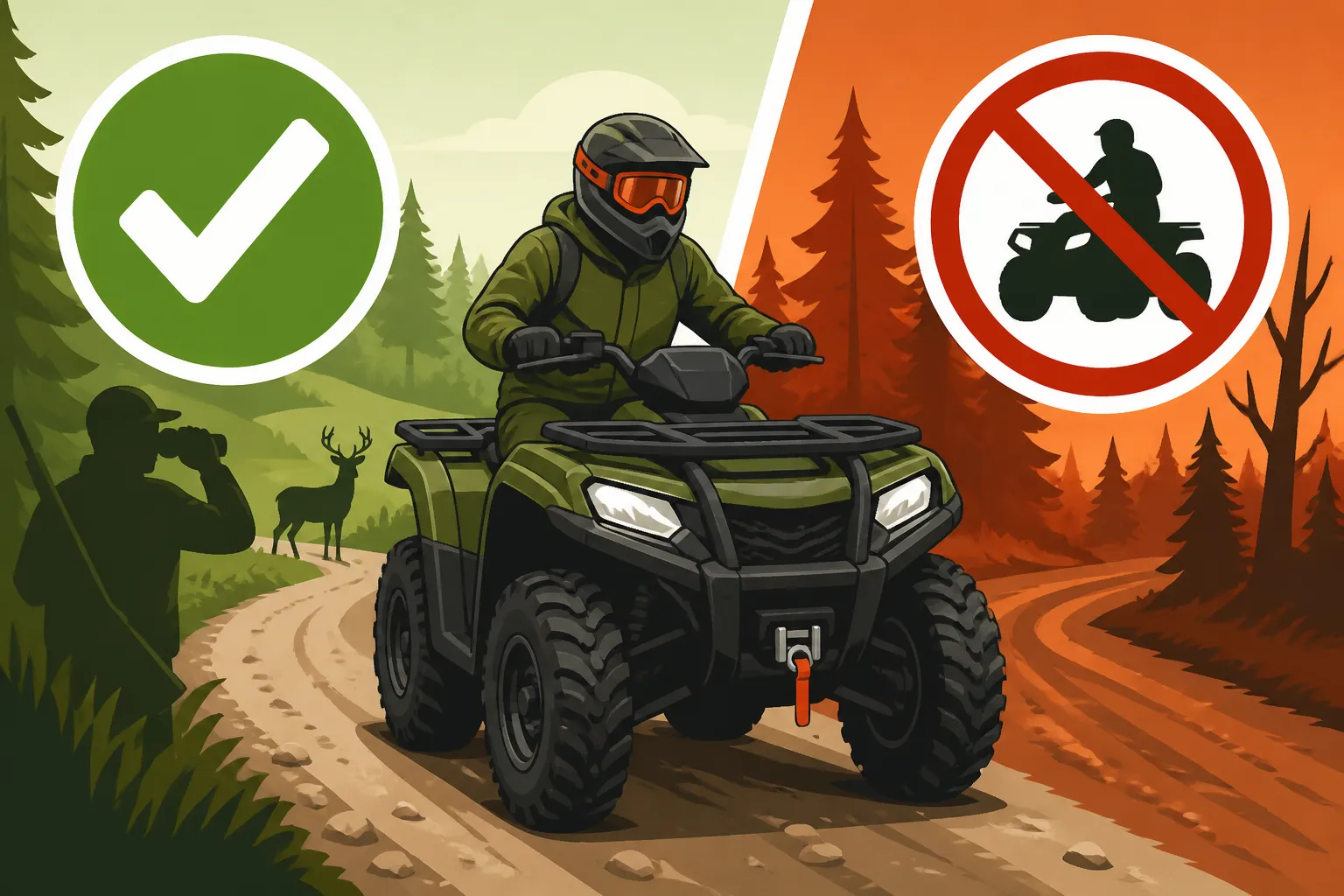
Perhaps one of the most important aspects of legal ATV/UTV use is understanding where you cannot ride. Generally, riding off designated trails or forest roads is prohibited. This means no venturing into wetlands, cutting new trails, or driving through areas simply because they look passable. Such actions not only damage sensitive ecosystems but can also lead to significant fines and penalties. Wisconsin takes environmental protection seriously, and reckless off-trail riding contributes to erosion, habitat destruction, and water quality issues.
Always stay on marked trails and roads, and be mindful of "Closed to All Motorized Vehicles" signs. These closures are often in place for very good reasons, whether it's protecting nesting birds, regenerating timber, or providing quiet recreational opportunities. Respecting these closures is a fundamental part of responsible land stewardship and ensures that these natural resources remain healthy for future generations. Remember, illegal riding by a few individuals can sometimes lead to closures for everyone, so let's all do our part to keep access open and enjoyable.
Using Mapping Tools to Stay Legal
In today's world, technology can be your best friend when it comes to navigating the complex landscape of Wisconsin's forest road regulations. Gone are the days of relying solely on flimsy paper maps that quickly get soaked or torn. Modern mapping tools have revolutionized how we access and understand public lands, making it much easier to stay legal and confident on your rides.
How Apps Like onX Hunt Can Help
For many outdoor enthusiasts, especially hunters and riders, apps like onX Hunt have become indispensable. These powerful tools offer incredibly detailed satellite imagery, topographic maps, and, crucially, overlays that show land ownership boundaries, public land designations, and even specific trail systems. When you're trying to figure out if a particular forest road is open to ATVs, pulling up an app like onX Hunt can often give you immediate clarity by showing if it's within public land, if there's a designated trail marked, or if you're approaching a private parcel where access is restricted. The ability to see onX Layers for Wisconsin Land Status right on your phone, even without cell service if you've downloaded maps beforehand, is a game-changer.
While these apps are not always the definitive legal source for every specific ATV trail designation (always cross-reference with official county or state maps where possible), they provide an invaluable initial layer of information. They can help you visualize your route, plan stops, and quickly identify potential access issues before you even leave your driveway. Many riders find that having a robust mapping app reduces a significant amount of the anxiety that comes with deciphering the diverse rules across different forest management areas. Another similar tool like GoHunt might also offer comparable features to help you visualize boundaries and stay on track.
Official DNR Resources and Local Maps
While third-party apps are fantastic tools, always remember that the official word comes from the Wisconsin DNR and the specific county or national forest managing the land. The DNR website offers a wealth of information, including interactive maps that show designated ATV/UTV trails statewide. These maps are regularly updated and are the most authoritative source for state-managed lands. You can also typically find printable maps or even order physical copies from the DNR.
For county forests, visiting the individual county's forestry department website is often the best bet. Many counties provide downloadable PDF maps that clearly mark open ATV/UTV routes, parking areas, and any specific local ordinances. Don't underestimate the value of checking these local resources; what's current on a state map might have local nuances not immediately apparent. Also, national forests, like the Chequamegon-Nicolet, have their own specific Motor Vehicle Use Maps (MVUMs) that are the legal guide for motorized travel on federal lands. Combining these official resources with the convenience of apps like onX Hunt or Using the Wisconsin Hunt Wild App gives you the most comprehensive understanding of where you can ride.
Here's a quick comparison of general ATV/UTV rules across different types of Wisconsin forest roads:
| Feature | Wisconsin State Forests | Wisconsin County Forests | Chequamegon-Nicolet National Forest |
|---|---|---|---|
| Primary Access Rule | Restricted to designated, marked trails only. | Varies greatly by county; many open designated logging roads/trails. | Restricted to routes on Motor Vehicle Use Maps (MVUMs). |
| Mapping Resources | WI DNR website, official state trail maps. | Individual county forestry websites, local maps. | MVUMs from US Forest Service, ranger stations, online. |
| Typical Signage | "ATV Trail," "No Motorized Vehicles," trail numbers. | "ATV Route," "Open to OHV," "Closed to OHV." | Route numbers, "Motorized Use Permitted," "Closed." |
| Speed Limits | Generally 35 mph on trails, posted limits on roads. | Varies by county, often 35 mph or posted road limits. | Posted limits, generally lower in sensitive areas. |
| Registration Required | Yes (WI DNR public use). | Yes (WI DNR public use). | Yes (WI DNR public use). |
| Safety Course Req. | Yes, for operators born after 1/1/1988. | Yes, for operators born after 1/1/1988. | Yes, for operators born after 1/1/1988. |
| Environmental Focus | Strict adherence to trails, minimal off-trail use. | Varies, but generally stresses staying on designated routes. | Strong emphasis on resource protection, strict trail use. |
| Best Practice | Consult DNR maps, follow signage explicitly. | Contact specific county forestry dept, obtain local maps. | Obtain and follow current MVUM, respect all closures. |
Navigating Wisconsin's forest roads with your ATV or UTV can be an incredibly rewarding experience, offering access to beautiful, wild places for recreation, hunting, and exploration. The key to making it a positive experience lies in preparedness and a commitment to understanding and respecting the rules. By taking the time to research the specific regulations for the area you plan to visit, utilizing modern mapping tools, and always adhering to designated routes and safety guidelines, you can ensure your adventures are both fun and legal. Remember, responsible riding helps keep our access open for everyone who cherishes Wisconsin's public lands.
Disclaimer
This article is for general informational purposes only and does not constitute professional advice. Laws, prices and regulations vary by location and change over time. Consult a qualified professional for guidance on your specific situation.