Northern Wisconsin County Forest Acreage
It's no secret that finding prime hunting ground in Wisconsin can sometimes feel like trying to find a needle in a haystack, especially with increasing pressure and shrinking private access. Many hunters lament the lack of expansive, accessible land where they can truly get away from it all and immerse themselves in the hunt. This guide is here to shed light on one of Wisconsin's greatest public land treasures for hunters: the vast and diverse county forests of Northern Wisconsin, offering countless acres and unparalleled opportunities for those willing to explore.
Understanding Wisconsin's County Forests
Wisconsin's county forest system is truly unique and a significant asset to public land enthusiasts. Unlike federal or state lands, these forests are owned and managed by individual counties, but they operate under a cooperative agreement with the Wisconsin Department of Natural Resources (DNR). This partnership provides technical expertise and financial aid, ensuring these lands are managed sustainably for multiple uses, including timber production, recreation, and, most importantly for us, exceptional hunting opportunities.
A Legacy of Conservation and Management
The story of Wisconsin's county forests dates back to the early 20th century, a time when much of northern Wisconsin's timber was cut over, leading to widespread erosion, wildfires, and economic hardship. Counties acquired vast tracts of tax-delinquent land, often devastated by logging and fires, and embarked on ambitious reforestation programs. This commitment to restoring the land gave birth to the county forest system. Today, these forests stand as a testament to long-term vision, providing sustainable timber harvests that support local economies, while simultaneously offering critical habitat for wildlife and recreational opportunities for the public. It’s a remarkable legacy that continues to benefit generations of Wisconsinites and visitors alike.
For hunters, this means traversing landscapes that have seen careful stewardship for decades. You'll find a mix of mature timber stands, younger regenerating forests, wetlands, and open areas, all of which contribute to a diverse ecosystem capable of supporting robust wildlife populations. The active management often creates the varied edge habitat that deer, grouse, and other game animals thrive in, making these working forests incredibly productive for hunters.
The Role of Local Government
While the DNR provides overarching guidance, the local county boards, through their forestry committees, are the primary decision-makers for their respective county forests. This decentralized management means that while there are common threads, each county forest can have its own nuances in management priorities, specific recreational allowances, and even hunting regulations, beyond the statewide rules. It’s crucial to remember that you're dealing with local government, which can sometimes be a double-edged sword: decisions are made closer to home, but it also means checking individual county regulations for specific areas.
This local control means that communities have a direct say in how these lands are used. Hunters benefit from this because local committees often understand the specific needs of their area, from timber harvest schedules that can create new deer habitat to maintaining access roads that are vital for hunters. However, it also means that hunters need to be diligent about researching the specific rules and regulations for the county they plan to hunt in, as general statewide public land rules might be supplemented by additional county-specific ordinances regarding things like ATV Rules on Wisconsin Forest Roads or even camping.
Balancing Timber, Recreation, and Wildlife
The fundamental principle guiding county forest management is "multiple use." This means the forests are managed for a variety of benefits: sustainable timber production, clean water, wildlife habitat, and diverse recreational activities like hiking, biking, snowmobiling, and, of course, hunting. Striking this balance is a continuous effort, and sometimes different interests can clash.
From a hunter's perspective, this multi-use approach is largely a positive. Timber harvesting, for instance, isn't just about lumber; it creates critical early successional habitat that benefits deer, grouse, and rabbits. Clear-cuts, thinnings, and other silvicultural practices open up the canopy, allowing sunlight to reach the forest floor, promoting the growth of brush, forbs, and young trees that provide food and cover. Conversely, recreational trails for snowmobiles or ATVs can sometimes overlap with prime hunting areas, requiring hunters to be aware of other users and plan their hunts accordingly. It’s a shared resource, and understanding that helps foster respect for all user groups.
The Sheer Scale of Northern Wisconsin's County Forest Acreage
When we talk about "vastness" in hunting land, Northern Wisconsin's county forests truly deliver. These aren't small, isolated parcels; they are immense, interconnected blocks of public land that stretch across multiple counties, offering some of the most remote and wild hunting experiences in the state. For hunters weary of crowded state parks or small, heavily pressured parcels, these county forests are a breath of fresh air, providing the space needed for genuine solitude and deep woods hunting.
Top Counties for Public Hunting Access
While many counties across Wisconsin boast county forest lands, the northern region is truly the powerhouse. Some of the titans of public hunting land in Northern Wisconsin, largely comprised of county forest acreage, include:
| County Name | Approximate County Forest Acreage (as of past records) | Primary Game Species | Noteworthy Features |
|---|---|---|---|
| Marinette County | Over 230,000 acres | Deer, Bear, Grouse | Diverse forest types, Peshtigo River corridor |
| Langlade County | Over 130,000 acres | Deer, Bear, Grouse | Rolling terrain, good mix of timber, many lakes |
| Bayfield County | Over 170,000 acres | Deer, Bear, Grouse | Northern hardwoods, Chequamegon-Nicolet Forest border |
| Sawyer County | Over 150,000 acres | Deer, Bear, Grouse | Home of the Flambeau River, varied habitat |
| Price County | Over 290,000 acres | Deer, Bear, Grouse | Massive timber blocks, very remote areas |
| Douglas County | Over 270,000 acres | Deer, Bear, Grouse | Extensive pine barrens, wetlands, northern hardwoods |
| Forest County | Over 80,000 acres | Deer, Bear, Grouse | Primarily national forest, but good county blocks |
| Iron County | Over 160,000 acres | Deer, Bear, Grouse | Rugged terrain, Lake Superior watershed |
Note: The exact acreage numbers fluctuate due to land sales, acquisitions, and boundary adjustments. Always consult the most current county forest maps and DNR resources for up-to-date figures. Many of these counties contain some of How Many Acres of Wisconsin County Forest.
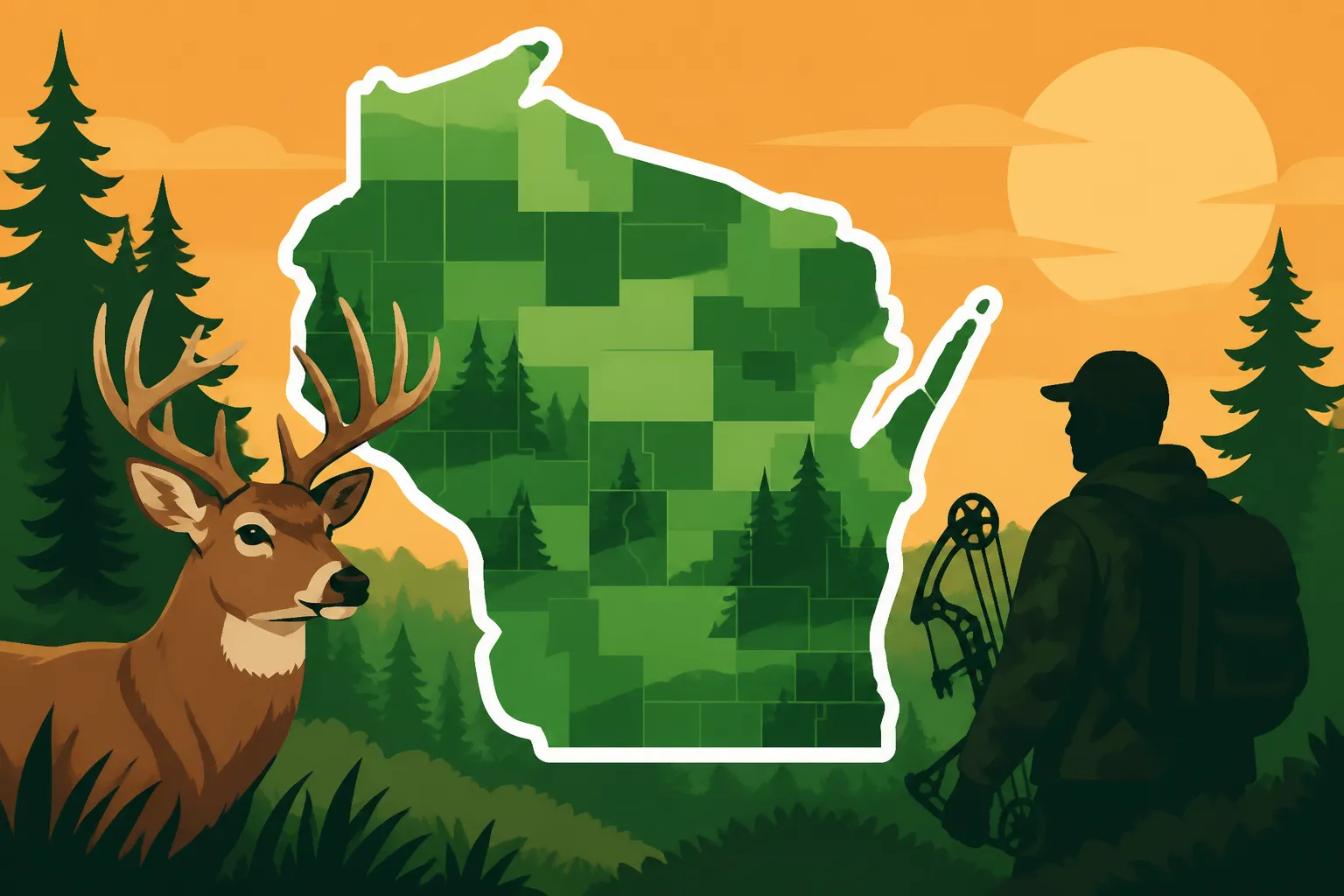
These numbers are staggering, representing vast opportunities for hunters seeking to explore diverse landscapes. When you look at a map and see these massive blocks of green, it's easy to get excited about the possibilities they hold for hunting.
Why This Acreage Matters to Hunters
The sheer quantity of land available in these northern county forests translates directly into quality hunting experiences. For one, it means less hunting pressure. While popular access points will see traffic, it's still possible to walk a mile or two off the beaten path and find yourself in truly unpressured woods. This is a stark contrast to some smaller public parcels in more populated areas, where you might encounter multiple hunters within earshot. This vastness allows deer to mature, bears to roam undisturbed, and grouse populations to thrive in relative peace.
Moreover, the size of these forests offers crucial habitat for larger, more mobile species like black bears and older bucks. These animals often require expansive territories, and fragmented landscapes can limit their ability to find food, cover, and mates. In the county forests, a wise old buck might have thousands of acres to roam without ever leaving public land, making patterning him a significant, yet rewarding, challenge. The depth of these forests also allows for greater tactical flexibility, from still-hunting miles of timber to setting up in remote clearcuts. Where Northern Forest Bucks Bed often in these vast, unbroken stretches of cover.
Navigating the Vastness: Tools for Finding Your Spot
While the immense size of northern county forests is a blessing, it can also feel overwhelming without the right tools. Gone are the days of relying solely on paper maps, although they still have their place. Modern digital mapping applications have revolutionized how hunters scout and navigate these expansive lands. Platforms like onX Hunt and GoHunt provide incredibly detailed satellite imagery, topographic maps, and crucially, land ownership overlays that clearly distinguish public from private land.
These apps allow you to mark waypoints, measure distances, and even track your movements in real-time, all from your smartphone or tablet. Before a hunt, you can digitally "scout" potential areas, looking for changes in timber type, terrain features like ridges and swamps, and potential travel corridors. During the hunt, these tools ensure you stay on public land and help you navigate back to your vehicle, especially when you've pushed deep into unfamiliar territory. Many hunters also rely on tools like the Scouting With the Wisconsin Hunt Wild App for specific, real-time information from the DNR. Don't underestimate the power of these digital assistants; they can turn a daunting wilderness into a manageable hunting ground.
Hunting Opportunities Within County Forests
Northern Wisconsin's county forests are a veritable smorgasbord of hunting opportunities, supporting a wide array of game species. From the elusive whitetail buck to the thundering flush of a ruffed grouse, these lands offer something for every type of hunter, often in environments that demand genuine woodsmanship.
Whitetails in the Big Woods
Deer hunting in the northern county forests is a different beast compared to the agricultural lands further south. Here, deer densities are generally lower, and the bucks grow wise in vast, unbroken timber. This isn't often about spotting deer in open fields; it's about understanding subtle sign, identifying cover, and patiently still-hunting or stand-hunting along natural funnels and bedding areas. The deer in these big woods are often more dependent on natural browse, acorns (when available), and the cover provided by thick regenerating timber or cedar swamps. You'll also find some great opportunities for Hunting the Wisconsin Northern Forest for Deer within these acres.
Success often comes down to meticulous scouting and adapting to the deer's movements based on food sources and weather. For example, a heavy snowfall might concentrate deer in dense conifer stands, while a recent clear-cut might draw them in for fresh browse. Understanding the lay of the land, how wind and thermals affect scent dispersal, and where deer prefer to bed in these expansive areas is key. It's challenging, but the reward of a big woods buck, earned through effort and skill, is deeply satisfying. Northern Forest Deer Density in Wisconsin might be lower, but the experience is often more fulfilling.
Grouse and Woodcock Cover
For upland bird hunters, the northern county forests are a paradise. These lands are actively managed for timber, which means a constant supply of the early successional forest habitat that ruffed grouse and woodcock require. Aspen cuts of varying ages, alder thickets along creek bottoms, and regenerating clear-cuts provide the dense cover and food sources these birds need to thrive. When walking these areas, you're constantly anticipating that explosive flush, a sound that gets the heart racing every single time.
Hunting these areas often involves covering a lot of ground, either with a good bird dog or through diligent boot-leather scouting. Look for areas with a mix of young aspen, dense evergreens for thermal cover, and nearby water sources. The management practices in county forests, designed for sustainable timber, inadvertently create fantastic grouse and woodcock habitat year after year. Hunters can have incredible success by focusing on Grouse Hunting Wisconsin Aspen Cover and the dense, swampy runs where woodcock gather during their migration. The opportunity to find both species in the same cover is common, making for a truly memorable day afield.
Bear and Predator Habitat
The vast, wild nature of Northern Wisconsin's county forests also makes them prime habitat for black bears and a variety of predators, including coyotes, bobcats, and even elusive timber wolves. For bear hunters, these expansive areas provide the seclusion needed for effective baiting or for running hounds. The dense forests and swampy lowlands offer perfect cover for bears, allowing them to thrive and grow to impressive sizes. If you're looking to hunt bear, understanding Bear Hunting With Bait and Dogs in Wisconsin is critical, and these county forests are where much of that action takes place.
Predator hunting, particularly for coyotes, offers year-round opportunities. The diverse terrain, from open pine barrens to thick timber, provides varied calling scenarios. Winter, with its snow cover, is particularly popular for coyote hunting, as tracks can reveal travel patterns, and animals are often more active in searching for food. For bobcat hunters, who require a special permit, the remote reaches of the county forests offer the wildness these secretive felines prefer. Always be aware of the presence of timber wolves in these northern forests; while generally harmless, their presence impacts other wildlife and hunting dynamics.
Planning Your Hunt in Northern County Forests
A successful hunt in Northern Wisconsin's county forests isn't just about showing up with a gun or bow; it's about meticulous planning, understanding the rules, and knowing how to navigate truly wild country. These are not manicured parks, and they demand respect for the land and preparedness from the hunter.
Maps and Digital Tools for Success
As mentioned earlier, digital mapping tools like onX Hunt and GoHunt are indispensable. Before you even set foot in the woods, use these apps to study the terrain. Look for topographical features like ridge lines, drainages, and saddlebacks that could funnel deer. Identify different timber types – a dense conifer stand might be a bedding area, while an oak flat on a ridge could be a food source. Locate water sources, which are crucial for all wildlife.
Beyond identifying potential hot spots, these tools are vital for navigation and safety. In areas with no cell service, make sure to download offline maps to your device. This allows you to track your location and navigate without a signal, preventing you from getting disoriented in vast, unfamiliar territory. Consider purchasing detailed paper maps from the county forestry department or a local outdoor store as a backup. There's nothing worse than being deep in the woods and realizing your phone battery died or your signal dropped. Always plan your Entry Routes on Steep Driftless Ground and Hunting a Funnel Between Two Swamps before you head out.
Rules and Regulations Specific to County Forests
While statewide hunting regulations apply, county forests can have their own set of rules, particularly concerning things like ATV use, camping, and treestand placement. It is absolutely essential to check the specific county's forestry department website or contact them directly before your hunt. For example, some counties might restrict ATV use to designated trails, while others might allow access on forest roads that are not maintained in winter. ATV Rules on Wisconsin Forest Roads can vary.
When it comes to Treestand Rules on Wisconsin Public Land, most counties prohibit permanent stands or stands that damage trees. You'll typically need to remove your stand daily or adhere to specific guidelines regarding marking and material. Similarly, Camping Rules on Wisconsin County Forest will dictate where you can set up camp, if campfires are allowed, and whether permits are required. Ignoring these local regulations can lead to fines or, worse, losing your hunting privileges. Always assume you need to confirm, rather than assume everything is allowed.
Accessing Remote Areas
One of the biggest advantages of northern county forests is the opportunity to get away from the crowds, but this often means accessing more remote areas. Many county forests are crisscrossed by a network of logging roads, some well-maintained, others barely more than two-tracks. These roads are your primary means of deeper access. However, many are gated or become impassable depending on the season and weather. A fresh snowfall can quickly turn a drivable road into a challenging walk.
Parking at the edge of these gated roads or at designated parking areas and then walking in is often the key to reaching truly unpressured ground. Don't be afraid to put in the miles; the further you get from easy access points, the more likely you are to find undisturbed game. When scouting, pay attention to the condition of these roads. If you plan to retrieve a deer, consider how you'll get it out. Logging roads and where deer move after a cut can offer excellent hunting spots, but ensure you have a plan for extraction. Sometimes, a deer cart or sled is invaluable, especially if you're venturing deep into the timber.
Maximizing Your Experience and Respecting the Land
Hunting in Northern Wisconsin's county forests is an incredible privilege, and with that comes a responsibility to be a good steward of the land and a respectful participant in shared outdoor spaces. These forests are for everyone, and ensuring they remain wild and accessible for future generations requires conscious effort from all of us.
Minimizing Your Impact
The "Leave No Trace" principles are paramount when hunting in these expansive wildlands. Pack out everything you pack in, and then some. This includes all your trash, spent shell casings, and any flagging tape you used to mark trails or blood lines. Avoid disturbing sensitive areas, such as wetlands or fragile ecosystems. When field dressing an animal, move away from trails, water sources, and camping areas to allow nature to take its course without impacting other users.
Furthermore, be mindful of your presence. Avoid leaving permanent signs of your hunt, such as excessive cut branches or discarded materials. If you use a portable stand, ensure it is removed according to county regulations. The goal is to leave the forest as you found it, or ideally, in better condition. This respect for the land ensures that the beauty and wildness that draw us to these county forests will endure.
Interacting with Other Users
County forests are multi-use lands, meaning you'll likely encounter other people enjoying the outdoors, especially during popular seasons. You might cross paths with hikers, mountain bikers, birdwatchers, ATV riders, or even timber workers. A friendly nod and a polite greeting go a long way. Understanding that everyone has a right to be there fosters a more harmonious outdoor experience for all.
If you're hunting during firearm seasons, be especially aware of the Wisconsin Blaze Orange and Pink Rules and ensure you're highly visible. Communication is key; if you see another user, make your presence known calmly and clearly. Avoid setting up stands or hunting in areas heavily frequented by non-hunters, if possible, especially near designated trails or recreation areas, to minimize potential conflicts and ensure safety.
Supporting County Forest Programs
The continued existence and accessibility of these vital county forests depend on ongoing support and responsible use. Part of the revenue generated from timber sales, which is a core management activity, goes back into the county forestry programs to fund trail maintenance, wildlife habitat projects, and administrative costs. By purchasing hunting licenses and equipment, hunters also contribute to conservation efforts that indirectly support these lands.
Beyond financial contributions, active engagement in local conservation groups or attending county forestry committee meetings can be a powerful way to advocate for hunter access and sound wildlife management practices. Your voice matters in shaping the future of these incredible public resources. By respecting the land, following the rules, and engaging constructively, hunters can ensure that the vast county forests of Northern Wisconsin remain a cherished hunting destination for generations to come.
Disclaimer
This article is for general informational purposes only and does not constitute professional advice. Laws, prices and regulations vary by location and change over time. Consult a qualified professional for guidance on your specific situation.