Diver Ducks on Lake Winnebago
Hunting diver ducks on a body of water as vast and dynamic as Lake Winnebago can feel like an entirely different sport compared to sneaking into a cattail marsh for puddle ducks. Many hunters, even seasoned ones, find the sheer scale intimidating, unsure where to start or how to stay safe. This guide is all about demystifying diver duck hunting on Lake Winnebago, providing you with the insights and confidence to chase those fast-flying bluebills, canvasbacks, and redheads on Wisconsin's largest inland lake.
The Allure of Lake Winnebago for Diver Ducks
Lake Winnebago, often affectionately called "The Big Lake," isn't just Wisconsin's largest inland lake; it's a massive, crucial stopover for migrating diver ducks. Spanning over 130,000 acres, its expansive, windswept waters and productive depths create an ideal environment for these deep-diving waterfowl. Unlike the dabblers who prefer shallow sloughs and flooded timber, divers thrive in open water, feeding on submerged vegetation and abundant invertebrates. Winnebago offers exactly that – a vast pantry and a safe haven from predators and hunting pressure when they need it. The sheer size of the lake means that even with significant hunting activity, there are always undisturbed areas where birds can rest and refuel.
The migration patterns often concentrate huge numbers of birds on Winnebago during peak times, particularly as colder weather pushes birds down from the north. When conditions are right, with strong north or northwest winds funneling birds south, the lake can truly come alive with waterfowl. This phenomenon creates opportunities for truly memorable hunts, but it also demands a thorough understanding of diver behavior and the unique challenges presented by such a large water body. It’s a hunt that tests both your gear and your grit, but the rewards—a brace of fat canvasbacks or a sky full of banking bluebills—are well worth the effort.
Why Divers Choose "The Big Lake"
Divers, like canvasbacks, redheads, and bluebills (lesser and greater scaup), have specific habitat requirements that Lake Winnebago fulfills perfectly. First and foremost is the ample open water, providing them with a sense of security from land-based predators. They raft up in huge groups, sometimes thousands strong, often miles from shore where they feel safe. This vastness also means less immediate hunting pressure compared to smaller, more accessible bodies of water. Hunters can’t simply walk in; getting to where the birds want to be requires a capable boat and a willingness to brave the elements.
Beyond security, the lake's rich ecosystem provides an exceptional food source. The bottom of Lake Winnebago is a veritable smorgasbord for divers. While historically wild celery and sago pondweed were primary food sources, current ecological conditions mean that bivalve mollusks, particularly zebra mussels, have become a significant dietary staple. These mussels, though invasive, are incredibly abundant and provide a high-energy food source that keeps divers well-fed during their migration. This consistent food supply, combined with the expansive resting areas, makes Winnebago a magnet for these birds, drawing them in year after year.
Key Diver Species You'll Encounter
Lake Winnebago is a melting pot of diver duck species throughout the fall migration. Understanding which species are likely to show up, and when, can significantly help you tailor your hunting approach. While bluebills often dominate the scene in sheer numbers, other prized species make their appearance, each with their own flight characteristics and preferences.
The bluebill, both lesser and greater scaup, are arguably the most common divers on Winnebago. They often travel in large, noisy flocks, circling high before committing to a decoy spread. Their fast, erratic flight can be challenging, but their abundance provides consistent action. Wisconsin Duck Daily Bag Limit regulations often have different limits for scaup, so always check the current rules. Canvasbacks are often considered the king of divers, highly sought after for their striking appearance and excellent table fare. They are powerful flyers, often flying in long, V-shaped formations or lines, and can be quite wary. Finding areas with natural wild celery, even if sparse, can be a clue to their presence. Redheads, with their distinctive reddish-brown heads and blue bills, are another beautiful and desirable diver. They often associate with canvasbacks and scaup, but can also be found in their own smaller flocks. Their flight is strong and direct.
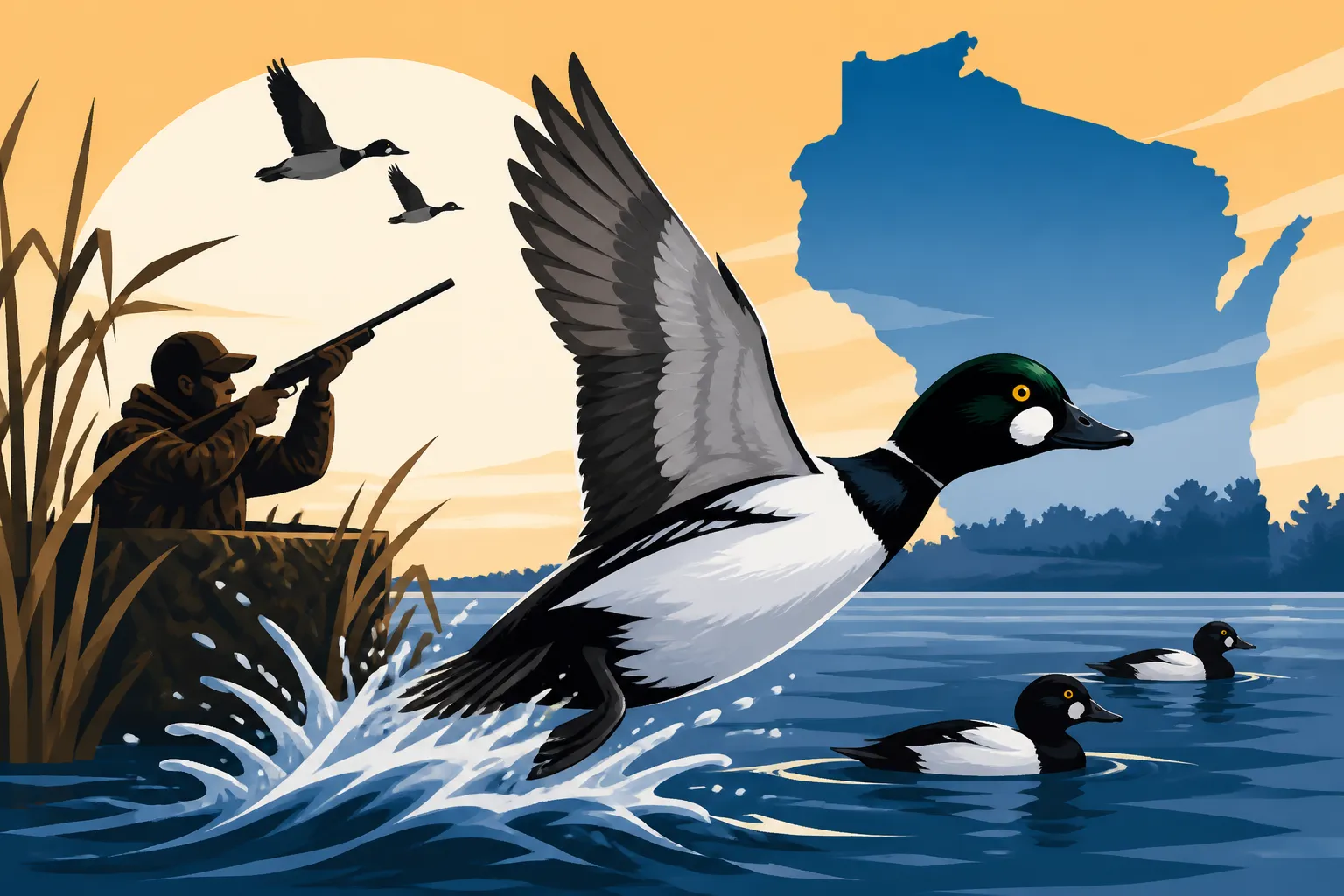
Later in the season, as temperatures drop, you'll also start seeing goldeneyes and buffleheads. Goldeneyes are hardy birds, often appearing when ice begins to form on smaller waters. They are fast and agile flyers. Buffleheads, the smallest of the divers, are incredibly quick, darting and diving with astonishing speed. They're often seen in smaller groups, hugging shorelines or isolated pockets of open water. Knowing these species helps you identify them in flight, anticipate their movements, and understand what to expect as the season progresses.
| Diver Duck Species | Common on Winnebago | Primary Food Sources | Flight Characteristics | Key Features |
|---|---|---|---|---|
| Bluebill (Scaup) | Very Common | Mussels, aquatic plants | Fast, erratic, large flocks | Blue bill, often in huge rafts |
| Canvasback | Common | Aquatic plants (wild celery), mussels | Strong, direct, V-formations | Large, distinctive profile, prized |
| Redhead | Common | Aquatic plants, mussels | Fast, direct, often with Cans/Scaup | Red head, blue bill |
| Goldeneye | Late Season Common | Mussels, crustaceans | Fast, powerful, often lower | Dark back, white sides, bright eye |
| Bufflehead | Late Season Common | Aquatic insects, small fish | Very fast, erratic, small flocks | Smallest diver, black/white plumage |
Gearing Up for Big Water: Decoys, Boats, and Blinds
Hunting diver ducks on Lake Winnebago isn't your average jump-shooting expedition. This is big water, and it demands specialized gear, a keen eye for safety, and tactics tailored to the conditions. You can't just throw out a dozen puddle duck decoys and expect diver magic. The conditions can change rapidly, from glass-calm to white-capping waves in a matter of minutes, making reliable equipment not just an advantage, but a necessity. Proper preparation is paramount to both success and, more importantly, safety. Investing in the right tools for the job will not only increase your chances of bagging birds but also ensure you have an enjoyable and secure experience on this formidable lake.
Crafting the Perfect Diver Decoy Spread
When it comes to diver hunting, numbers matter. Diver ducks are social birds, and they are drawn to large concentrations of their own kind. A small spread of six to twelve decoys might work for puddle ducks in a pothole, but on the vast expanse of Lake Winnebago, it will likely go unnoticed by passing rafts of divers. You want to create the illusion of a safe, successful feeding and resting area, and that means going big. Most successful Winnebago diver hunters will deploy spreads of 50 to 100 decoys, sometimes even more. The larger the spread, the more visible it is from a distance and the more confidence it instills in wary birds.
Mix your decoys with a good proportion of the species you expect to encounter, with bluebills and canvasbacks often forming the core. Redheads and goldeneyes can be mixed in. Spacing is crucial: divers prefer a more open spread than puddle ducks, allowing plenty of room for incoming birds to land. Common configurations include a large "J-hook" or "fish-hook" shape, with the blind positioned at the bend or inside the curve, creating a landing zone right in front of the hunters. A distinct "landing strip" in the open water where the birds can commit is vital. Using heavy lines and robust anchors is also non-negotiable, as strong winds and waves can easily scatter a poorly secured spread. Don't be afraid to experiment with your layout; sometimes a subtle change can make all the difference, especially when using a tool like GoHunt to visualize underwater contours and adjust your setup accordingly.
Safety First: Boats and Essential Equipment
Hunting on Lake Winnebago means respecting its immense power. Safety is not a suggestion; it is an absolute requirement. A reliable, adequately sized boat is your most critical piece of equipment. Forget about johnboats or small aluminum skiffs unless you're hugging the calmest, most sheltered shorelines. For open water diver hunting, you need a boat that can handle significant chop and retrieve downed birds in potentially rough conditions. A V-hull boat, at least 16-18 feet in length with a powerful, dependable outboard motor (preferably with a backup or kicker motor), is highly recommended. The larger the boat, the more stable it will be, which is vital when waves start to build.
Beyond the boat itself, a host of safety gear is non-negotiable. Everyone on board must have a properly fitting personal flotation device (PFD), and it’s wise to wear it at all times, not just when conditions get hairy. A VHF marine radio is essential for communication, as cell service can be spotty miles offshore. Flares, a whistle or air horn, navigation lights (if hunting at dawn or dusk), a first-aid kit, and plenty of dry bags for electronics and extra clothing are also crucial. Heavy-duty anchors – at least two, preferably three – with plenty of rope are needed to hold your boat securely against wind and waves. Always check the marine forecast before heading out, and if there's any doubt about conditions, especially high winds, err on the side of caution and stay home. The ducks will be there another day.
Navigating Regulations, Seasons, and Prime Locations
Successfully hunting diver ducks on Lake Winnebago requires more than just good gear and decoys; you also need to understand the regulatory landscape and how to find those elusive birds. Wisconsin's waterfowl seasons can be complex, with specific dates and bag limits for different zones and species. Knowing these details is critical to staying legal and maximizing your hunting opportunities. Furthermore, while the lake is vast, certain areas consistently hold more divers due to specific habitat features, and understanding how to identify these spots, along with accessing them, is key to consistent success. This blend of regulatory knowledge and on-the-water savvy is what separates the consistently successful Winnebago diver hunters from those who struggle.
Understanding Wisconsin's Diver Duck Seasons and Zones
Wisconsin's waterfowl season structure, including the regulations for diver ducks, is broken down into different zones. Lake Winnebago generally falls within the Southern Zone for ducks, but specific dates can vary, and it's always important to double-check the current year's regulations for any nuances. Diver duck seasons often open slightly later than puddle duck seasons and can run well into November, sometimes even December if ice conditions allow. This later timing is critical because divers tend to migrate later, often pushed by colder weather up north.
Bag limits are also species-specific, and these can change from year to year based on population surveys and management goals. For instance, bluebills (scaup) might have a lower daily bag limit than other species during certain periods. Always consult the Wisconsin DNR's annual hunting regulations pamphlet or their website for the most up-to-date information on Wisconsin Waterfowl Seasons and Zones and Wisconsin Duck Daily Bag Limit. Understanding these dates and limits ensures you're hunting legally and sustainably, contributing to the continued health of the resource. Don't forget federal requirements like the federal duck stamp and HIP certification, which are mandatory for all waterfowl hunters. Additionally, being aware of The Wisconsin Open Water Duck Zone regulations is particularly important when hunting the expansive main basin of Winnebago, as it defines specific rules for hunting from stationary boats or permanent blinds in larger bodies of water.
Finding Your Staging Grounds and Public Access
Lake Winnebago offers numerous public access points around its perimeter, but finding the right access for diver hunting often means considering prevailing winds and the specific areas where birds are holding. Public boat launches are plentiful in towns like Fond du Lac, Oshkosh, Calumetville, and Neenah/Menasha. While many launches are suitable, some offer better protection from certain winds, which can be crucial for launching and retrieving your boat safely on a rough day.
Identifying prime diver hunting areas on such a large lake requires a combination of scouting, local knowledge, and technology. Divers often congregate on large, open flats with healthy weed beds (historically wild celery and pondweed, now often mussels) or along subtle changes in depth and contour. These underwater features might not be obvious from the surface. This is where modern mapping applications become invaluable. Using tools like GoHunt or other detailed topographic lake maps can help you pinpoint submerged humps, shoals, and historical weed lines where divers are likely to feed or rest. Scouting With the Wisconsin Hunt Wild App can also be very useful for identifying not just public access points but also potential habitat features. Pay close attention to wind direction; divers often prefer to land and take off into the wind, and on blustery days, they might seek refuge in the lee side of large points or islands. Early morning scouting runs before the season can reveal traditional staging areas, but keep in mind that birds can shift locations with changing weather and pressure.
Mastering the Hunt: Challenges, Tactics, and Unforgettable Moments
Hunting diver ducks on Lake Winnebago is a demanding pursuit, far from a casual morning stroll in the marsh. The environment itself presents constant challenges, from unpredictable weather to the sheer scale of the water. However, it's precisely these difficulties that forge unforgettable hunting experiences and make the successful retrieve of a canvasback or bluebill so incredibly rewarding. It’s a game of patience, adaptation, and an unwavering respect for the elements, pushing hunters to hone their skills and truly earn their birds.
Overcoming Winnebago's Unique Hunting Obstacles
The most significant obstacle on Lake Winnebago is undoubtedly the weather. What starts as a calm, crisp morning can quickly transform into a churning, white-capped beast. High winds can make setting decoys and retrieving birds treacherous, if not impossible. Hunters must always prioritize safety over ambition. This means being willing to call off a hunt or head in early when conditions deteriorate. Dressing in appropriate layers is also crucial; the wind off that open water can be brutally cold, even on days that seem mild on shore. Cold Weather Sitting Strategy and understanding the importance of proper insulation, especially for your extremities, cannot be overstated.
Beyond the weather, divers on Lake Winnebago can become incredibly "educated." These birds see a lot of hunting pressure throughout their migration, and they learn quickly. They might circle a spread multiple times, looking for any sign of a flaw or unnatural setup before committing. This means meticulous attention to detail with your decoy spread, ensuring lifelike presentation, and impeccable concealment for your blind. Waterfowl Loads for Wisconsin Divers also means selecting the right shot size and choke to reach these fast-flying birds effectively, as they often come in high or at a distance. If you're using a dog, ensure they are trained for cold water retrieves and are protected from the elements. If not, a long-handled landing net is a must for recovering downed birds quickly before they drift away or dive.
The Deep Reward of a Successful Diver Hunt
Despite the challenges, the rewards of hunting diver ducks on Lake Winnebago are profound and deeply satisfying. There's an undeniable thrill that comes with watching a massive raft of bluebills high over the lake, slowly working your spread, banking and circling, until they finally commit and begin to drop their feet for a landing. The explosive action when the shooting starts, the challenge of swinging on those lightning-fast birds, and the pride in retrieving a beautiful canvasback from the vastness of the lake are experiences that truly define waterfowl hunting.
The variety of species you might encounter, from the common bluebill to the majestic canvasback, adds another layer of excitement to each hunt. Every bird is a testament to the effort and preparation you've invested. Furthermore, the camaraderie among hunters who brave these conditions together is unique. Sharing stories, working as a team to set and retrieve decoys, and celebrating successes against the backdrop of Winnebago's grandeur builds bonds that last. It's an opportunity to connect with nature on a grand scale, to witness the power of the migration, and to participate in a challenging yet deeply rewarding tradition. When you manage to bring home a brace of these incredible birds, knowing the effort it took, the taste of that wild game will be all the sweeter. Waders for Wisconsin Marsh Hunting might be part of your overall waterfowl gear, but for deep-water diver hunts, your boat is your wader.
Disclaimer
This article is for general informational purposes only and does not constitute professional advice. Laws, prices and regulations vary by location and change over time. Consult a qualified professional for guidance on your specific situation.