Reading Cuttings Under an Oak
You know that feeling of walking through a seemingly perfect patch of woods, seeing deer sign everywhere – tracks, rubs, even a scrape or two – but then never actually laying eyes on a deer? It’s incredibly frustrating, and often, it’s because we're looking at old news. This guide will dive deep into a critical, often overlooked sign: fresh oak cuttings, showing you how to read these subtle clues to pinpoint exactly where Wisconsin whitetails are feeding right now.
Why Oak Cuttings Matter for Wisconsin Hunters
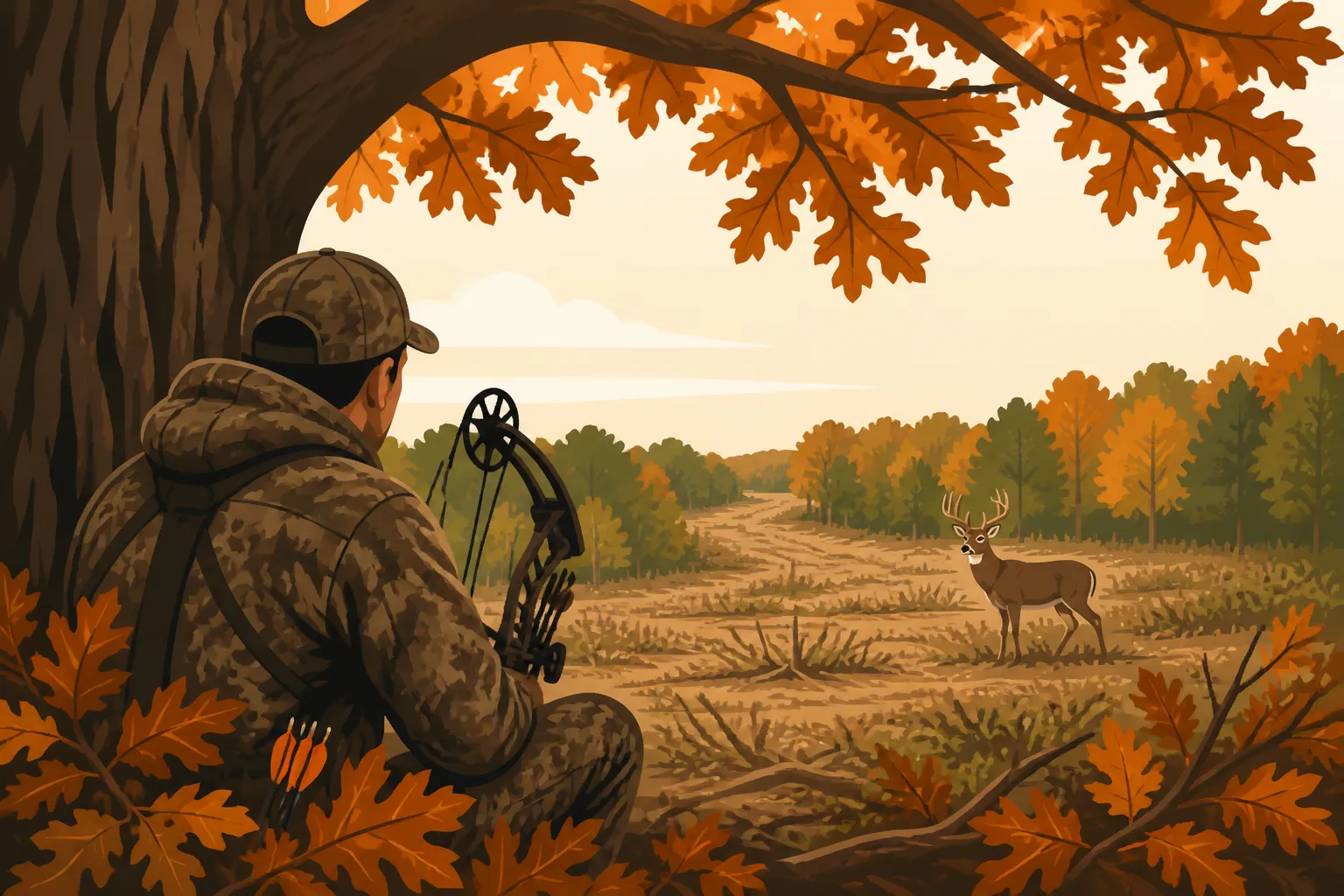
For serious deer hunters in Wisconsin, understanding deer diet and behavior is paramount, and nothing screams "food source!" quite like an active oak stand during the early and mid-fall. When those acorns start dropping, especially after a long summer, deer often abandon other food sources to gorge on them. Ignoring this powerful magnet is a mistake many hunters make, and it leads to countless hours sitting in empty stands. The key isn't just knowing oaks produce acorns; it's knowing which oaks are producing, when, and whether deer are actually using them. That's where cuttings come in.
Understanding Acorn Production and Deer Preference
Not all acorns are created equal, and deer have their preferences, much like we do with our favorite snacks. Wisconsin is home to several oak species, but generally, we categorize them into white oaks and red oaks. White oak acorns, like those from our common white oak and swamp white oak, tend to be lower in tannins, making them less bitter and more palatable to deer. They also drop earlier in the fall, often starting in late August through September. This makes them a prime early-season target.
Red oak acorns, from species like northern red oak, pin oak, and black oak, have higher tannin levels, giving them a more bitter taste. They usually drop later, from October into November, and some can even persist on the tree or ground well into winter. Deer will absolutely eat red oak acorns, especially as other food sources diminish, but they often hit the white oaks first. A strong acorn crop, particularly from white oaks, can draw deer from a wide area, disrupting their usual patterns and concentrating them in specific groves. Hunters often wonder what replaced bait piles for Wisconsin hunters after bans, and natural food sources like acorns become even more critical.
The "Dinner Table" Effect
Think of an oak tree, especially one that's really dropping, as a deer's favorite all-you-can-eat buffet. When deer are actively feeding under an oak, they’re not just picking up fallen acorns. Often, they’ll chew on the caps of the acorns, leaving distinct pieces of the cap scattered on the ground. They might also bite off small pieces of bark or twigs while browsing, but the tell-tale sign of acorn consumption is those little pieces of the acorn itself. These are your "cuttings."
The beauty of these cuttings is that they're a direct, undeniable indicator of recent feeding activity. Tracks might be a day old, a rub could have been made last week, but fresh cuttings mean a deer was there very recently, enjoying a meal. It's like finding crumbs on a table – you know someone just ate there. For hunters trying to time their hunt during the critical pre-rut in late October, when deer are packing on calories, finding these active feeding zones is invaluable.
Identifying Fresh Oak Cuttings
Finding cuttings isn't just about spotting "stuff" under an oak tree. It requires a keen eye and an understanding of what distinguishes deer activity from that of other woodland creatures. This skill can genuinely elevate your scouting game.
What Fresh Cuttings Look Like
When you're sifting through the leaves and duff under an oak, you're looking for small, tell-tale fragments. Fresh acorn cuttings from deer will typically be:
- Color-Consistent: The inside of an acorn cap is usually a lighter, almost creamy color, contrasting with the darker, weathered exterior. Freshly bitten pieces will show this lighter interior, indicating a recent break. Older cuttings will be uniformly dark or faded.
- Size and Shape: Deer tend to bite off pieces of the acorn cap, leaving fragments that are often crescent-shaped or irregular, typically a quarter-inch to a half-inch in size. You might also find perfectly whole, yet empty, acorn caps if the deer simply popped the acorn out.
- Location: Cuttings will be concentrated directly under the canopy of the actively dropping oak tree, sometimes scattered on a faint game trail leading into or out of that specific tree.
- Context: Are there other signs of deer nearby? Fresh tracks leading to and from the tree, or even fresh droppings mixed in with the cuttings, further confirm deer presence.
Imagine you're walking under a mature white oak in late September. You kick aside a few leaves and see several small, light-colored crescent-shaped pieces of what clearly looks like acorn shell. They haven't been bleached by the sun or turned dark by rain; they look like they just fell from a fresh bite. That's exactly what you're after.
Differentiating from Squirrel or Other Animal Activity
Here's where many hunters get confused. Squirrels, turkeys, and even bears love acorns. However, their feeding habits leave different clues:
- Squirrels: Squirrels are prolific acorn eaters, but they often leave very distinct evidence. They’ll typically chew through the entire shell, leaving fine, shredded pieces or, more commonly, two neatly separated halves of the acorn with the nut meat completely gone. They also often leave little piles of these chewed pieces on logs, stumps, or favorite perches. Squirrels are less likely to leave just cap fragments.
- Turkeys: Wild turkeys will swallow smaller acorns whole and peck open larger ones. If they're pecking, you might find more shattered pieces or, again, clean halves, but usually with a messier appearance than a squirrel's neat work. Turkeys also leave very distinctive three-toed tracks and droppings.
- Bears: While bears will devour acorns, especially in Northern Wisconsin, their sign is usually much more destructive. They might rip branches down, leave larger, crushed pieces, and generally create a much bigger disturbance, often with distinct claw marks on the tree or ground. Unless you're specifically bear hunting with bait and dogs in Wisconsin, it's less likely you'll confuse their subtle sign with deer cuttings.
To help distinguish, here’s a quick comparison:
| Sign Characteristic | Deer Acorn Cuttings | Squirrel Acorn Cuttings | Turkey Acorn Cuttings |
|---|---|---|---|
| Primary Appearance | Small, irregular fragments of acorn caps, often crescent-shaped. Sometimes empty, whole caps. | Neat, shredded halves of the entire shell. Often piled on logs/stumps. | Shattered pieces of shell from pecking; smaller acorns swallowed whole. |
| Size of Fragments | 1/4 to 1/2 inch, typically. | Fine shreds, or larger, clean halves. | Varies, often more fragmented than deer. |
| Freshness Indicator | Lighter inner cap visible on fresh breaks. | Often uniform color, unless very recent. | Can be quite fresh, but less focus on cap fragments. |
| Associated Sign | Deer tracks, fresh droppings, faint trails. | Small paw prints, gnaw marks on bark, droppings near piles. | Three-toed tracks, distinct turkey droppings, scratching. |
The Importance of Location
Not every oak tree will be a hot spot. You need to identify the productive trees. Prime locations for finding concentrated cuttings often include:
- Isolated Oaks: A single oak, or a small cluster, standing apart from a larger oak flat can act as a natural magnet, especially if it’s the only one dropping in a particular area.
- Ridge Tops and Sides: Oaks thrive on well-drained soils, making ridge points for deer movement and sides excellent places to find them. The elevation can also provide a strategic advantage for hunters.
- Transition Zones: Look for oaks along the edge of open fields and timber, or where a dense cedar swamp meets an oak ridge. Deer will often stage in these areas before moving out to feed.
- Near Bedding Areas: If you find a patch of oak cuttings relatively close to thick cover where deer might bed, you've likely found a primary feeding area connected to their sanctuary. This helps you understand their daily patterns.
Scouting with the Wisconsin Hunt Wild App or other mapping tools like GoHunt can be invaluable here. Use their aerial imagery and public land layers to zoom in on areas with a high concentration of mature oaks. Then, physically walk those areas, focusing on ridge lines and transitions.
Interpreting Cuttings for Hunting Strategy
Finding cuttings is just the first step. The real art is in interpreting what they tell you and translating that into an effective hunting strategy. This isn't just about finding food; it's about understanding the deer's routine around that food.
Timing Your Hunt Based on Cuttings
The freshness of cuttings is your most crucial indicator. If you find a pile of light-colored, crisp acorn cap pieces, you know deer were there within the last 12-24 hours, possibly even within a few hours. This is like striking gold.
- Morning Freshness: If you find very fresh cuttings first thing in the morning, it's highly likely deer were feeding there in the pre-dawn hours or at last light the previous evening. This suggests they might be bedding relatively close by and moving to this food source after leaving their beds. Setting up for an evening hunt or a cautious morning approach might be wise.
- Evening Freshness: Discovering extremely fresh cuttings late in the day means deer were likely just there, or are even still in the vicinity. This presents an immediate opportunity for a careful, silent approach and a quick setup, assuming wind and cover allow.
- Consistent Activity: If an oak tree consistently shows fresh cuttings over several days, it indicates a preferred, high-traffic feeding area. This is a spot you want to sit. However, remember that hunting pressure on Wisconsin public land can quickly push deer out of obvious spots.
The key is to avoid hunting a tree that showed activity a week ago. Deer patterns, especially around acorns, can change quickly as a crop is depleted or new trees start dropping.
Pinpointing Bedding Areas and Travel Routes
Cuttings are rarely an isolated piece of information. They are a puzzle piece that, when combined with other observations, helps you map out a deer's daily life.
- Connecting the Dots: Once you find fresh cuttings, look for subtle trails leading in and out of the area. These aren't always super-highway deer trails, especially in mature timber. They might be faint indentations in the leaves, broken twigs, or scuff marks. Follow these trails (without contaminating them with your scent, of course) to try and identify potential bedding areas, often dense cover on a leeward slope, a thick cedar swamp, or even just a dense patch of saplings.
- Wind and Thermals: Consider the prevailing wind direction and thermals in relation to the cuttings. Deer often approach food sources with the wind in their favor, or use thermals (rising air in the morning, falling air in the evening) to detect danger. If you find a cutting hot spot on a ridge, think about how the wind and thermals will affect deer approach and your stand location. Understanding wind and thermals in a coulee, for example, is critical if your oak stand is on a slope.
- Water Sources: While deer primarily seek food, they also need water. If your oak stand is near a reliable water source – a small creek, pond, or even a low, marshy area – it further enhances its attractiveness and helps you predict travel.
Utilizing Technology to Enhance Scouting
In today's hunting world, technology is a powerful ally. While nothing replaces boots on the ground, tools can make your "boots on the ground" time far more efficient.
- Mapping Applications: Applications like GoHunt allow you to overlay satellite imagery with public land boundaries, topography, and even timber type data (though this can vary in detail). You can mark specific oak trees or stands you've identified, create waypoints for potential stand locations, and plan silent entry and exit routes. This is particularly helpful when scouting Wisconsin County Forest Hunting lands or portions of the Chequamegon-Nicolet National Forest Hunting areas, where vast tracts of timber can make finding specific stands challenging.
- Topographical Maps: Use these to identify ridge lines, saddles, and drainages that funnel deer movement. An oak stand on a strategic pinch point or saddle can be exponentially more productive than a random one.
- Trail Cameras: While direct baiting is restricted in many Wisconsin counties, you can still place trail cameras to monitor activity over specific oak trees, especially if you're not using bait near the camera. This provides invaluable intel on the exact times deer are feeding and the size of bucks using the area. Just be mindful of trail camera rules on Wisconsin public land.
Advanced Cutting Analysis and Adaptation
The woods are dynamic, and so are deer. A hot oak stand today might be dead tomorrow. Truly successful hunters understand this and adapt their strategies based on evolving signs, including how cuttings change.
Tracking Changes in Feeding Patterns
Acorn crops aren't endless. Once a particular oak tree or stand has dropped most of its acorns, or deer have simply eaten them all, activity will cease.
- Depletion: If you've been seeing fresh cuttings for days, and then suddenly find nothing new, it means the "dinner table" has been cleared. It's time to move on and find another active food source. This could mean switching from early-dropping white oaks to later-dropping red oaks, or perhaps to agricultural fields if you're hunting Wisconsin farmland deer. The experience of hunting after an acorn failure is a lesson in adaptation.
- Shifting Preferences: As the season progresses, deer might switch their preference based on available food. In late November, as the rut winds down, deer will return to heavily feeding. If the acorns are gone, they might turn to waste grain in cut cornfields or browse on woody stems.
- Identifying "The Next Best Thing": Always be scouting for other potential food sources in your hunting area. If the oaks dry up, where will they go next? Do you have food plots instead of bait nearby? Are there standing cornfields adjacent to timber?
Combining Cuttings with Other Deer Sign
Cuttings are powerful, but they are just one piece of the puzzle. The most effective hunters weave together multiple types of deer sign to create a comprehensive picture.
- Rubs and Scrapes: Finding fresh cuttings near a prominent scrape line along a logging road or a series of rubs can indicate a buck is regularly visiting that feeding area, especially during the pre-rut and rut. This adds another layer of confidence to your stand choice.
- Tracks and Trails: Always look at the quality and quantity of tracks leading to and from the oak stand. Are there large, defined tracks indicating a mature buck? Are there multiple sets of tracks, suggesting a doe group? This helps you understand the composition of the deer visiting the area.
- Droppings: Fresh droppings are another clear indicator of recent deer presence. Their consistency and freshness can even tell you a bit about their diet (e.g., firm, dark droppings usually indicate acorn consumption).
- Bedding: If you can connect the feeding area directly to a nearby bedding area, you have a complete picture of a deer's daily routine. This allows you to set up ambush points not just at the food, but along the travel corridor itself. Finding where Northern Forest bucks bed is often about connecting food sources to their secure daytime haunts.
Adapting to Environmental Factors
Weather and hunting pressure can significantly impact how and when deer use oak stands, even ones with abundant cuttings.
- Wind and Rain: A strong wind might knock down more acorns, but it also makes deer more cautious. Heavy rain can wash away or darken cuttings, making them harder to spot. Deer also tend to move less during heavy downpours but might become very active immediately afterward.
- Temperature: In warmer early-season conditions, deer might feed more at night. As temperatures drop, especially in Wisconsin's late archery season or during the muzzleloader tactics in December cold, daytime feeding on acorns can increase as deer need more calories to stay warm.
- Hunting Pressure: Public land, even a great oak stand, can get hammered during gun season. If you find fresh cuttings but suspect high pressure, you might need to find ground others walk past, or focus on obscure oak pockets that require more effort to reach. Deer drives with three or four hunters are common in pressured areas, and knowing where deer might seek refuge after being pushed can be key.
No matter the circumstances, reading cuttings is a skill that, when honed, provides invaluable, real-time intelligence on deer movement. It's about being observant, understanding deer behavior, and adapting to the ever-changing landscape of a Wisconsin hunting season.
Disclaimer
Hunting is an activity with inherent risks. Always prioritize safety, understand and follow all Wisconsin Department of Natural Resources (DNR) regulations, and obtain proper licenses and permits. The information provided here is for educational purposes and should not replace official safety guidelines or legal requirements.