Prescribed Burns and Hunting Closures
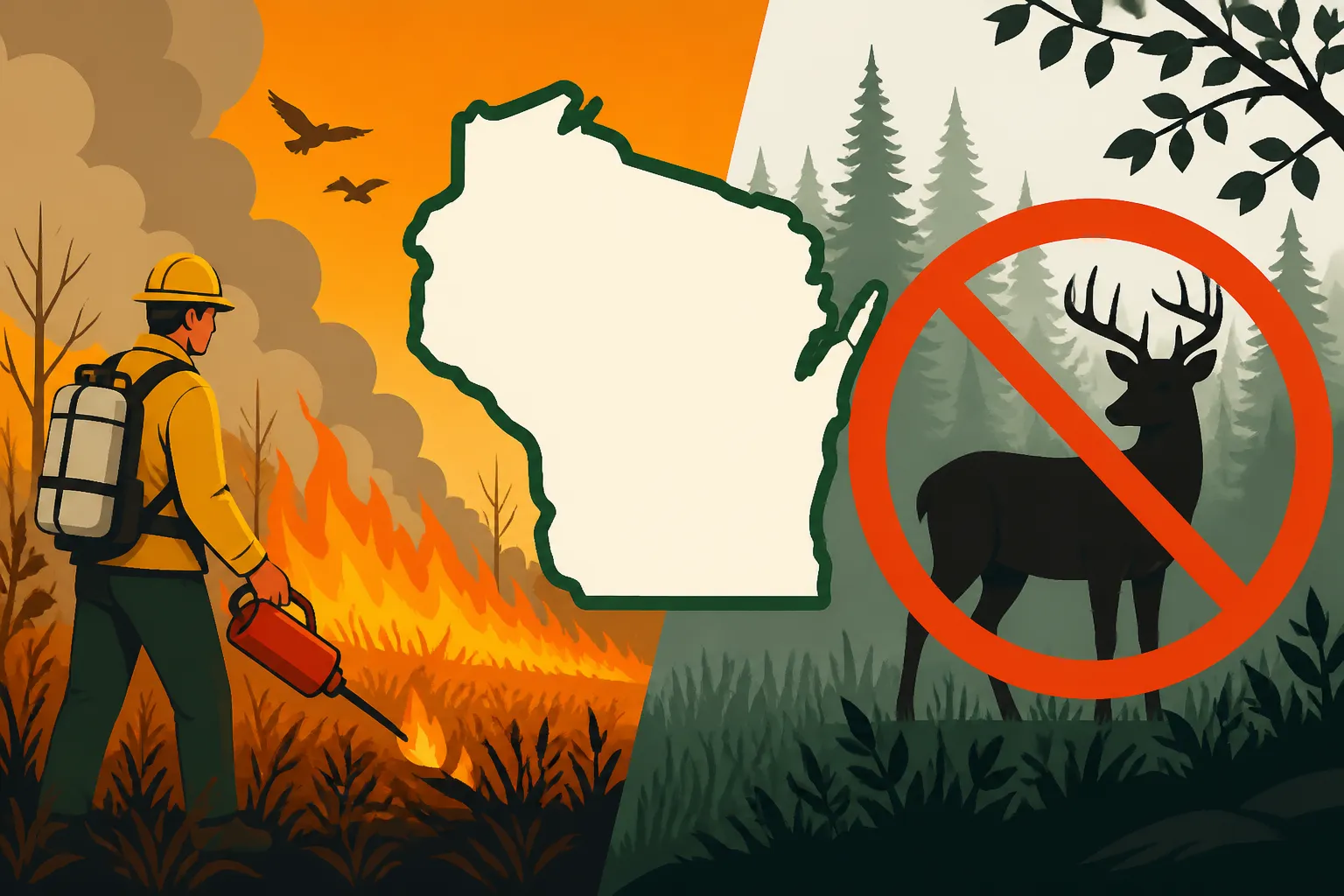
It’s a truly disheartening feeling, isn’t it? You’ve spent countless hours scouting, planned your weekend hunt meticulously, only to arrive at your favorite public land block and find those dreaded "Area Closed" signs or, worse, see a haze of smoke on the horizon. Prescribed burns are a vital tool for habitat management in Wisconsin, but they often bring temporary hunting closures that can throw a wrench in your plans. This guide is here to demystify prescribed burns, explain why they happen, how they lead to closures, and crucially, how you can stay informed and even adapt your hunting strategy around them.
Understanding Prescribed Burns in Wisconsin
For many of us, the idea of intentionally setting fire to the woods or grasslands seems counterintuitive to wildlife conservation. We’re taught to prevent forest fires, not start them! But in Wisconsin, prescribed burns are a carefully planned and executed management technique, playing a critical role in maintaining healthy ecosystems for our cherished game species. They're a long-term investment in the land that pays dividends for future hunting seasons.
Why Wisconsin Uses Prescribed Fire
Think about the natural history of Wisconsin. Before European settlement, wildfires, often started by lightning or Indigenous peoples, regularly swept through many landscapes. These fires weren't always destructive; they were a natural process that shaped the land, preventing dense canopies from forming and promoting diverse plant life. Today, prescribed fire aims to mimic those natural processes in a controlled environment.
One of the biggest reasons for prescribed burns is to control invasive species. Think about all the undesirable plants like buckthorn or honeysuckle that choke out native flora. Fire can be incredibly effective at knocking back these invaders, giving native grasses, forbs, and young trees a chance to flourish. This renewed growth provides vital food sources for everything from deer to turkeys, creating a healthier, more vibrant ecosystem.
Beyond invasives, burns also help recycle nutrients back into the soil, essentially fertilizing the ground naturally. This process encourages a flush of tender, nutritious new growth that is incredibly attractive to deer and other herbivores. It also helps clear out dead, stagnant vegetation, which can reduce the risk of more intense, uncontrolled wildfires later on.
The Role of Controlled Burns in Habitat Management
Different types of burns are used to achieve specific habitat goals. A "cool burn," for instance, might be used in the spring or fall when conditions are damp, allowing the fire to creep along the forest floor, cleaning up leaf litter and undergrowth without harming mature trees. This opens up the canopy, allowing sunlight to reach the forest floor and encouraging the growth of new browse for deer. It also makes for easier walking and better visibility for hunters.
"Hotter burns," often conducted under drier conditions, might be used in areas like the pine barrens or prairies to remove more significant amounts of woody vegetation and rejuvenate fire-dependent plant communities. This kind of burning is crucial for species like sharp-tailed grouse, which thrive in open, savanna-like environments. If you're wondering about specific game, these burns are often designed to boost habitat for species like Ruffed Grouse and Woodcock in Wisconsin and are absolutely essential for the survival and expansion of Sharp-Tailed Grouse on Wisconsin Barrens.
For deer, a burn can mean a temporary displacement, but the long-term benefit is undeniable. That flush of new growth, often rich in protein and minerals, draws them back in once the area recovers. It’s like hitting a reset button on the food plot Mother Nature intended. Understanding these long-term benefits can help ease the sting of a temporary closure, knowing that the land is being improved for future hunts.
How Prescribed Burns Lead to Hunting Closures
While the ecological benefits are clear, the process of conducting a prescribed burn inherently requires public safety measures, which often translates to temporary hunting closures. It's not about keeping hunters out, but about keeping everyone safe, including the hardworking crews on the ground.
Safety First: The Primary Reason for Closures
Imagine a crew of foresters, fire managers, and trained technicians operating heavy equipment, setting controlled fires, and monitoring their spread. Add to that the unpredictability of wind shifts, smoke plumes, and falling trees, and you can quickly see why an active burn zone is no place for an unsuspecting hunter. Safety is, without a doubt, the number one priority.
Closures protect not only the public but also the fire crews themselves. It's incredibly difficult and dangerous for firefighters to work effectively when they're constantly on alert for stray hunters or confused hikers. The smoke can also be disorienting and hazardous, reducing visibility to almost nothing. These are controlled burns, not uncontrolled wildfires, but they still present significant risks that necessitate keeping the public out until the operation is complete and the area is deemed safe.
Furthermore, the post-burn environment itself can be dangerous. Hot spots can linger for days, even weeks, creating ash pits that can cause severe burns if stepped into. Trees weakened by fire can fall unexpectedly. These lingering hazards mean that even after the active flames are out, an area might remain closed for a period to allow for cooling and a safety assessment.
Types of Closures and Their Duration
When a prescribed burn is scheduled, closures can vary in scope and duration. Often, an area will be closed for the specific day of the burn. These "day-of" closures are common in smaller, more contained burns. You might show up early, see the signs, and have to pivot to a different hunting spot.
For larger burns, or those in more remote, complex terrain, closures could extend for several days or even a week or two, particularly if the fire crews need to monitor lingering hot spots or if specific safety assessments are required before reopening. These closures are typically marked with clear signage at access points, outlining the perimeter of the closed area and the expected reopening date.
In some rarer cases, if a burn significantly alters the landscape or involves extensive work, a closure could potentially impact a portion of a hunting season, though this is less common for active hunting periods. Most land managers aim to conduct burns outside of peak hunting seasons to minimize disruption, often targeting early spring or late fall when the risk of wildfire spread is lower and hunting pressure is reduced. This means a spring burn might affect Spring Turkey Hunting in Wisconsin locally, or a fall burn could impact early deer archery.
Impact on Different Hunting Seasons
While managers strive to minimize impact, prescribed burns can intersect with various hunting seasons. Early archery season in September, for instance, might see some burns in prairie or grassland areas. If you're targeting small game like rabbits or squirrels, a burn might displace them temporarily, but these areas often become vibrant again within a year or two as new growth provides food and cover.
Waterfowl hunting around marsh edges or managed wetlands might also be affected, as burns are sometimes used to manage cattails and other vegetation that can choke out open water. While a burn might temporarily clear out bird use, the long-term goal is to improve the habitat, creating better food sources and flight patterns for subsequent seasons. It's a cyclical process, and hunters who understand this often find themselves benefiting from the improved habitat in the long run.
Finding Information on Burn Plans and Closures
The frustration of encountering a closure sign is real, especially when you've invested time and effort. Thankfully, land managers understand this and make efforts to communicate burn plans and closures in advance. It just takes a bit of proactive digging on your part to stay informed.
Official Sources: DNR and Forest Service Websites
Your absolute first stop for official information on prescribed burns and hunting closures in Wisconsin should always be the Wisconsin Department of Natural Resources (DNR) website. The DNR manages state forests, wildlife areas, and other public lands where many burns occur. Look for dedicated sections on "Prescribed Fire," "Public Notices," or "Recreation Closures." They often have maps showing planned burn units, current burn operations, and expected reopening dates.
Similarly, if you're hunting in a national forest, such as the Chequamegon-Nicolet National Forest, check the U.S. Forest Service website for that specific forest. They will also have dedicated pages for prescribed fire management and any associated closures. It's a good practice to bookmark these pages for the areas you frequent and check them regularly, especially in the weeks leading up to and during active burn seasons (typically spring and fall).
Many DNR field offices and national forest ranger stations also post physical notices at their headquarters or on information boards at popular access points. A quick phone call to the local office can often provide you with the most up-to-date information on current or planned operations in your target area.
Using Mapping Apps to Stay Informed
In today's digital age, mapping apps have become indispensable tools for hunters. Services like onX Hunt and GoHunt can be incredibly valuable for staying informed about prescribed burns, even if they don't always have real-time closure data integrated. These apps allow you to view public land boundaries, often with different ownership layers (state, federal, county), which helps you narrow down which official website to check.
More importantly, these apps can sometimes show recent satellite imagery. If a burn has occurred, you might see the distinct black or brown scar on the landscape long before you arrive on the ground. While this doesn't tell you if it's closed, it certainly tells you that the habitat has changed dramatically, which is crucial for planning your hunt. Scouting Wisconsin Public Land Before Season with these tools can help you identify areas recently burned and adjust your plans accordingly.
Some mapping apps also include layers for different habitat types or management units, which can correlate with burn plans. For example, if you see a large section designated as "pine barren management," it's a strong indicator that prescribed fire is a regular part of its maintenance. Keep in mind, however, that while these apps are fantastic for general navigation and property lines, always cross-reference with official government sources for current closure status.
On-the-Ground Reconnaissance and Local Contacts
Even with all the digital tools, there’s no substitute for good old-fashioned boots-on-the-ground scouting. Drive the access roads leading into your preferred hunting block. Look for official signs from the DNR or Forest Service indicating a prescribed burn or closure. These signs are typically very clear and should always be respected for your safety and the safety of the crews.
Beyond official signs, look for physical evidence of recent burns. The smell of smoke can linger, and you might see blackened trees or charred ground. This tells you immediately that a burn has taken place, even if you missed the official notices.
Finally, don't underestimate the value of local contacts. Chat with folks at the local gas station, bait shop, or even other hunters you meet. Local knowledge can be incredibly accurate and timely. Conservation wardens, park rangers, or foresters often have the most current information and are usually happy to share it if you approach them respectfully. Their insights can be invaluable, not just for closures but for understanding how game might react to newly burned areas.
| Aspect | Short-Term Impact of a Prescribed Burn | Long-Term Benefit for Hunting |
|---|---|---|
| Access | Temporary closures of roads/trails/areas | Improved hunter access due to clearer understory |
| Game Animals | Temporary displacement from the burn area | Increased food sources and improved habitat leads to higher game populations and healthier animals |
| Vegetation | Charred ground, reduction of live vegetation | Flush of nutritious new growth, control of invasive species |
| Hunting Success | Disruption, need to adjust plans, potential blank spots | Enhanced hunting opportunities in subsequent seasons due to better habitat |
| Visibility | Smoke, reduced visibility | Clearer shooting lanes, better visibility for spotting game |
| Safety | Hazardous conditions due to active fire/hot spots | Reduced risk of catastrophic wildfires, safer forest environment |
Hunting Strategies Around Burned Areas
So, you've found an area that's been recently burned, or you know a burn is scheduled. What now? While immediate access might be limited, understanding how animals react to fire can give you a significant edge, both in the short term and for future seasons. It's all about adapting to the changing landscape.
Short-Term: Hunting the Edges and Escape Routes
When a prescribed burn occurs, deer, turkeys, and other wildlife aren't simply incinerated. They move. Their primary instinct is to get away from the fire and smoke, seeking out unburned pockets of cover, denser woods, or adjacent unimpacted areas. This immediate displacement creates opportunities for smart hunters.
Focus your efforts on the edges of the burned area. Think of it as a temporary funnel. Animals will move along the perimeter, seeking escape or refuge. Look for transition zones where the burn stopped, creating a hard line between charred ground and untouched habitat. These edges often become temporary travel corridors or staging areas. Deer might quickly move to the nearest thick cover, a cedar swamp, or even private land adjacent to the public burn.
Consider prevailing winds during the burn. Animals will naturally move away from the smoke and flames, often traveling downwind or crosswind to escape. Knowing the burn direction can help you predict their initial escape routes. Also, look for any unburned islands or fingers of cover within the burn unit. These small refuges, if they exist, can be temporary havens before animals move out completely. Pay close attention to any water sources, as animals will often gravitate towards them during stressful events.
Long-Term: The Regenerative Benefits and Future Opportunities
While the immediate impact of a burn can be inconvenient, the long-term benefits for hunting are usually exceptional. A year or two after a well-executed burn, these areas often become prime hunting spots. The removal of dense underbrush, the control of invasives, and the infusion of nutrients into the soil lead to a flush of tender, highly palatable new growth.
This regenerated habitat provides crucial forage for deer, particularly in the form of succulent forbs and new browse. It can create excellent Late-Season Food Sources for Whitetails when other vegetation has died back. Turkeys will flock to burned areas, too, scratching for insects and seeds that become more accessible on the cleared ground. Upland birds like grouse will find new patches of cover and improved bugging areas.
It's wise to make a mental note, or better yet, mark it on your onX Hunt app, of any areas that have undergone prescribed burns. Revisit these spots in subsequent seasons to observe the regeneration. You'll likely find improved visibility for hunting and an increase in game sign as animals capitalize on the renewed food and cover. Understanding the cyclical nature of habitat management, where a short-term disturbance leads to long-term gain, is a key part of becoming a more successful and adaptable hunter.
Safety Considerations When Hunting Near Burned Ground
Even after the "all clear" is given and an area reopens, exercising caution when hunting near recently burned ground is crucial. The landscape can be significantly altered, presenting new hazards you might not expect.
First, watch your footing. The ground might be uneven, with ash pits that can be surprisingly deep and soft. Buried roots can continue to smolder, creating hidden hot spots. Ash can also be slippery, especially when wet, so wear appropriate footwear with good traction.
Second, be aware of "widowmakers"—trees that have been weakened by the fire but haven't fallen yet. These can come down unexpectedly, especially in windy conditions. Always look up and around when walking through burned timber. Charred logs and branches can also be unstable and shift underfoot.
Visibility can be both a blessing and a curse. While the lack of undergrowth can make spotting game easier, it also means less cover for you. Adjust your stalking techniques and camouflage accordingly. Ensure you're wearing appropriate amounts of blaze orange or pink, especially during gun seasons, as your visibility to other hunters (and vice-versa) might be impacted by the altered landscape.
Finally, always respect residual closures or caution signs. Land managers put them there for a reason. Ignoring them not only puts you at risk but also demonstrates a disregard for the hard work that goes into improving our shared public lands. Hunters are partners in conservation, and part of that partnership is understanding and respecting land management practices like prescribed burns.
Disclaimer
This article is for general informational purposes only and does not constitute professional advice. Laws, prices and regulations vary by location and change over time. Consult a qualified professional for guidance on your specific situation.